Antimony Milling & Processing Systems | Advanced Guide to Grinding, Micronization & Engineered Solutions
What Is Antimony?
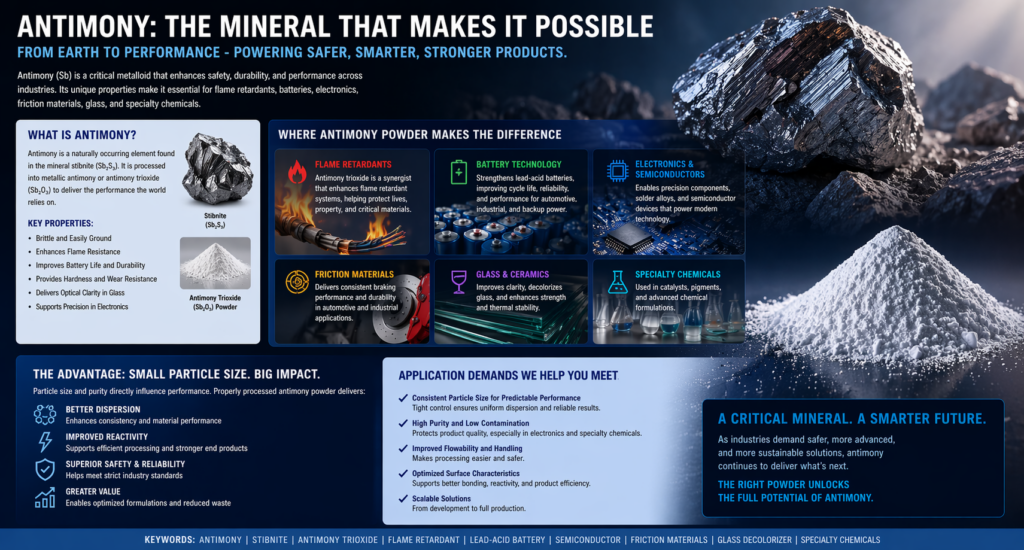
Antimony (Sb) is a brittle metalloid primarily derived from stibnite (Sb₂S₃) and processed into metallic antimony or antimony trioxide (Sb₂O₃). It is widely used in flame retardants, battery alloys, electronics, and specialty chemical applications.
Key Material Properties Relevant to Processing:
- Brittle fracture behavior → high grindability with low plastic deformation
- Low Mohs hardness (~3) → efficient size reduction
- Thermally sensitive → oxidation risk during high-energy milling
- Toxic in fine particulate form → requires controlled dust handling
- Moderate density (~6.7 g/cm³) → influences classification efficiency
- Tendency toward agglomeration at fine particle sizes (<10 µm)
Common Feed Materials:
- Stibnite ore (Sb₂S₃)
- Roasted antimony oxide (Sb₂O₃)
- Metallic antimony ingots or lumps
- Recycled antimony-bearing materials
Industrial Applications & Particle Size Requirements
End-use requirements dictate system design, especially particle size distribution (PSD), purity, and morphology.
Key Industries & Targets:
- Flame retardants: D50 = 5–20 µm, narrow PSD
- Electronics: D50 = 1–10 µm, ultra-low contamination
- Battery alloys: coarser fractions (50–300 µm)
- Specialty chemicals: tight PSD with minimal fines (<5 µm control)
- Ceramics/glass: controlled particle shape and surface area
Antimony Processing Overview
1. Crushing & Pre-Reduction
- Jaw crushers or roll crushers reduce feed to <10–20 mm
- Objective: prepare material for controlled milling and liberation
2. Grinding & Beneficiation
- Ball mills or rod mills used for initial liberation
- Flotation separates Sb₂S₃ from gangue minerals
3. Thermal Processing
- Roasting: Sb₂S₃ → Sb₂O₃ (volatile oxide phase)
- Reduction: Sb₂O₃ → metallic Sb
4. Fine Grinding & Micronization (Value-Critical Step)
This stage defines:
- Final PSD (D10, D50, D90)
- Surface area and reactivity
- Flowability and downstream handling
- Product purity and contamination levels
Advanced Milling Technologies for Antimony
Coarse Grinding (100–500 µm)
Equipment:
Mechanism:
- Impact-driven fracture exploiting brittleness
Considerations:
- High dust generation
- Limited PSD control
- Heat generation at high throughput
Fine Grinding (20–100 µm)
Equipment:
Operating Principle:
- Impact grinding combined with dynamic air classification
Key Advantages:
- Adjustable cut point via classifier speed
- Continuous operation
- Reduced over-grinding compared to hammer mills
Design Considerations:
- Rotor tip speed optimization
- Airflow balance for efficient classification
- Wear-resistant liners for extended service life
Ultra-Fine Grinding (1–20 µm)
Equipment:
Operating Principle:
- Particle-to-particle collision at high velocity using compressed gas
Advantages:
- No mechanical grinding media → minimal contamination
- Precise PSD control via classifier wheel
- Low thermal impact when using compressed air or nitrogen
Critical Parameters:
- Grinding pressure (typically 6–10 bar)
- Gas type (air vs nitrogen for inerting)
- Feed rate vs classifier speed balance
- Internal residence time control
Cryogenic Milling (Specialized Applications)
Used when:
- Oxidation must be prevented
- Thermal degradation affects product quality
- Ultra-fine PSD is required with minimal agglomeration
System Characteristics:
- Liquid nitrogen (LN₂) injection
- Reduced material temperature → increased brittleness
- Controlled evaporation to maintain process stability
Process Engineering Challenges in Antimony Milling
1. Dust Containment & Toxicity
Antimony dust presents inhalation risks and environmental concerns.
Engineering Controls:
- Fully enclosed milling systems
- Negative pressure operation
- Pulse-jet baghouse with high-efficiency filtration
- Sealed transfer points and rotary airlocks
2. Oxidation & Thermal Management
Heat generation during milling can alter chemical composition and product performance.
Solutions:
- Nitrogen inerting in jet milling systems
- Temperature monitoring at mill outlet
- Cryogenic grinding for sensitive materials
3. Contamination Control
Critical for electronics and high-purity chemical applications.
Mitigation Strategies:
- 316L stainless steel construction
- Ceramic or tungsten carbide liners
- Elimination of mechanical contact surfaces (jet milling)
4. Particle Size Distribution (PSD) Control
Over-grinding leads to excessive fines, impacting flowability and performance.
Optimization Methods:
- Dynamic classification tuning
- Closed-loop milling circuits
- Real-time PSD monitoring (laser diffraction systems)
5. Flowability & Powder Handling
Fine antimony powders exhibit:
- Cohesion
- Poor discharge characteristics
- Risk of hopper bridging
Solutions:
- Post-milling blending and conditioning
- Controlled moisture and particle size distribution
- Proper hopper design (mass flow geometry)
Turnkey Antimony Milling System Design
A high-performance system integrates multiple technologies into a single engineered solution.
Typical System Configuration:
Material Feeding
- Loss-in-weight feeders for precise dosing
- Screw or pneumatic conveying systems
Primary Size Reduction
- Hammer or pin mill
Secondary Grinding
- Air classifier mill (ACM)
Final Micronization
- Jet mill (air or nitrogen-based)
Dust Collection
- Pulse-jet baghouse with explosion protection
- Optional HEPA filtration
Inerting System (Optional)
- Nitrogen generation or bulk supply
- Oxygen monitoring and control
Post-Processing
- Powder blending and conditioning
- Packaging or bulk material handling systems
Why Conventional Milling Approaches Fail
Standard equipment-only approaches typically result in:
- Poor PSD control
- Excessive fines generation
- Thermal degradation
- Contamination from mechanical wear
- Inefficient scale-up from lab to production
Engineered System Approach
By integrating process engineering with equipment selection, superior outcomes are achieved through:
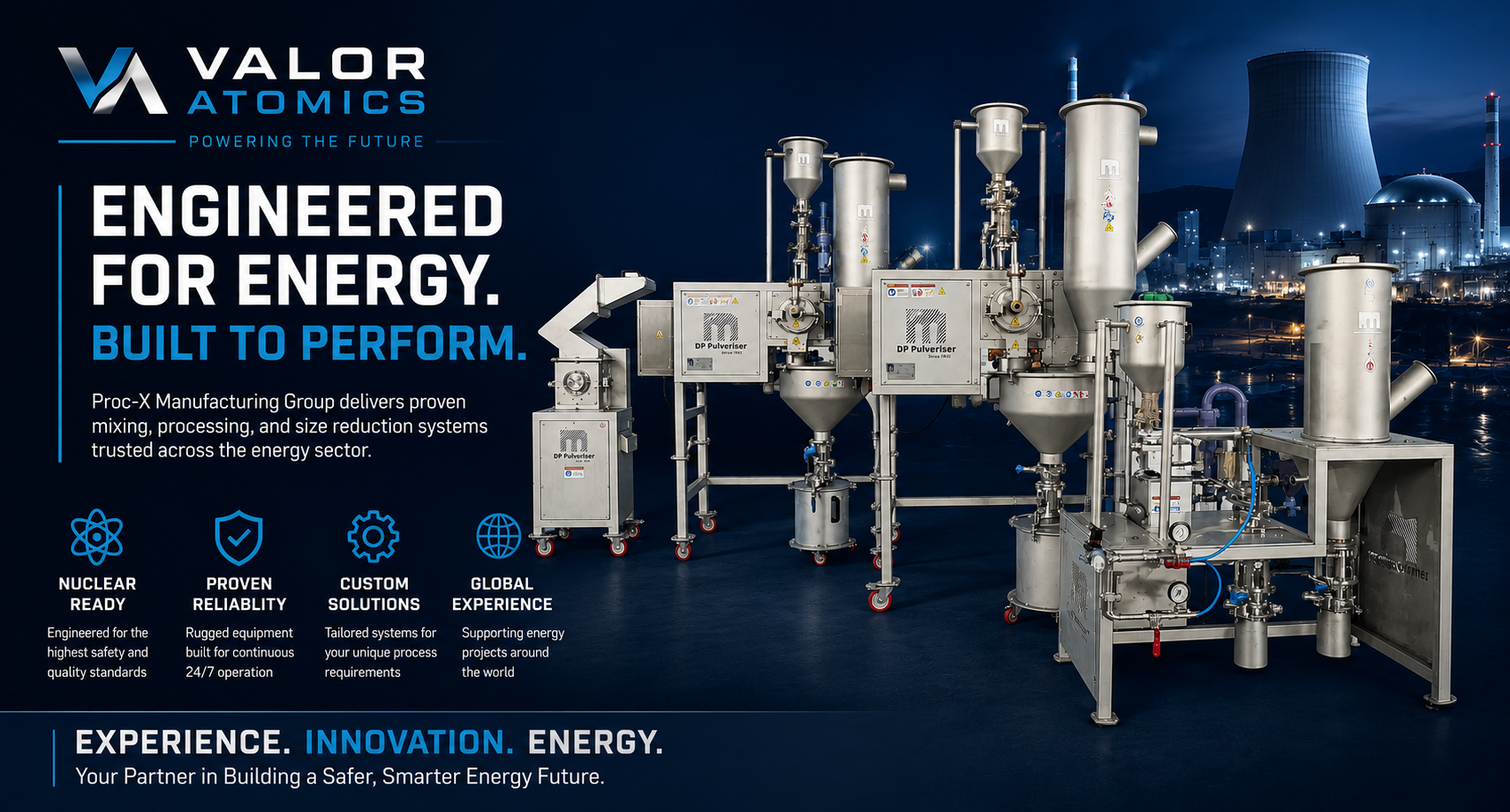
- DP Pulverisers – Advanced milling and micronization systems
- PerMix – Powder blending and conditioning
- AIS – Feeding, conveying, and system integration
Capabilities Include:
- Turnkey system design and integration
- Lab, pilot, and full-scale production systems
- ATEX / NFPA compliant designs
- Cleanroom-compatible solutions
- Factory Acceptance Testing (FAT) validation
- Global installation and service support
Application-Specific Expertise
- Antimony trioxide (Sb₂O₃) micronization for flame retardants
- High-purity antimony powders for electronics
- Battery-grade material processing
- Recycled antimony recovery systems
- Specialty chemical processing requiring tight PSD control
Conclusion: Engineering Over Equipment
Antimony processing is fundamentally a process engineering challenge, not simply a milling requirement.
Success depends on:
- Precise control of particle size distribution
- Minimization of contamination
- Effective dust and thermal management
- Integration of feeding, milling, classification, and handling systems
A fully engineered approach ensures consistent product quality, operational efficiency, and scalable production.