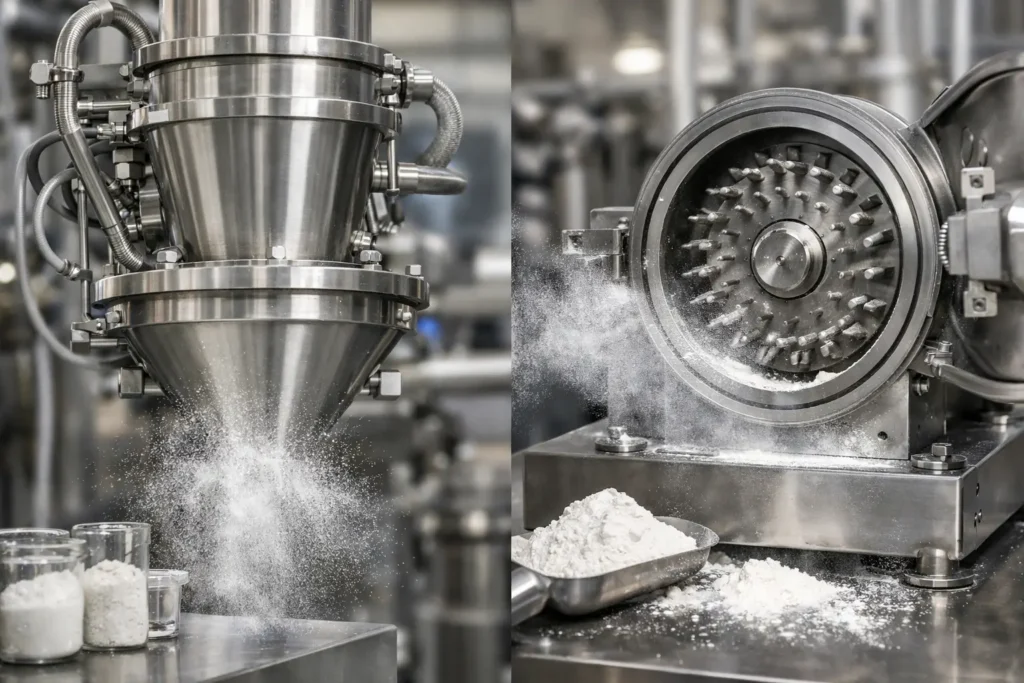
A jet mill versus pin mill decision is not simply a choice between two ways to make powder finer. It determines how a material experiences impact, heat, air flow, wear, classification, and containment throughout production. For manufacturers working with high-value ingredients, tight specifications, or difficult material behavior, the right selection can improve product consistency while preventing a costly mismatch between mill capability and process requirements.
Both technologies use particle-to-particle or particle-to-surface impact to reduce size, but their operating principles are fundamentally different. A pin mill relies on high-speed mechanical impact from intermeshing pins. A jet mill uses compressed gas to accelerate particles into one another at very high velocity, often within an integrated air classification environment. Those differences affect achievable particle size, throughput, energy use, maintenance planning, and suitability for sensitive products.
Jet Mill Versus Pin Mill: The Core Difference
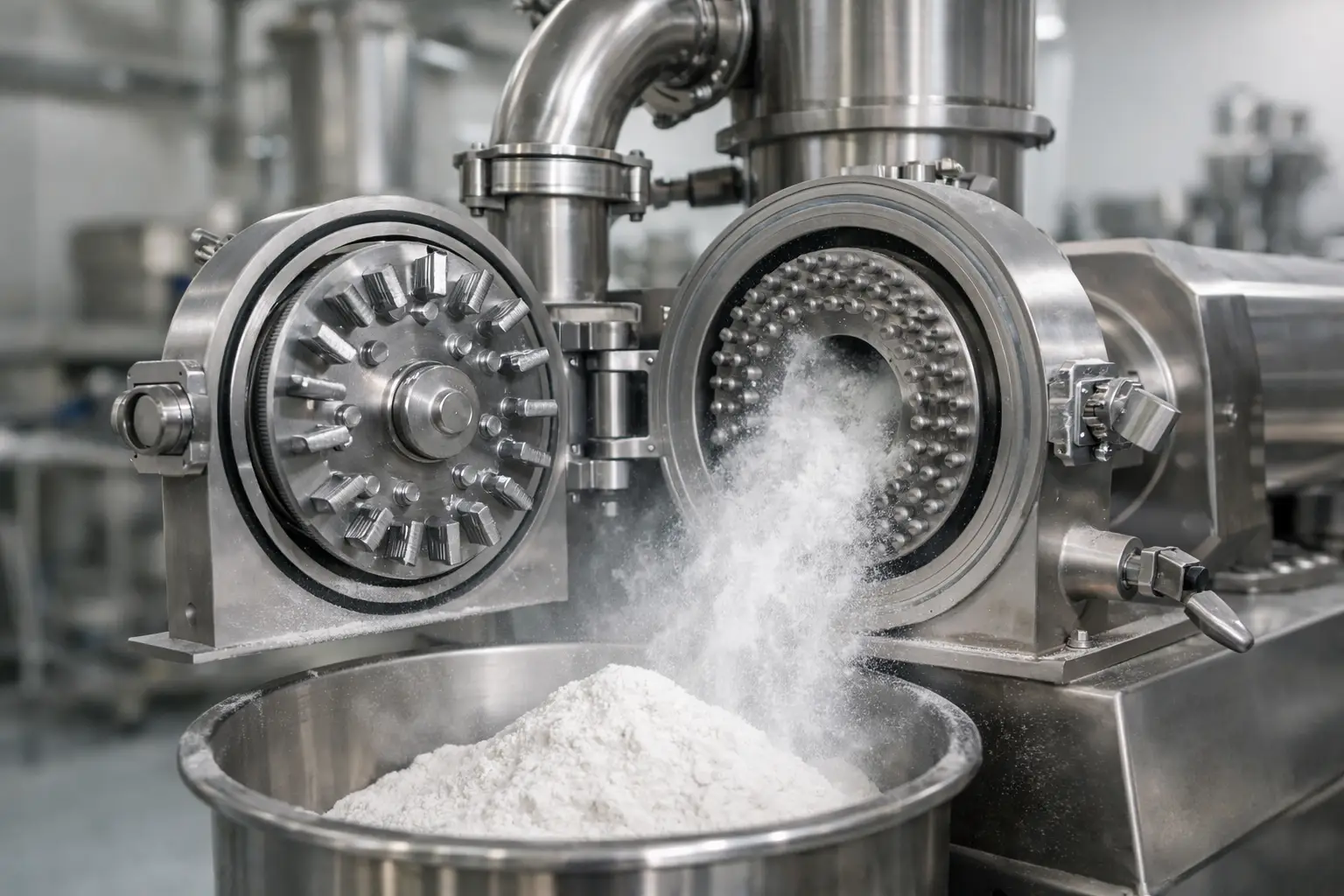
A pin mill typically feeds material into a grinding chamber containing one or two rotors fitted with pins. As the rotor or rotors turn, particles collide with the pins, other particles, and the chamber surface. Screen selection, rotor speed, feed rate, and air movement influence the resulting particle size distribution. This direct mechanical approach is efficient for many dry materials and can provide a practical balance of fine grinding capacity and production rate.
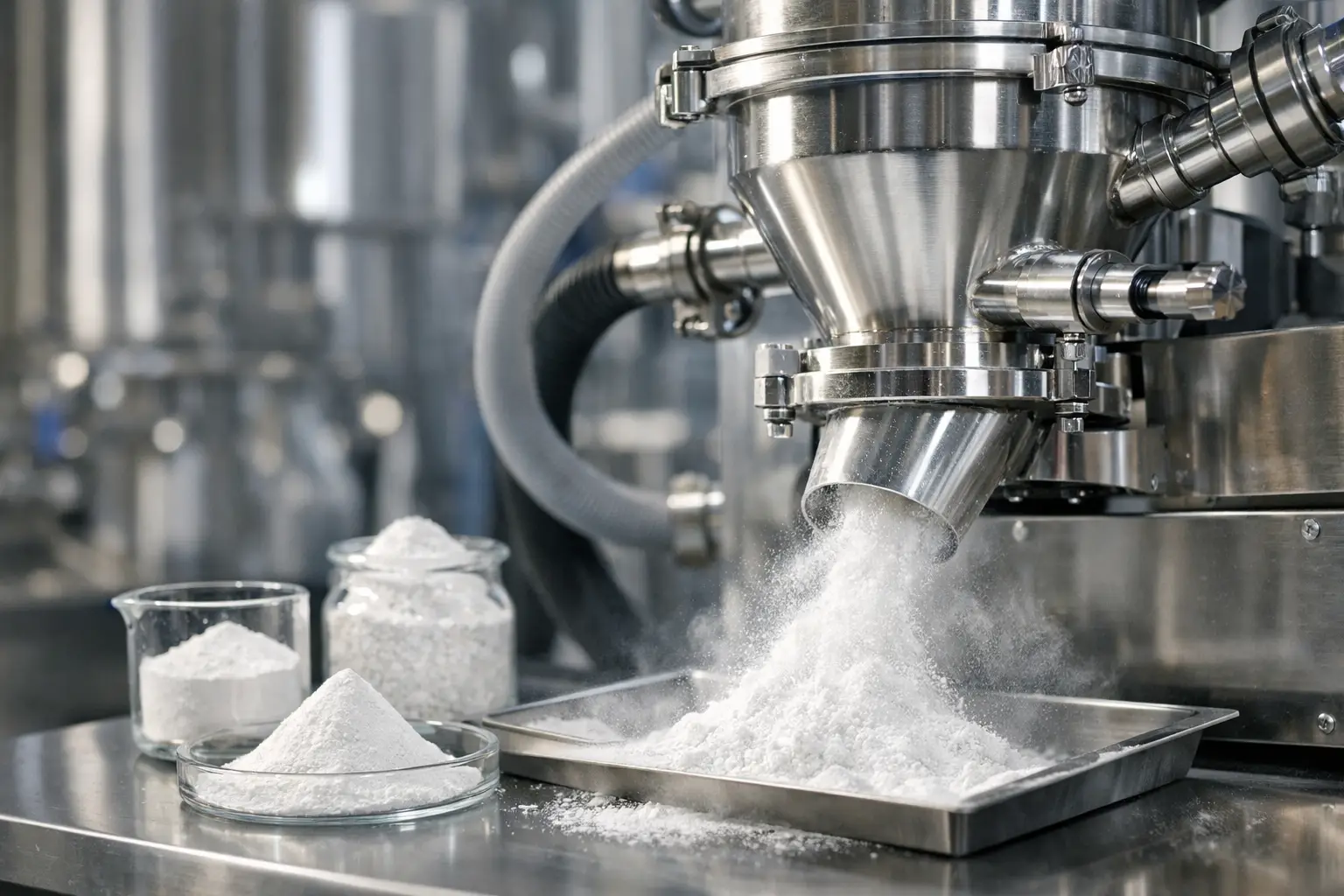
A jet mill has no internal mechanical grinding elements in the milling zone. Compressed air, nitrogen, or another process gas expands through nozzles and creates high-velocity particle streams. The particles collide repeatedly until they are small enough to leave the grinding chamber, commonly through an internal classifier that rejects oversize material for further milling.
That distinction matters in operation. Pin mills generate size reduction through contact with rotating components. Jet mills achieve it primarily through particle-on-particle impact. As a result, jet milling is often selected where extremely fine particle size, minimal metal contact, or low process heat is more important than maximizing pounds per hour.
Particle Size and Distribution Control
Jet mills are commonly used when a product specification requires micron-scale particles and a narrow top size. Their integrated air classification action provides a useful degree of control because particles generally exit only after reaching the target aerodynamic size. Adjusting classifier speed, grinding pressure, feed rate, and airflow allows process teams to tune the cut point and manage the final distribution.
This does not mean every fine-powder application requires a jet mill. A pin mill can produce fine powders effectively, especially when the target is in a moderate fine range rather than an ultrafine range. With the correct rotor configuration and process conditions, pin milling may achieve the specification with lower system complexity and a more favorable production rate.
The key question is not whether either mill can reduce the material. It is whether the mill can repeatedly deliver the required distribution at commercial scale. A product may meet an average particle-size target while still carrying excessive oversize particles, too many fines, or unacceptable batch variation. For pharmaceutical excipients, battery materials, specialty chemicals, and performance additives, distribution shape can be as consequential as the median particle size.
When finer is not automatically better
Over-milling can create problems that are easy to overlook during early trials. Excessive fines may reduce flowability, increase dusting, complicate downstream blending, or alter dissolution and dispersion behavior. In food and nutraceutical operations, very fine powder can also change mouthfeel, bulk density, and packaging performance.
A jet mill provides the capability to pursue very fine cuts, but the process should be designed around the functional target rather than the smallest number achievable in a lab. Pin milling may be the better production choice when the required particle size is attainable without the added compressed-gas demand of a jet system.
Heat-Sensitive and High-Value Materials
Heat generation is one of the most practical distinctions in a jet mill versus pin mill evaluation. Pin mills transfer mechanical energy through high-speed rotating components. Depending on the material, feed rate, moisture level, residence time, and rotor speed, that energy can raise product temperature. This may be manageable for stable minerals and many chemical powders, but it can become limiting for heat-sensitive materials.
A jet mill can offer a cooler grinding environment because gas expansion produces a cooling effect. This is particularly valuable for products that soften, melt, degrade, oxidize, lose volatile compounds, or become sticky as temperature rises. Thermally sensitive polymers, waxy materials, certain nutraceuticals, pigments, and pharmaceutical actives may benefit from this operating characteristic.
Cooling alone is not a complete process strategy. Material temperature still depends on feed conditions, gas pressure, system configuration, collection equipment, and production duration. A material that is highly elastic, tacky, or prone to agglomeration may require controlled feed conditioning, chilled gas, cryogenic assistance, or a different milling approach entirely. Process development should confirm product temperature at steady-state conditions, not only during a short test run.
Throughput, Energy, and Production Economics
Pin mills often have an advantage where production economics are driven by high throughput at a moderate target size. They use mechanical power rather than large volumes of compressed gas, and their relatively straightforward design can make them well suited to continuous industrial processing. For many food ingredients, chemicals, minerals, and bulk powders, a pin mill can provide efficient results when the material is friable and the final specification is not ultrafine.
Jet mills are generally more energy-intensive because compressed air or nitrogen requires significant upstream energy. Their throughput can also be lower than a mechanically driven mill for the same material, especially as the target particle size becomes finer. However, evaluating energy per pound without considering yield, quality losses, and downstream performance can lead to the wrong conclusion.
If a jet mill eliminates a secondary classification step, improves active ingredient performance, reduces contamination risk, or prevents rejected batches, its total operating value may justify the utility cost. Conversely, using a jet mill for a specification that a pin mill can meet consistently may add unnecessary capital and operating expense. The correct comparison is based on total process cost, not only mill horsepower or compressed-air consumption.
Wear, Contamination, and Cleanability
For products with strict purity requirements, internal wear is a primary design consideration. Pin mills contain rotating pins and other mechanical surfaces exposed to abrasive feed. Over time, these components can wear, particularly when processing hard minerals, ceramics, metal powders, or other abrasive materials. Wear-resistant materials and engineered component selection can extend service life, but maintenance planning remains essential.
Jet mills reduce direct contact between product and mechanical grinding elements. That can lower the risk of metallic contamination in applications requiring high purity. The chamber, nozzles, classifier, and product-contact surfaces still require appropriate material selection, particularly for abrasive, corrosive, or reactive powders. Ceramic liners, specialized alloys, and polished sanitary surfaces may be appropriate depending on the application.
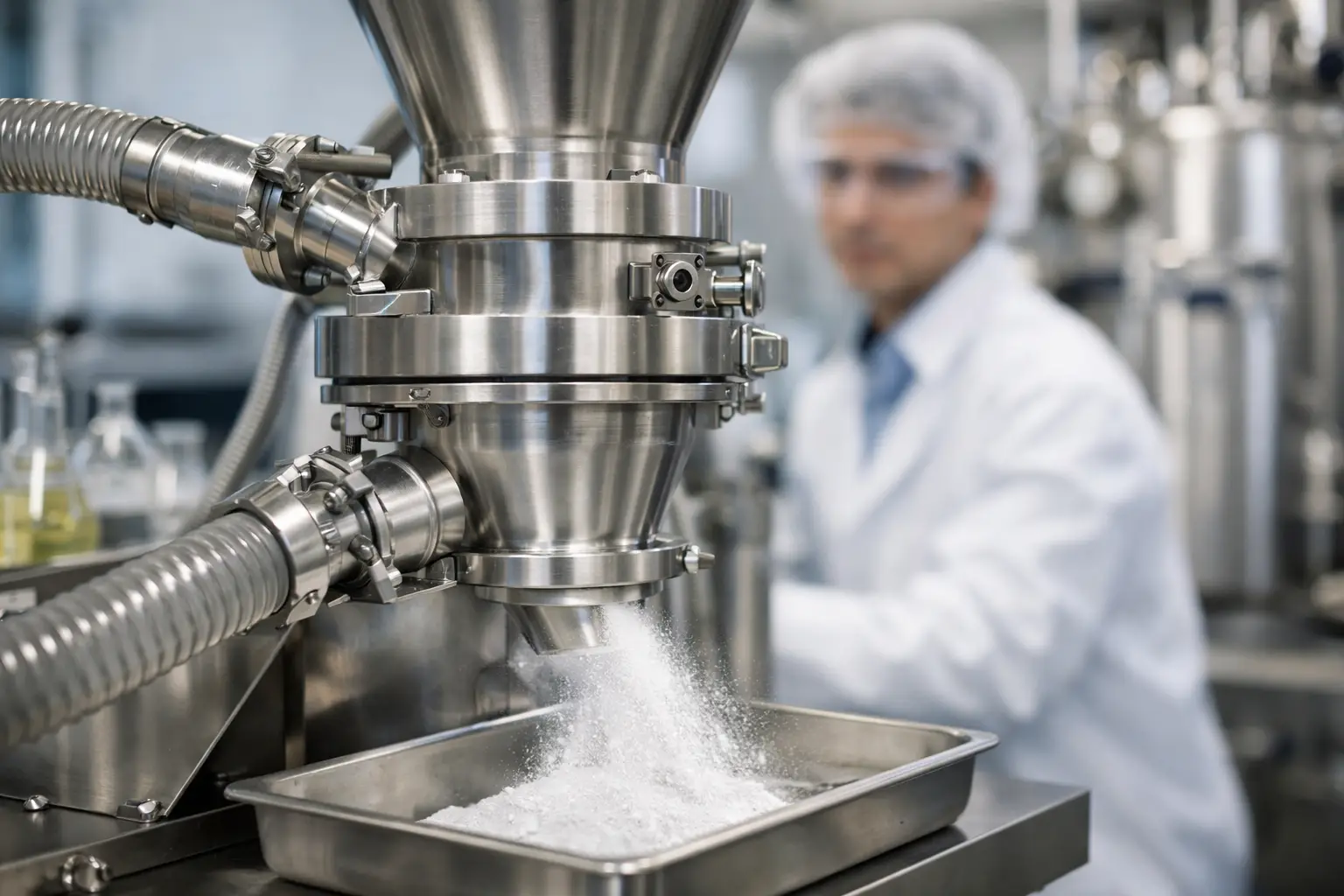
Cleanability also depends on the complete system, not just the mill. Feed equipment, air handling, dust collection, discharge valves, and transfer lines can all retain product. Manufacturers processing allergen-sensitive foods, pharmaceutical products, or frequent product changes should evaluate access, clean-in-place requirements, gasket design, dead zones, and cleaning validation needs early in equipment selection.
Material Behavior Can Decide the Outcome
The material itself often makes the decision clearer than a generic equipment comparison. Pin mills are commonly effective for brittle, crystalline, friable, and free-flowing materials. They can also handle a broad range of feed sizes with the right upstream conditioning and mill configuration.
Jet mills perform especially well for dry materials that need very fine size reduction and can be conveyed by the process gas. They are less suitable when a material is wet, highly cohesive, or difficult to fluidize without special system design. Sticky powders can build up in either technology, although the mechanism and solution differ. Moisture control, feed metering, air classification, temperature management, and surface finish all influence whether stable continuous operation is possible.
Before specifying equipment, process teams should characterize hardness, friability, moisture, oil content, thermal sensitivity, abrasiveness, bulk density, flow behavior, desired particle distribution, and allowable contamination. A representative milling trial is often the fastest way to expose issues that material data sheets do not reveal, such as excessive fines, poor feeding, chamber buildup, or unacceptable temperature rise.
Selecting the Right Milling System
The best choice should begin with the product requirement and work backward through the process. A pin mill is frequently the practical option when the target size is moderately fine, throughput is a priority, the material is compatible with mechanical impact, and operating cost must remain controlled. A jet mill is often the stronger choice when ultrafine performance, narrow distribution, low heat exposure, and reduced mechanical-contact contamination are critical.
Selection should also account for the surrounding system. Feed control, classifier settings, dust collection, gas supply, explosion protection, containment, controls, and final packaging all affect real-world performance. DP Mills approaches these decisions as process-engineering questions, because a mill operating in isolation rarely determines whether a production line succeeds.
The most useful next step is to test representative material under conditions that reflect the intended plant operation. A well-planned trial can establish particle-size capability, temperature profile, throughput, yield, utility demand, and cleaning requirements before the equipment decision becomes a production constraint.