DP Pulverizer Americas Inc
One Mill Infinite Possibilities
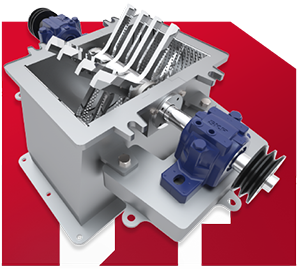
DP Pulverizer Jet Mills use high-velocity gas to grind powders to submicron sizes with no moving parts—ensuring precision, purity, and consistent results. Our Jet Mills lead the industry in engineering, innovation, performance, & quality, all while keeping a realistic price point that everyone can afford.
Jet mills are essential in industries requiring ultra-fine, contamination-free powders
Need help selecting the right solution? Contact us now
A jet mill is a type of industrial size-reduction equipment used to grind materials into very fine and ultra-fine particles, often in the micron and sub-micron range, without the use of mechanical grinding media.
Instead of relying on rotating blades, hammers, or balls, a jet mill uses high-velocity compressed gas—typically air, nitrogen, or steam—to accelerate particles to extreme speeds. The particles collide with one another inside a specially designed grinding chamber, fracturing along natural material weaknesses. This process is known as particle-to-particle impact milling.
Because there are no moving mechanical grinding parts in the milling zone, jet mills are exceptionally well-suited for materials that are:
Heat-sensitive
Abrasive
Contamination-sensitive
Chemically reactive
Required to meet tight particle size distributions
Jet mills are widely used in industries where precision particle size control, purity, and repeatability are critical, including pharmaceutical manufacturing, nutraceutical processing, specialty chemicals, food ingredients, pigments, advanced materials, and battery powders.
Traditional milling technologies—such as hammer mills, pin mills, or ball mills—use mechanical force generated by rotating components to break particles down. While effective for many applications, mechanical mills introduce friction, heat, wear surfaces, and potential contamination.
Jet milling works differently.
In a jet mill:
Grinding energy comes from compressed gas, not mechanical contact
Material breaks through high-speed collisions, not cutting or crushing
Heat generation is minimal due to gas expansion and short residence time
There is no grinding media to wear, shed particles, or require replacement
This makes jet mills particularly effective for applications where mechanical stress, temperature rise, or metal contamination would compromise product quality.
Jet mills are commonly selected when final particle size requirements fall between:
~1 micron to 20 microns for ultra-fine applications
Up to ~50 microns for controlled fine grinding
When integrated with an internal air classifier, a jet mill can deliver a narrow particle size distribution, ensuring consistent product performance batch after batch.
Manufacturers turn to jet milling when they need:
Ultra-fine particle sizes without excessive fines
Excellent temperature control for heat-sensitive materials
High purity with minimal risk of cross-contamination
Repeatable, scalable results from R&D through production
Inert gas operation for oxygen-sensitive or explosive materials
Because jet mills rely on physics rather than mechanical force, they are often the preferred solution for high-value powders where product integrity matters more than raw throughput alone.
Jet mills are used to process a wide range of materials, including:
Active pharmaceutical ingredients (APIs)
Nutraceutical and botanical powders
Sugar, starches, and specialty food ingredients
Pigments, dyes, and colorants
Fine chemicals and catalysts
Ceramic and mineral powders
Battery and advanced energy materials
The versatility of jet milling makes it a foundational technology in modern powder processing.
In industrial applications, a jet mill is rarely a standalone machine. It is typically integrated into a complete milling system, which may include:
Precision feeding systems
High-efficiency air handling
Internal or external classification
Dust collection and containment
Explosion protection or inert gas operation
PLC-based control systems
When engineered as a complete system, jet mills deliver exceptional control, safety, and consistency across demanding production environments.
A jet mill operates by using high-velocity compressed gas to accelerate particles inside a grinding chamber, where they collide with one another at extreme speeds. These collisions cause the particles to fracture into progressively smaller sizes without the need for mechanical grinding components or media.
The jet milling process relies on fluid dynamics and particle physics, rather than mechanical force, to achieve fine and ultra-fine size reduction.
Material is introduced into the jet mill through a controlled feeding system, ensuring a consistent and metered flow into the grinding zone. Stable feeding is critical, as jet milling performance depends on maintaining the correct particle concentration within the chamber.
Depending on the application, the feed system may include:
Screw feeders
Rotary valves
Loss-in-weight feeders
Vacuum or pneumatic conveying
Once inside the chamber, particles are immediately exposed to high-energy gas streams.
Compressed gas—typically air, nitrogen, or steam—is injected through specially designed nozzles positioned around the milling chamber. These nozzles accelerate the gas to supersonic velocities, often approaching or exceeding the speed of sound.
As particles enter these gas streams, they are rapidly accelerated and suspended in a turbulent flow field. At this point, particles are no longer resting against surfaces; they are fully entrained in the gas stream.
This is a key distinction from mechanical mills: the particles are moving freely, not being forced against grinding elements.
Size reduction occurs when accelerated particles collide with one another at high velocity. These particle-to-particle impacts generate intense localized stress, causing particles to fracture along natural weaknesses in their structure.
Because the impacts are:
Short in duration
Distributed throughout the chamber
Free from metal-to-particle contact
The process produces clean, precise size reduction with minimal contamination and limited heat buildup.
As particles become smaller, their mass decreases, making them easier to carry with the gas stream and harder to fracture further—an effect that naturally limits over-grinding.
Most industrial jet mills incorporate an internal air classifier or size-selective discharge mechanism. This classifier continuously separates particles based on aerodynamic behavior rather than mechanical screening.
Fine particles are carried upward and exit the mill with the gas stream
Coarser particles remain in the milling chamber for further size reduction
This continuous classification loop allows the jet mill to produce a narrow particle size distribution without the need for external sieving or multiple passes.
By adjusting variables such as gas pressure, feed rate, and classifier speed, operators can fine-tune the final particle size with high precision.
Once particles meet the target size, they exit the milling chamber and are conveyed to downstream separation equipment, which may include:
Cyclones
Bag filters
Cartridge dust collectors
The gas is then cleaned and either exhausted or recirculated, depending on the system design and process requirements.
Despite the high energy involved, jet milling is well known for excellent temperature control. This is due to several factors:
Gas expansion during acceleration provides a cooling effect
Short particle residence time limits heat transfer
Absence of mechanical friction reduces heat generation
As a result, jet mills are particularly effective for heat-sensitive materials such as pharmaceuticals, nutraceuticals, sugars, and specialty chemicals.
Because jet mills have:
No grinding media
No rotating cutting elements in the milling zone
Minimal internal wear surfaces
They offer very low risk of contamination, making them ideal for high-purity and regulated applications. When operated with inert gases, jet mills can also safely process oxygen-sensitive or explosive materials.
Jet mills are inherently well-suited for continuous operation, making them easy to scale from laboratory and pilot systems to full production lines. When engineered as part of an integrated system, jet milling delivers consistent results across batch sizes and production rates.
A jet mill is a precision-engineered system made up of several key components, each playing a critical role in particle size reduction, control, and product consistency. While configurations vary by application, all industrial jet mills share the same fundamental building blocks.
Understanding these components helps manufacturers evaluate performance, scalability, and suitability for specific materials.
The grinding chamber is the heart of the jet mill. This is where particles are accelerated, collide with one another, and fracture into finer sizes.
The chamber is typically designed with:
Smooth internal geometry to promote uniform flow
Strategic nozzle placement to maximize particle collision energy
Materials of construction selected for wear resistance and purity
Because there are no mechanical grinding elements inside the chamber, wear is minimized and contamination risk is significantly reduced.
Jet mills use multiple high-velocity gas nozzles positioned around the grinding chamber. These nozzles introduce compressed gas—such as air, nitrogen, or steam—at extremely high speeds.
The nozzles are responsible for:
Accelerating particles to supersonic velocities
Creating the turbulent flow field needed for particle-to-particle impact
Controlling grinding intensity through gas pressure and flow rate
Nozzle design and placement are critical to milling efficiency and final particle size.
The compressed gas system provides the energy that drives the entire milling process. Depending on the application, this system may include:
Air compressors
Nitrogen generation or bulk nitrogen supply
Steam supply (for steam jet mills)
Pressure regulation and safety controls
The choice of gas impacts not only grinding performance, but also temperature control, oxidation risk, and safety for sensitive or combustible materials.
Most industrial jet mills incorporate an internal air classifier, which continuously separates particles based on aerodynamic behavior rather than mechanical screening.
The classifier:
Allows fine particles to exit the mill
Retains oversized particles for further grinding
Produces a narrow and consistent particle size distribution
Classifier speed and geometry can be adjusted to precisely control final product size without stopping the process.
A jet mill requires a controlled, consistent feed system to maintain stable operation and predictable results.
Common feeding options include:
Screw feeders
Rotary valves
Loss-in-weight feeders
Vacuum or pneumatic conveying systems
Proper feed control ensures optimal particle concentration within the grinding chamber and prevents fluctuations in particle size distribution.
After particles reach the target size, they exit the jet mill with the gas stream and enter the product collection system.
This system typically includes:
Cyclones for primary separation
Bag filters or cartridge filters for fine dust capture
Discharge valves or containers for product recovery
Efficient product collection is essential for yield, cleanliness, and compliance with environmental and safety standards.
Modern jet mills are equipped with PLC-based control systems that monitor and regulate key operating parameters such as:
Gas pressure and flow
Feed rate
Classifier speed
Temperature and differential pressure
Advanced controls improve repeatability, simplify operation, and enable integration into automated production environments.
Industrial jet mills are engineered with robust housings and safety systems, which may include:
Pressure-rated construction
Explosion venting or suppression
Inert gas operation
Sealed designs for containment and GMP compliance
These features are especially important in pharmaceutical, chemical, and advanced material applications.
While each component plays a specific role, jet mills perform best when engineered as a fully integrated system. Proper coordination between feeding, grinding, classification, and collection ensures consistent performance, scalability, and long-term reliability.
The performance of a jet mill is not defined by any single component, but by how well the system is engineered as a whole. Gas dynamics, internal geometry, materials of construction, and control strategy all influence final particle size, efficiency, and product quality.
Jet mills are selected for applications where precision, purity, and control matter more than brute force. Their unique operating principle delivers several advantages over conventional mechanical milling technologies, particularly in high-value and regulated industries.
One of the most significant advantages of jet milling is its ability to produce very fine and ultra-fine particle sizes without the use of mechanical grinding media.
Because size reduction occurs through particle-to-particle collisions, there are:
No balls, pins, or hammers to introduce wear
No grinding media to shed contaminants
No frequent media replacement or maintenance
This makes jet mills ideal for applications where product purity and consistency are critical.
Jet mills are exceptionally well-suited for heat-sensitive materials. Despite the high energy involved, the milling process generates minimal thermal stress due to:
Cooling effects from rapid gas expansion
Very short particle residence time
Absence of mechanical friction
As a result, jet milling preserves flavor, potency, color, and chemical stability in sensitive materials such as pharmaceuticals, nutraceuticals, sugars, and specialty chemicals.
Jet mills equipped with internal classification systems deliver a tight and highly repeatable particle size distribution.
Advantages include:
Continuous separation of fines and coarse particles
Precise control over top-cut size
Consistent results from batch to batch
This level of control is essential for applications where particle size directly impacts bioavailability, reactivity, flowability, or final product performance.
With no mechanical grinding components in the milling zone, jet mills offer exceptionally low contamination risk.
This is particularly important in:
Pharmaceutical and GMP environments
Food and nutraceutical production
High-purity chemical processing
Advanced materials and battery applications
When combined with sanitary or sealed system designs, jet mills support stringent cleanliness and regulatory requirements.
Jet mills are well-suited for processing abrasive and hard materials because there is little direct contact between the product and internal surfaces.
This results in:
Reduced wear compared to mechanical mills
Longer service life of critical components
Stable performance over extended operating periods
For difficult materials, this translates into lower maintenance costs and more predictable operation.
Jet mills can operate using inert gases such as nitrogen, allowing safe processing of materials that are:
Oxidation-sensitive
Hygroscopic
Flammable or explosive
Inert gas operation also supports compliance with safety standards in industries handling fine powders with explosion risks.
Jet mills are naturally suited for continuous processing, making them easy to scale from laboratory and pilot systems to full-scale production.
Key benefits include:
Predictable scale-up behavior
Consistent particle size across production volumes
Integration into automated manufacturing lines
This scalability is especially valuable in pharmaceutical development and specialty materials manufacturing.
Because jet mills have:
No rotating cutting elements in the milling zone
No grinding media
Fewer wear surfaces
They typically require less maintenance than mechanical milling systems. This reduces downtime and simplifies long-term operation.
Jet mills are used across a wide range of industries, including:
Pharmaceuticals and APIs
Nutraceuticals and botanicals
Food ingredients and sugars
Pigments and coatings
Specialty chemicals
Battery and advanced energy materials
Their ability to handle diverse materials while maintaining tight control makes jet milling a foundational technology in modern powder processing.
Jet mills are particularly advantageous when:
Ultra-fine particle sizes are required
Heat or oxidation must be minimized
Product purity is critical
Narrow particle size distribution is essential
Mechanical milling introduces unacceptable wear or contamination
In these scenarios, jet milling often delivers performance that conventional mills simply cannot match.
While jet mills offer exceptional performance for many fine grinding applications, they are not the optimal solution for every material or processing requirement. Understanding the limitations of jet milling is essential when selecting the right size-reduction technology.
Jet mills rely on compressed gas to generate grinding energy, which can result in higher energy consumption than mechanical milling technologies for certain applications.
Key considerations include:
Energy demand increases as finer particle sizes are required
Compressed air or inert gas generation can be energy intensive
Operating costs may be higher for coarse grinding applications
For applications where ultra-fine particle size is not required, mechanical mills may offer lower operating costs.
Jet mills are optimized for fine and ultra-fine grinding, not high-throughput coarse size reduction.
As a result:
Throughput is generally lower than hammer or pin mills at larger particle sizes
Jet mills may not be economical for applications requiring only moderate size reduction
Pre-milling steps may be required for larger feed sizes
In many processes, jet mills are used as a final finishing step rather than a primary size-reduction tool.
Jet mills are precision-engineered systems with advanced gas handling, classification, and control components. This typically results in a higher upfront capital cost compared to simpler mechanical mills.
Costs may be influenced by:
Compressed gas infrastructure
Inert gas or explosion protection requirements
High-precision internal components
Integrated control systems
For applications that do not require tight particle size control or high purity, simpler milling technologies may be more cost-effective.
Jet mills perform best when supplied with uniform, pre-conditioned feed material.
Limitations include:
Large or inconsistent feed sizes reduce milling efficiency
Agglomerated or irregular feed may require pre-processing
Stable feed control is essential for consistent results
In many cases, upstream milling or conditioning equipment is required to prepare material for jet milling.
Jet milling relies on brittle fracture mechanisms. Materials that are highly elastic, fibrous, or rubber-like do not fracture efficiently under particle-to-particle impact.
Examples include:
Fibrous plant materials
Rubber-like polymers
Highly plastic or ductile substances
For these materials, cutting, shredding, or cryogenic milling may be more effective.
Compared to mechanical mills, jet milling systems involve greater system complexity, including:
Compressed gas supply and control
Air handling and filtration
Pressure-rated components
Safety systems for inert gas or explosive materials
This complexity requires careful engineering and proper operator training, particularly in regulated or hazardous environments.
For high-volume, low-value materials where precision is less critical, the performance advantages of a jet mill may not justify the added complexity and operating costs.
In these cases, mechanical milling technologies often provide a better balance of cost and throughput.
Jet mills may not be the ideal choice when:
Coarse grinding is sufficient
Energy efficiency is the primary concern
Feed material is highly elastic or fibrous
Capital and operating budgets are tightly constrained
Understanding these limitations ensures the jet mill is applied where it delivers the greatest value.
Jet mills excel when precision, purity, and control are required. However, the most effective milling solution often involves selecting the right technology for each processing stage, sometimes combining jet milling with other milling methods.
At DP Mills, milling is just one chapter of the story.
Real manufacturing challenges don’t begin or end at particle size. They live in how materials are fed, mixed, conditioned, and moved—reliably, repeatedly, and without contamination or waste.
That’s why DP Mills delivers integrated powder processing solutions, combining:
Precision milling
Engineered mixing
Intelligent bulk material handling
All designed to work as one coherent system, not a collection of disconnected machines.
Our mills are engineered to perform within a larger production ecosystem. Whether you’re reducing size, controlling top cut, or preserving heat-sensitive materials, DP Mills systems are designed with upstream and downstream integration in mind.
This means:
Consistent feed rates into the mill
Controlled discharge into mixers or classifiers
Reduced rework, fines, and yield loss
Scalable performance from R&D to full production
Milling becomes predictable. Operations become calmer. Engineers sleep better.
Particle size alone doesn’t make a product sellable. Homogeneity does.
That’s why DP Mills systems are frequently paired with PerMix industrial mixers, engineered for powders, pastes, and hybrid formulations across food, pharmaceutical, chemical, battery, and advanced material applications.
Integrated milling and mixing allows manufacturers to:
Mill and blend in a continuous or batch-controlled workflow
Achieve tighter formulation tolerances
Reduce material transfers and exposure to air or moisture
Design cleaner, safer, more automated plants
When milling and mixing are designed together, performance compounds.
Milling systems are only as good as the material feeding them.
DP Mills works alongside A.I.S. (Automated Ingredient Systems) to deliver fully automated bulk material handling—because manual feeding and inconsistent dosing have no place in modern production.
These systems include:
Loss-in-weight and gain-in-weight feeding
Automated batching and recipe control
Pneumatic and mechanical conveying
Dust containment and sanitary transfer
The result is a controlled, repeatable process from raw material intake to finished blend—without bottlenecks or operator guesswork.
Instead of coordinating multiple vendors, timelines, and control philosophies, DP Mills provides a single, unified solution for:
Milling + Mixing + Bulk Material Handling
This approach reduces:
Commissioning time
Integration risk
Control system conflicts
Long-term maintenance headaches
And it increases:
Process reliability
Product consistency
Line efficiency
ROI on capital equipment
From initial material testing to full turnkey systems, DP Mills doesn’t just ask “What micron size do you need?”
We ask “What does your process need to succeed?”
Because the future of manufacturing isn’t standalone machines.
It’s intelligent systems that work together—quietly, efficiently, and relentlessly.
That’s Milling, Mixing, & Bulk Material Handling—done right.
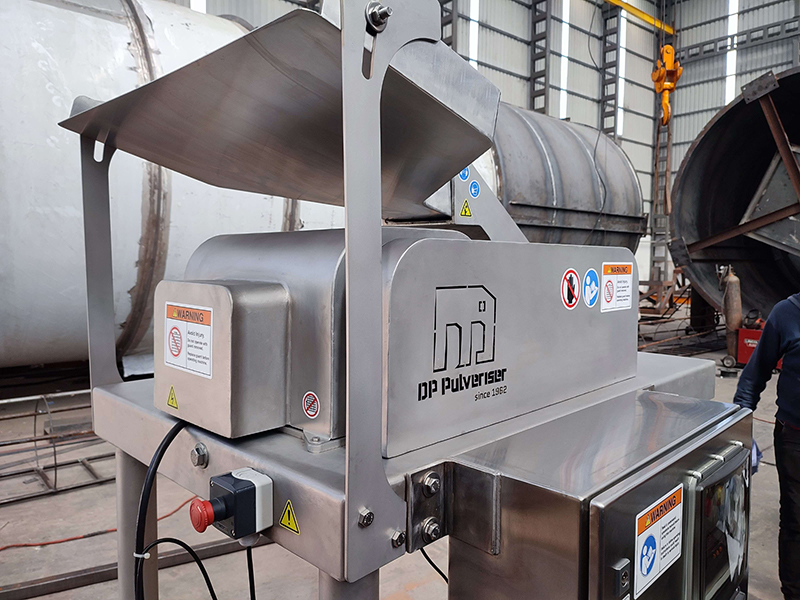
Selecting a jet mill is only half the decision. The other half—and often the more critical one—is choosing who designs, builds, and supports the system.
DP Pulverizer jet mills are engineered for manufacturers who need repeatable performance, deep process understanding, and long-term reliability, not just a machine on a purchase order.
DP Pulverizer brings decades of focused experience in particle size reduction and powder processing. Jet milling is not treated as a catalog item, but as a process-specific solution tailored to the material, target particle size, and downstream requirements.
Every system is engineered with a clear understanding of:
Material behavior under high-energy impact
Gas dynamics and classification principles
Scale-up from lab to pilot to production
Regulatory and safety considerations
This engineering-first approach ensures predictable results—not trial-and-error outcomes.
No two materials behave the same in a jet mill. DP Pulverizer designs jet milling systems around your specific application, not generic assumptions.
Customization may include:
Grinding chamber geometry
Nozzle configuration and gas selection
Internal classification strategy
Feed and discharge integration
Wear protection and material selection
The result is a jet mill that performs optimally for your product, not an average of everyone else’s.
DP Pulverizer delivers fully integrated jet milling systems, engineered to operate as a cohesive process rather than disconnected components.
Turnkey solutions may include:
Precision feeding and dosing systems
Air handling and dust collection
Cyclones and filtration
Inert gas or closed-loop operation
PLC/HMI automation and data logging
This system-level approach reduces commissioning time, improves reliability, and simplifies long-term operation.
DP Pulverizer jet mills are trusted across industries where particle size control, purity, and consistency directly impact product performance, including:
Pharmaceuticals and APIs
Nutraceuticals and botanicals
Food ingredients and sugars
Specialty chemicals
Pigments and coatings
Battery and advanced energy materials
These applications demand tight tolerances and repeatability—standards DP Pulverizer systems are designed to meet.
Jet milling often begins at the R&D or pilot scale and progresses to full production. DP Pulverizer engineers jet mills with scalability in mind, ensuring consistent particle size behavior as throughput increases.
Benefits include:
Predictable scale-up performance
Consistent process parameters across equipment sizes
Easier technology transfer from lab to production
This minimizes risk and accelerates time to market.
DP Pulverizer jet mills are built for industrial duty, with an emphasis on long-term reliability and maintainability.
Design priorities include:
Robust construction and pressure-rated components
Reduced wear surfaces and simplified maintenance
Accessible system layouts
Long service life with predictable operating costs
The goal is not just initial performance, but sustained performance over years of operation.
DP Pulverizer jet mills can be engineered to meet stringent safety and regulatory requirements, including:
Inert gas operation for oxygen-sensitive or explosive materials
Containment and sealed designs
Pressure and explosion protection
GMP-friendly configurations
This makes DP systems suitable for regulated and high-risk processing environments.
Perhaps the most important distinction is this: DP Pulverizer approaches every jet mill project as a collaborative engineering effort.
From material testing and system design to installation and long-term support, the focus is on delivering a solution that works reliably in real production conditions.
DP Pulverizer jet mills are ideal when:
Particle size precision is critical
Product purity cannot be compromised
Heat or oxidation must be controlled
The process must scale reliably
Long-term performance matters more than short-term savings
In these cases, choosing the right engineering partner is just as important as choosing the right milling technology.
Engineering solutions that fuel client success.


