What Is Particle Size Reduction?
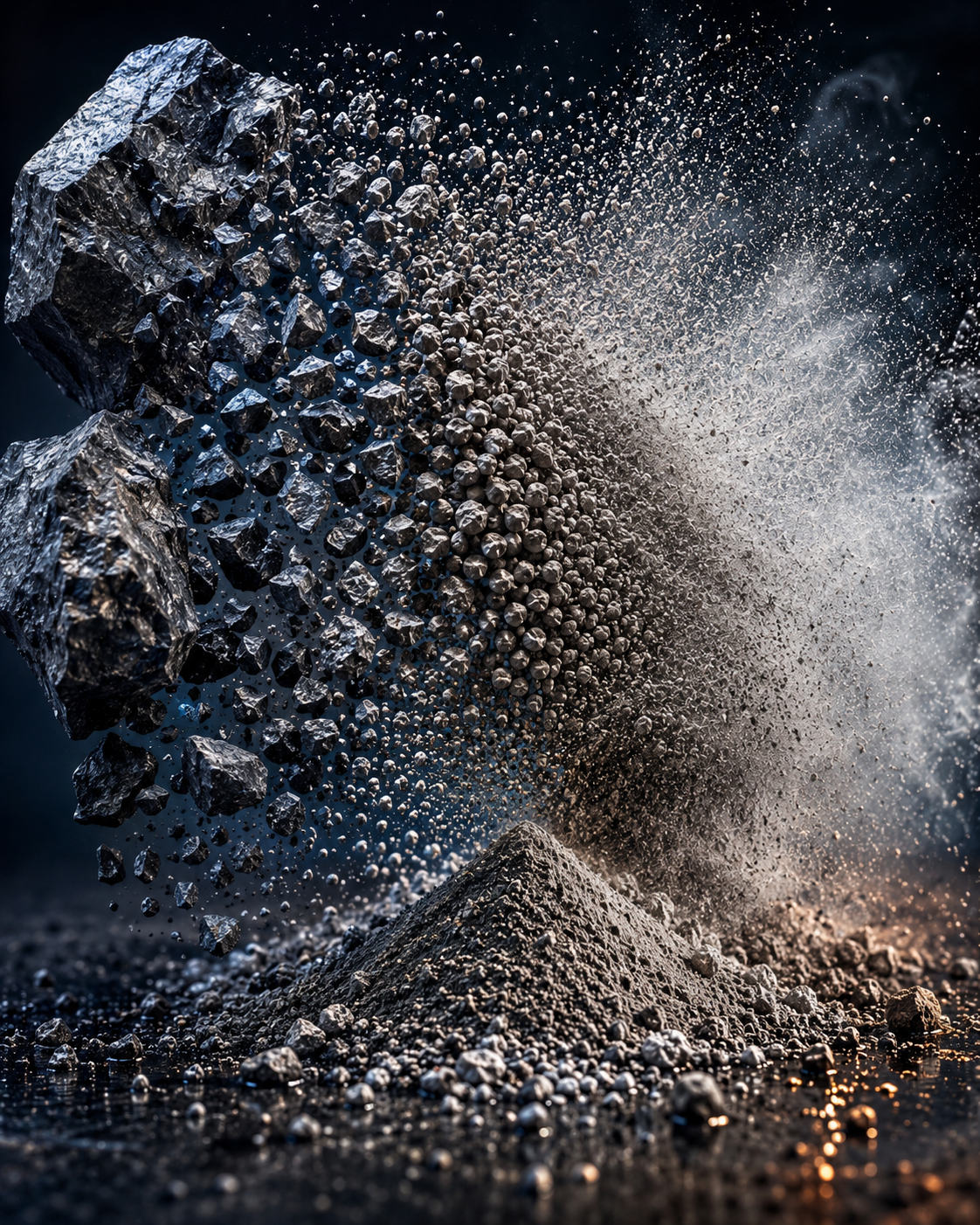
Particle size reduction is the process of breaking down solid materials into smaller particles using mechanical impact, attrition, compression, air classification, or fluid energy technologies.
The objective is not simply to make materials smaller. Effective particle size reduction creates powders with specific characteristics that improve manufacturing processes and end-product performance.
Particle size reduction is commonly used to:
- Increase surface area
- Improve dissolution rates
- Enhance bioavailability
- Improve powder flowability
- Increase blend uniformity
- Improve product texture
- Enhance chemical reactivity
- Improve coating performance
- Optimize downstream processing
- Reduce ingredient segregation
Virtually every powder processing industry relies on particle size reduction at some stage of production.
Why Particle Size Matters
The size and distribution of particles directly influence how materials behave during processing and how finished products perform in the marketplace.
Increased Surface Area
As particle size decreases, surface area increases significantly.
Benefits include:
- Faster dissolution
- Improved absorption
- Increased reaction rates
- Enhanced product functionality
- Better ingredient utilization
Improved Powder Flow
Particle size impacts how materials move through:
- Feeders
- Conveying systems
- Mixers
- Packaging equipment
- Filling machines
- Process vessels
Optimized particle size distributions can improve handling efficiency and reduce production interruptions.
Better Blend Uniformity
Consistent particle sizing helps create more homogeneous formulations by reducing segregation and improving ingredient distribution throughout the blend.
Enhanced Product Performance
Particle size can directly influence:
- Solubility
- Stability
- Appearance
- Texture
- Mouthfeel
- Suspension characteristics
- Functional performance
For many products, particle size is one of the most critical quality attributes.
Common Particle Size Reduction Goals
Different industries require different particle size specifications depending on the application.
| Industry/Application |
Typical Particle Size Range |
| Food Ingredients |
50–1,000 Microns |
| Protein Powders |
20–300 Microns |
| Nutraceuticals |
10–200 Microns |
| Pharmaceutical Ingredients |
1–100 Microns |
| Battery Materials |
5–50 Microns |
| Pigments & Coatings |
1–50 Microns |
| Industrial Minerals |
5–500 Microns |
| Specialty Chemicals |
1–100 Microns |
Selecting the proper milling technology depends on both the target particle size and the material’s physical properties.
Particle Size Reduction Equipment Technologies
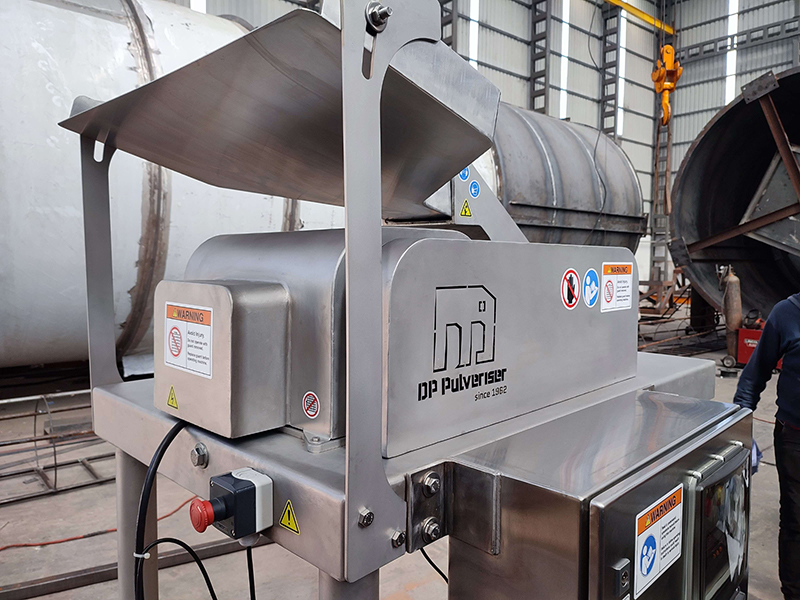
DP Mills USA offers a comprehensive portfolio of milling technologies capable of handling everything from coarse grinding to ultra-fine micronization.
Hammer mills are commonly used for high-capacity size reduction of relatively friable materials.
Applications include:
- Agricultural products
- Biomass
- Food ingredients
- Minerals
- Chemicals
- Animal feed ingredients
Benefits include:
- High throughput
- Cost-effective operation
- Rugged construction
- Simple maintenance
Universal mills offer exceptional flexibility by utilizing interchangeable grinding elements to accommodate a wide range of materials and particle size requirements.
Ideal for:
- Food products
- Nutraceuticals
- Industrial powders
- Chemicals
- Specialty ingredients
Pin mills generate fine particle size reduction through high-speed impact forces created between stationary and rotating pins.
Common applications include:
- Protein powders
- Sugars
- Starches
- Spices
- Nutraceutical ingredients
- Specialty chemicals
Benefits include:
- High efficiency
- Fine particle production
- Consistent particle size distribution
Turbo mills combine impact milling with controlled airflow to achieve fine particle reduction while minimizing temperature rise during processing.
Ideal for:
- Heat-sensitive ingredients
- Plant proteins
- Food ingredients
- Nutraceutical products
- Specialty powders
Air Classifier Mills integrate milling and particle classification into a single machine, allowing precise control over final particle size.
Advantages include:
- Narrow particle size distributions
- Reduced over-grinding
- Improved efficiency
- Consistent product quality
Applications include:
- Pharmaceuticals
- Battery materials
- Specialty chemicals
- Pigments
- Industrial minerals
Jet Mills utilize compressed air or inert gas to create high-velocity particle-to-particle collisions, producing ultra-fine powders without mechanical grinding media.
Benefits include:
- Micron and sub-micron particle sizes
- Minimal contamination
- Superior purity
- Exceptional particle size control
Common applications include:
- Active pharmaceutical ingredients (APIs)
- Lithium battery materials
- Advanced ceramics
- Electronic materials
- Specialty chemicals
Cryogenic milling uses liquid nitrogen to lower product temperatures before and during grinding.
Ideal for materials that are:
- Heat sensitive
- Elastic
- Waxy
- Difficult to grind at ambient temperatures
Applications include:
- Plastics
- Rubber
- Waxes
- Spices
- Specialty polymers
Industries Served by DP Mills USA
Particle size reduction is essential for:
- Active pharmaceutical ingredients (APIs)
- Dry powder inhalers
- Controlled-release formulations
- Tablet production
- Research and development
Precise particle size control can significantly improve dissolution rates and bioavailability.
Applications include:
- Sugar grinding
- Protein powders
- Beverage ingredients
- Functional food ingredients
- Starches
- Flavor systems
- Seasonings and spices
Controlled particle size helps improve texture, consistency, and product performance.
Particle size reduction supports:
- Botanical extracts
- Herbal ingredients
- Sports nutrition products
- Vitamins and minerals
- Functional supplements
Applications include:
- Pigments
- Resins
- Polymers
- Agricultural chemicals
- Specialty additives
- Catalysts
Particle engineering often directly impacts product functionality and manufacturing efficiency.
The rapidly expanding North American battery industry depends on precise particle size control for:
- Cathode materials
- Anode materials
- Conductive additives
- Lithium compounds
- Solid-state battery technologies
Particle consistency is critical for battery performance and manufacturing repeatability.
Commonly processed materials include:
- Calcium carbonate
- Talc
- Silica
- Kaolin
- Graphite
- Ceramic powders
- Specialty minerals
Factors That Influence Particle Size Reduction Performance
Successful milling begins with understanding the characteristics of the material being processed.
Material Hardness
Harder materials require greater grinding energy and often benefit from specialized milling technologies.
Moisture Content
Excess moisture can impact grinding efficiency, throughput, and final particle size distribution.
Abrasiveness
Highly abrasive products may require hardened wear components and specialized materials of construction.
Heat Sensitivity
Some materials require temperature-controlled or cryogenic processing to prevent degradation.
Particle Size Distribution Requirements
Many applications require both a target particle size and a tightly controlled distribution to ensure optimal performance.
Sanitary & GMP-Compliant Milling Systems
For pharmaceutical, food, and nutraceutical applications, DP Mills USA offers hygienic processing systems designed to meet strict industry requirements.
Available options include:
- 304 stainless steel construction
- 316L stainless steel construction
- GMP-compliant designs
- Polished product contact surfaces
- Washdown construction
- Easy-clean access
- CIP-ready configurations
- Validation support
These features help manufacturers improve product safety while simplifying cleaning and maintenance procedures.
Dust Collection & Explosion Protection
Many fine powders present combustible dust risks that require specialized engineering controls.
DP Mills USA can provide:
- NFPA-compliant system designs
- Explosion venting
- Explosion suppression
- Dust collection systems
- Nitrogen inerting systems
- Containment solutions
- Process safety integration
Safety is incorporated into every system we engineer.