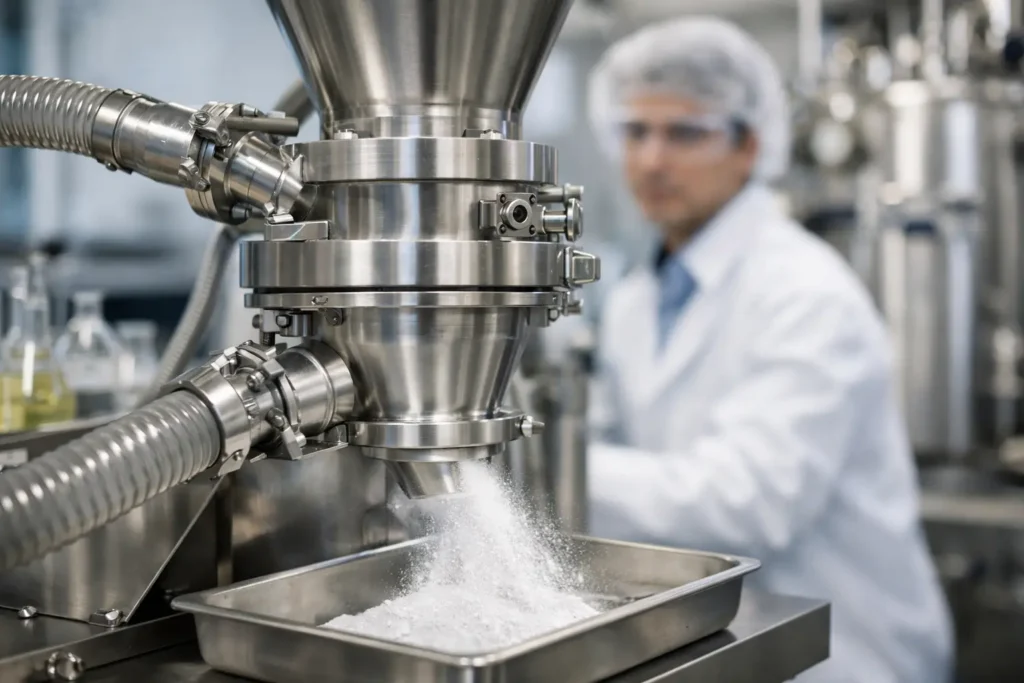
A material that mills cleanly in one process can smear, heat, degrade, or contaminate in another. That is exactly why jet mill applications matter in high-value manufacturing. When particle size control, low heat input, and product purity directly affect product performance, a jet mill is often the right answer – but only for the right material, target size, and production objective.
Where jet mill applications make sense
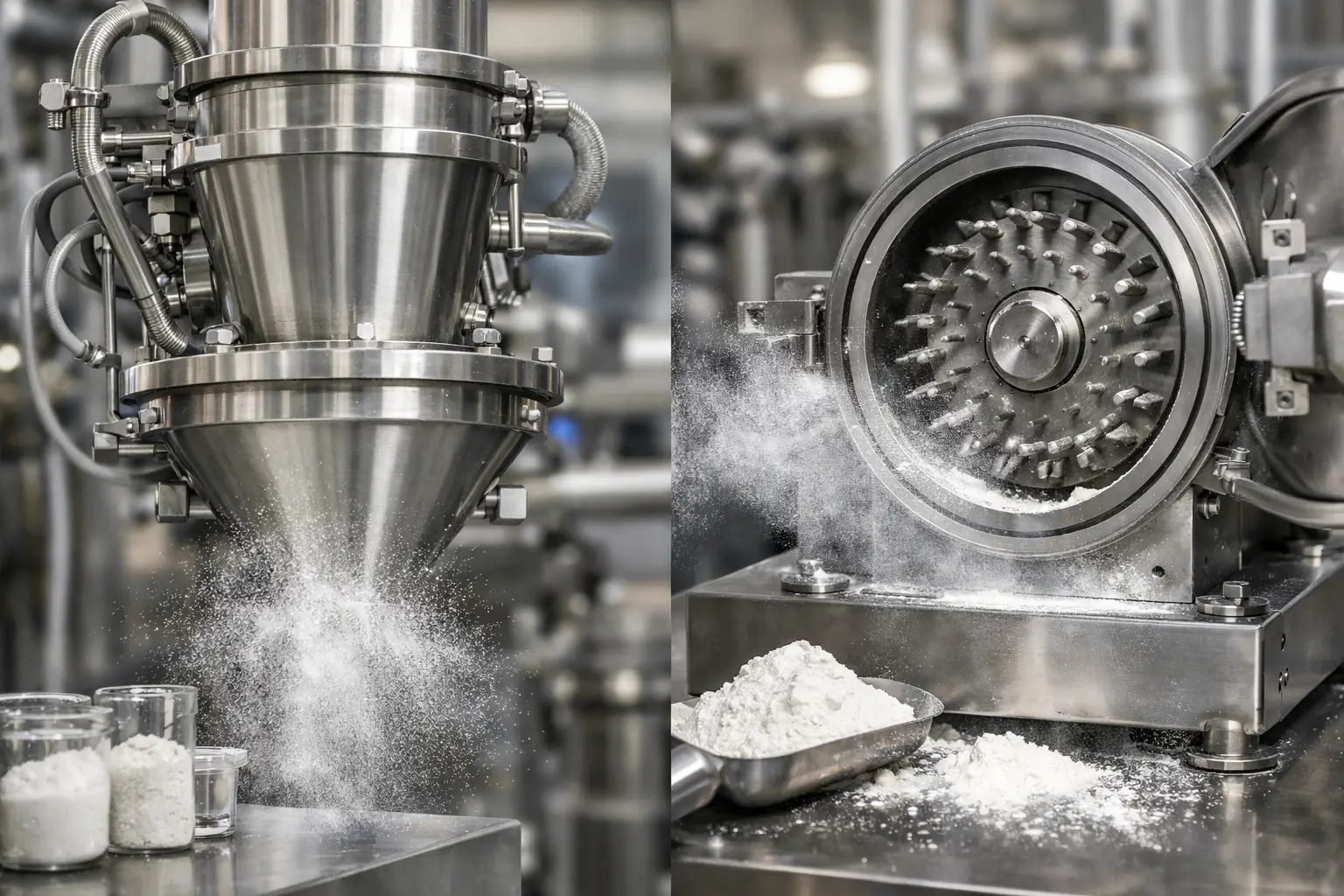
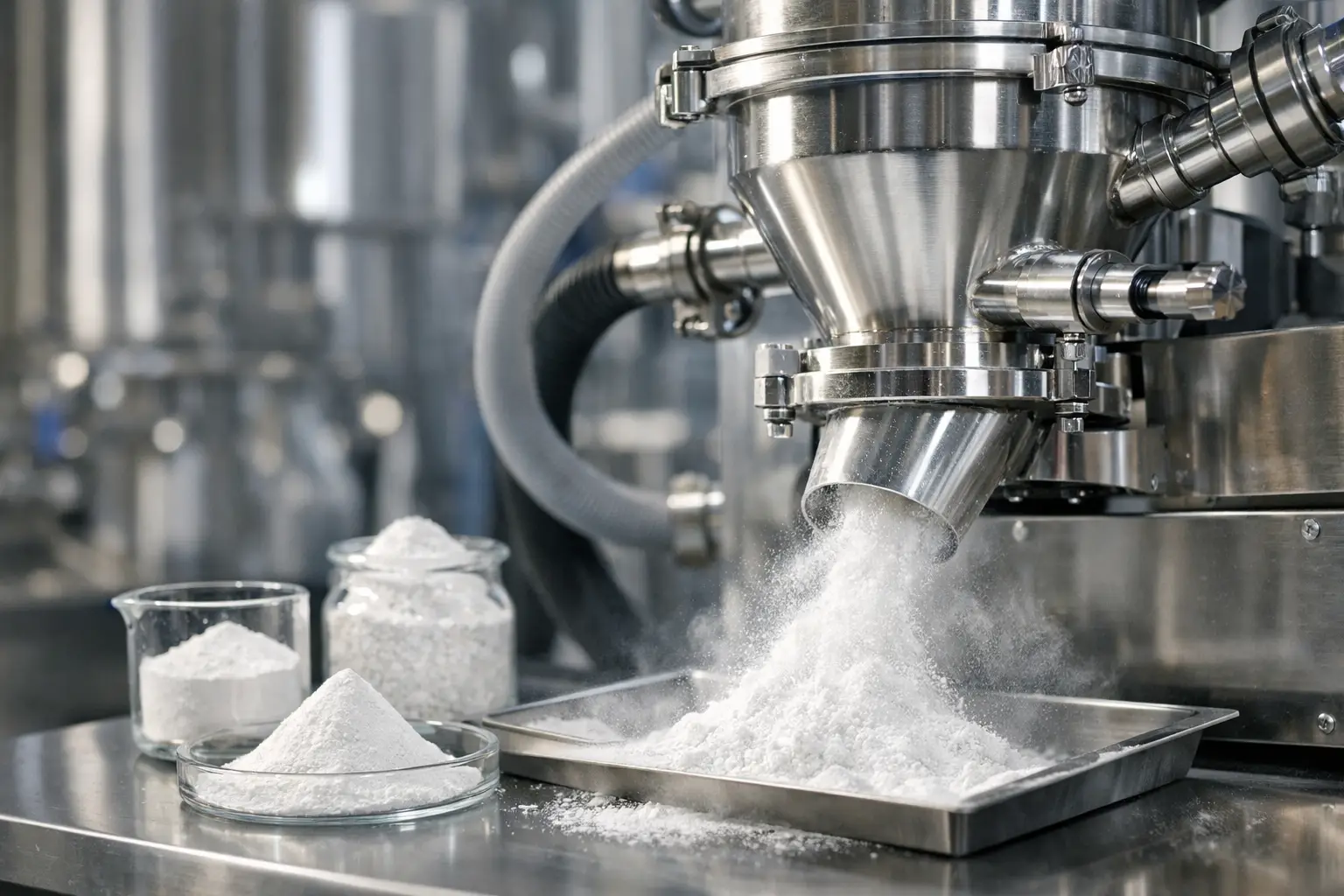
Jet mills use high-velocity compressed gas to create particle-to-particle impact inside the grinding chamber. Because there are no high-speed mechanical grinding surfaces in the milling zone, they are especially well suited for materials that require tight particle size distribution, minimal contamination, and careful thermal handling.
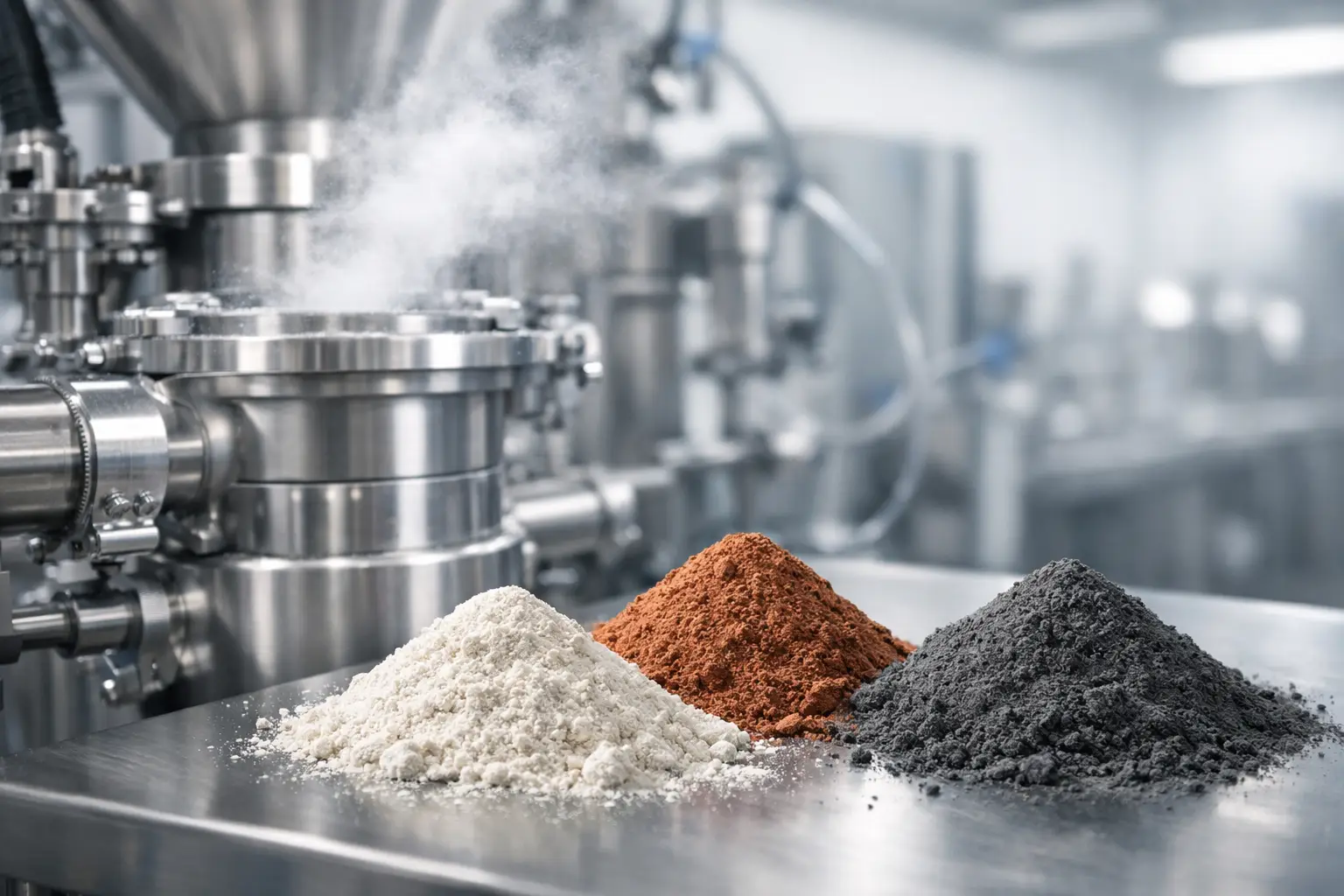
That combination makes jet milling valuable in industries where powder performance is tied to downstream results. In pharmaceuticals, a narrow particle size range can affect dissolution, bioavailability, and blend uniformity. In battery materials, particle consistency can influence packing density, conductivity, and process stability. In specialty chemicals and advanced materials, even small variations in particle size can change reaction rates, surface area, flow behavior, and final product quality.
The strongest fit for jet mills is not simply “fine grinding.” It is fine grinding under controlled conditions, where conventional impact or mechanical mills may introduce too much heat, too many oversized particles, or too much wear-based contamination.
Pharmaceutical and nutraceutical jet mill applications
Pharmaceutical processing is one of the most established areas for jet mill applications because the technology supports micronization with a high degree of control. Active pharmaceutical ingredients often require very fine particle sizes to achieve target dissolution profiles or delivery characteristics. At the same time, the process must protect sensitive compounds from excessive thermal exposure and support strict cleanliness standards.
For potent compounds, containment and contamination control are often as important as particle size itself. A properly engineered jet milling system can be integrated with upstream and downstream handling equipment to support cleaner processing and more consistent production. The result is not just a finer powder, but a more predictable process.
Nutraceutical applications can present similar challenges. Botanical extracts, specialty ingredients, and functional compounds may require fine size reduction for suspension stability, blend uniformity, or improved absorption. Here, the material’s behavior matters. Some ingredients are brittle and respond well to jet milling. Others may have fibrous or elastic properties that make a different milling approach more practical.
Chemical processing and specialty powders
In chemical manufacturing, jet mills are often selected when particle size affects reactivity, dispersion, coating performance, or product handling. Pigments, catalysts, agrochemicals, additives, and specialty intermediates can all benefit from micronization when the process needs to avoid high temperatures or preserve product purity.
For example, heat-sensitive chemicals may soften or degrade in mechanically intensive mills. Abrasive materials may also create wear concerns that shorten equipment life or introduce contamination from contact surfaces. Jet milling reduces those risks because grinding is driven primarily by particle collision in a gas stream rather than direct mechanical impact from moving metal components in the milling zone.
That said, jet milling is not automatically the lowest-cost choice for every chemical application. Compressed gas demand, system design, and required fineness all affect operating cost. If the target particle size is relatively coarse, or if the material is not sensitive to heat or contamination, another mill type may deliver better economics. The right choice depends on the process goal, not the popularity of the technology.
Food and ingredient processing
Food manufacturers often evaluate jet mills when dealing with high-value ingredients that require fine, uniform particle size without excessive heat generation. Spices, flavor components, functional powders, proteins, sweeteners, and specialty food additives may all benefit from a lower-temperature grinding approach, especially when aroma, color, or nutritional integrity must be protected.
In these applications, one of the main advantages is process cleanliness. Reduced metal-to-product contact in the grinding zone can support contamination control, which is critical for food safety and product consistency. Fine particle control can also improve mouthfeel, dispersion, and blending performance in finished formulations.
Still, food materials can be unpredictable. Oily, sticky, or moisture-sensitive products may not behave well in a jet mill without careful conditioning or system design. Hygroscopic powders can agglomerate. Fat-rich ingredients can smear instead of fracture. That is why application testing matters. A material that appears suitable on paper may require a different process route in production.
Battery materials and advanced material processing
Battery and advanced material production has increased the importance of jet mill applications in recent years. Cathode materials, anode materials, conductive additives, ceramics, electronic powders, and functional minerals often require very tight particle specifications because powder characteristics directly affect product performance.
In these sectors, contamination control is a major consideration. Small amounts of unwanted metal can create quality issues in sensitive formulations. Jet milling is attractive because it supports fine grinding with reduced wear exposure compared with many mechanical milling methods. It also allows manufacturers to target demanding particle distributions needed for high-performance materials.
Advanced materials also tend to come with difficult processing behavior. Some are hard and abrasive. Others are brittle but highly sensitive to surface modification or thermal effects. Some require inert gas operation because of oxidation or safety concerns. These factors push the discussion beyond basic equipment selection and into full system engineering, including feed handling, classification, dust collection, containment, and gas management.
Why jet mills are chosen over other mill types
The best reason to choose a jet mill is process fit. When manufacturers need finer particle size with lower heat input and tighter contamination control, jet milling offers distinct performance advantages. It is especially effective when the product value is high enough that improved particle size precision justifies the higher complexity of the system.
Compared with hammer mills, pin mills, or other impact mills, jet mills typically operate with less heat generation in the product zone and can achieve much finer particle sizes. Compared with some mechanical fine grinding technologies, they may also provide better purity for contamination-sensitive applications.
The trade-off is that jet mills are not universal solutions. They often require more utilities, more careful process control, and more application-specific engineering. Throughput can vary significantly depending on feed size, hardness, density, and target fineness. If a process is judged only by installed horsepower or nameplate capacity, the comparison can be misleading.
Key factors that define successful jet mill applications
Successful jet milling starts with the material itself. Hardness, brittleness, moisture content, bulk density, and thermal sensitivity all influence whether the material will fracture efficiently in a fluid energy process. Feed consistency matters too. Wide variation in upstream material properties often leads to unstable downstream milling performance.
Target particle size is equally important. The tighter the specification, the more critical the relationship becomes between grinding energy, internal classification, and feed rate. Pushing for an ultra-fine cut can improve product performance, but it can also reduce throughput and increase energy use. In practice, the best process window is often a balance between ideal particle size and sustainable production economics.
System integration should not be treated as an afterthought. Feeding, conveying, dust collection, product discharge, and containment all affect real production results. A well-designed jet mill installation is not just a mill connected to air. It is a controlled process system built around the material, the environment, and the production target.
This is where engineering support has measurable value. Companies such as DP Pulverizer Americas approach jet mill selection as part of a broader processing solution, helping manufacturers evaluate material behavior, production goals, and system requirements before finalizing equipment decisions.
When a jet mill is not the best option
There are cases where another technology is the better fit. If the required particle size is not especially fine, a hammer mill, pin mill, universal mill, or air classifier mill may offer better throughput economics. If the material is fibrous, sticky, or highly elastic, fluid energy grinding may be inefficient or unstable. If compressed gas consumption becomes too costly for the production volume, the operating model may favor a different approach.
That does not make jet milling less valuable. It simply reinforces the point that application suitability drives performance. The most effective milling systems are selected around the realities of the product and process, not around a single preferred technology.
Jet mills continue to earn their place in pharmaceutical, chemical, food, battery, mineral, and advanced material production because they solve problems that other mills often cannot solve as effectively. When manufacturers need precision, low heat input, and cleaner particle size reduction, the strongest results come from matching the application to the process with engineering discipline from the start.