A mill that looks good on a data sheet can still create problems on the plant floor. The real value of an air classifier mill review is not whether the machine can produce a fine powder. It is whether it can do it consistently, at target throughput, with acceptable heat, wear, dust control, and operating cost.
For manufacturers evaluating powder processing equipment, air classifier mills sit in a useful middle ground. They can handle a wide range of materials, produce relatively tight particle distributions, and support continuous processing without adding a separate classification step in many applications. That combination makes them attractive, but it also means buyers need to look past headline micron targets and focus on how the system performs under actual production conditions.
What an air classifier mill does well
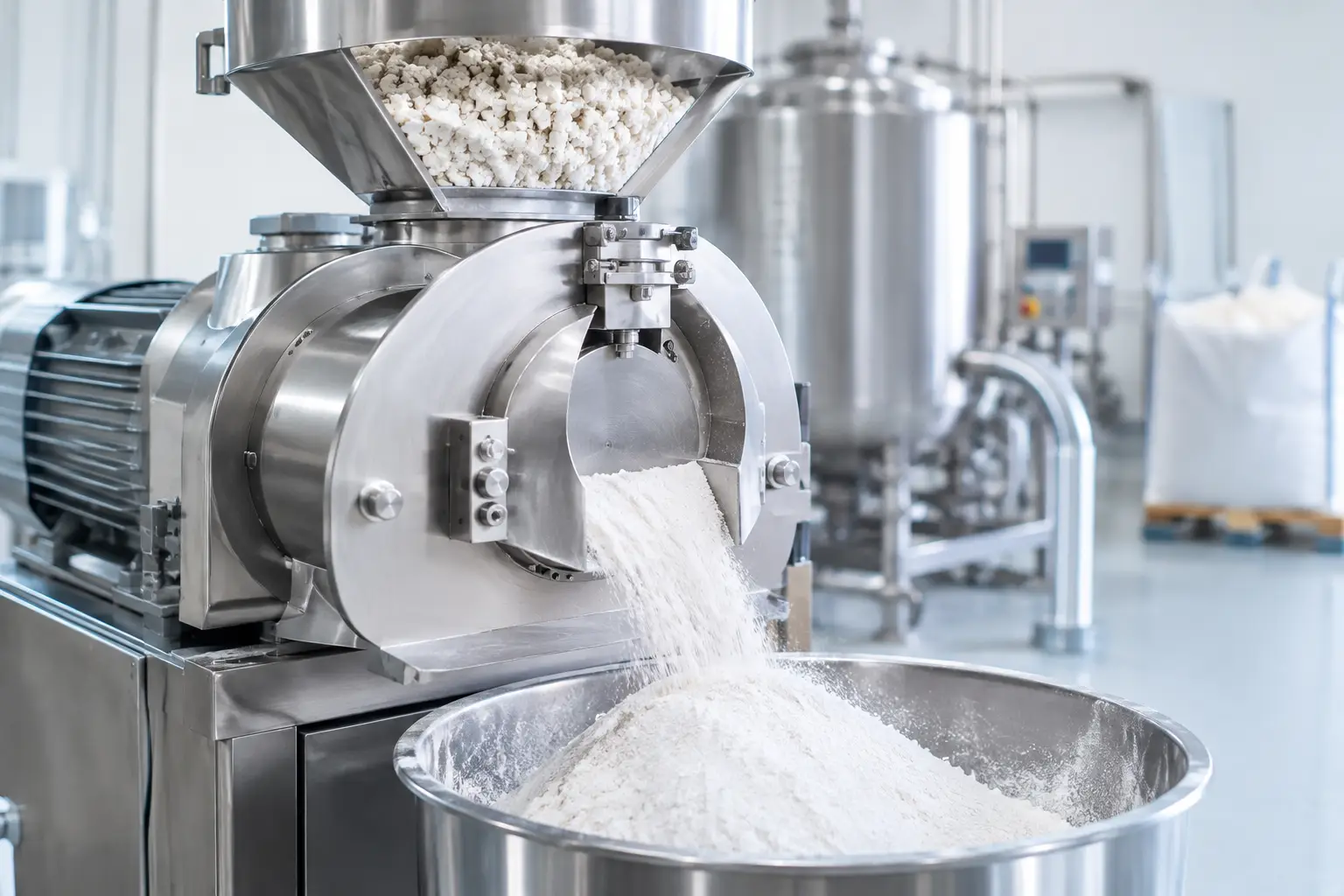
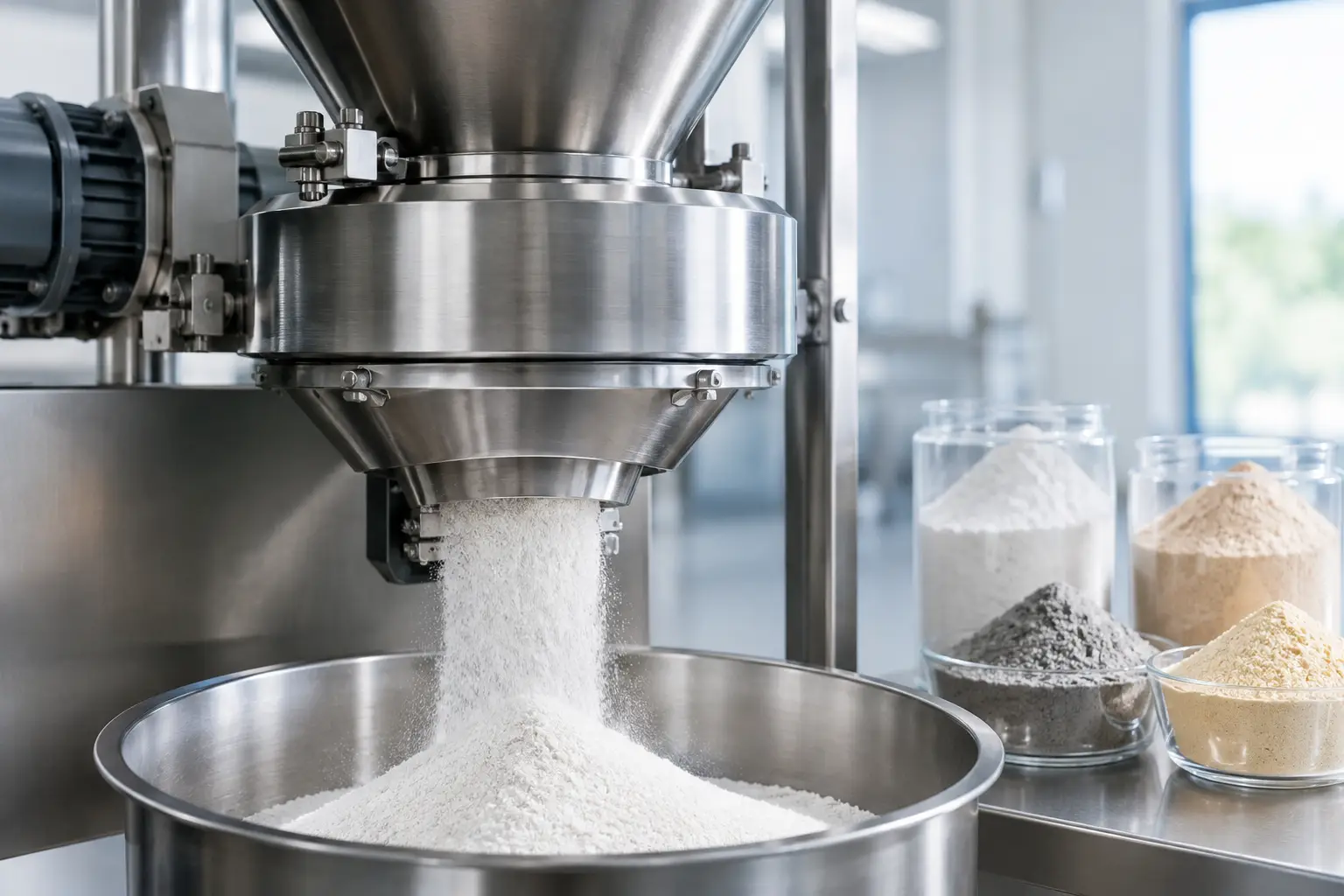
An air classifier mill combines impact milling and dynamic classification in one system. Material enters the grinding zone, where it is reduced by high-speed mechanical action. Internal airflow then carries particles to the classifier, which rejects oversized material back into the grinding zone and allows acceptable particles to pass through.
That design gives the machine a practical advantage over simpler mills. Instead of producing a broad distribution and relying entirely on screen selection, the classifier continuously controls the top size. For operations that need better particle uniformity, less oversize, and more control over the final cut point, that matters.
In many chemical, food, mineral, and specialty material applications, an air classifier mill can provide a strong balance of fineness and throughput. It is often selected when a hammer mill is too coarse, a pin mill does not offer enough control, or a jet mill would add cost and complexity beyond what the product requires.
Air classifier mill review: where performance is won or lost
A useful air classifier mill review should start with process performance, not just machine features. The key question is how reliably the mill can hold your target particle size distribution while maintaining practical throughput.
Classifier design is central here. Rotor speed, airflow stability, and internal geometry all affect cut point and product consistency. If the classifier cannot maintain a stable separation under varying feed conditions, the result is drift in product quality, recycled load increases, and a narrower operating window. On paper, two machines may claim similar fineness. In production, one may hold spec with fewer adjustments and lower recirculation.
Grinding efficiency also deserves close attention. Fine grinding is not only about reaching a target D50. It is about how much energy and residence time are required to get there. Some products fracture cleanly and classify well. Others become more difficult as they get finer, especially fibrous, elastic, heat-sensitive, or low-density materials. In those cases, mill geometry, tip speed, and airflow design become more important than nominal motor horsepower.
Heat generation is another factor that tends to get underestimated early in the buying process. Mechanical milling creates heat, and as particle size decreases, that heat can affect product quality. In food and nutraceutical applications, it may change flavor, aroma, or fat behavior. In chemicals and advanced materials, it may influence flow, moisture sensitivity, or downstream blending. A strong review should ask not only what fineness the mill can achieve, but what product temperature it produces while doing it.
Comparing air classifier mills to other milling options
Air classifier mills are versatile, but they are not the answer for every powder processing challenge. That is where honest comparison matters.
Compared with hammer mills, air classifier mills typically offer finer size reduction and better top-size control. They are a stronger fit when product consistency matters more than simple bulk reduction. Hammer mills can still be the better choice for coarse grinding, simpler duty, and applications where tight control is not required.
Compared with pin mills, the difference often comes down to classification control and application behavior. Pin mills can perform very well on certain friable materials and can be highly effective in sugar, starch, and similar applications. But when the process requires tighter management of coarse particles, an integrated classifier may provide a more repeatable result.
Compared with jet mills, air classifier mills are generally more economical and often easier to justify for mid-range fineness targets. Jet mills remain the better choice for ultra-fine applications, contamination-sensitive products, and materials that benefit from fluid energy grinding with minimal mechanical contact. The trade-off is usually higher system complexity and operating cost.
Material behavior changes the review
No air classifier mill review is complete without discussing the material itself. The same machine can perform very differently depending on hardness, brittleness, moisture, fat content, bulk density, and thermal sensitivity.
Friable materials are usually good candidates because they respond well to impact and classify efficiently. Hard abrasive products can also be processed, but wear protection becomes a major part of the equipment evaluation. If internal components wear quickly, particle size consistency can drift and maintenance cost can climb. In these cases, liner materials, rotor design, and service access deserve as much attention as throughput claims.
Heat-sensitive products require extra caution. If the material softens, smears, agglomerates, or degrades under heat, the operating window may narrow significantly. Sometimes cooling air, conditioned feed, or a different milling technology is the better answer. Fibrous or elastic materials can present similar issues because they resist clean fracture and may circulate excessively instead of classifying efficiently.
For pharmaceutical, battery, and high-purity chemical applications, contamination control raises the bar even higher. Equipment finish, material of construction, cleanability, and containment may carry equal weight with particle size performance. In those environments, the best review is not about whether the mill can run. It is about whether it can run cleanly and predictably within the process envelope.
What to examine before making a purchase decision
The strongest buyers do not evaluate an air classifier mill as a standalone machine. They review it as part of a complete process.
Feed consistency is one of the first checkpoints. Variations in feed rate, particle size, moisture, and bulk density can shift classifier behavior and change throughput. If upstream conditions are unstable, even a well-designed mill may appear inconsistent. That is why process testing matters. Test work should confirm not only achievable fineness, but also production stability across the expected operating range.
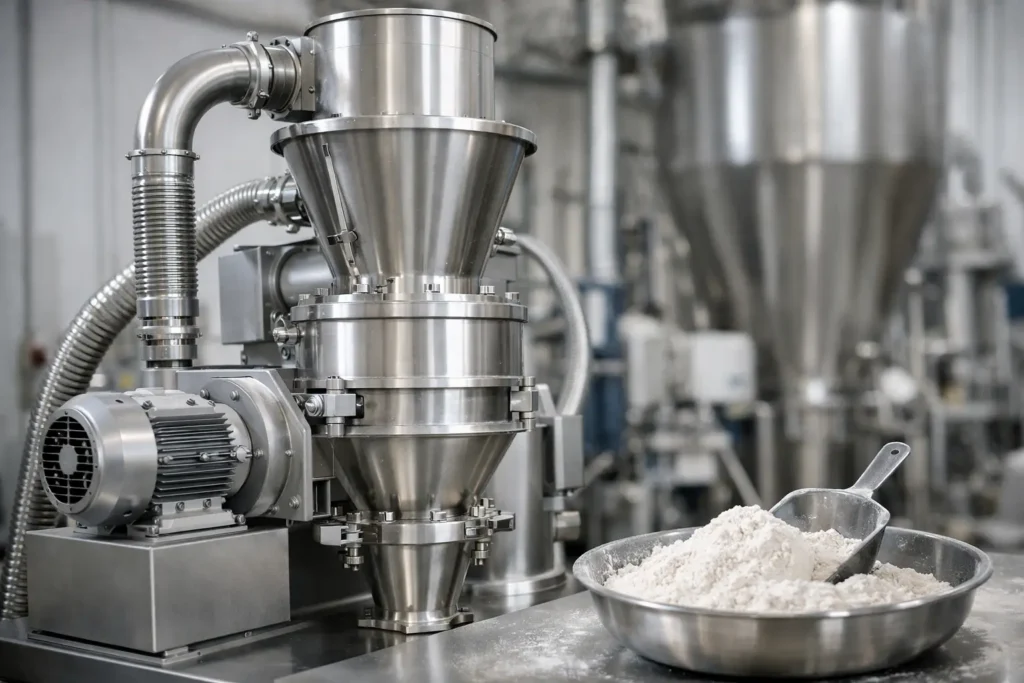
System integration is just as important. An air classifier mill depends on more than the mill body itself. Air handling, dust collection, feed method, discharge arrangement, and controls all influence actual performance. Poor airflow balance can reduce classification efficiency. An undersized dust collector can affect system pressure. Weak controls can make repeatability harder than it should be.
Maintenance access should also be part of the review. A mill that performs well but requires excessive downtime for cleaning, inspection, or wear part replacement can create hidden cost. Engineers and plant managers should look closely at access doors, rotor handling, internal component changeout, and routine service intervals. Long-term value is tied to uptime, not just initial capability.
Air classifier mill review criteria that matter most
When industrial teams compare options, the most useful criteria are practical and measurable. Can the mill achieve the target particle size distribution at the required rate? Can it do so without excessive heat, attrition, or internal wear? How stable is the product quality when feed conditions vary? What does routine maintenance actually involve? And how easily can the system scale from pilot work to commercial production?
This is also where engineered customization can separate one supplier from another. Standard equipment may be enough for straightforward products, but demanding applications often require adjustments to rotor configuration, classifier setup, wear protection, controls, and system layout. A manufacturer that understands the process can often prevent problems that are expensive to solve later.
DP Pulverizer Americas Inc. approaches these systems from that process standpoint, which is often what industrial buyers need most. Equipment selection is more effective when it starts with the material, the target specification, and the operating constraints rather than a generic machine model.
The overall verdict
An air classifier mill is a strong choice when the process calls for fine grinding with tighter top-size control than basic impact mills can provide, but without the complexity of ultra-fine fluid energy systems. It offers meaningful advantages in versatility, continuous operation, and particle size management across many industrial applications.
The limitation is that performance always depends on the material and the full system design. For some products, it delivers exactly the right balance of fineness, throughput, and operating efficiency. For others, heat sensitivity, wear, contamination concerns, or ultra-fine requirements may point to a different solution.
The best review is not based on broad claims. It is based on how the mill behaves with your material, in your process, at your production target. That is where a buying decision shifts from equipment selection to process confidence.