DP Pulverizer Americas Inc
Pharmaceutical Milling Solutions by DP Pulverizer
Talk to a Milling Specialist
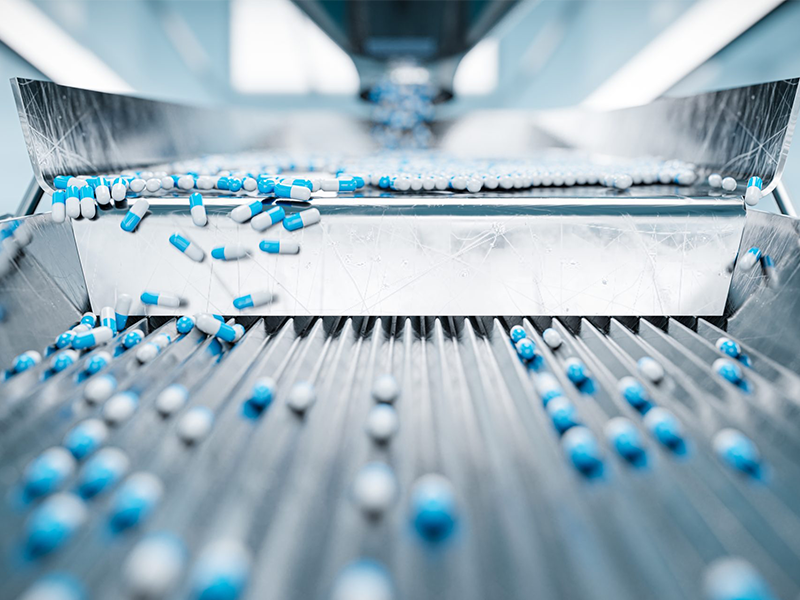
At DP Pulverizer, we understand that pharmaceutical manufacturers require more than just equipment—they require precision, compliance, cleanliness, and consistency. Our complete line of pharmaceutical milling solutions is engineered to meet the highest standards of GMP, FDA, and cleanroom compatibility, delivering unmatched particle size control, batch reproducibility, and operational efficiency.
From API micronization to excipients, natural extracts, polymers, and formulation powders, our technologies help you scale from R&D to production with confidence.
Engineering solutions that fuel client success.
Stainless steel (SS304/SS316L) construction, mirror-polished internals, tool-free access, and clean-in-place (CIP) or easy manual cleaning options.
From coarse granulation to ultra-fine micronization (<1 µm), we deliver targeted results with minimal loss.
Our solutions prevent thermal degradation and preserve molecular integrity.
From bench-scale development to high-volume continuous production.
Discuss your application, material, and production goals with our experts. We'll help identify the most suitable milling solution for your requirements.
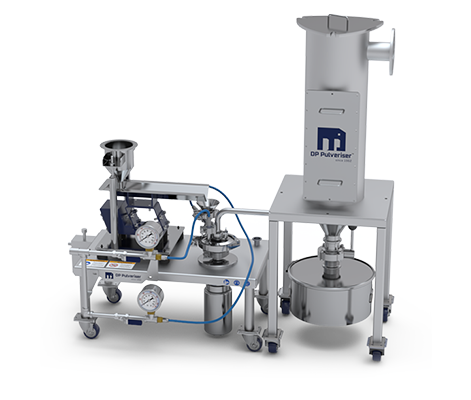
Precision particle size reduction for pharmaceutical manufacturing
Active Pharmaceutical Ingredients (APIs) live or die by particle size. Dissolution rate, bioavailability, content uniformity, flowability, and even regulatory acceptance all hinge on how precisely those particles are controlled. That’s where jet mills for API micronization earn their reputation as the gold standard.
Jet milling uses high-velocity gas streams—not mechanical grinding—to reduce APIs down into the micron and sub-micron range. No grinding media. No metal-to-metal contact. No unnecessary heat. Just physics doing elegant, repeatable work.
API micronization is the controlled reduction of drug substance particles, typically into the 1–10 micron range, to improve:
Bioavailability of poorly soluble APIs
Dissolution rate and absorption consistency
Blend uniformity for low-dose formulations
Stability and reproducibility across batches
Jet mills are uniquely suited for this task because they rely on particle-to-particle collision driven by compressed air or inert gas, rather than mechanical force.
Inside a pharmaceutical jet mill, compressed gas accelerates particles to supersonic velocities. As particles collide with one another, they fracture along natural fault lines. An integrated air classifier continuously rejects oversized particles, ensuring only material that meets the target cut point exits the system.
The result is a tight particle size distribution without thermal degradation or contamination risk.
Key advantages of this mechanism:
No milling media to contaminate the API
Minimal heat generation for thermally sensitive compounds
Extremely narrow and repeatable PSD control
Jet milling isn’t just preferred in pharma—it’s often required. For regulated environments, the advantages are hard to argue with:
Ultra-clean processing
No mechanical contact means minimal wear and virtually zero risk of metallic contamination.
Low-temperature operation
Critical for heat-sensitive or amorphous APIs that degrade under mechanical milling.
Precise particle control
Classifier-controlled cut points enable consistent micronization from batch to batch.
Scalable from R&D to production
Process parameters translate cleanly from lab-scale systems to full commercial throughput.
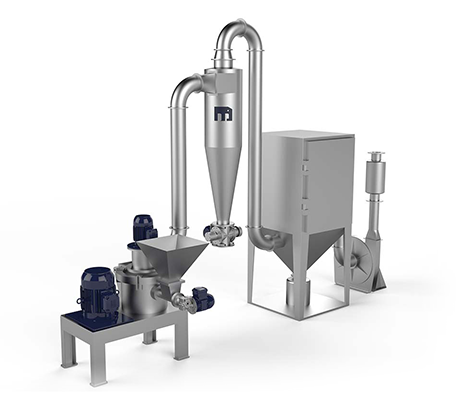
Integrated grinding and classification for efficient pharmaceutical size reduction
Not every API needs the elegance of a jet mill or the deep freeze of cryogenics. Many need something just as important: speed, control, and efficiency in a single pass. That’s where Air Classifier Mills (ACM) shine in pharmaceutical manufacturing.
An ACM combines impact milling and dynamic air classification in one compact system, allowing APIs to be micronized and classified simultaneously—without external screens or secondary milling steps.
An Air Classifier Mill is a high-speed impact mill equipped with an internal air classifier wheel. As particles are reduced in size, airflow and centrifugal force continuously separate fines from oversized material.
Only particles meeting the target cut point exit the system. Oversized particles are automatically returned to the grinding zone—no operator intervention required.
That’s why ACMs are often described as one-pass micronization systems, even though classification is happening continuously inside the mill.
For many APIs, ACMs strike the perfect balance between precision and throughput.
One-pass efficiency
Grinding and classification happen in a single, continuous operation.
Tight particle size control
Classifier wheel speed directly controls the final PSD.
Higher throughput than jet mills
Ideal for commercial-scale API production.
Lower energy consumption
Compared to jet milling for the same target size range.
Excellent batch-to-batch repeatability
Critical for regulatory compliance and process validation.
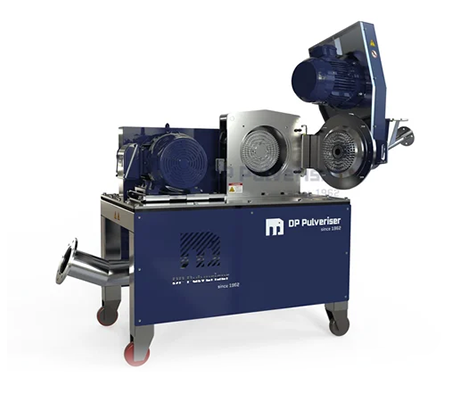
Low-temperature size reduction where conventional milling fails
Some APIs simply refuse to behave. They soften, smear, melt, oxidize, or elastically deform the moment mechanical energy is applied. Traditional mills respond by generating heat—exactly the wrong thing to do. This is where cryogenic milling for APIs becomes not just useful, but essential.
Cryogenic mills use liquid nitrogen or cryogenic gas to embrittle materials before and during size reduction, enabling precise milling of APIs that would otherwise be impossible to process reliably.
Cryogenic milling is a controlled size-reduction process in which the API is cooled—often to -80 °C to -196 °C—prior to milling. At these temperatures, heat-sensitive and elastic materials become brittle, allowing them to fracture cleanly rather than deform.
This technique is widely used in pharmaceutical manufacturing when APIs exhibit:
Low melting or glass transition temperatures
Elastic or rubber-like behavior
High oil or wax content
Sensitivity to oxidation or thermal degradation
Standard milling introduces friction. Friction introduces heat. Heat introduces risk.
Cryogenic milling removes heat from the equation entirely.
Thermal protection
APIs remain well below degradation temperatures throughout the milling process.
Elastic material control
Polymers, waxy compounds, and soft APIs fracture cleanly instead of smearing.
Improved yield and consistency
No agglomeration, no melting, no reprocessing loops.
Preserved chemical integrity
Reduced oxidation, polymorphic changes, and loss of potency.
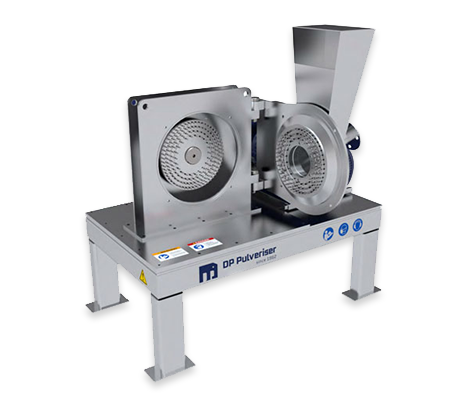
High-impact milling for clean, consistent, and scalable natural ingredient processing
Nutraceuticals and herbal blends sit at an awkward intersection of food and pharma. They’re natural, fibrous, oil-bearing, aromatic, and often inconsistent—yet they’re expected to perform with pharmaceutical-level repeatability. That combination makes milling a quiet but decisive step in product quality.
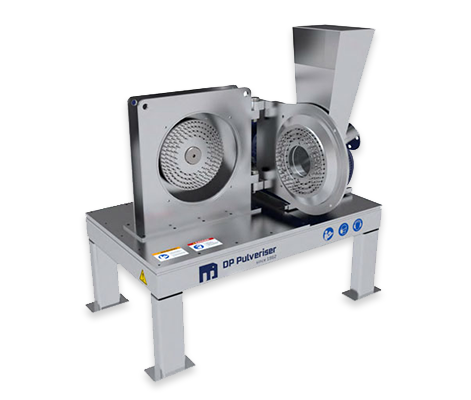
Pin mills are one of the most versatile and widely used milling technologies for nutraceuticals and herbal powders because they strike a rare balance: fine particle size, controlled heat, high throughput, and gentle handling of plant-based materials.
Pin mills rely on high-speed impact between intermeshing pins rather than crushing or grinding media. This makes them particularly effective for dried botanicals, roots, leaves, extracts, and blended supplements.
Key advantages for nutraceutical applications include:
Fast, efficient size reduction without over-processing
Excellent control of particle size for capsules, tablets, and drink mixes
Lower heat generation than many mechanical mills
Clean, sanitary designs suitable for regulated food and supplement environments
In short, pin mills respect the ingredient while still getting the job done.
Pin mills are routinely used for milling:
Herbal blends and botanical powders
Root-based materials (turmeric, ginger, ginseng, maca)
Leafy botanicals and dried plant matter
Protein blends and functional powders
Vitamin and mineral premixes
Natural colorants, antioxidants, and extracts
They are especially effective where uniform particle size improves blend consistency, flowability, and bioavailability perception—even when the chemistry is unchanged.