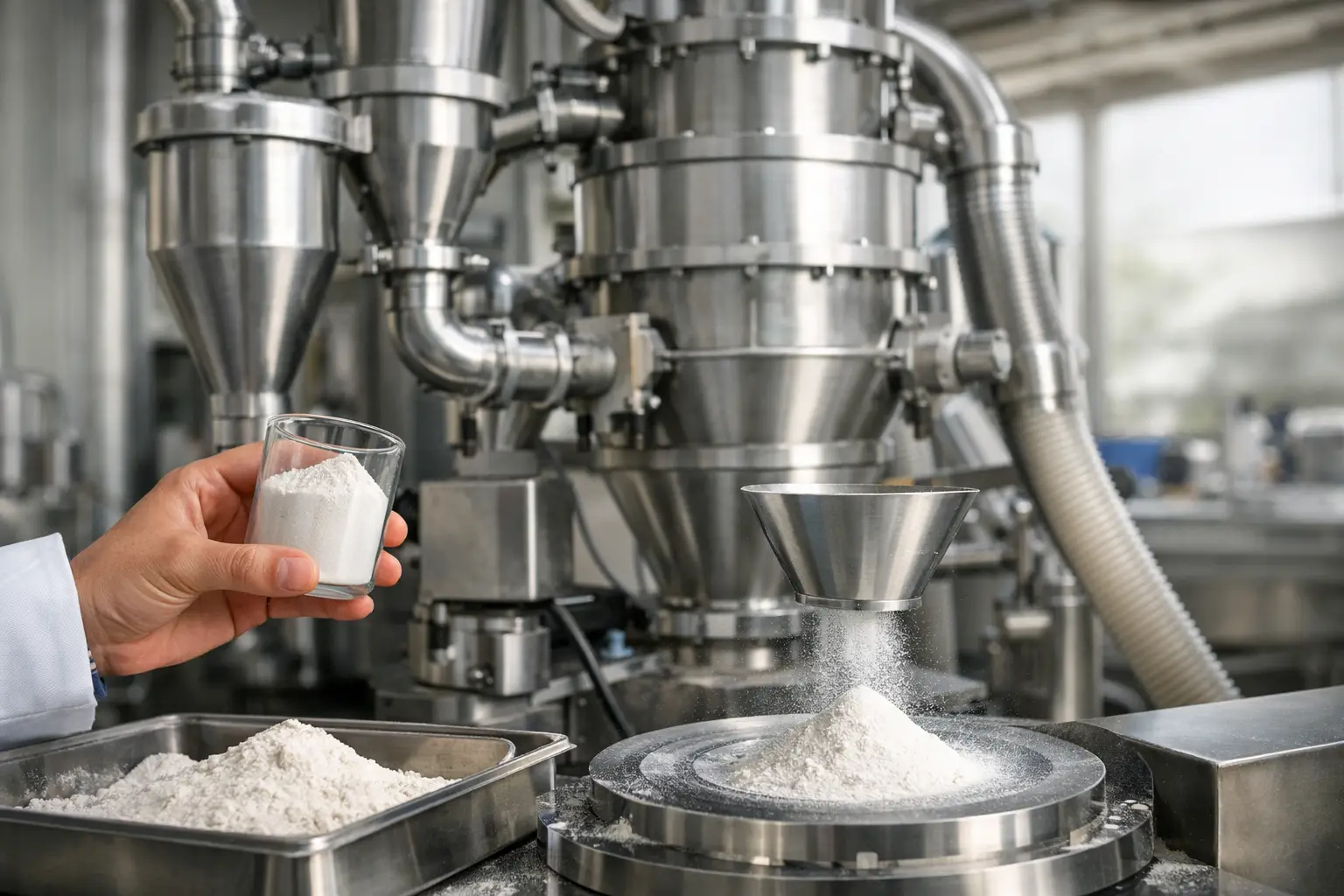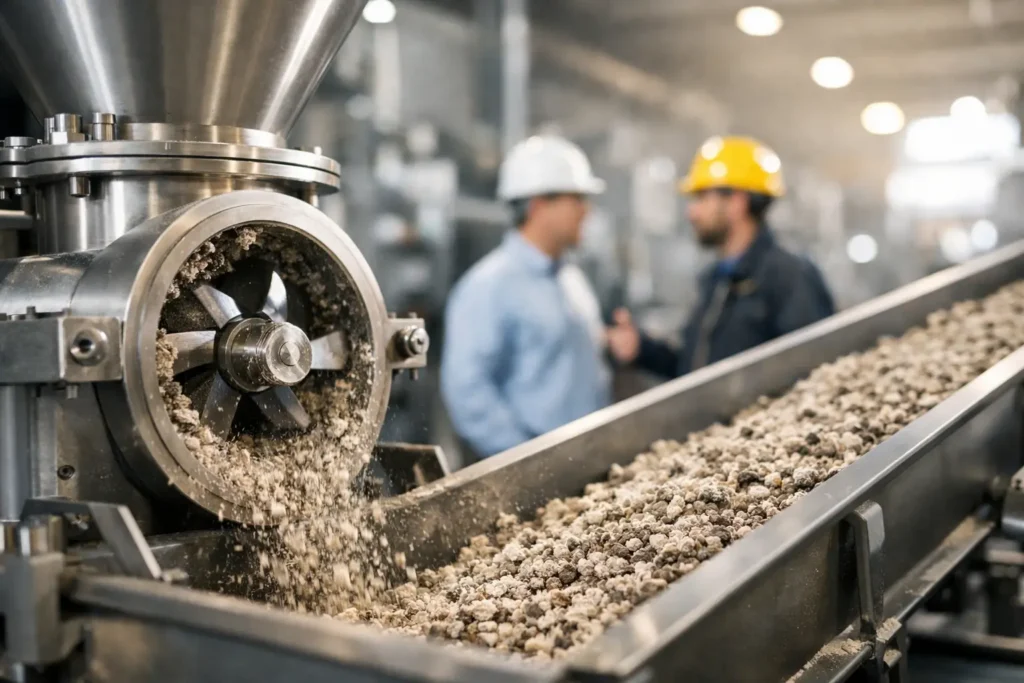
A mill that hits target particle size in the lab can still fail on the production floor. Throughput drops, heat builds up, fines increase, and operators start adjusting around the equipment instead of relying on it. That is where size reduction technology becomes more than a machine category. It becomes a process decision that affects product quality, uptime, yield, and long-term operating cost.
For manufacturers processing powders, granules, and difficult bulk solids, particle size is rarely an isolated specification. It influences flowability, blend uniformity, dissolution, reactivity, bulk density, compaction, and downstream packaging or handling performance. The right system does not simply make particles smaller. It controls how size reduction happens, how much heat is introduced, how narrow the distribution remains, and how consistently the process performs shift after shift.
What size reduction technology actually controls
In industrial processing, size reduction technology refers to the equipment and process methods used to reduce particle size to a target range while protecting critical material attributes. That sounds straightforward, but in practice the objective changes by application.
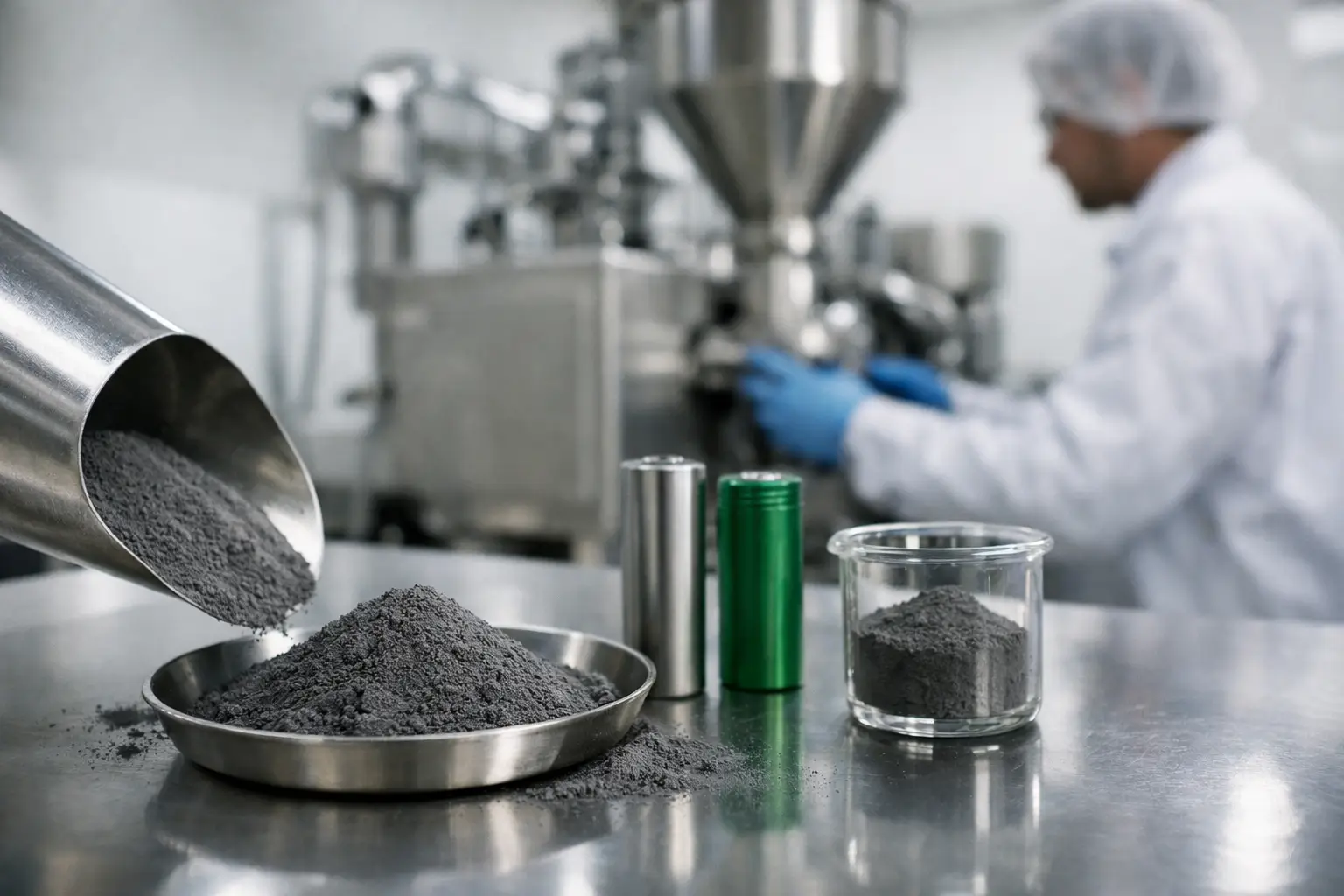
In pharmaceuticals and nutraceuticals, tighter control may be needed to support bioavailability, blend consistency, or tablet performance. In food processing, the priority may be flavor release, mouthfeel, or thermal protection. In chemicals, minerals, battery materials, and advanced powders, particle size can directly affect reaction rate, surface area, conductivity, or final product stability.
This is why the best technology choice depends on more than the target micron range. Material hardness, friability, moisture level, fat or oil content, abrasiveness, temperature sensitivity, contamination risk, and required throughput all shape the right approach.
Why one milling method rarely fits every application
Two materials can share the same feed size and final target size yet require completely different processing strategies. A brittle mineral may respond well to impact-based milling. A heat-sensitive polymer may smear or degrade under the same conditions. A sticky botanical may blind screens and reduce capacity if the wrong mill is selected.
That is the central challenge in size reduction technology. Equipment must match material behavior, not just the specification sheet.
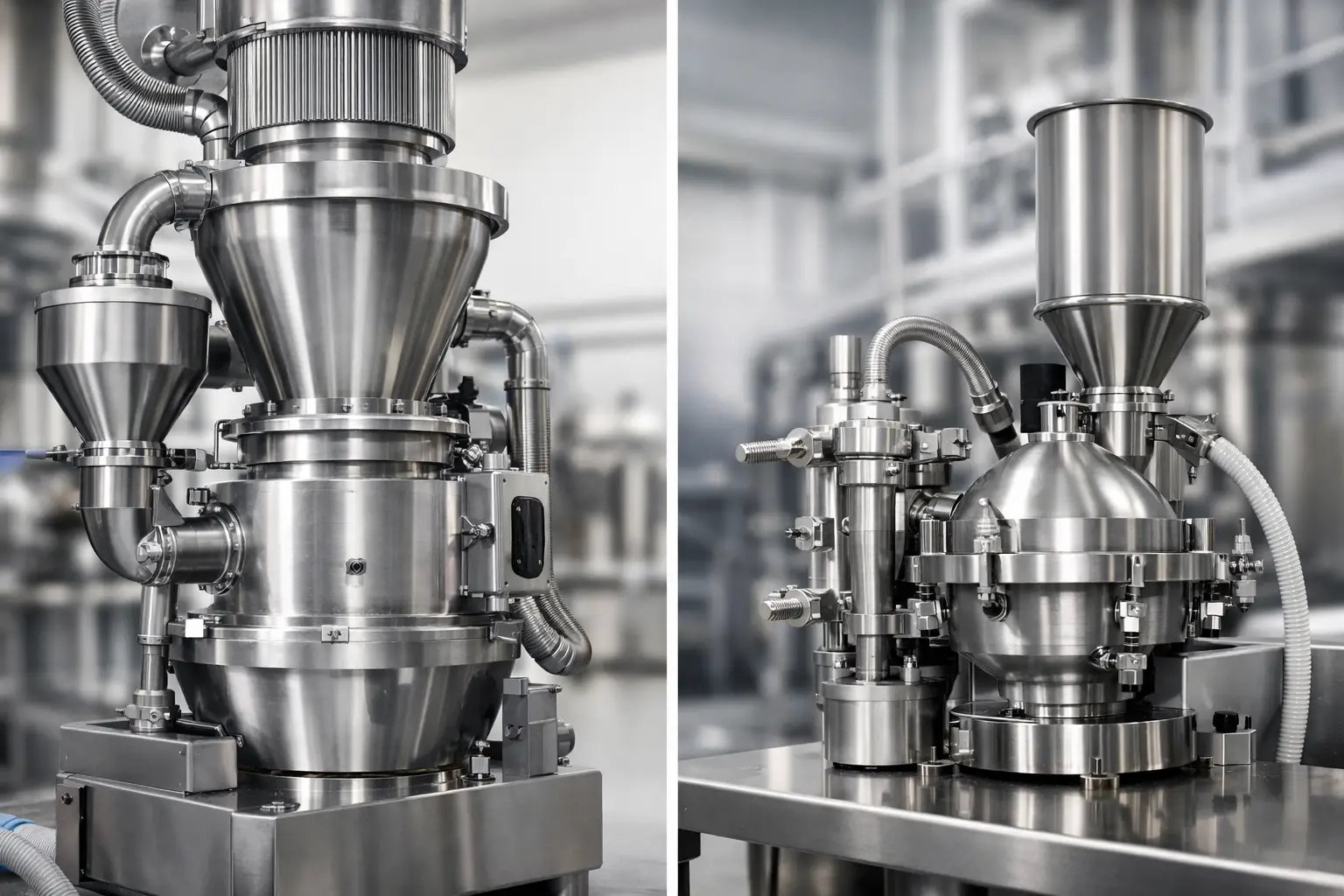
Jet mills are often selected when ultrafine particle size, low contamination, and minimal heat rise are priorities. They are especially useful for high-value applications where particle integrity and clean processing matter more than simple bulk reduction. Air classifier mills combine impact milling with internal classification, which helps control particle size distribution while supporting continuous production. Hammer mills and pin mills can provide efficient reduction for many food, chemical, and industrial materials, but performance depends heavily on feed characteristics and desired fineness.
Cone mills and universal mills are often better suited where delumping, controlled granule reduction, or gentle size reduction is required. Cryogenic systems become important when materials soften, smear, or oxidize at ambient temperatures. Each technology has strengths, limitations, and operating windows. Ignoring those trade-offs usually shows up later as lower yield, excessive wear, inconsistent product, or cleaning problems.
Process performance matters more than nameplate specifications
A common mistake in equipment evaluation is focusing too heavily on headline metrics such as horsepower, rotor speed, or nominal capacity. Those numbers matter, but they do not predict actual processing performance on their own.
Real-world results depend on how the mill interacts with the full system. Feed rate stability, air handling, classifier settings, screen selection, discharge method, dust containment, and upstream or downstream integration all influence output. A mill may be technically capable of reaching the target size, yet still become the bottleneck because feeding is inconsistent or internal airflow is poorly controlled.
That is why engineered process design tends to outperform one-size-fits-all equipment selection. In demanding applications, the question is not simply, Can this machine grind the material? The better question is, Can this system produce the required particle profile at the required rate with acceptable heat, wear, sanitation, and maintenance demands?
Key variables that shape size reduction results
Particle size reduction is governed by energy transfer, residence time, and classification efficiency. Increase energy too aggressively and the process may generate excess fines, heat, or material degradation. Reduce energy too much and the system may miss target size or lose throughput. There is always a balance.
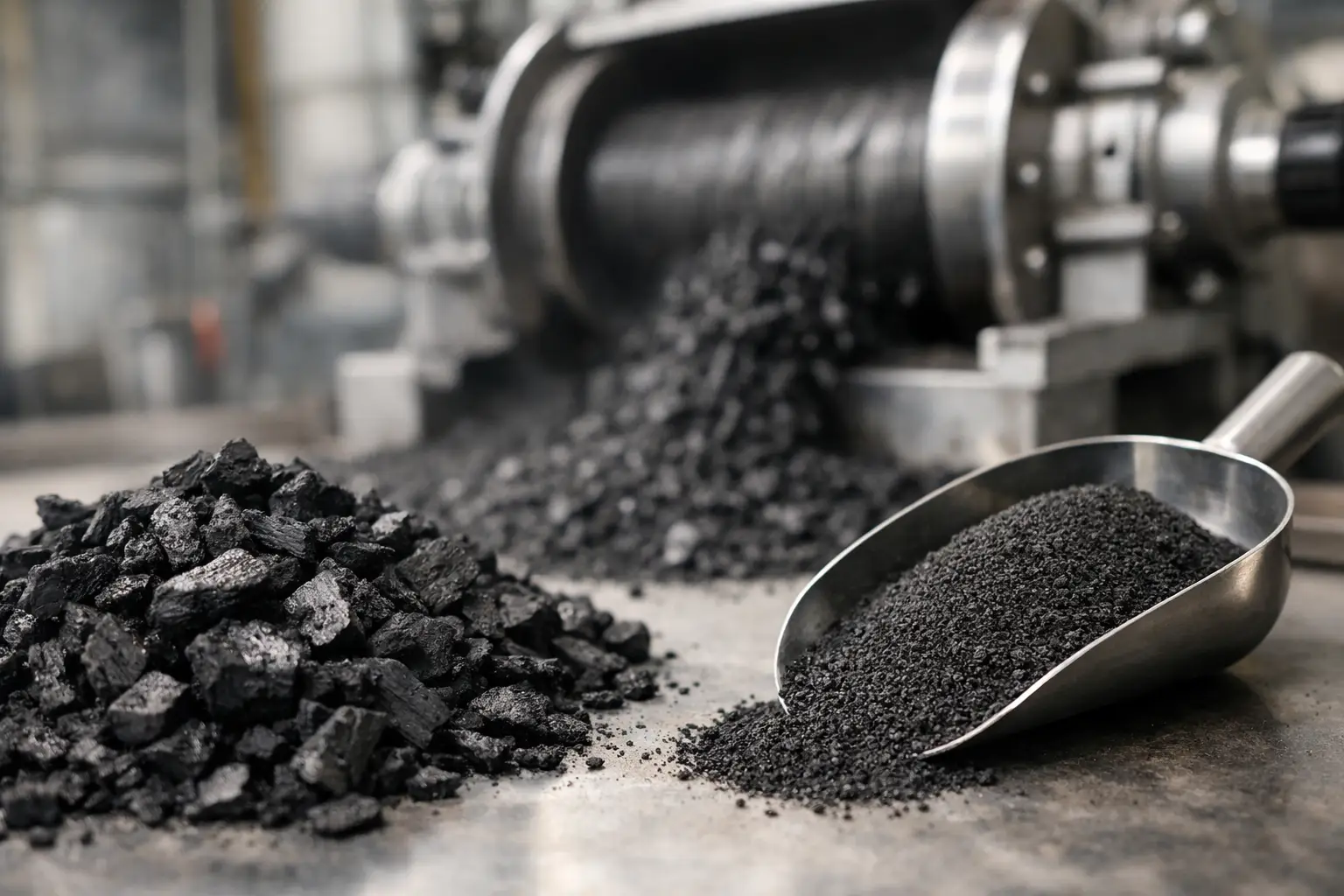
Material characteristics are equally important. Hard and abrasive materials may require designs that minimize wear and protect product purity. Fibrous products often need cutting or shearing action rather than pure impact. Hygroscopic materials can create flow and buildup issues that change mill performance over time. Fatty, waxy, or temperature-sensitive products may require lower-temperature processing or specialized configurations.
Contamination control also deserves more attention than it often gets. In many industries, contamination risk is not limited to foreign material from the environment. It can come from internal wear surfaces, poor cleanout, cross-batch carryover, or inadequate dust management. The right mill design, material of construction, and system layout can significantly reduce those risks.
Where size reduction technology delivers measurable value
Well-matched size reduction technology improves more than particle size. It can stabilize the entire process.
Tighter particle size distribution often improves downstream consistency, whether the next step is blending, conveying, drying, compaction, granulation, coating, or packaging. Better control over fines can reduce dust generation and product loss. More efficient milling can improve throughput without increasing rework or thermal damage. Lower wear rates can reduce maintenance intervals and preserve product purity.
In high-volume operations, even modest gains in milling efficiency can have a significant cost impact. Reduced energy use, better yield, less off-spec material, and shorter cleaning cycles all affect total operating cost. For regulated or quality-critical industries, repeatability may be even more valuable than maximum throughput.
Choosing the right system for the application
The most effective equipment selection process starts with the material, the target specification, and the production environment. It should account for current needs and likely future scale.
If the process requires ultrafine output with minimal contamination, fluid energy milling may be the right direction. If the application needs a balance of fineness, throughput, and internal classification, an air classifier mill may offer better control. If the objective is general-purpose reduction with strong throughput and a simpler footprint, hammer or pin milling may be more practical. If the product is temperature sensitive, cryogenic grinding may shift from optional to necessary.
This is also where pilot testing becomes valuable. Material behavior can change under production conditions, especially when feed variability, humidity, and continuous operation are involved. Testing helps identify realistic throughput, expected distribution, wear behavior, and thermal effects before full-scale investment.
For many manufacturers, the best answer is not a standalone mill but an integrated solution. Feeding, conveying, dust collection, classification, and controls all influence final performance. A properly engineered system reduces variability that would otherwise be blamed on the mill alone.
Why customization often matters in demanding environments
Standard equipment can work well for straightforward applications. But demanding industrial processes often require more precise configuration. That may include custom rotor design, specialized liners, sanitary construction, inert gas capability, classifier tuning, cryogenic integration, or controls tailored to batch and recipe management.
Customization is not about adding complexity for its own sake. It is about aligning the machine with the process so the operation can run predictably at scale. For manufacturers handling sensitive materials, abrasive powders, or strict quality requirements, that alignment can be the difference between a system that runs consistently and one that constantly needs operator intervention.
An engineering-led approach also helps avoid under-scoping support systems. Airflow management, explosion protection, containment strategy, and cleanability should be considered early, not after startup problems appear. This is where experienced process partners bring practical value. Companies such as DP Pulverizer Americas Inc. focus on system performance in actual manufacturing conditions, not only on equipment categories.
The future of size reduction technology
The direction of size reduction technology is increasingly shaped by tighter tolerances, more difficult materials, and stronger pressure to improve efficiency without compromising quality. Advanced materials, battery applications, functional ingredients, and high-value actives are pushing mills to deliver finer control with less contamination and better repeatability.
At the same time, plant teams are asking more from their equipment. They want easier cleaning, faster changeovers, better automation, lower energy use, and systems that can scale from development through production. That means equipment selection is becoming less about buying a mill and more about designing a process platform.
The manufacturers that get the best results usually treat particle size reduction as a critical process function, not a utility step. When the technology is aligned with the material and the production objective, the payoff shows up everywhere else in the line. Better flow. Better consistency. Fewer surprises. That is usually where real process improvement begins.