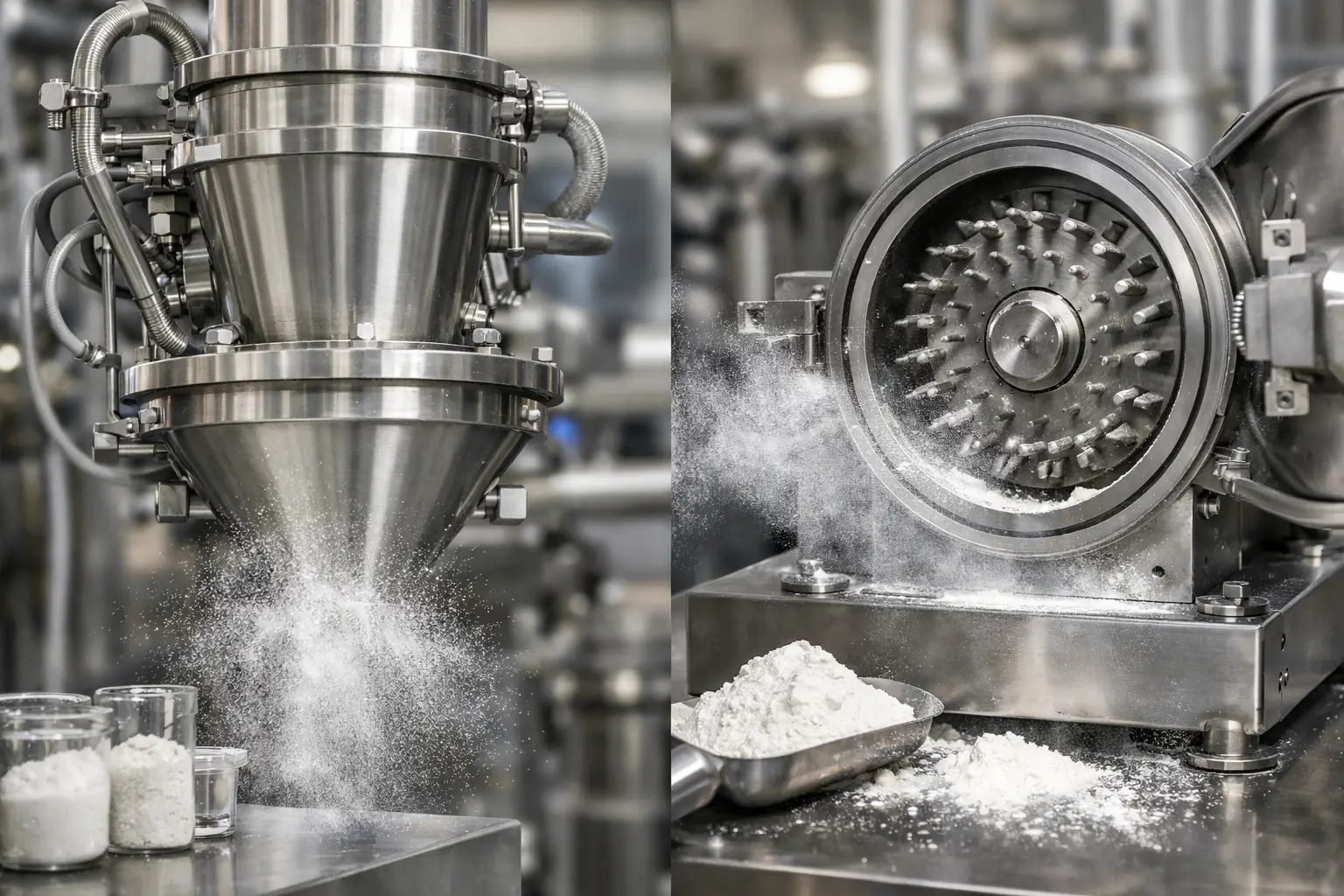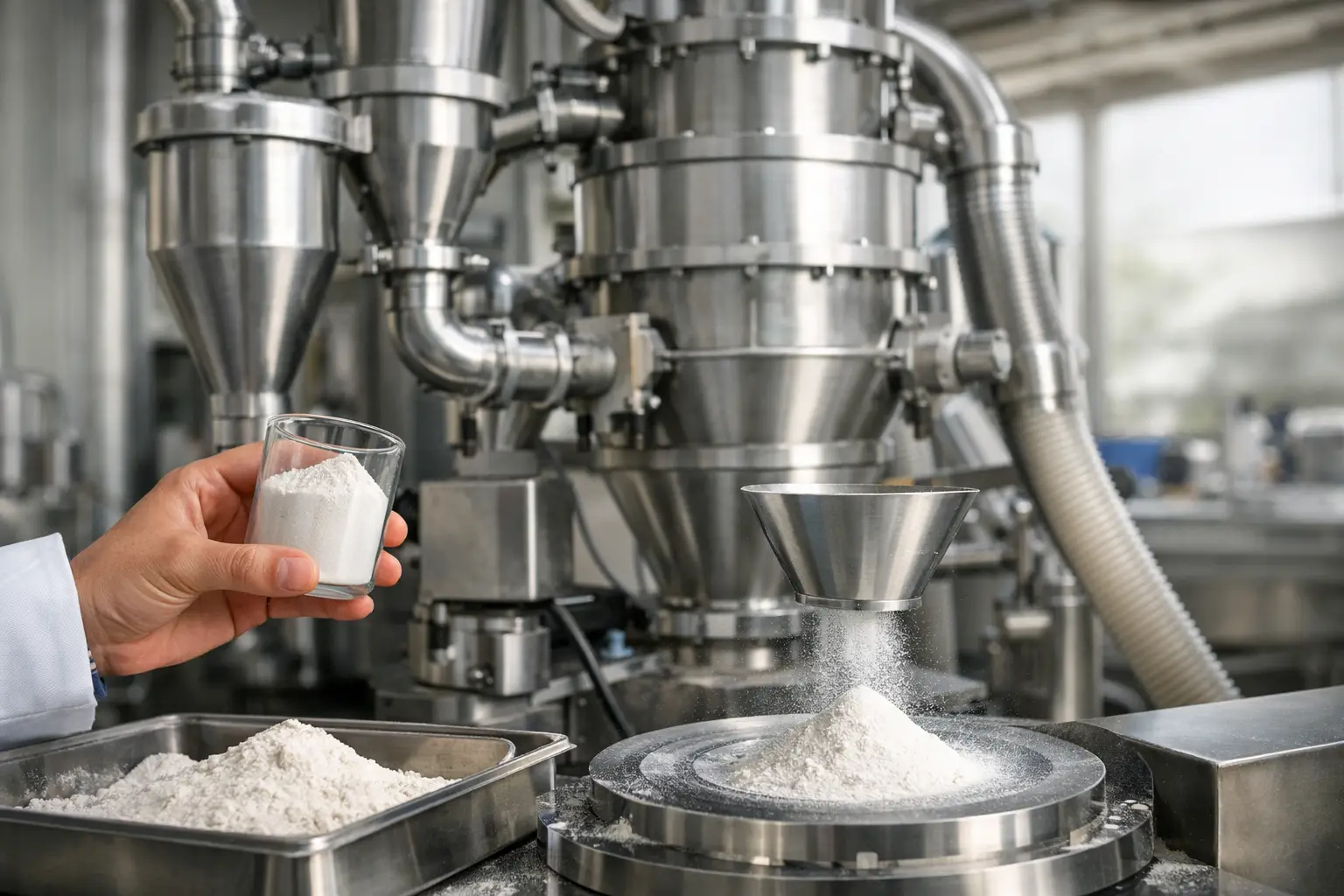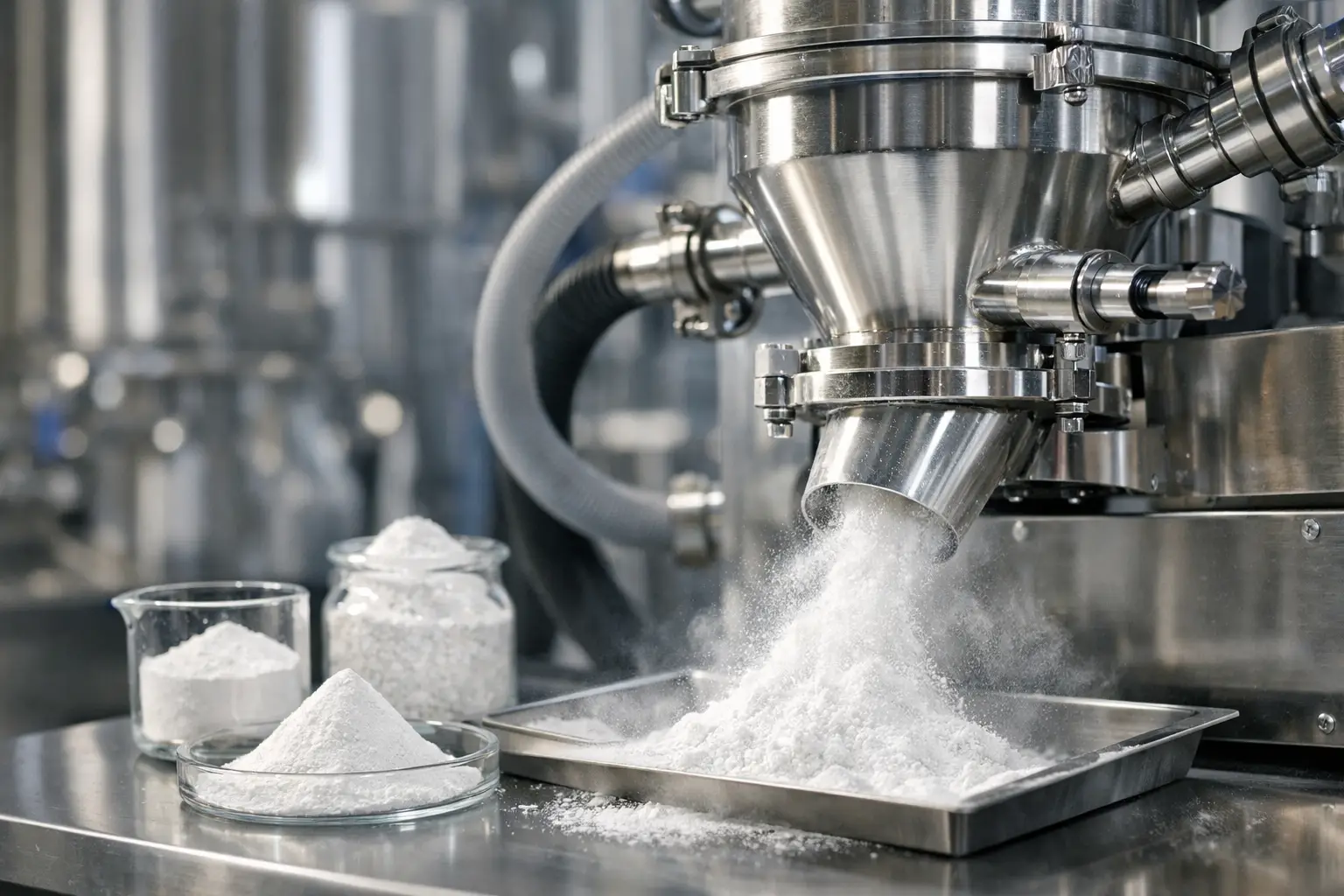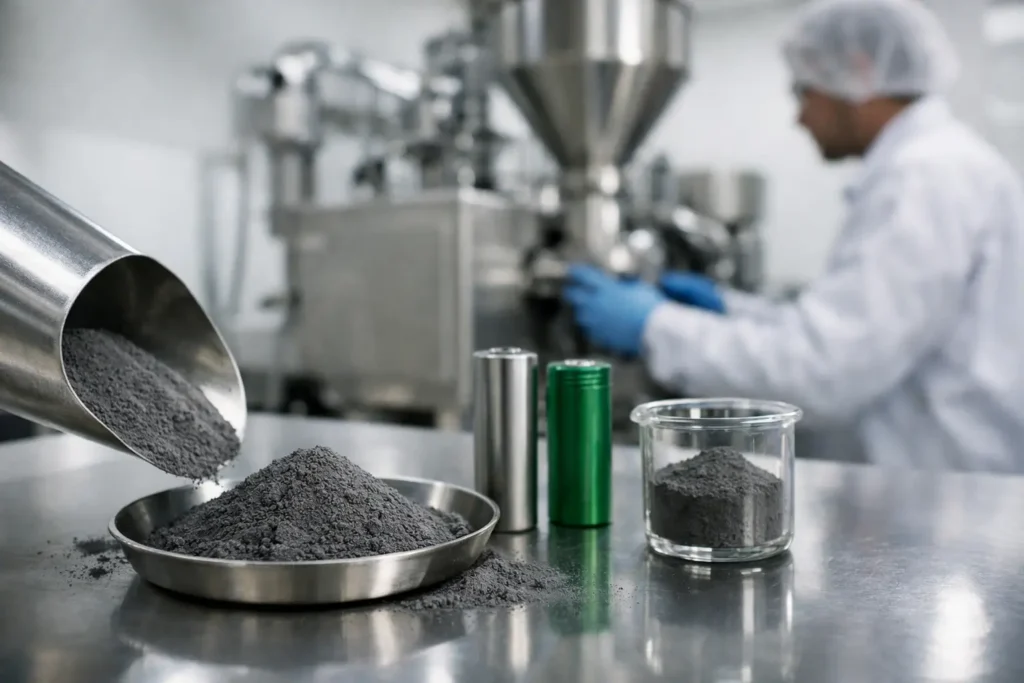
A battery line rarely fails because of one dramatic event. More often, performance slips through small process errors – a wider particle size distribution than expected, trace contamination from wear surfaces, too much heat in milling, or poor flow feeding the next step. That is why a useful battery powder processing example is not just about reducing size. It is about controlling the full chain of material behavior from feed to finished powder.
For manufacturers working with cathode precursors, conductive additives, graphite, or recycled battery materials, powder processing decisions directly affect electrochemical performance, yield, safety, and production economics. The right system depends on the chemistry, target particle size, contamination limits, moisture sensitivity, and required throughput. There is no single mill that solves every battery application well.
A practical battery powder processing example
Consider a manufacturer producing a lithium iron phosphate-related powder blend for downstream electrode production. The incoming material stream includes dried agglomerated powder from synthesis, plus a conductive carbon component that must be blended later without damaging structure or introducing foreign material. The process objective is straightforward on paper: reduce oversized agglomerates, tighten particle size distribution, preserve material integrity, and deliver a consistent powder to blending and coating.
In practice, that objective creates several competing requirements. The main active powder may need deagglomeration without excessive generation of fines. The conductive additive may require gentle handling because over-processing can change structure and surface area. The entire line may need inerting or dust control because fine battery powders create housekeeping, exposure, and ignition concerns. If the production target is moving from pilot to commercial scale, equipment selection also has to support repeatability at higher throughput.
This is where process design matters more than headline machine capacity.
Step 1: Define the real particle size target
Many battery projects start with an incomplete specification such as “make it finer” or “remove oversize.” That is rarely enough. A better starting point is to define the target distribution, not only the median particle size. D10, D50, and D90 values all matter because packing density, slurry behavior, and reaction consistency can change when the tails move, even if the average looks acceptable.
For example, if the feed contains soft agglomerates around 150 to 300 microns but the primary particles are much smaller, aggressive impact milling may reduce agglomerates quickly while also creating excessive ultrafines. That can hurt flowability and increase dust loading in the system. In that case, a controlled deagglomeration approach with air classification may outperform a more forceful grinding method.
Step 2: Match the milling method to the material behavior
In this battery powder processing example, suppose the active powder is moderately friable, somewhat heat sensitive, and contamination sensitive. Several technologies could be considered, but each comes with trade-offs.
A jet mill is often a strong fit when contamination control and fine particle size are high priorities. Because particle-to-particle impact does most of the work, metal wear can be reduced compared with contact-heavy methods. Jet milling can also support tight control when paired with classification. The trade-off is that energy demand may be higher, and very light or difficult-to-fluidize materials may require more process tuning.
An air classifier mill can be a better choice when the goal is controlled size reduction with integrated classification at moderate fineness. It offers good flexibility and throughput, but internal component wear and material-specific heat generation need to be evaluated carefully for sensitive chemistries.
A pin mill or universal mill may be effective for upstream conditioning or deagglomeration when the powder does not require ultrafine grinding. These systems can be efficient and practical, but they may not be the best answer where very tight contamination limits or very fine cut points are required.
If the material becomes smear-prone, oxidizes easily, or changes behavior with temperature rise, cryogenic grinding may also enter the discussion. That is not always necessary in battery applications, but in the right case it can stabilize the process and preserve powder characteristics that would otherwise drift under ambient milling conditions.
Where the process usually gets harder
The hardest part is often not primary size reduction. It is managing the side effects.
Heat generation is one common problem. As powder gets finer, surface area rises and material behavior becomes less forgiving. Increased heat can change moisture pickup, alter surface properties, and reduce throughput as the system begins to load inefficiently. Battery manufacturers dealing with sensitive materials often need to treat thermal control as a core design parameter, not an afterthought.
Contamination is another issue that deserves early attention. In battery materials, trace metal contamination can create downstream quality problems that are expensive to diagnose after the fact. Wear-resistant materials of construction, proper liner selection, controlled velocities, and the right milling mechanism can all help reduce contamination risk. The best answer depends on the powder chemistry and the acceptable impurity profile.
Then there is containment. Fine powders in battery processing bring obvious housekeeping concerns, but the larger issue is process stability and operator safety. Dust-tight equipment, efficient collection, proper transfer methods, and where needed inert gas operation are part of the system design, not optional accessories.
Classification is often the real control point
A common mistake is to focus on mill type while underestimating the importance of classification. In many battery applications, the separator or classifier determines whether the process will produce a repeatable distribution or simply recirculate material inefficiently.
In our example, the manufacturer wants to remove oversize agglomerates without over-grinding usable product. A well-tuned classifier allows fine material to exit while returning coarse particles for additional processing. That lowers the residence time for already-correct particles and helps preserve morphology.
This matters because over-processing does not just waste energy. It can change the powder in ways that affect blending, densification, slurry rheology, and final cell performance. Tight control is usually worth more than raw grinding intensity.
Scale-up from lab to production
A process that works for a five-kilogram development batch can fail badly at production scale. Residence time shifts, feed consistency changes, system temperatures rise, and powder handling becomes more complex. The scale-up question is not simply whether a larger machine exists. It is whether the process window remains stable as throughput increases.
For battery manufacturers, this usually means validating several points before full deployment. Feed variability has to be characterized, not assumed away. The impact of higher load on classifier efficiency must be measured. Powder transfer and collection systems need to be sized to prevent buildup, segregation, or excessive product retention.
This is where engineered process development has real value. A properly designed line considers feeder behavior, mill dynamics, classifier settings, dust collection, and discharge handling as one system. Treating them separately often creates a bottleneck somewhere else in the plant.
Material-specific design choices
Not every battery chemistry behaves the same way, and that changes equipment selection.
Graphite may require a very different approach than a brittle inorganic cathode material. Recycled black mass can introduce broader feed variability, abrasive constituents, and more complex contamination concerns. Conductive carbons may demand gentle handling to preserve structure, while precursor materials may need controlled deagglomeration rather than aggressive reduction.
That is why a useful battery powder processing example should not be copied blindly from one chemistry to another. The right configuration depends on whether the job is delumping, deagglomeration, fine grinding, classification, blending preparation, or a combination of these steps.
What a well-engineered result looks like
If this example process is configured correctly, the manufacturer should see more than a smaller particle size. The better outcome is a narrower and more predictable distribution, reduced oversize, lower contamination risk, improved powder flow to the next step, and a process that holds those results over long runs.
Operationally, that means fewer adjustments during production, more stable throughput, and less troubleshooting downstream in blending, coating, or compaction. From a plant perspective, those gains often matter as much as the laboratory particle size report.
For companies evaluating milling and classification systems for battery materials, the most useful question is not “Which mill is best?” It is “Which process design best fits this material, this specification, and this production target?” That is the question an engineering-focused partner should help answer.
Battery powder processing rewards precision. Small differences in milling energy, classification cut point, system temperature, and material handling can compound quickly across production. When the process is designed around the actual material instead of a generic equipment preference, manufacturers gain tighter control and a better path to scale. That is where long-term performance usually starts.