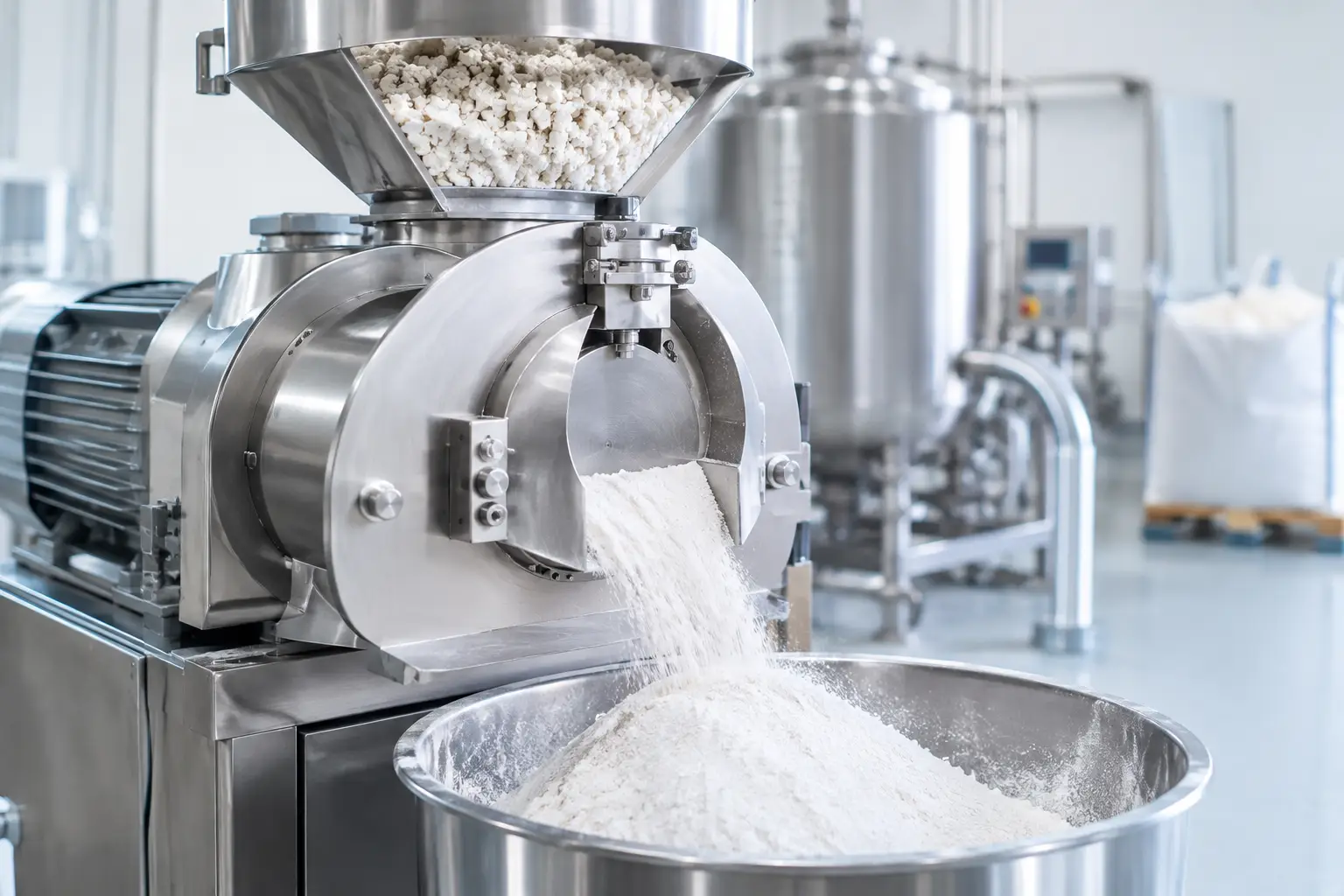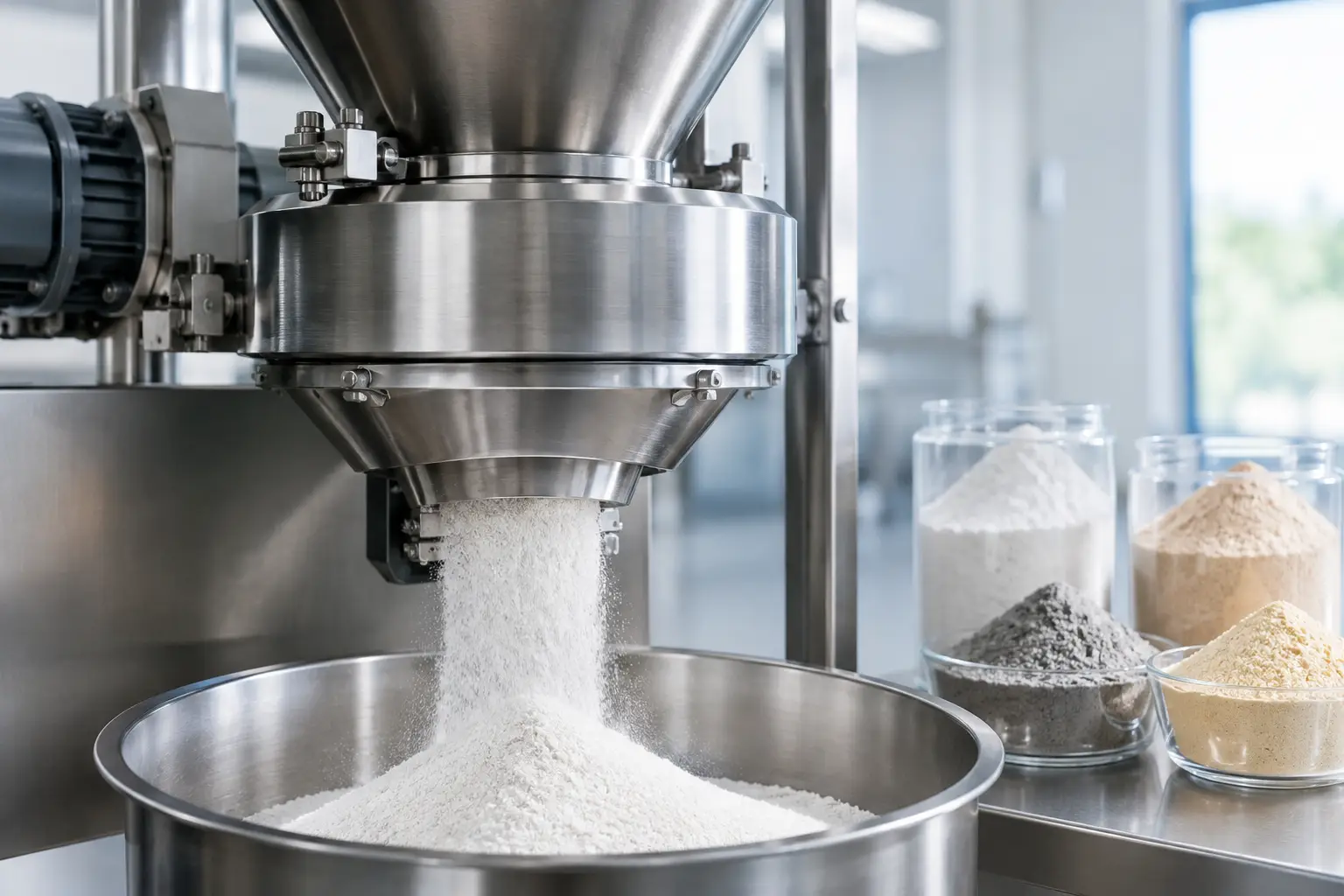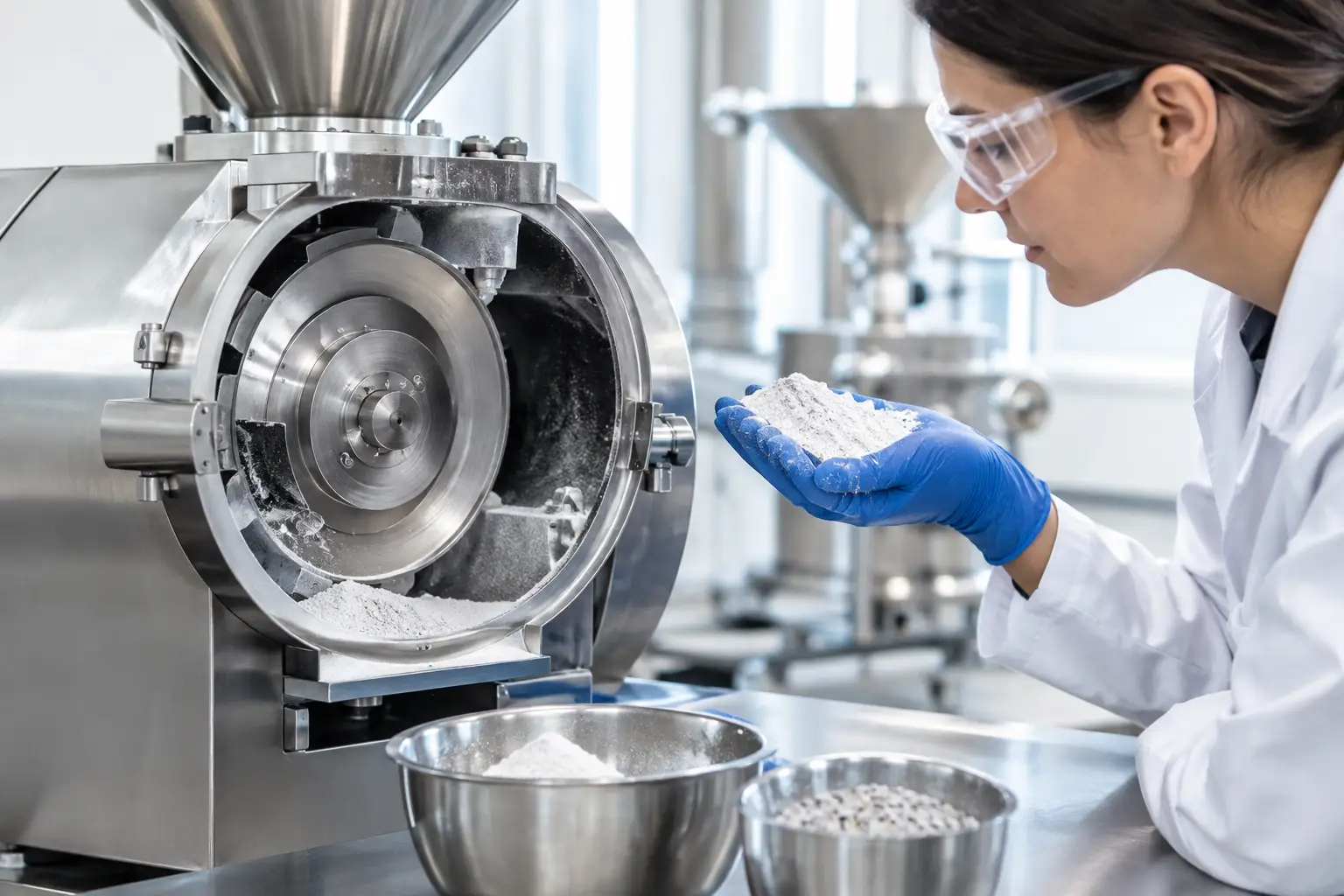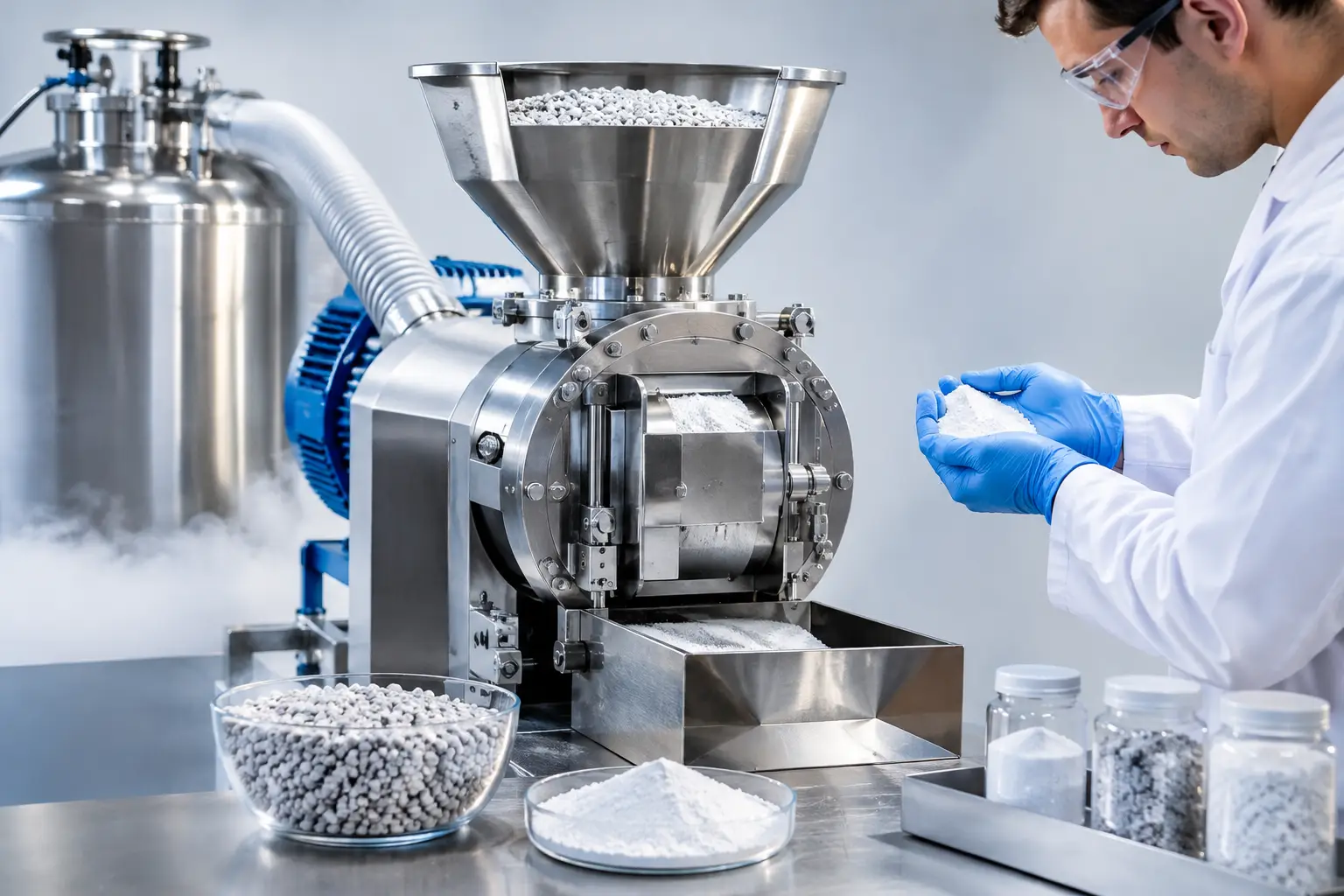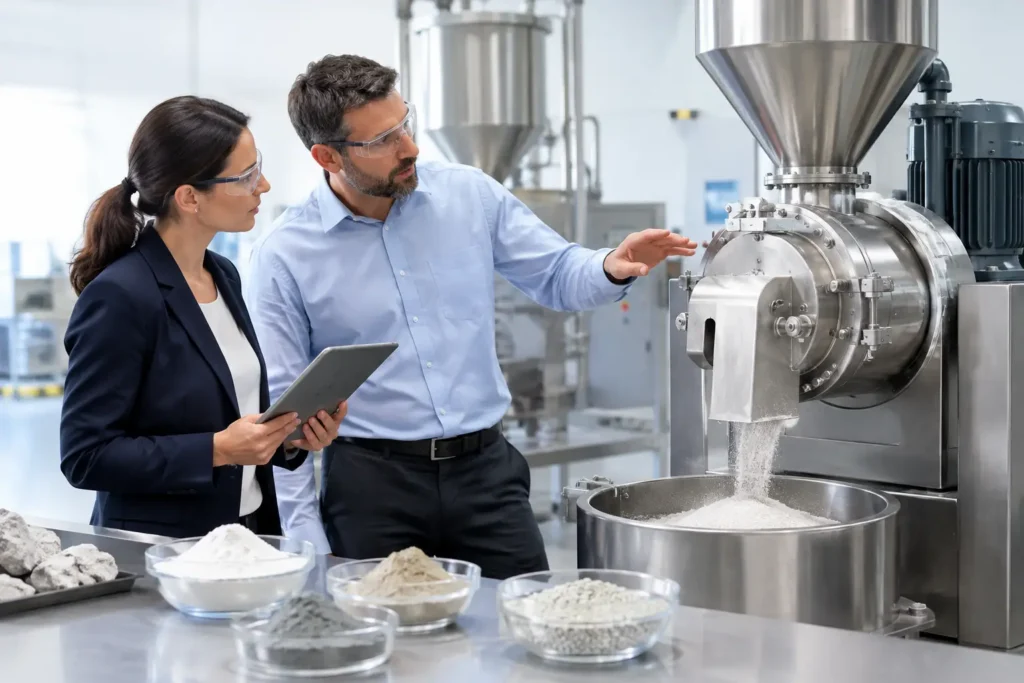
A milling system can meet its nameplate capacity and still create a costly process problem. Broad particle distribution, excessive temperature rise, metal contamination, poor dust control, and extended cleaning time can all undermine the value of an otherwise capable machine. For manufacturers comparing milling equipment suppliers, the central question is not simply who can quote a mill. It is who can engineer a process that performs consistently with the actual material, production rate, quality standard, and operating environment.
The right supplier brings more than a catalog of equipment. They should understand how material characteristics interact with milling energy, air flow, classification, feed control, and downstream handling. That level of involvement matters whether the application is pharmaceutical API processing, food ingredient size reduction, battery-material production, mineral milling, or chemical powder processing.
Start With the Material and the Required Result
Equipment selection should begin with a defined processing objective, not a preferred mill type. A material’s hardness, brittleness, moisture content, oil content, bulk density, abrasiveness, heat sensitivity, and flow behavior all influence the technology that will produce the best outcome.
For example, a heat-sensitive nutraceutical ingredient may require low-temperature processing or cryogenic grinding to prevent softening, volatilization, or loss of functional properties. A hard mineral may require a different approach focused on wear resistance, throughput, and energy use. A fine chemical with tight particle-size requirements may benefit from an air classifier mill or jet mill, where classification helps control the upper end of the particle-size distribution.
A qualified supplier will ask for more than a target micron size. They should clarify the required distribution, such as D10, D50, and D90 values; allowable oversize; acceptable fines; batch or continuous operation; and the impact of moisture or ambient conditions. These questions distinguish a process discussion from a basic equipment transaction.
Evaluate Milling Equipment Suppliers on Engineering Depth
The most capable milling equipment suppliers evaluate the entire process around the mill. Feed consistency, conveying conditions, dust collection, product discharge, screening, magnetic separation, and controls can all affect finished product quality and system uptime.
A supplier should be able to explain why a given technology fits the application and where its limitations may appear. Hammer mills, for instance, provide practical size reduction for many products and can support high production rates, but they may not be the best choice for ultra-fine specifications or materials that degrade under impact. Pin mills can offer controlled impact milling for many dry materials, while cone mills are often selected for deagglomeration, sizing, and controlled milling of friable products. Turbo mills, universal mills, and air classifier mills each serve different material behaviors and particle-size targets.
Engineering depth also shows up in how a supplier handles difficult requirements. This may include sanitary construction for food and pharmaceutical operations, specialized alloys for corrosive materials, ceramic or tungsten carbide wear components for abrasive feedstocks, and inert gas systems for oxygen-sensitive or combustible powders. A supplier that treats these requirements as afterthoughts may create expensive modifications later.
Ask How the System Will Control Particle Size
Particle size is not controlled by rotor speed alone. It is shaped by the combined effect of feed rate, milling intensity, screen or classifier selection, air volume, residence time, and material response. As production rates change, those variables can shift, sometimes widening the distribution or increasing oversize.
Ask prospective suppliers how the system maintains control under expected operating conditions, including normal variation in feedstock. If the process must reliably hold a narrow distribution, the answer may involve integrated air classification, closed-loop control, recirculation, or a dedicated feeding system. For less demanding applications, a simpler screen mill may offer lower capital cost and easier maintenance.
The right choice depends on the product requirement. Paying for ultra-fine capability that is not needed can add unnecessary complexity. Choosing a basic mill for a tightly controlled specialty powder can create ongoing quality losses that far exceed the initial savings.
Require Application Testing When the Risk Is High
Representative product testing is one of the most valuable steps in selecting a milling partner. It provides a practical view of particle-size distribution, throughput, temperature increase, yield, dust behavior, and equipment wear before a full-scale purchase is made.
Testing is especially useful when processing a new formulation, scaling from R&D to production, replacing an outdated mill, or handling a material with inconsistent incoming characteristics. It can also reveal whether a single-pass process is realistic or whether classification, multiple stages, cooling, or preconditioning will be required.
The test plan should reflect real production conditions as closely as possible. That means using representative material, target feed rates, and relevant upstream or downstream requirements. A trial that produces a small amount of acceptable powder at a low feed rate is not enough if the production line requires consistent output over long operating periods.
Ask for the data, not just a verbal recommendation. Useful results include particle-size analysis, production rate, product temperature, power consumption, yield, retained oversize, and observations about cleanability or material buildup. These findings create a more reliable basis for equipment sizing and process design.
Look Beyond the Mill to Containment and Cleanability
In many plants, the greatest operational challenges occur before and after the milling chamber. Fine powders can create airborne dust, cross-contamination risks, housekeeping burdens, and material losses. Hygroscopic products may bridge in hoppers or adhere to transfer lines. Low-bulk-density powders can be difficult to convey and collect efficiently.
A supplier should address containment as part of the equipment solution. Depending on the application, this may involve enclosed transfer, dust collection, high-efficiency filtration, negative-pressure operation, sealed discharge, glovebox containment, or integration with isolators. For combustible dust applications, the design also needs to account for the applicable hazard assessment and protection strategy.
Cleanability deserves the same attention. Dead zones, difficult access points, rough internal surfaces, and poorly designed transitions can extend changeover time and increase the risk of carryover. In regulated or multi-product operations, a mill that is fast to open, inspect, and clean may deliver more value than one with a slightly higher theoretical capacity.
Compare Lifecycle Value, Not Purchase Price Alone
Capital cost matters, but it is only one component of the decision. The lowest initial quote can become the most expensive option when it produces excessive waste, requires frequent wear-part replacement, consumes too much energy, or causes recurring downtime.
Compare suppliers using the operating factors that affect the plant over time: expected throughput, product yield, maintenance intervals, changeover duration, energy demand, spare-part availability, and technical response when production conditions change. For abrasive applications, ask for realistic expectations around wear components and the consequences of running beyond recommended replacement intervals. For high-purity applications, ask how the design minimizes metallic contamination and how wear is monitored.
Scalability is equally important. A pilot system should generate information that transfers to a larger production platform, and a production system should allow reasonable adjustment as demand grows. This does not always mean buying the largest possible mill. Oversizing can reduce efficiency at low operating rates or make fine-control conditions harder to maintain. The better approach is to size the system for the expected operating window and define a realistic expansion path.
Assess Support Before the Equipment Ships
Technical support is most valuable when it is available before startup problems become production losses. Evaluate how the supplier approaches installation, commissioning, operator training, documentation, controls integration, spare parts, and troubleshooting.
A strong support partner can help tune operating parameters after startup, identify the cause of a particle-size shift, and recommend process changes as raw materials or production targets evolve. This is particularly important for engineered powders where minor changes in feed moisture, screen condition, classifier settings, or air balance can affect final performance.
DP Mills approaches equipment selection as a process-engineering exercise, combining milling technology with application knowledge, system integration, and practical production requirements. That approach helps manufacturers select equipment based on measurable process outcomes rather than a generic machine specification.
The most useful supplier conversations begin with a clear sample of the material, a realistic production objective, and an honest description of the constraints inside the plant. Bring those details forward early, and the evaluation will produce a system that supports stable production instead of simply adding another machine to manage.