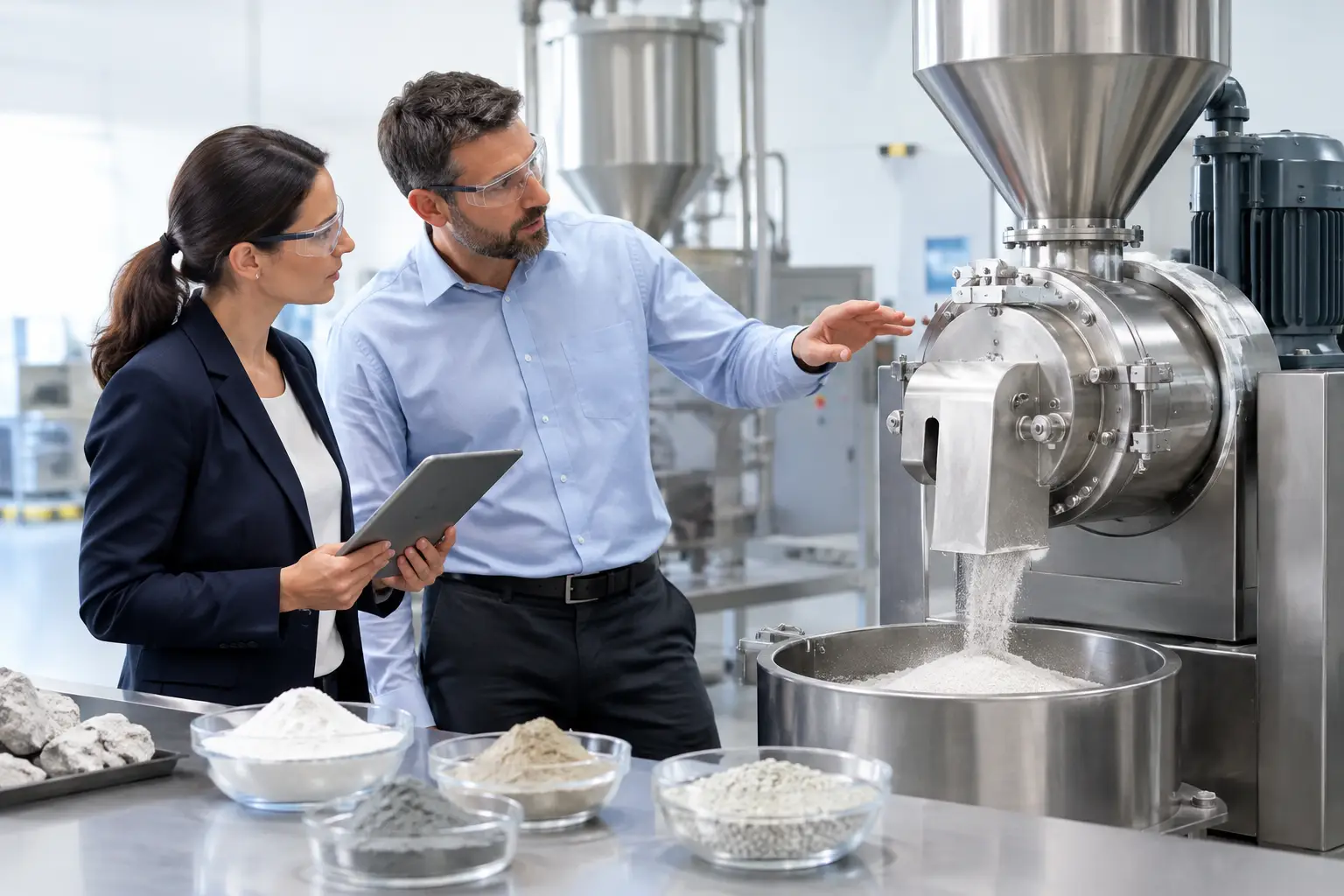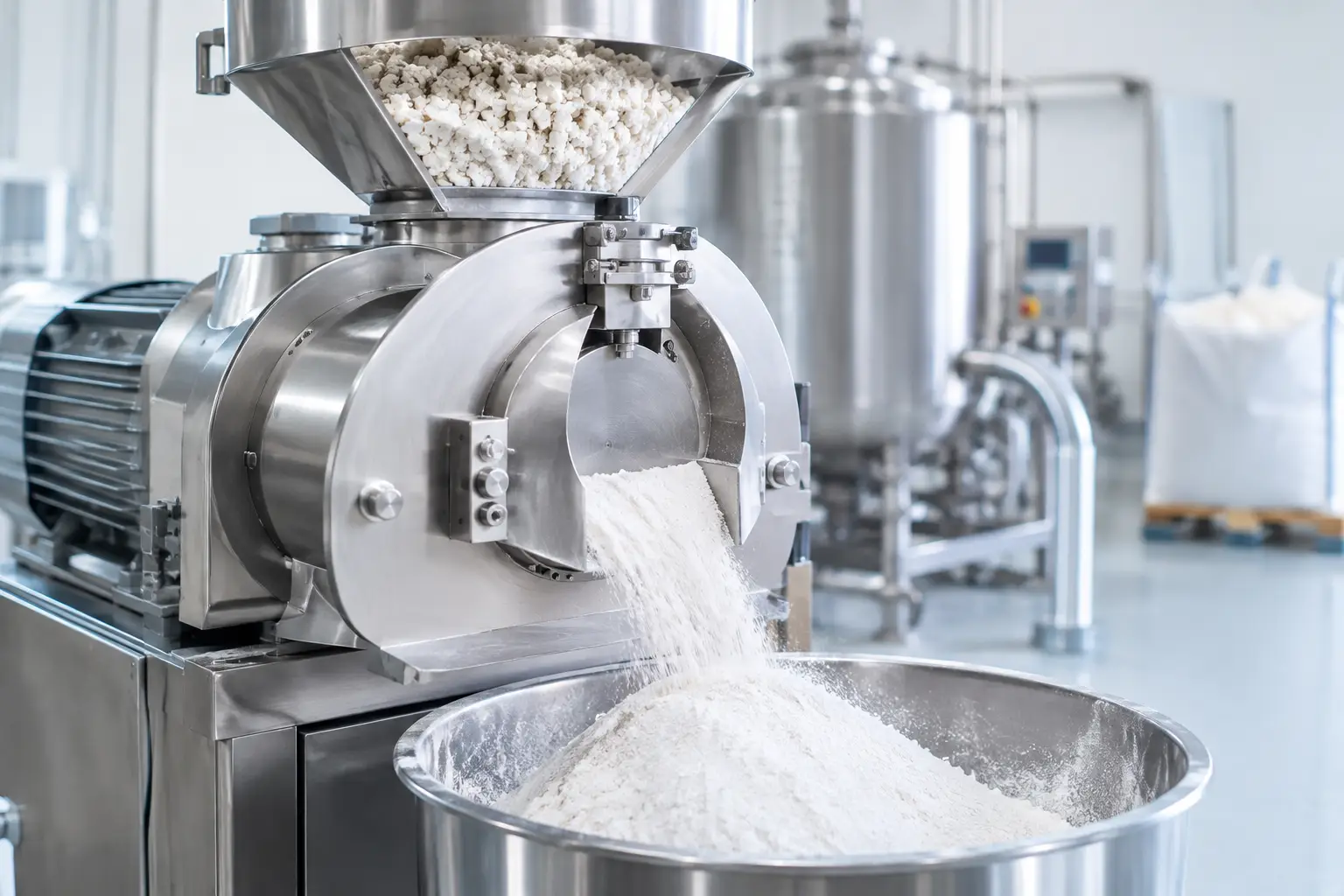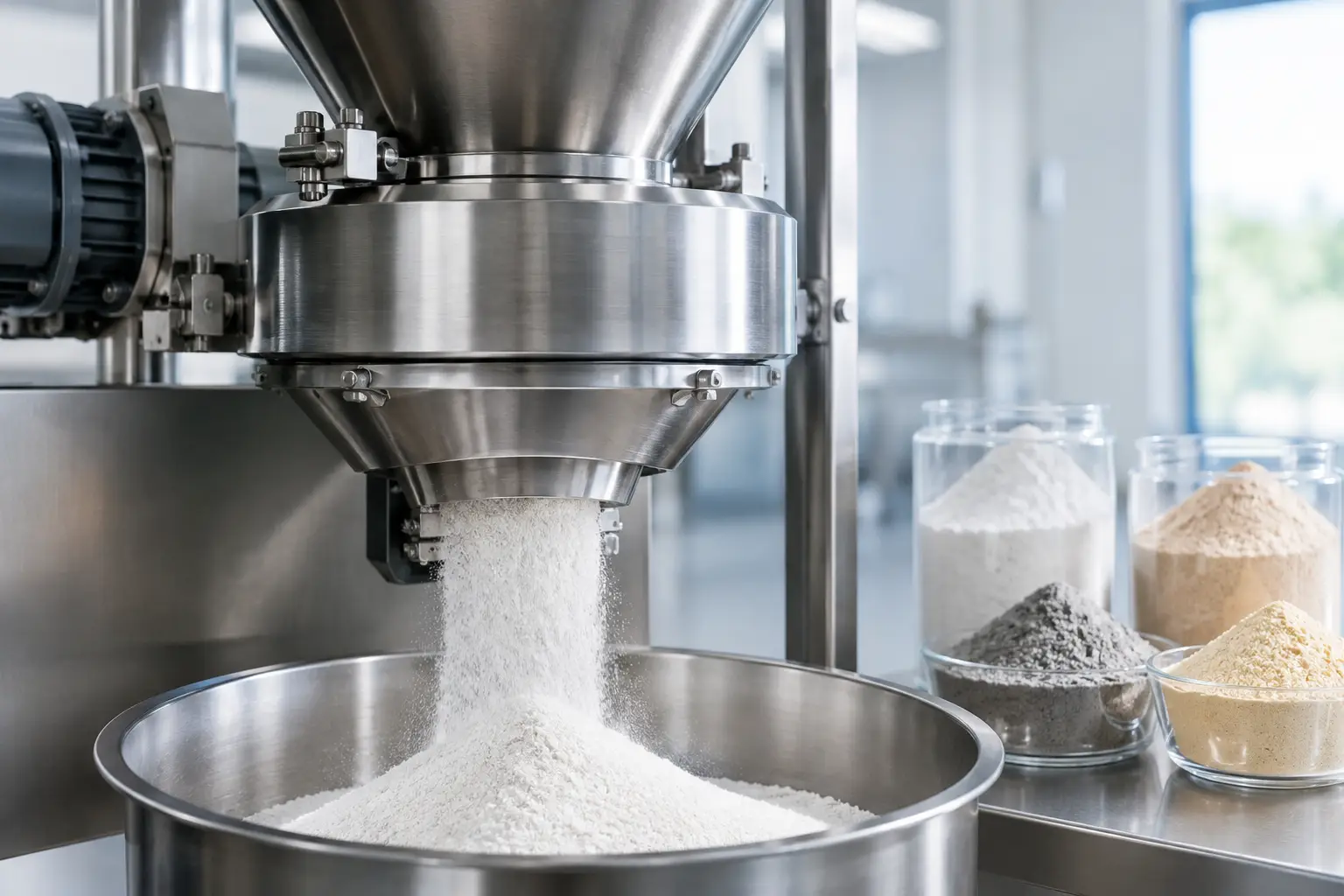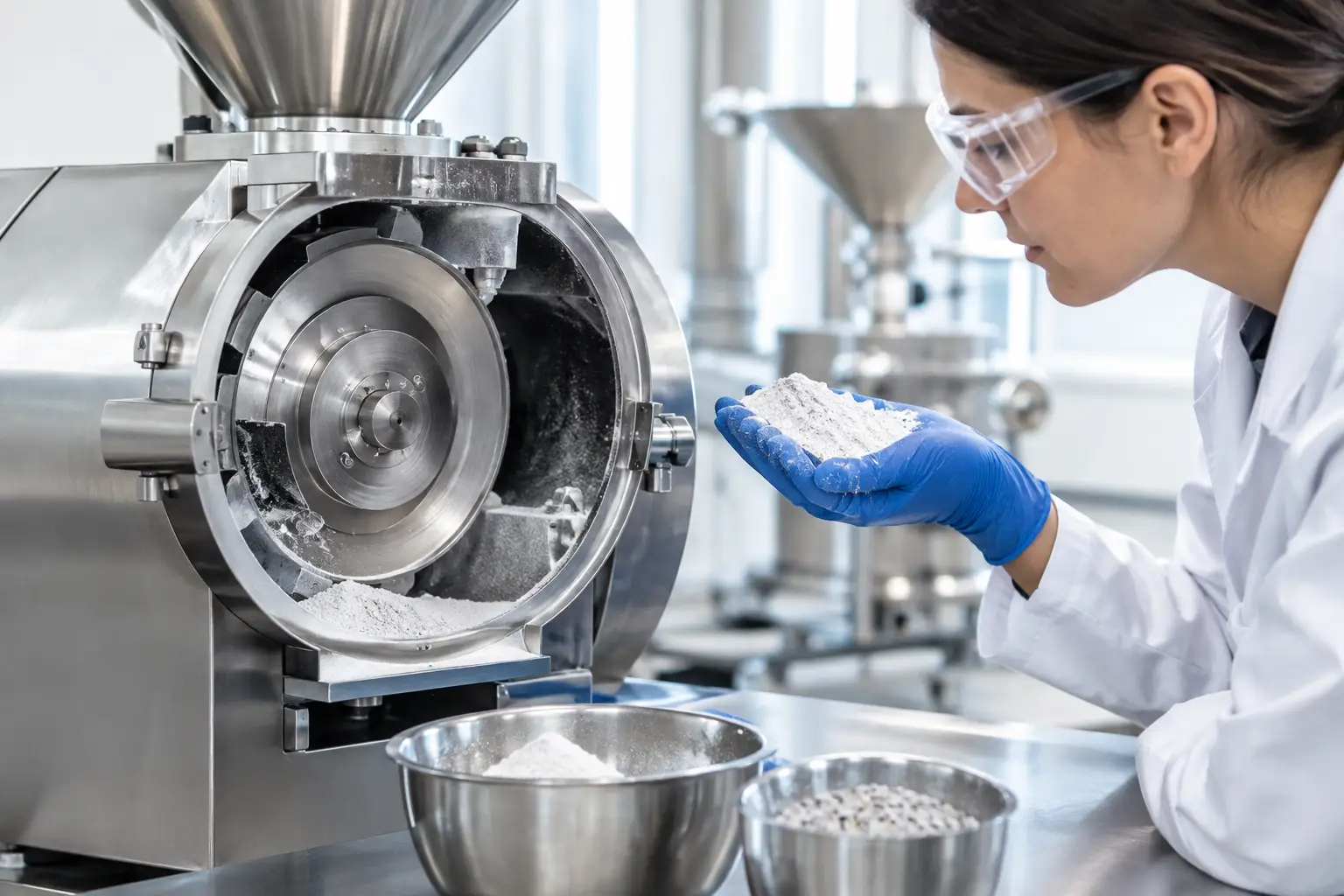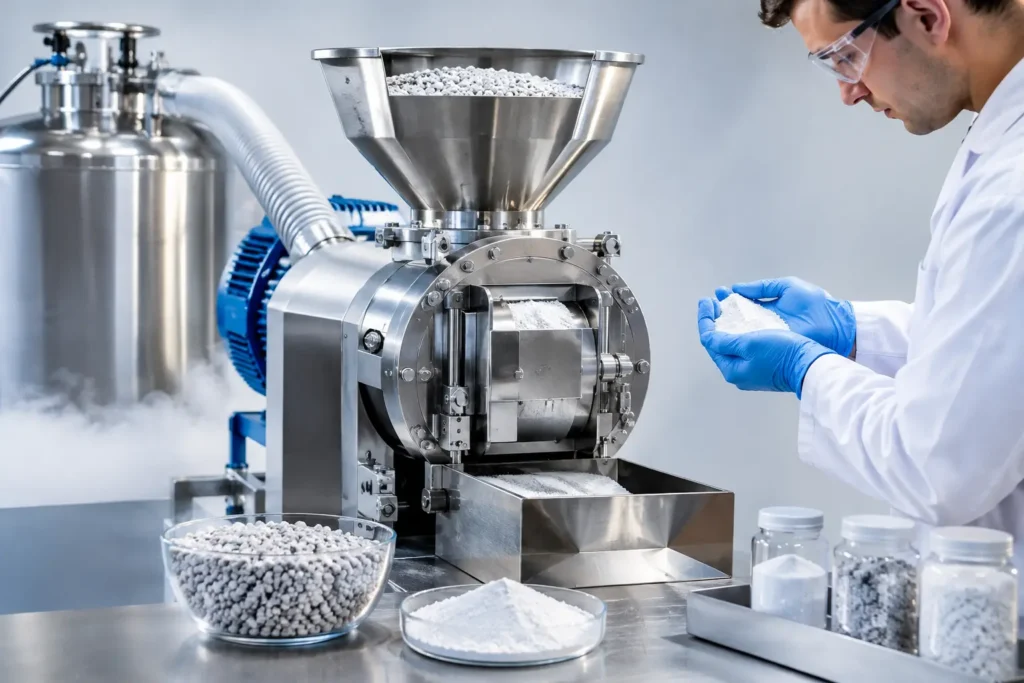
A material that smears in a conventional mill can become cleanly friable when cooled below its glass transition or embrittlement point. That change is the reason manufacturers select cryogenic grinding equipment, but low temperature alone does not guarantee an efficient process. The right system must control heat at the grinding zone, achieve the required particle distribution, manage nitrogen use, and operate reliably at production scale.
Cryogenic size reduction is commonly considered for heat-sensitive, elastic, sticky, waxy, oily, or volatile materials. It can also be effective where oxidation, odor release, flavor loss, or particle agglomeration limits conventional milling. For process engineers and operations teams, the selection decision begins with the material and the finished-product specification, not with a preferred mill design.
How to Select Cryogenic Grinding Equipment for the Material
The first question is whether the material actually benefits from cryogenic processing. Some materials become brittle enough to fracture efficiently at moderately reduced temperatures. Others need deep cooling to prevent softening, melting, or surface adhesion. Elastomers, spices, polymers, thermoplastics, pigments, pharmaceuticals, and certain battery or advanced materials can behave very differently as temperature falls.
A useful starting point is to define the material’s thermal and mechanical behavior. Determine its softening point, glass transition temperature where applicable, melting range, moisture content, oil content, volatility, hardness, and tendency to build up on contact surfaces. Particle morphology also matters. A brittle crystal and a flexible polymer may reach the same nominal particle size through entirely different grinding mechanisms.
Material testing should examine more than a single average particle-size result. The process team should evaluate the full particle size distribution, fines generation, bulk density, flowability, color, odor, active-content retention, and any change in downstream behavior. A powder that meets a screen analysis but bridges in a hopper or loses functional performance is not a successful result.
Cryogenic grinding can reduce heat-related degradation, but it introduces a cost and control variable: liquid nitrogen consumption. The objective is not simply to run as cold as possible. It is to establish the lowest practical temperature that produces stable fracture behavior and the required quality outcome. Excessive cooling can increase operating expense without improving throughput or particle control.
Match the Mill to the Required Grinding Mechanism
Cryogenic conditioning can be integrated with several milling technologies. The appropriate mill depends on feed form, target size, capacity, and the material’s response to impact, shear, and attrition.
Hammer mills are often suitable for coarse to intermediate size reduction when a chilled, embrittled material fractures readily under impact. They can provide practical throughput for many polymers, spices, and food ingredients. Screen selection and rotor speed influence the final result, although a screen-based configuration may be less suitable where very tight particle-size control is required.
Pin mills provide high-speed impact and are frequently applied when finer powder is needed from brittle feed. In a cryogenic configuration, controlled nitrogen injection and insulated process sections help prevent the product from warming as it enters and passes through the grinding chamber. Their performance depends heavily on uniform feeding. Surges can increase residence time, raise local temperatures, and widen the particle-size distribution.
Air classifier mills combine impact grinding with internal classification. They are valuable when the process requires a defined top size and tighter control of coarse particles. Classifier speed, airflow, and grinding energy must be tuned together. For some applications, the added control justifies the complexity; for others, a simpler impact mill followed by separate classification offers better maintenance access or capacity flexibility.
Jet mills may be considered for specialized fine and ultrafine applications where contamination control and narrow particle-size distributions are central requirements. However, they are not automatically the best answer for every cryogenic duty. Compressed gas demand, feed characteristics, desired throughput, and the practical effect of low-temperature conditioning on the material should be evaluated before selecting a jet-milling approach.
The mill is only one part of the system. Effective cryogenic grinding equipment includes feed metering, pre-cooling or conditioning, nitrogen injection, insulated conveying, grinding, classification where needed, product collection, dust control, and controls that coordinate the process. Weak temperature control upstream can undermine even a well-designed mill.
Define Particle Size as a Process Requirement
Specifications such as 95 percent below 250 microns or a defined D90 are more useful than asking for a fine powder. The equipment supplier needs to understand the required distribution, allowable oversize, acceptable fines level, and measurement method. Sieve analysis, laser diffraction, and image-based methods can report different aspects of the same powder.
The target must also reflect the purpose of milling. A spice processor may need release of flavor compounds while limiting heat exposure. A polymer recycler may need free-flowing granulate for compounding. A pharmaceutical or nutraceutical manufacturer may require a controlled distribution for blending and content uniformity. Battery and advanced-material producers may prioritize contamination limits and controlled morphology alongside size.
Finer is not always better. Reducing particle size increases surface area and can make a powder more cohesive, moisture-sensitive, or difficult to convey. It also generally requires more energy and may reduce throughput. Equipment selection should be based on the narrowest specification that creates measurable downstream value.
Evaluate Throughput Beyond Nameplate Capacity
A stated capacity without material context has limited value. Actual throughput is affected by feed size, feed temperature, desired final size, nitrogen injection rate, mill configuration, screen or classifier settings, and product collection efficiency. A mill producing a coarse product at high capacity may deliver significantly less material per hour when producing a fine, tightly controlled powder.
Define the production case clearly: expected annual volume, continuous or batch operation, shift pattern, campaign length, and required changeover time. Include realistic operating assumptions rather than ideal conditions. This is especially important for materials that absorb heat quickly or have variable incoming moisture and particle size.
Scale-up should be supported by representative trials. Pilot work can establish whether the material becomes sufficiently brittle, determine preliminary nitrogen demand, identify build-up risks, and show how particle distribution changes with process settings. It also provides data for designing feeders, conveyors, collection equipment, and controls around the actual material response.
Account for Contamination, Cleaning, and Containment
For regulated and high-value applications, the contact materials and equipment geometry are as important as grinding performance. Food, pharmaceutical, nutraceutical, and specialty chemical operations may require sanitary construction, cleanable product paths, documented surface finishes, and designs that minimize powder retention. Abrasion-sensitive materials may require consideration of wear-resistant liners and components.
Cross-contamination risk should be evaluated across the complete system, including feeders, transfer lines, cyclone separators, filters, and discharge valves. A mill that is easy to access but connected to poorly cleanable downstream equipment will still create extended changeovers and quality risk.
Dust collection deserves equal attention. Fine powders can create housekeeping, yield, exposure, and combustible-dust concerns. The collection system must suit the powder’s physical properties and the operating environment. Where nitrogen is used, facility planning must also address oxygen-deficiency hazards, ventilation, monitoring, interlocks, pressure management, and safe handling procedures. Cryogenic systems require disciplined engineering around both product quality and personnel safety.
Consider Operating Cost and Long-Term Maintainability
Liquid nitrogen is a visible operating cost, but it is not the only one. Compare total process cost, including electrical load, compressed air where applicable, wear parts, filter maintenance, cleaning labor, downtime, yield loss, and the cost of off-spec material. A lower-cost mill can become expensive if it requires frequent cleaning, struggles with temperature stability, or creates excessive fines.
Maintainability should be assessed in the actual plant environment. Ask how quickly operators can inspect the grinding zone, change screens or classifier components, replace wear parts, and clean product-contact surfaces. Consider access requirements, spare-parts strategy, controls diagnostics, and the availability of technical support. Reliability is built into the equipment design, but it is also shaped by how practical the system is to operate and service.
DP Mills approaches cryogenic applications as an integrated process problem. That means evaluating the material, temperature profile, milling mechanism, containment requirements, and production targets together rather than treating liquid-nitrogen injection as an accessory to a standard mill.
A well-selected cryogenic system should give the production team more than a colder grinding chamber. It should create predictable material behavior, stable quality, and a practical path from trial-scale data to dependable daily production.