A material can look extraordinary in a lab and still become a production headache on the plant floor. That is the real story with graphene. Its electrical conductivity, mechanical strength, thermal performance, and low density have made it one of the most discussed advanced materials in modern manufacturing. But for engineers and operations teams, the value of graphene is not defined by headlines. It is defined by whether the material can be processed consistently, safely, and at commercial scale.
For manufacturers evaluating graphene, the key questions are practical. What form of the material is actually being used? How does it behave during handling and size reduction? Where does it create measurable performance gains, and where do the economics or process risks narrow the opportunity? Those answers matter far more than broad claims about a miracle material.
What graphene actually is in production terms
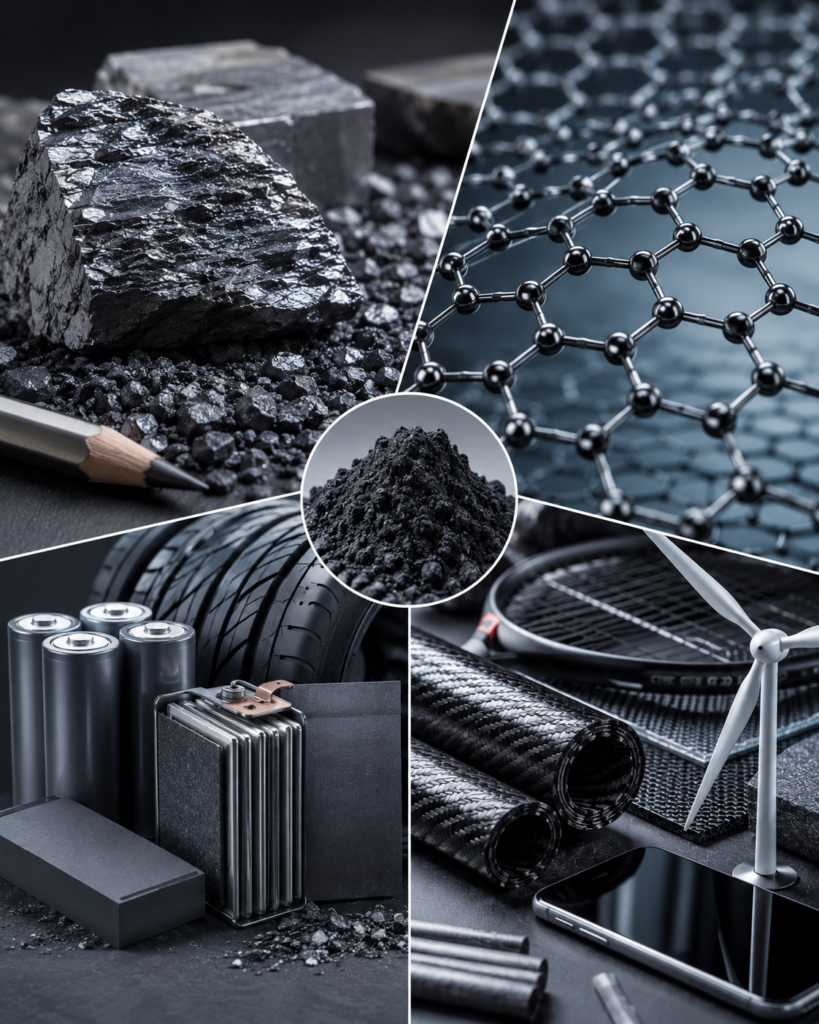
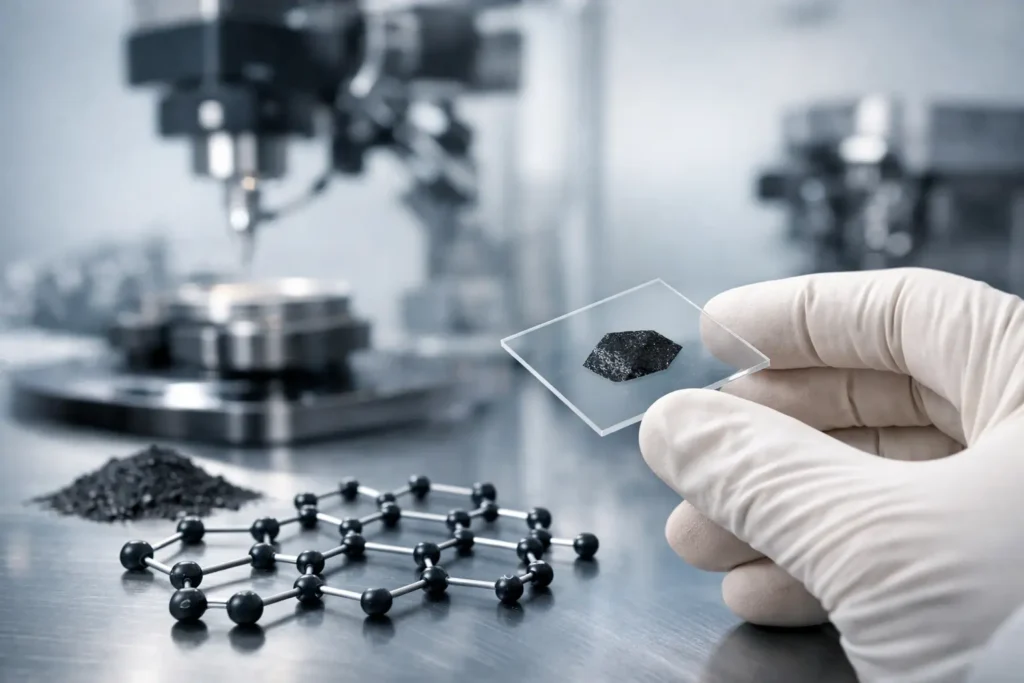
At the technical level, graphene is a single layer of carbon atoms arranged in a two-dimensional hexagonal lattice. That definition is useful in research, but industrial processing is usually more complicated. In commercial applications, the material may appear as graphene nanoplatelets, few-layer graphene, graphene oxide, reduced graphene oxide, or graphene-containing masterbatches and dispersions.
That distinction is not trivial. Each form behaves differently in storage, feeding, dispersion, classification, and downstream blending. A process designed for dry graphene nanoplatelets may be completely unsuitable for graphene oxide with different moisture behavior, density, and agglomeration tendencies. Manufacturers that treat all graphene as interchangeable often run into inconsistent product quality, poor dispersion, dust handling issues, or disappointing end-use performance.
In other words, the question is not simply whether a process can handle graphene. The better question is whether it can handle a specific graphene morphology, bulk density, surface chemistry, and target particle size distribution without damaging material integrity.
Why graphene attracts so much industrial interest
The appeal of graphene is straightforward. When properly incorporated into a formulation, it can improve conductivity, strengthen composites, enhance thermal transfer, and support barrier properties at relatively low loading levels. That makes it attractive for battery materials, conductive polymers, coatings, inks, elastomers, filtration media, and specialty chemical systems.
For battery manufacturers, graphene may support conductivity enhancement and structural performance in selected electrodes or conductive additives. In coatings and polymer systems, it can improve mechanical properties and wear resistance while helping with electrical or thermal conductivity targets. In composites, the goal is often to gain more performance without adding significant weight.
Still, the phrase “when properly incorporated” does a lot of work here. The same graphene material that performs well in a controlled R&D formulation may deliver much less value in production if it agglomerates, disperses poorly, or varies from lot to lot. The material’s potential is real, but the process window can be narrow.
Graphene processing challenges start with particle behavior
Many advanced materials fail to scale smoothly because their particle behavior is underestimated. Graphene is a prime example. Its high surface area, low bulk density, and tendency to agglomerate can complicate feeding, transfer, blending, and classification.
Agglomeration is often the first problem. Even if primary graphene structures are extremely thin, the material can cluster into larger soft or hard agglomerates during drying, packaging, transportation, and storage. Those agglomerates affect not only apparent particle size, but also flowability, dispersion quality, and final product performance. A coating or battery formulation built on poorly dispersed graphene may never achieve the conductivity or mechanical targets expected from the raw material specification.
Dust management is another major concern. Fine carbon-based materials demand careful attention to containment, housekeeping, and operator exposure control. This is especially relevant when processing dry powders at scale. The more valuable the material, the more costly product loss and contamination become.
There is also a thermal and mechanical sensitivity issue. Some materials benefit from aggressive milling. Others do not. With graphene, excessive mechanical stress can alter morphology, reduce aspect ratio, or create unwanted fines that change performance in the end product. That means the best particle processing strategy is not always maximum energy input. It is controlled energy input matched to the material and the application.
Where milling and classification fit into graphene production
Graphene processing does not always mean grinding the material down as far as possible. In many cases, the objective is deagglomeration, controlled size reduction, classification, or blending support while preserving critical functional properties.
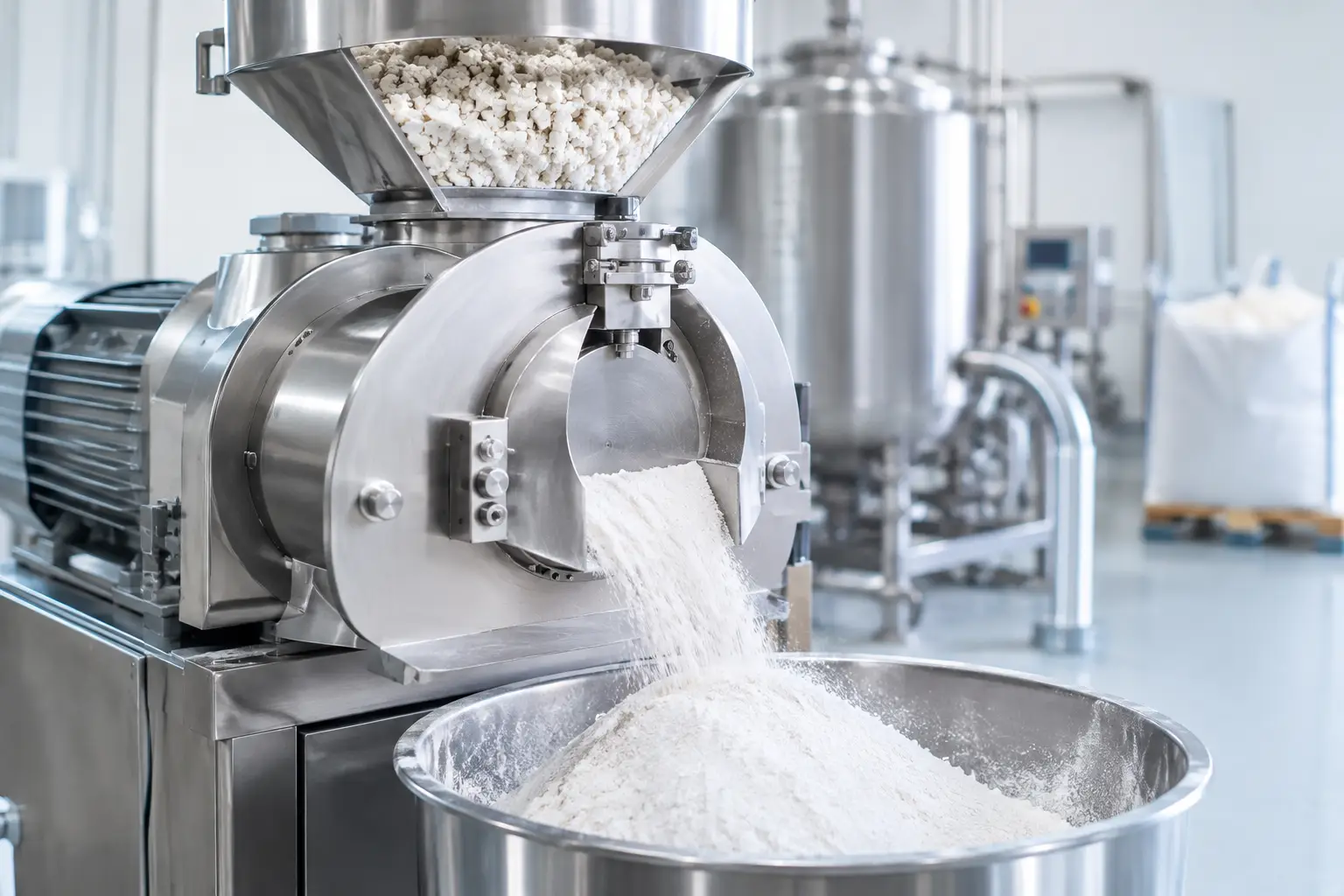
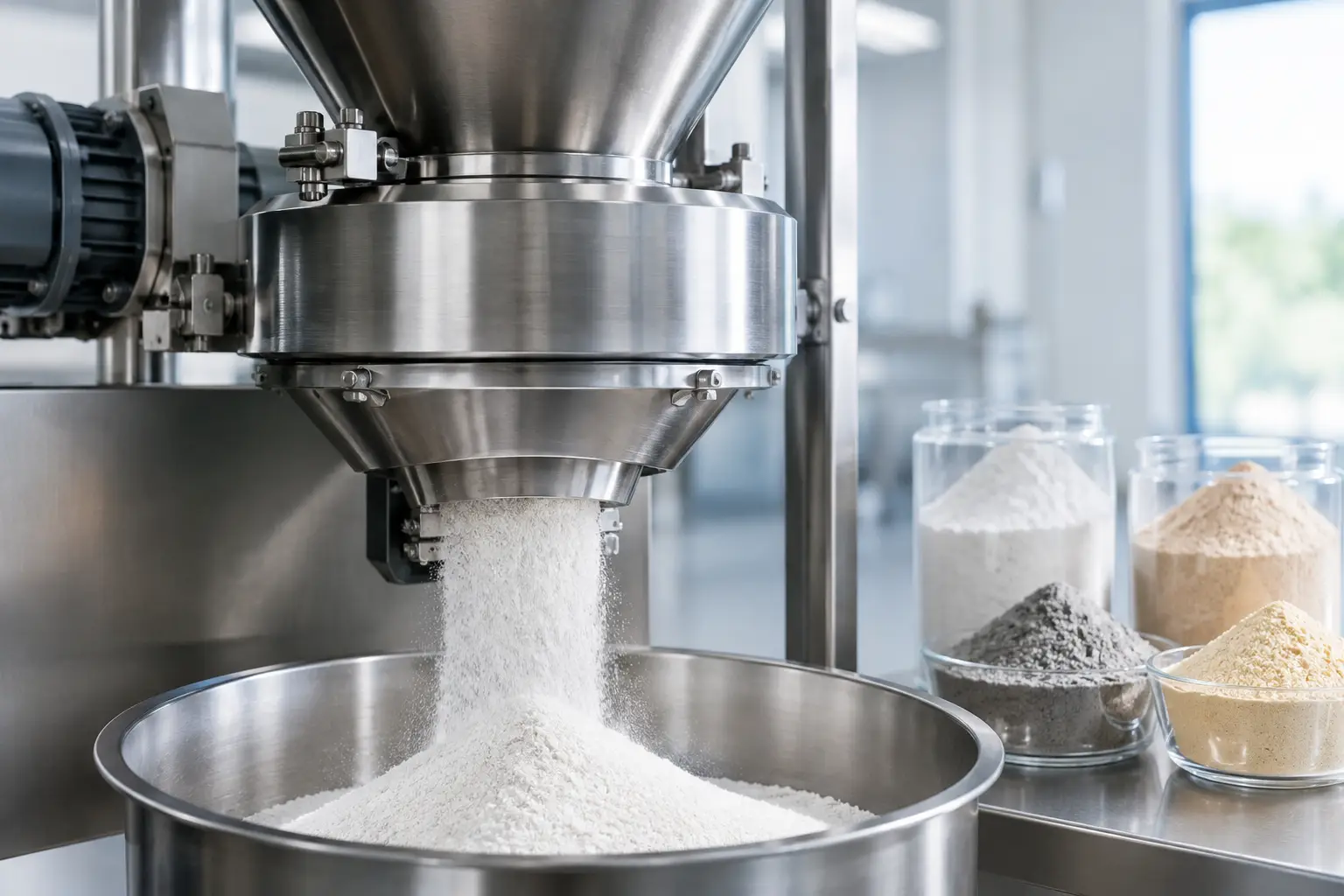
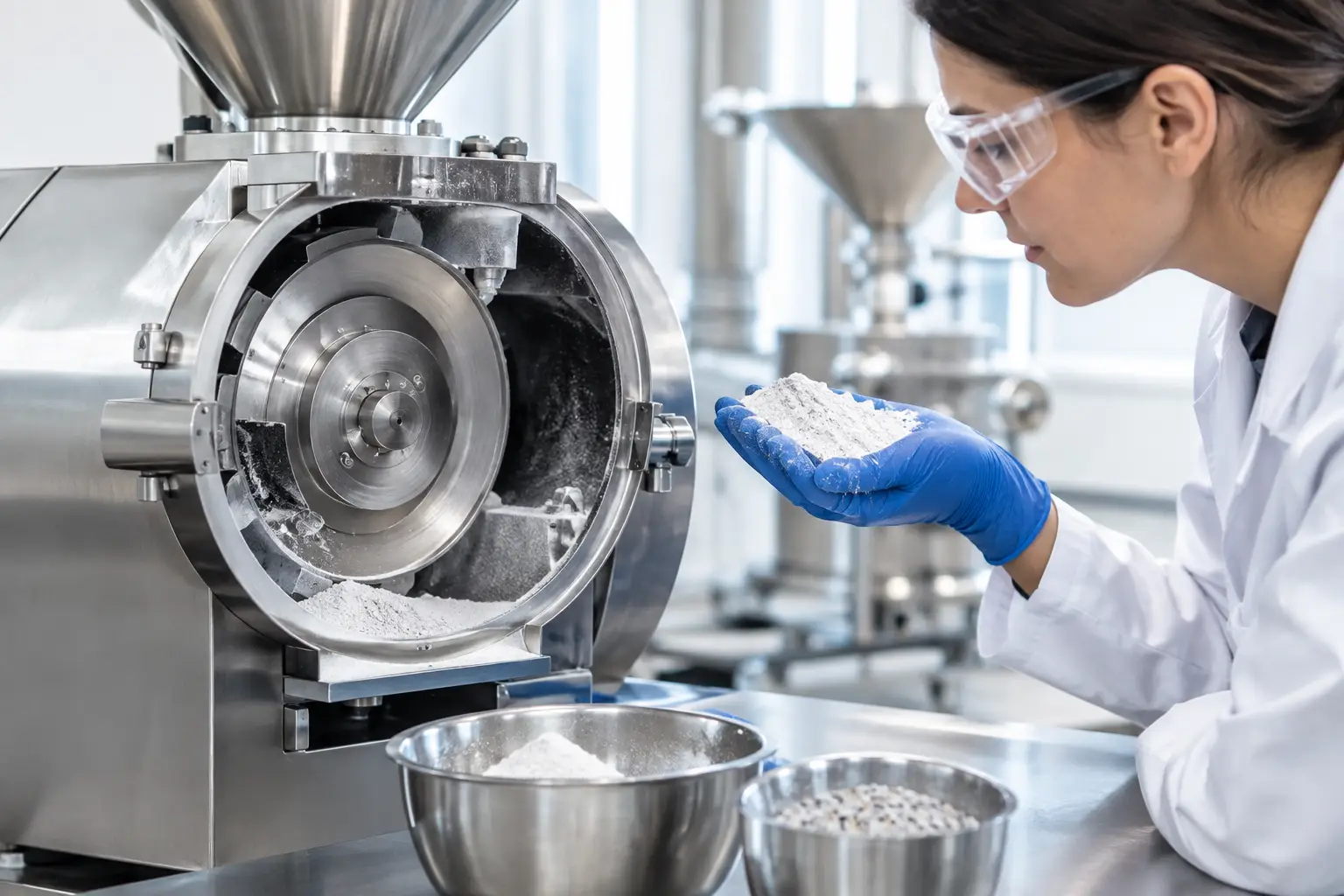
That is where process selection becomes important. Jet milling, for example, may be suitable when contamination control and fine particle management are priorities, particularly in applications where metallic contamination must be minimized. Air classification can help separate oversized particles or agglomerates from a usable fraction without excessive mechanical impact. Pin mills, hammer mills, or other impact-based technologies may fit selected precursor or composite processing steps, but not every graphene form will tolerate those forces equally well.
The process goal must be clear from the start. If the target is narrower particle size distribution, the system should be engineered around classification performance. If the target is better downstream dispersion, then deagglomeration and feed consistency may matter more than absolute fineness. If the target is conductivity in a formulated product, preserving structure may be more valuable than pushing to a smaller particle size.
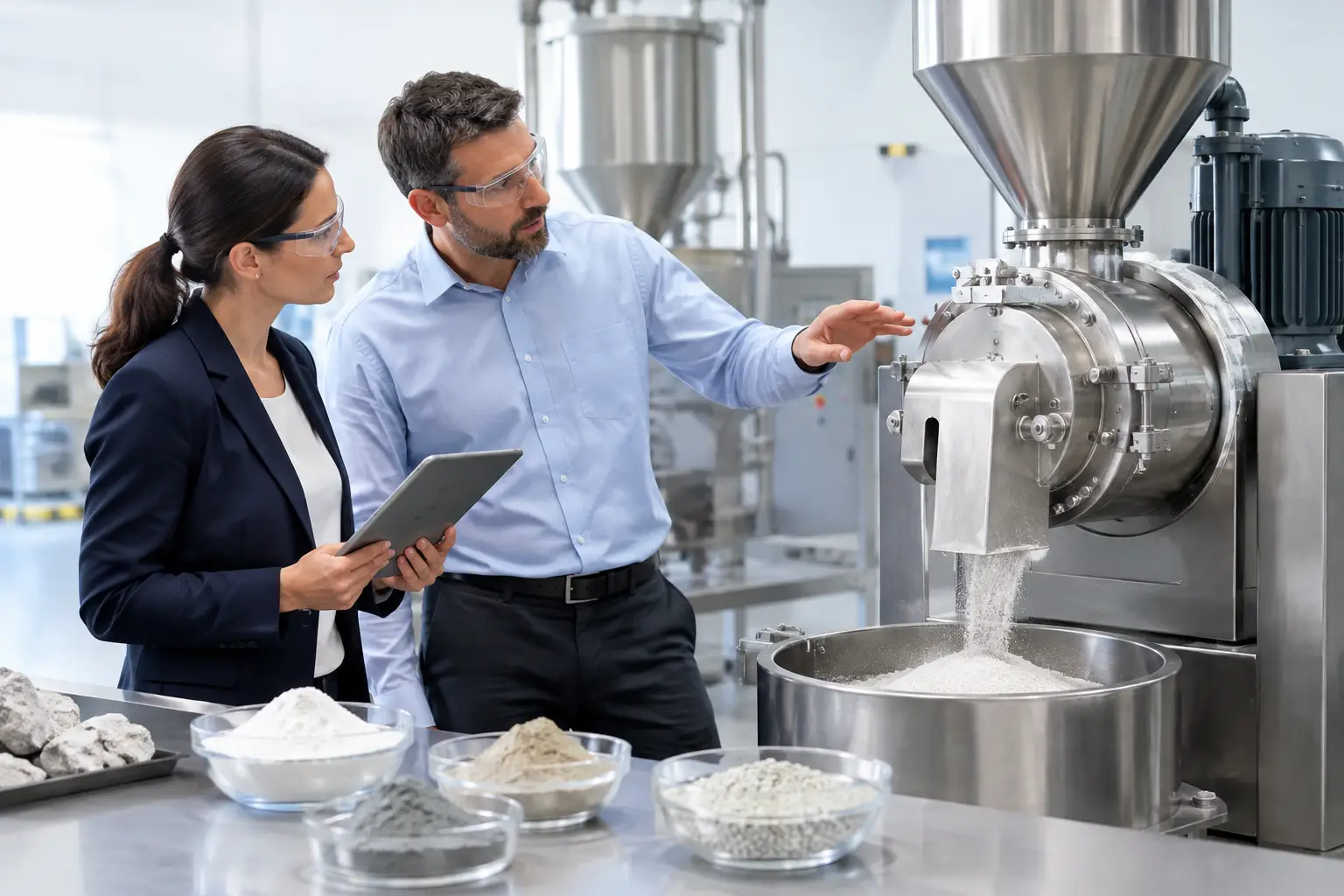
This is one reason engineered process development matters. Equipment should be chosen based on the behavior of the actual material under real operating conditions, not on a generic assumption that all fine powders respond the same way. For manufacturers scaling advanced materials, that distinction can determine whether a project becomes commercially viable.
Graphene applications depend on trade-offs
There is no single answer to whether graphene is worth the investment. It depends on the application, loading level, processing cost, and performance gain required.
In high-value sectors such as energy storage, electronics, and specialized coatings, the economics can support more complex material handling and tighter process controls. In larger-volume applications, such as commodity plastics or broad industrial coatings, cost-performance balance becomes harder. If graphene improves a formulation only marginally compared with carbon black, graphite, or other conductive fillers, manufacturers may struggle to justify the premium.
Performance trade-offs also show up in formulation work. Higher graphene loading may improve conductivity, but it can also affect viscosity, flow, and processability. A finer fraction may disperse more easily in one system, yet create dust or feeding challenges in another. A highly structured material may provide better reinforcement, but only if the process can preserve that structure through mixing and downstream handling.
This is why graphene should be evaluated as part of the whole process, not as an isolated raw material. The value proposition lives at the intersection of material properties, production reality, and end-use requirements.
What manufacturers should evaluate before scaling graphene
Before moving from lab quantities to pilot or full production, manufacturers should pressure-test the process in several areas. Feed behavior matters because low-density powders often bridge, flood, or feed inconsistently. Particle size distribution matters because oversized agglomerates can create weak points in performance. Contamination risk matters because conductive and high-purity applications are often sensitive to trace metals or foreign particles.
Thermal load and residence time should also be evaluated carefully. If the process generates more heat than expected, material properties may shift. If the system is difficult to clean, cross-contamination risks rise, especially in multi-product facilities. And if yield losses are significant, the economics can change quickly for a high-value material.
A well-designed scale-up program should answer practical questions early. Can the material be fed continuously? Can the process achieve the target distribution repeatedly? Does the selected milling or classification method preserve the graphene characteristics that drive end-use value? Can the system maintain throughput without compromising containment or operator safety?
For companies building a serious graphene production strategy, these are not secondary details. They are the process fundamentals that determine uptime, quality, and cost per kilogram.
Graphene is promising, but process discipline wins
Graphene deserves attention, but not for the reasons it is often marketed. Its real industrial promise is not that it changes every product category overnight. It is that, in the right applications, it can deliver meaningful performance gains when process conditions are tightly controlled and matched to the material.
That puts the burden on engineering, not hype. Manufacturers that approach graphene with clear application targets, disciplined material characterization, and properly selected particle processing systems are far more likely to see repeatable value. Companies that skip those steps often discover that a remarkable material on paper can be difficult to monetize in production.
For operations teams, the path forward is usually straightforward. Define the functional requirement first, understand how the graphene form behaves in your process, and build around consistency. Advanced materials rarely reward guesswork. They reward process control.
The most useful question is not whether graphene is the future. It is whether your process can turn its potential into stable, scalable output.