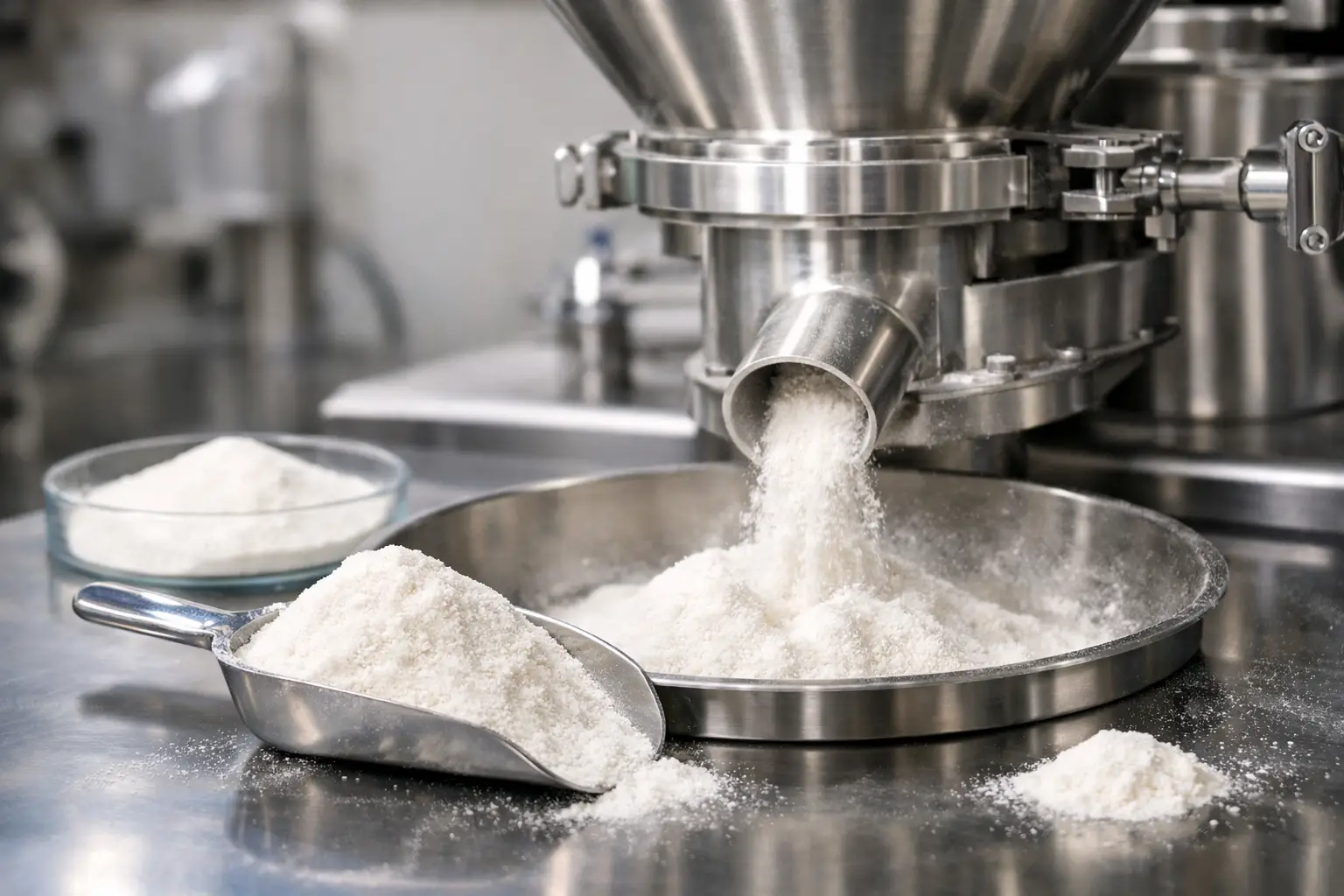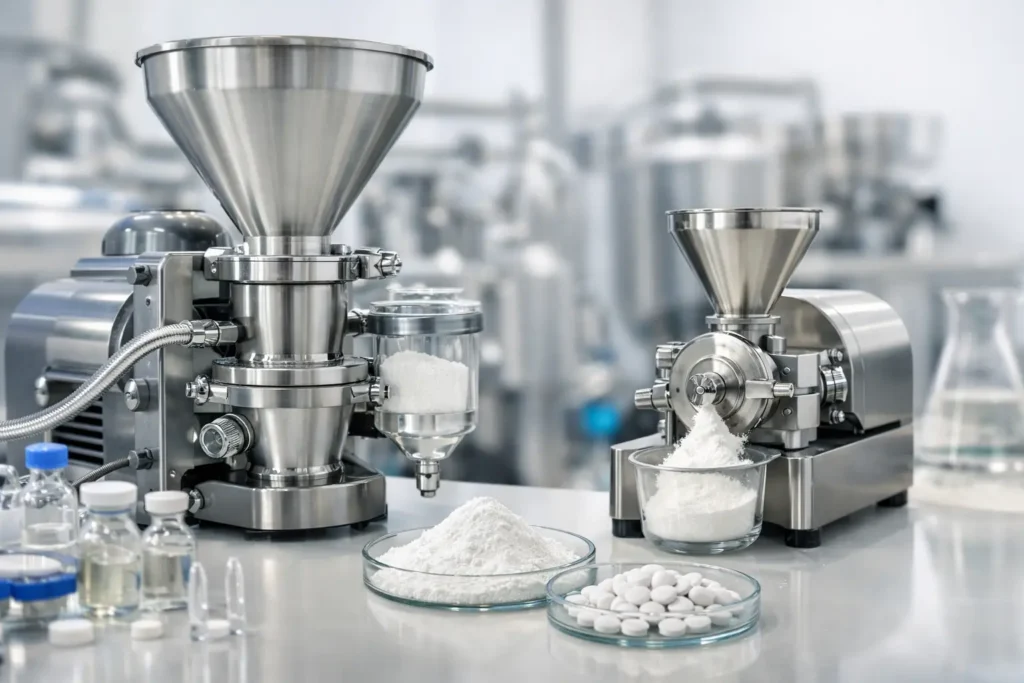
A mill that performs well in food or minerals can become a liability in pharmaceutical production. Tight particle size distribution, contamination control, heat sensitivity, cleanability, and batch-to-batch repeatability change the selection criteria fast. When manufacturers evaluate the best mills for pharmaceuticals, the right answer usually depends less on headline capacity and more on how the equipment behaves under real process conditions.
Pharmaceutical milling is rarely just about making particles smaller. It is about controlling dissolution, flowability, blend uniformity, bioavailability, and downstream performance in blending, granulation, tableting, encapsulation, or sterile processing. That is why mill selection should start with the product and process requirements, not with a preference for one machine type.
What defines the best mills for pharmaceuticals?
The best mills for pharmaceuticals are the systems that consistently achieve the target particle profile without compromising product integrity or production efficiency. In practice, that means evaluating several factors at the same time: final particle size and distribution, temperature rise, contamination risk, dust containment, cleaning requirements, throughput, and the ability to scale from development to commercial production.
A milling technology may produce the right top size but generate too many fines. Another may deliver tight control but at lower throughput than the line requires. Some mills are excellent for friable powders yet struggle with fibrous, fatty, sticky, or heat-sensitive materials. There is no universal best option. There is only the best fit for a defined pharmaceutical application.
Jet mills for high-purity fine grinding
Jet mills are often the first technology considered when very fine particle sizes and low contamination are critical. These systems use high-velocity gas streams rather than mechanical grinding media to reduce particle size, which makes them well suited for APIs and other high-value pharmaceutical materials where purity matters.
Their biggest advantage is the ability to achieve fine to micronized particle sizes with minimal mechanical contact. That can reduce wear-related contamination and help protect sensitive materials from some of the issues associated with high-impact mechanical milling. Jet mills are also a strong option when a narrow particle size distribution is required, especially when integrated with precise classification.
The trade-off is that jet milling is not always the most economical choice for every formulation. It can require higher energy input, and throughput may be lower than coarser grinding technologies depending on the target specification. Feed characteristics also matter. If the material is difficult to fluidize or has strong agglomeration tendencies, performance can vary without the right system design.
Air classifier mills when control and throughput must coexist
Air classifier mills combine mechanical impact milling with internal classification, allowing finer control over the finished particle size. For many pharmaceutical operations, this makes them a practical middle ground between coarse-impact mills and ultra-fine jet milling.
These mills are especially useful when manufacturers need a defined size range with reasonable throughput and efficient recirculation of oversized particles. Internal classification can improve consistency and reduce overgrinding, which matters when excessive fines affect blending behavior or downstream compaction.
Air classifier mills are often selected for powders that need tighter control than a conventional hammer mill can provide but do not require the extreme fineness of jet milling. As always, the result depends on rotor speed, classifier settings, feed rate, and material behavior. A properly engineered system matters as much as the mill category itself.
Cone mills for sizing, deagglomeration, and gentle handling
Cone mills are widely used in pharmaceutical processing because they handle sizing and deagglomeration with relatively gentle action. They are often installed to condition materials before blending, granulation, or final dosage form processing, especially when uniform flow and repeatable bulk density are important.
Their strength is process friendliness. Cone mills can break down soft agglomerates, improve flow characteristics, and deliver more uniform feed without the aggressive impact forces seen in other mill types. That makes them a strong fit for intermediate processing steps and for products that do not require ultra-fine grinding.
They are not usually the answer for very fine particle targets. If the process requires micronization or very narrow sub-100-micron control, other technologies are better suited. But for many pharmaceutical lines, cone mills solve a different and equally important problem: maintaining product consistency with low heat generation and straightforward cleanability.
Pin mills for precise reduction of friable materials
Pin mills use repeated impact between rotating and stationary pins to achieve size reduction. In pharmaceutical applications, they can be effective for friable materials where a finer grind is needed than a cone mill typically provides, but where jet milling may be unnecessary.
A well-configured pin mill can deliver efficient size reduction with good control and relatively compact system design. They are often chosen for dry powders that respond well to impact and where production teams need a balance of fineness, throughput, and operational simplicity.
The limitation is material sensitivity. Heat generation, stickiness, and moisture can affect performance. If the product softens during milling or has a tendency to smear, screen buildup and inconsistent output can become problems. Pin mills can be excellent in the right window and frustrating outside it.
Hammer mills for robust coarse to mid-range reduction
Hammer mills remain useful in pharmaceutical processing, particularly for bulk reduction, pre-milling, and applications where the target size is not extremely fine. They are valued for simplicity, throughput, and the ability to process a wide range of materials.
For upstream size reduction or initial breaking of larger feed material, a hammer mill can be a highly practical solution. It is often used when the process benefits from reducing feed size before a finer secondary milling stage. In multi-stage systems, that approach can improve overall efficiency and reduce the load on precision milling equipment.
The main caution is control. Hammer mills can generate a broader particle size distribution than technologies with integrated classification or gentler reduction mechanisms. They may also create more heat and more fines in some products. In regulated pharmaceutical environments, design details such as sanitary construction, dust containment, and ease of cleaning become especially important.
Cryogenic milling for heat-sensitive pharmaceutical materials
Some pharmaceutical compounds do not respond well to conventional room-temperature grinding. Heat can alter physical properties, reduce potency, promote smearing, or make the material difficult to fracture. In those cases, cryogenic milling can change the process window entirely.
By lowering product temperature, cryogenic systems can improve brittleness, reduce thermal degradation, and make sticky or elastic materials more manageable. This is particularly valuable for difficult excipients, polymers, waxy compounds, and certain specialty formulations.
Cryogenic processing adds complexity and operating cost, so it is not the default answer. But when conventional milling causes product loss, inconsistent particle size, or unacceptable thermal impact, it can be the most effective route to stable production.
How pharmaceutical manufacturers should evaluate mill selection
Choosing among the best mills for pharmaceuticals starts with a disciplined review of the application. The required particle size is only one part of the decision. Teams should also evaluate whether the material is abrasive, hygroscopic, sticky, fibrous, elastic, heat sensitive, cohesive, or prone to electrostatic behavior. Those properties directly affect mill performance, uptime, and cleanability.
Process context matters just as much. A mill may work well in a lab trial but create bottlenecks in production if feed handling, containment, or discharge behavior are not addressed. The same applies to scale-up. Pharmaceutical manufacturers need confidence that the selected technology will reproduce the target particle profile across pilot and commercial volumes without excessive adjustment.
Maintenance and compliance should not be secondary considerations. In pharmaceutical environments, equipment access, washdown or clean-in-place suitability, validation support, and material-of-construction choices influence both operating cost and regulatory readiness. A system that meets particle size goals but slows changeovers or complicates cleaning may not be the right long-term choice.
This is where engineered customization becomes valuable. Rather than forcing an application into a standard machine, experienced process partners evaluate the complete milling objective – particle size, throughput, temperature control, containment, integration, and scalability – and design around that requirement. For pharmaceutical manufacturers, that approach reduces risk and improves process reliability.
DP Pulverizer Americas works with processors across demanding powder applications where mill performance is tied directly to product quality and operational efficiency. In pharmaceutical environments, that engineering perspective is often the difference between a machine that runs and a system that truly performs.
If you are comparing mill types, the best next step is not asking which technology is best in general. It is defining what your product must do after milling, because that is where the right answer starts.