When a powder processing line produces too many fines, too much oversize, or an unstable particle size distribution, the problem is rarely just the mill. In many operations, the air classification process is what determines whether the final product meets specification, whether usable material is recovered, and whether throughput stays where it needs to be.
For manufacturers handling pharmaceuticals, food ingredients, minerals, chemicals, battery materials, or advanced powders, classification is not a secondary step. It is a core process variable. Understanding how it works helps engineers make better decisions about system design, product quality, energy use, and long-term operating performance.
What is the air classification process?
The air classification process separates particles by size, shape, and density using a controlled air stream and mechanical or dynamic forces rather than screens. Instead of forcing material through physical mesh openings, the system uses aerodynamic behavior to distinguish lighter or finer particles from coarser or heavier ones.
This matters when screening becomes inefficient or impractical. Very fine powders can blind screens, agglomerate, or create unacceptable product loss. In those cases, air classification provides tighter control and more continuous performance, especially in applications where micron-level particle cut points are required.
At a practical level, the process works by introducing a feed material into a classification zone. As particles move through that zone, the system balances opposing forces. Drag from the air stream tends to carry finer particles with the flow, while centrifugal force and particle mass tend to reject larger particles. The point where those forces separate acceptable product from reject material is the cut point.
How the air classification process works in production
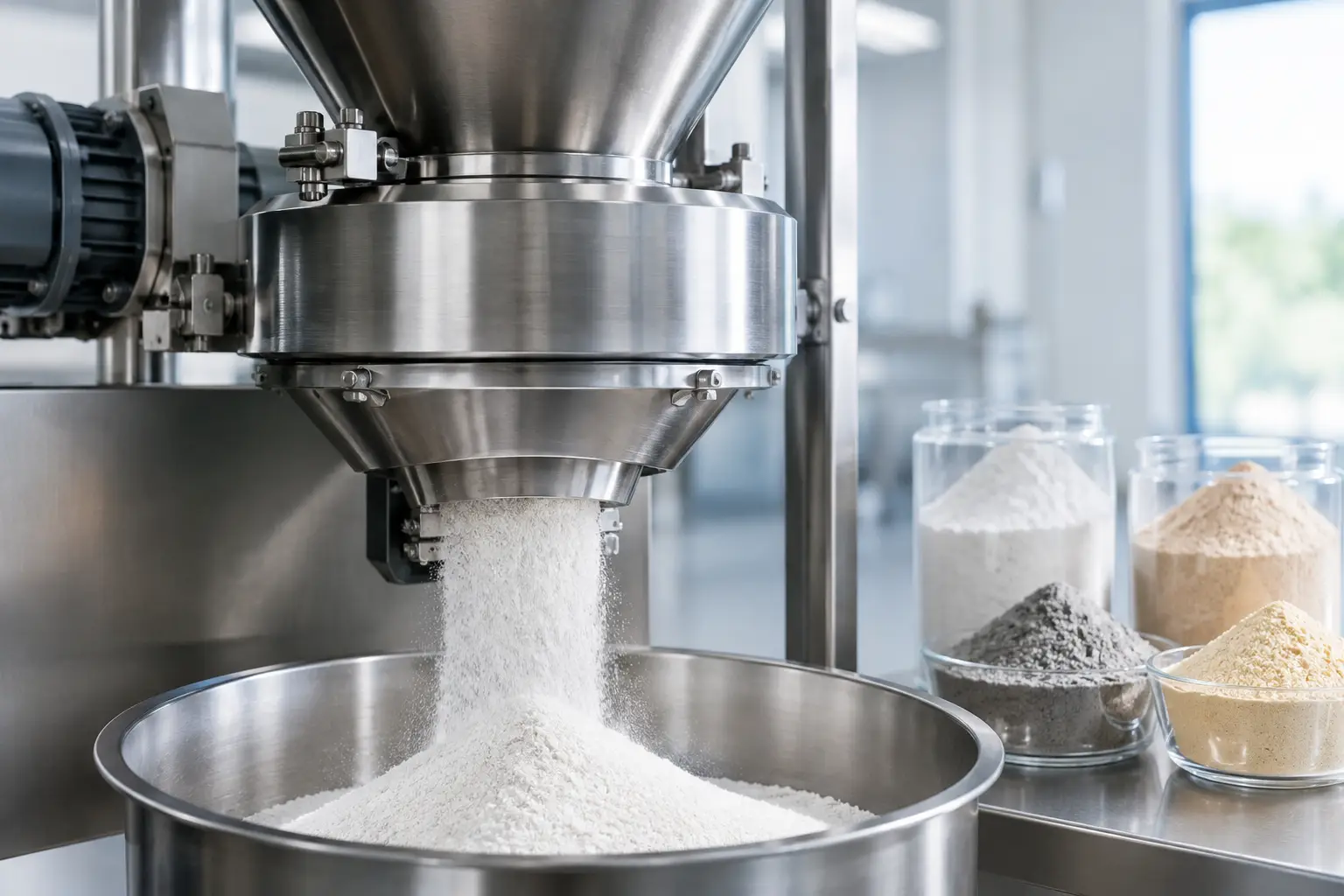
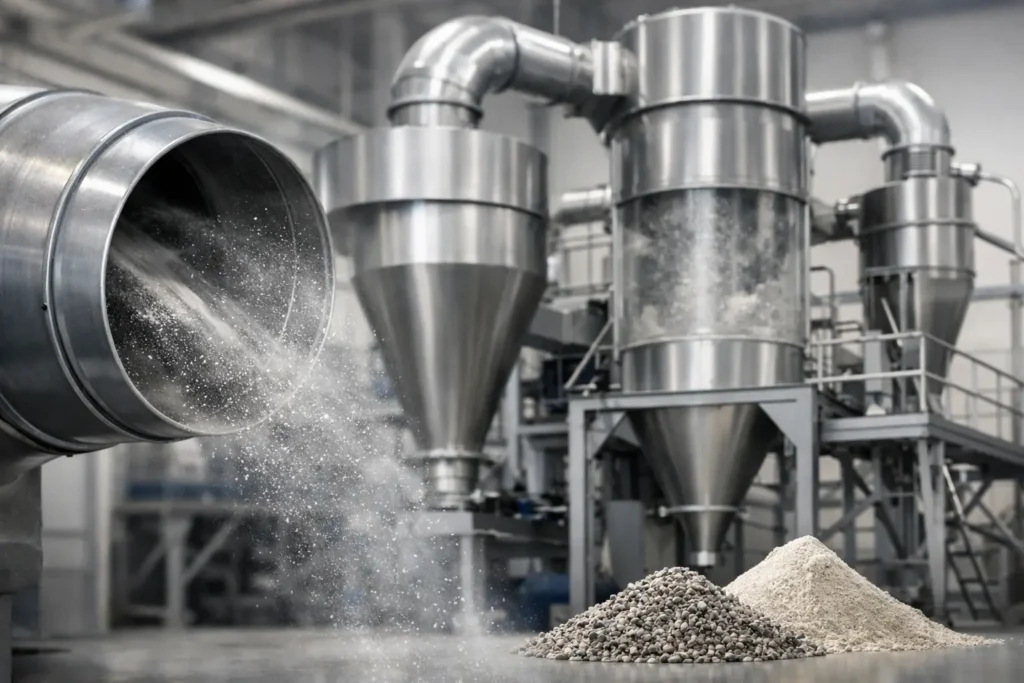
Most industrial classifiers rely on a consistent sequence. Material enters the system through a controlled feed mechanism. Process air moves the powder into the classification chamber, where a rotating classifier wheel, rotor, or similar internal component creates a separation field. Fine particles that meet the target criteria pass through and are collected downstream, while coarse particles are rejected and either discharged or returned for further milling.
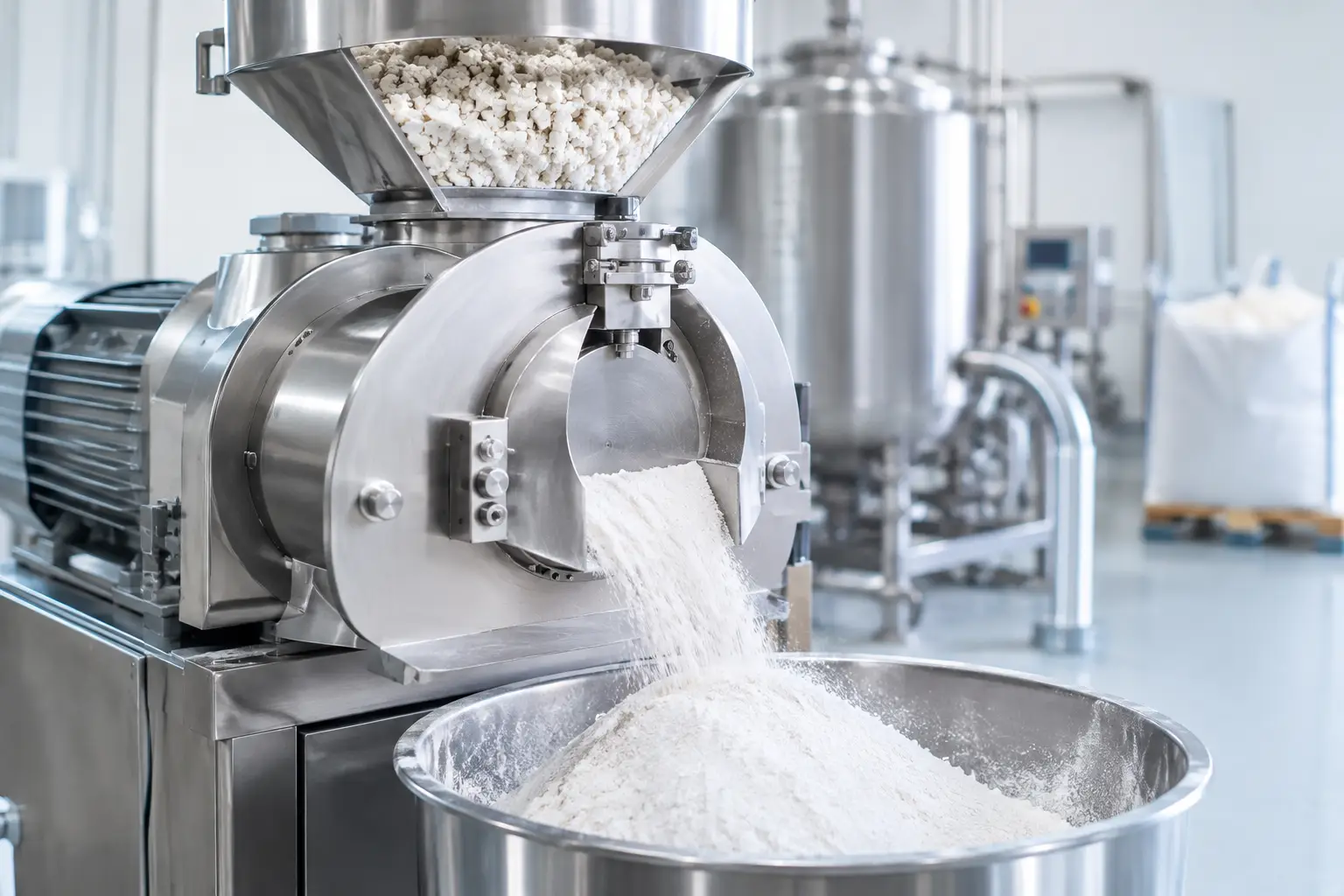
In a closed-loop system, this becomes more efficient. Oversize particles can be sent back into a mill for additional size reduction, while correctly sized product exits the circuit. That combination of milling and classification is common in air classifier mills, where grinding and particle separation happen in one integrated system.
The effectiveness of separation depends on more than wheel speed. Air volume, feed rate, particle loading, material density, particle morphology, moisture content, and system pressure all influence the result. Two materials with the same top size can classify very differently if one is fibrous, adhesive, or irregular in shape.
That is why classification performance should be evaluated as part of the full process, not as an isolated equipment specification.
Why manufacturers use air classification
The main reason is control. In many industries, product performance depends on a narrow particle size distribution. If the process allows too many oversized particles, downstream blending, dissolution, compaction, coating, flowability, or reaction performance may suffer. If too many fines remain, yield loss, dust generation, poor handling, or inconsistent bulk density can become recurring issues.
Air classification gives processors a way to tighten that distribution without relying solely on repeated milling. That can improve overall efficiency because the system is not wasting energy grinding already acceptable particles below target size.
It also supports contamination reduction in the right application. Since the process avoids physical screen contact, wear-related contamination may be reduced compared with systems where fine mesh or mechanical contact points become a source of product compromise. That benefit depends on material abrasiveness and system design, but it is a meaningful consideration in high-purity applications.
Another advantage is scalability. Once a material has been characterized properly, air classification can be integrated into pilot and production systems with a clearer path to predictable performance.
Key variables that affect classification results
Cut point and particle size target
The cut point is the particle size threshold the classifier is trying to achieve. In reality, no classifier creates a perfectly sharp separation. There is always a transition zone where some particles near the cut size report to both fine and coarse fractions. The goal is to make that separation as efficient and repeatable as the application requires.
Tighter cut points generally demand more precise control of rotor speed, airflow, and feed consistency. As target sizes become finer, system sensitivity increases.
Airflow and velocity
Air is not just a transport medium. It is the working force of the separation process. Too little airflow can allow fines to remain with coarse product. Too much airflow can pull unwanted larger particles into the fine fraction. Stable airflow is especially important in systems processing low-density or highly friable materials.
Rotor or classifier wheel speed
Higher wheel speed usually produces a finer cut because centrifugal force increases and rejects more coarse particles. Lower speed generally allows larger particles to pass. But speed adjustments have limits. If the feed material is inconsistent or the air balance is poor, changing wheel speed alone may not solve the problem.
Feed rate and solids loading
Overfeeding a classifier reduces separation efficiency. As solids loading rises, particle-to-particle interference increases and the classification zone becomes less selective. In production environments focused on throughput, this is a common trade-off. More feed may look attractive on paper, but if it broadens the distribution or increases recycle load, net process efficiency can decline.
Material characteristics
Moisture, cohesion, density, hardness, and shape all matter. Free-flowing mineral powders behave differently from sticky food ingredients or electrochemically sensitive battery materials. Materials that agglomerate may require deagglomeration or upstream conditioning before classification can perform consistently.
Air classification process applications across industries
In pharmaceuticals and nutraceuticals, air classification supports tighter control over active and excipient particle size, which can influence dissolution, blending behavior, and dosage consistency. In food processing, it can help separate fine fractions, manage texture targets, and improve ingredient uniformity while minimizing thermal stress compared with some alternative methods.
In minerals and chemicals, the process is often used to produce more precise grades, improve downstream handling, and reduce the amount of off-spec material. In battery and advanced material applications, where performance can depend heavily on controlled particle size and minimal contamination, classification becomes even more critical.
The value is not identical across all sectors. Some applications prioritize narrow top size control. Others are more concerned with fines removal, yield improvement, or closed-loop milling efficiency. The right objective should be defined before equipment is selected.
Air classification as part of an integrated milling system
Classification often performs best when engineered into the broader size reduction circuit. In an air classifier mill, the mill reduces particles and the internal classifier controls which particles exit the system. This approach can improve throughput, reduce overgrinding, and support tighter product consistency in a smaller footprint than separate standalone units.
Still, integrated systems are not always the correct answer. Some applications benefit from a separate classifier downstream of a primary mill, especially when process flexibility, staged separation, or multi-product operation is required. The best configuration depends on the material, production target, cleaning requirements, and how tightly the final PSD must be controlled.
This is where application expertise matters. Equipment selection based only on target micron size can lead to disappointing real-world performance if recyclability, feed variability, wear behavior, or maintenance access are not considered early.
Common air classification process challenges
Classification systems are highly effective, but they are not immune to process issues. Inconsistent feed properties can shift cut performance. Excess moisture can create buildup. Improper air balance can reduce selectivity. Internal wear can gradually change system behavior, especially in abrasive applications.
Another common issue is expecting classification to compensate for poor upstream process control. If the mill produces a wildly unstable feed, the classifier can only correct so much. Likewise, if dust collection, conveying, or feeder design is undersized, classifier performance may appear inconsistent even when the core machine is functioning correctly.
Routine evaluation of process data helps prevent these problems. Tracking feed rate, classifier speed, differential pressure, product yield, and PSD trends gives operators a clearer view of whether the system is actually optimized or simply running.
What to evaluate before selecting a system
A good starting point is not the machine. It is the material and the required outcome. Engineers should define the target PSD, acceptable fines content, throughput range, contamination limits, thermal sensitivity, and whether the process needs open-loop or closed-loop operation.
From there, practical questions matter. Does the application require sanitary design? Is inert operation needed? How abrasive is the material? Will the system need to scale from pilot to production? How often will the product change, and how important is cleanout time?
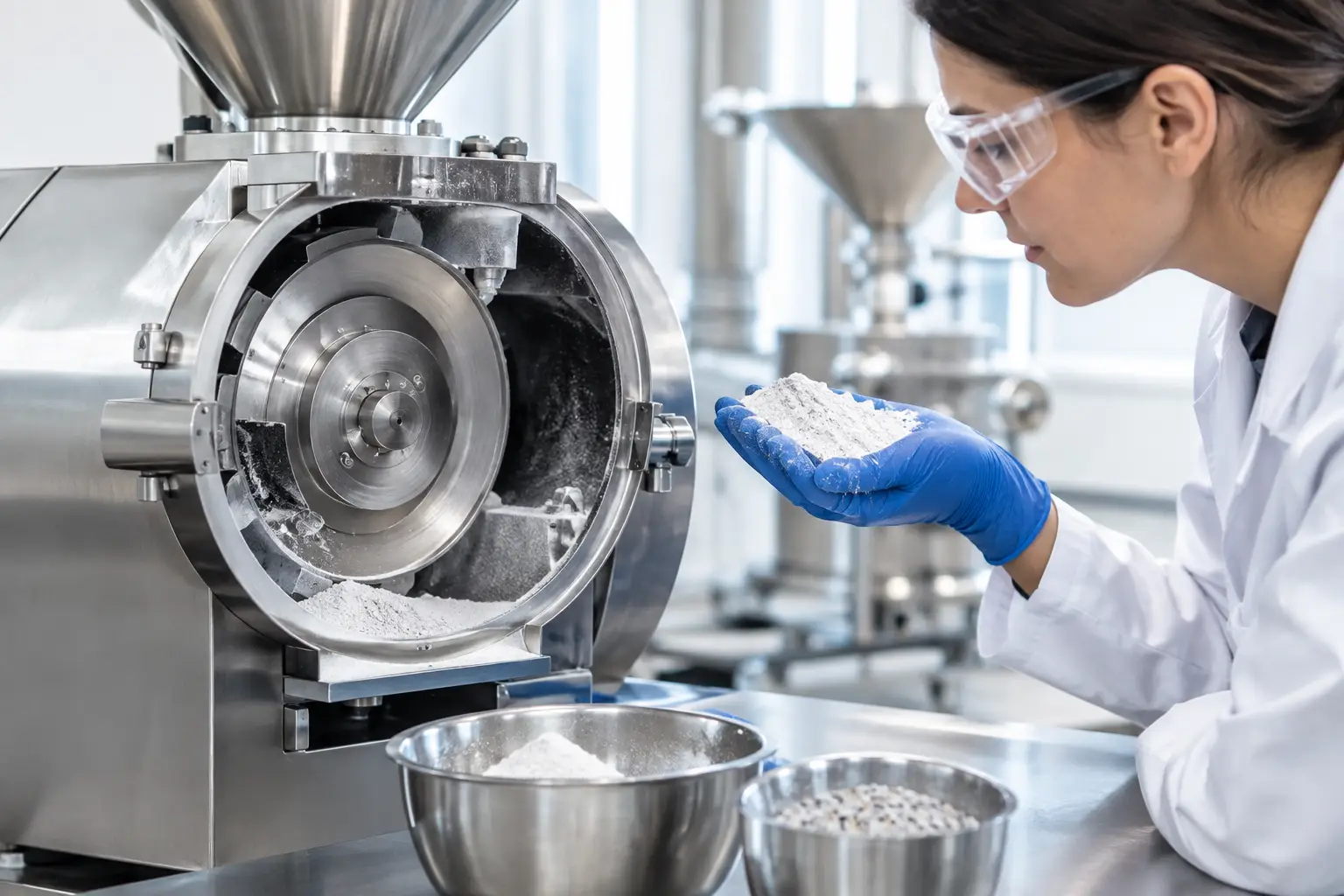
For many manufacturers, the most effective path is application testing with real material under production-relevant conditions. That is often where the trade-offs become clear. A tighter cut point may reduce throughput. Higher yield may require a broader distribution. Lower energy use may depend on accepting a different recycle strategy. These are process decisions, not just equipment features.
For manufacturers focused on consistent particle size control, process efficiency, and reliable scale-up, the air classification process is less about separating powder and more about shaping overall production performance. When it is engineered around the material, the specification, and the realities of the plant floor, it becomes a measurable advantage rather than just another step in the system.