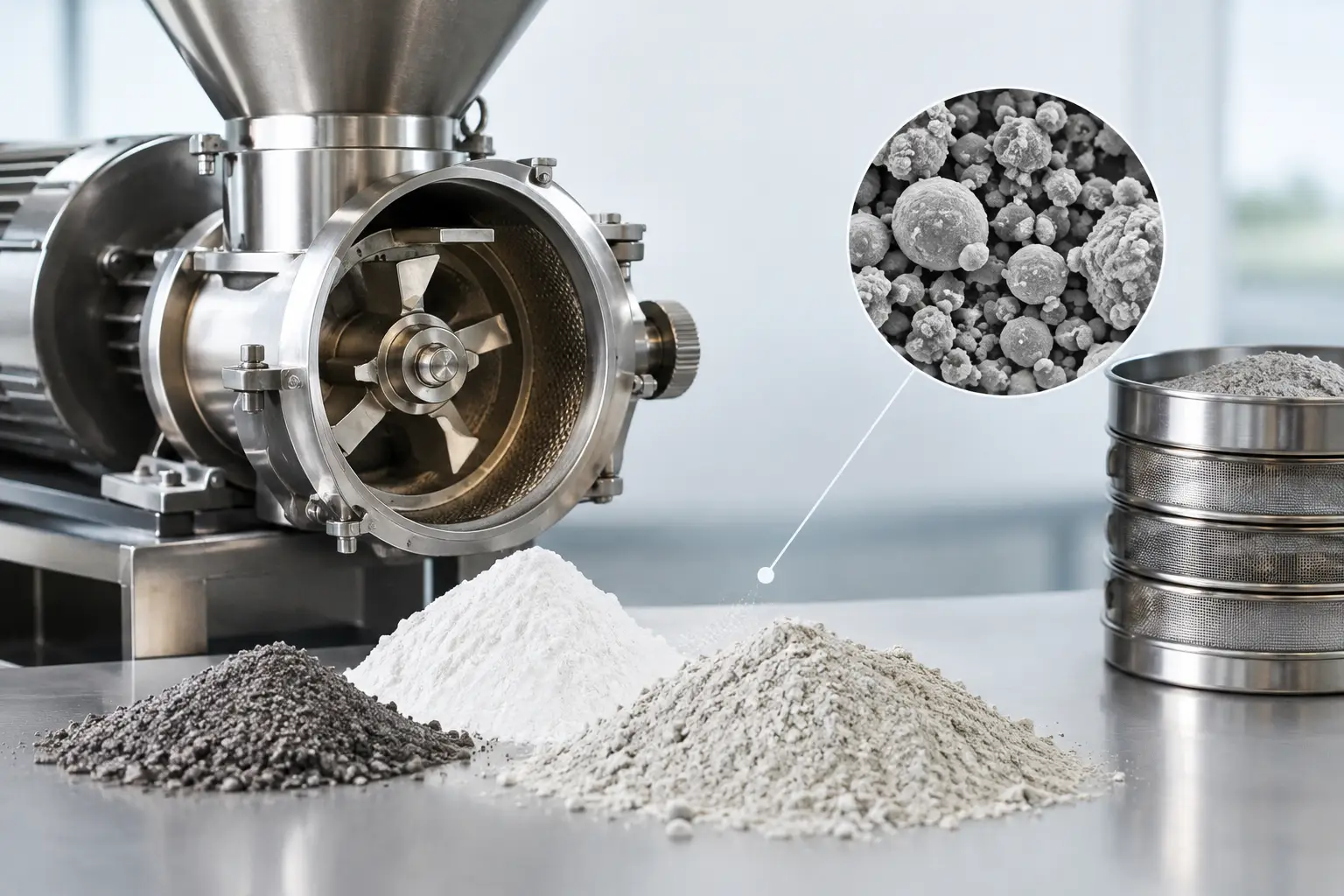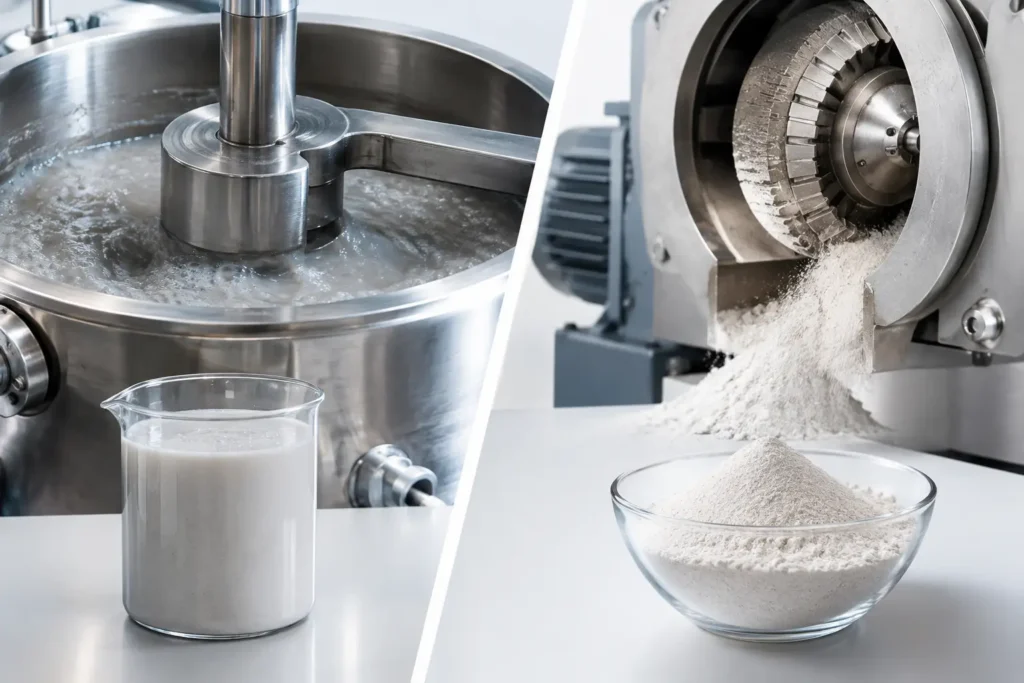
A material that reaches the target micron range in a lab can still become a production problem when it generates heat, agglomerates after drying, or overwhelms downstream separation. The decision between wet milling versus dry milling is therefore not simply a choice of equipment. It is a process-design decision that affects particle size distribution, product handling, contamination risk, throughput, utilities, and total operating cost.
For many industrial materials, either route can reduce particle size successfully. The better route depends on how the material behaves under mechanical energy, how tightly the final product specification must be controlled, and what has to happen before and after milling.
Wet Milling Versus Dry Milling: The Core Difference
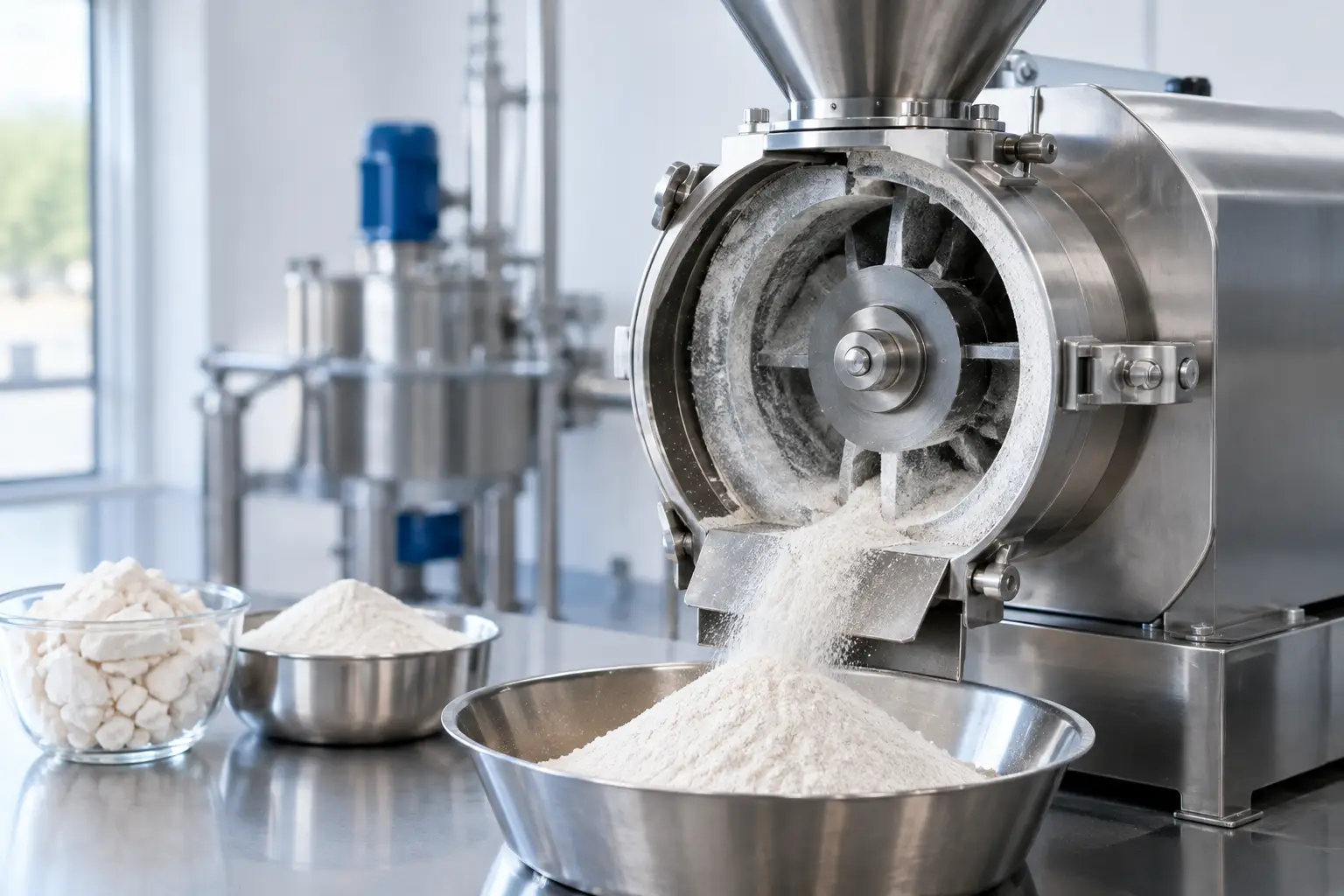
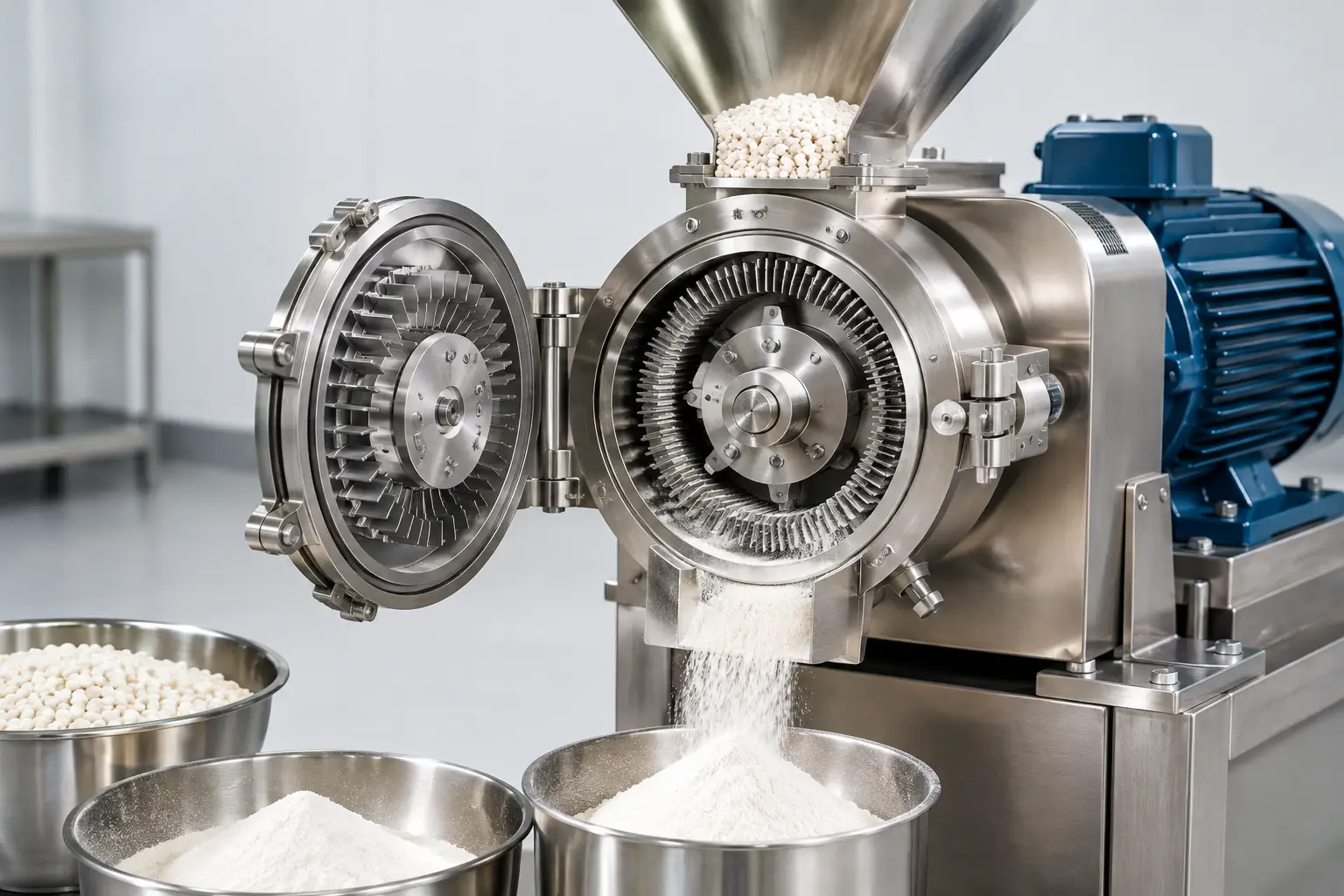
Dry milling reduces particle size in a gas stream or dry processing environment. Depending on the application, the system may use impact, attrition, shear, compression, or particle-to-particle collision. Hammer mills, pin mills, air classifier mills, jet mills, turbo mills, and cone mills are common dry-processing technologies.
Wet milling processes solids suspended in a liquid carrier, often water or a solvent. Mechanical energy is applied to the slurry through methods such as rotor-stator mixing, colloid milling, or media milling. The liquid can help transport particles, control dust, and moderate temperature, while grinding media can provide high localized energy for fine size reduction.
That distinction has major consequences. Dry milling produces a powder directly, which can simplify downstream operations. Wet milling can achieve excellent dispersion and, in suitable applications, very fine particle sizes, but it creates a slurry that may require filtration, drying, solvent recovery, or additional handling before packaging or further processing.
When Dry Milling Is the Better Process Route
Dry milling is often the preferred option when the required end product is a free-flowing powder and the material can be reduced without unacceptable thermal degradation or excessive agglomeration. It is widely used in food ingredients, minerals, chemicals, nutraceuticals, battery materials, and pharmaceutical applications where dry powder handling is already part of the production process.
A well-engineered dry system can provide high throughput with fewer downstream unit operations than a wet process. There is no liquid carrier to purchase, manage, recover, or remove. This can reduce the process footprint and eliminate a drying step that may otherwise consume substantial energy and limit overall production capacity.
Dry processing also supports closed-loop containment when properly designed. This matters for fine powders that present dust, operator exposure, cross-contamination, or moisture-control concerns. Integrated dust collection, inert gas operation, air classification, and sealed material transfer can be designed around the safety and quality needs of the application.
The challenge is that dry milling adds heat to the material. In impact mills, pin mills, and similar equipment, heat can result from rotor speed, particle impact, and friction. Heat-sensitive materials may soften, melt, smear, lose volatile components, or change in functional performance. Materials with high oil, fat, wax, sugar, or polymer content can be particularly difficult to process dry at ambient conditions.
Particle size control also depends on selecting the correct mill and classification method. A hammer mill may be effective for coarse reduction, while a jet mill or air classifier mill may be more appropriate when a narrow fine-particle distribution is required. Simply increasing milling intensity is rarely the right answer. It may raise energy use, increase fines, and reduce yield without improving the usable fraction of the product.
Dry Milling Technologies Must Match Material Behavior
Material hardness, brittleness, moisture content, feed-size variation, density, flowability, abrasiveness, and target particle size should drive equipment selection. For example, a brittle mineral may respond efficiently to impact reduction, while an elastic polymer may resist fracture and require temperature control or cryogenic grinding.
Air classification is especially valuable when the process must control top size and avoid overgrinding. In an air classifier mill, particles that meet the required size can exit the grinding zone while oversized particles remain for additional reduction. This approach can improve distribution control and reduce unnecessary energy applied to already-fine material.
Where Wet Milling Delivers an Advantage
Wet milling is often selected when a material is difficult to disperse, prone to dusting, highly heat-sensitive, or required in a liquid formulation. The liquid phase can absorb and carry away heat, helping protect materials whose properties change under elevated processing temperatures.
Media milling can also be effective for demanding fine and ultrafine applications. The combination of slurry flow, media selection, residence time, and process energy can break down agglomerates and reduce primary particles to a controlled range. This is relevant for coatings, pigments, inks, ceramics, pharmaceutical suspensions, specialty chemicals, and some advanced materials.
For products that will remain in suspension, wet milling may remove an unnecessary conversion step. If the next operation is blending into a liquid product, pumping to a reactor, or filling a liquid formulation, producing a stable slurry can be more efficient than creating a dry powder only to rehydrate or redisperse it later.
Wet processing can also reduce airborne dust during milling and transfer. However, it does not eliminate contamination or cleaning considerations. The mill chamber, media, seals, pumps, hoses, filters, and tanks all become part of the process contact path. Material compatibility, cleanability, and validation requirements must be addressed from the beginning.
The Hidden Cost of the Liquid Phase
The strongest case for wet milling can weaken if the slurry must be converted back into a dry powder. Drying can be capital-intensive, energy-intensive, and difficult to scale. It can also introduce new quality risks, including hard agglomerates, particle growth, altered morphology, loss of solvent-sensitive components, or inconsistent residual moisture.
Solvent-based wet systems add further requirements for environmental controls, recovery, ventilation, process safety, and regulatory compliance. Water-based systems may be simpler, but they can still create microbial-control, corrosion, wastewater, and cleaning challenges. A wet process should be evaluated as a complete system, not as a mill in isolation.
Compare the Factors That Actually Determine Performance
Particle size is important, but it is not the only selection criterion. A successful milling process must also produce the right distribution, morphology, bulk density, flow characteristics, and downstream behavior. Two systems may report the same average particle size while producing very different process outcomes.
Heat is another critical variable. Wet milling generally offers better direct heat removal through the liquid phase. Dry systems can manage temperature through airflow, chilled gas, controlled feed rates, staged reduction, or cryogenic operation. The appropriate approach depends on the material’s thermal limit and the production rate required.
Contamination control requires equal attention in both routes. In dry milling, wear surfaces, seals, filters, and transfer points should be selected for the material and purity standard. In wet milling, the same analysis extends to grinding media, fluid compatibility, cleaning chemistry, and slurry-contact components. Abrasive materials may require hardened or ceramic contact surfaces, while high-purity applications may require specialized construction and tightly controlled cleaning procedures.
Throughput should be assessed using the complete production line. A dry mill may process more material per hour at the reduction stage, but classification, dust collection, and packaging must keep pace. A wet mill may produce a high-quality slurry efficiently, yet the drying or solvent-recovery stage may become the actual bottleneck. The right capacity calculation considers usable finished product, not only mill feed rate.
A Practical Selection Approach
Start with the product specification. Define the required particle size distribution, maximum allowable oversize, fines limit, moisture target, bulk density, purity level, and final delivery form. Then evaluate how the material responds to impact, shear, friction, moisture, and temperature.
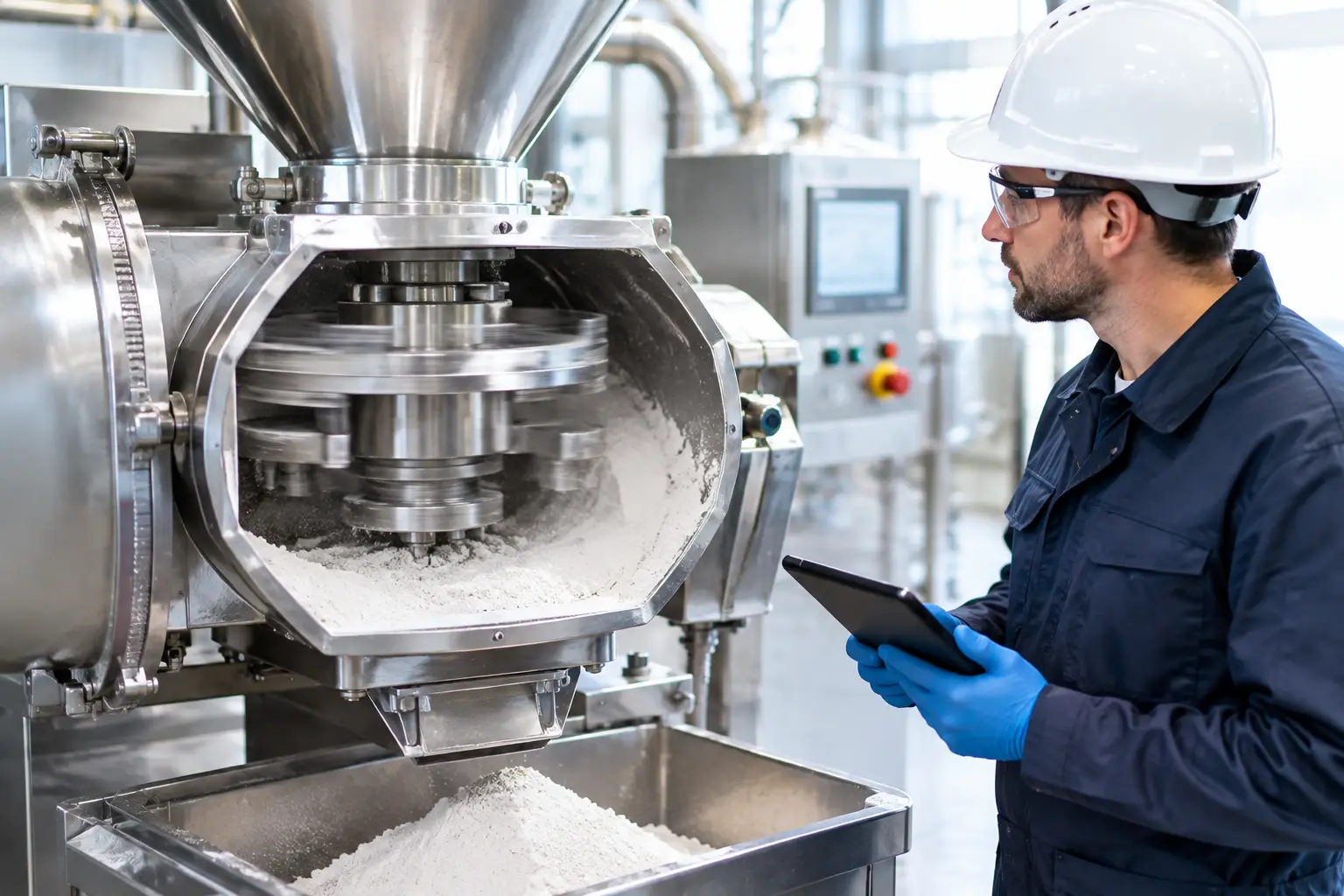
Pilot trials are often the fastest way to replace assumptions with usable data. Testing should measure more than particle size. Engineers should evaluate yield, product temperature, energy demand, screen or classifier performance, flowability, wear, cleaning requirements, and whether the milled material remains stable through downstream operations.
It is also useful to test the worst expected feed condition, not only an ideal sample. Seasonal moisture changes, supplier variation, recycled material content, and feed-size inconsistency can all affect milling performance. A process that works only with tightly controlled feedstock may create avoidable downtime in production.
DP Mills approaches milling selection from this systems perspective. The best equipment choice is the one that consistently delivers the required product specification while fitting the plant’s safety, containment, maintenance, throughput, and expansion requirements.
The Right Answer Is Often Found Downstream
Wet milling is not inherently more precise, and dry milling is not inherently more economical. Wet processing may be the stronger choice for thermally sensitive materials, difficult dispersions, or products that remain liquid. Dry processing may offer a more direct and scalable path when the finished product is a controlled powder and the material can tolerate the applied energy.
The most productive question is not which method is better in general. It is which process produces a stable, specification-compliant product with the fewest avoidable steps and the lowest long-term operational burden. When that question guides equipment selection, milling becomes a dependable part of production rather than the source of the next bottleneck.