Battery manufacturers rarely struggle with chemistry alone. More often, production issues show up as inconsistent particle size, poor flow, contamination risk, excess heat, or low yield in downstream processing. That is why the top solutions for battery materials are not limited to raw material selection. They also include the processing methods that determine how those materials behave in mixing, coating, densification, and final cell performance.
For process engineers and operations teams, the real question is not simply which battery material is best. It is which combination of material, particle size reduction, classification, containment, and process integration will deliver repeatable output at commercial scale. In battery manufacturing, small variations in powder characteristics can create large problems in throughput, quality, and long-term performance.
What defines the top solutions for battery materials
In practical terms, the top solutions for battery materials are the ones that improve electrochemical performance while remaining manufacturable. A material may perform well in the lab, but if it generates too much heat during milling, picks up contamination from contact surfaces, or produces an unstable particle size distribution, it becomes a production risk.
That is why battery material processing has to be evaluated across several factors at once. Particle size and distribution matter because they influence surface area, reaction kinetics, packing density, and slurry behavior. Purity matters because trace contamination can affect conductivity and cycle life. Moisture sensitivity matters because certain chemistries degrade quickly when exposed to ambient conditions. Throughput matters because pilot-scale success is not enough if the process cannot scale efficiently.
The strongest solutions balance all of those variables instead of optimizing one at the expense of the others.
Cathode materials remain central to battery performance
Cathode chemistry still defines much of the battery’s cost, energy density, and operating profile. Materials such as lithium iron phosphate, nickel manganese cobalt oxides, and nickel cobalt aluminum oxides each bring different strengths. LFP offers thermal stability, safety, and long cycle life. NMC and NCA support higher energy density but place tighter demands on material uniformity and process control.
From a powder processing standpoint, these materials are sensitive to particle morphology, agglomeration, and contamination. Over-grinding can damage structure or create too many fines, while under-processing can reduce homogeneity and hurt downstream mixing. For manufacturers, the right milling and classification approach depends on the target particle size, the brittleness of the material, and the contamination tolerance of the application.
Jet milling is often a strong fit where tight particle size control and low contamination are priorities. Because particle-to-particle impact drives size reduction, it can help reduce contact wear compared with mechanical methods. That said, jet milling is not automatically the right answer for every cathode material. Throughput targets, energy use, and the feed material’s behavior all have to be considered.
Anode materials demand tighter control than many lines expect
Graphite remains the dominant anode material in most lithium-ion production, while silicon and silicon-graphite blends continue to attract attention for higher capacity designs. Each of these materials presents different processing challenges.
Natural and synthetic graphite often require careful milling and classification to achieve the right particle size distribution and shape while protecting conductivity and bulk density. Silicon can improve capacity, but it introduces expansion-related performance issues and often demands more specialized powder handling and blending strategies. In both cases, controlling fines is critical. Too many ultra-fine particles can negatively affect flowability, dust generation, slurry rheology, and coating consistency.
This is where integrated particle processing becomes a competitive advantage. Milling without precise classification can create variability that shows up much later in the line. The same is true for systems that generate excessive heat or allow uncontrolled recirculation. Battery manufacturers evaluating anode production should look beyond nominal micron targets and focus on distribution shape, yield, and repeatability over long production runs.
Conductive additives and solid electrolytes are growing process priorities
As battery architectures evolve, conductive carbons, ceramic powders, and solid electrolyte materials are receiving more attention. These materials are often used at lower percentages, but their impact on final performance can be significant.
Conductive additives such as carbon black, graphite derivatives, and nanotube-based materials require careful dispersion and size control. Agglomeration can reduce effectiveness, while poor handling can create major dust containment and housekeeping issues. Solid-state battery materials add another layer of complexity because many ceramic or sulfide-based powders are moisture-sensitive, abrasive, or difficult to process consistently.
For these applications, equipment selection has to account for more than size reduction. It may need inert gas operation, sealed transfer, wear-resistant contact components, or cryogenic support depending on the material’s thermal and chemical behavior. A standard mill may technically reduce particle size, but that does not mean it is suitable for a sensitive solid electrolyte process.
Processing technology is one of the top solutions for battery materials
Material innovation gets most of the attention, but processing technology is often what turns a promising powder into a stable manufacturing input. The best battery materials still require controlled size reduction, accurate classification, and reliable handling.
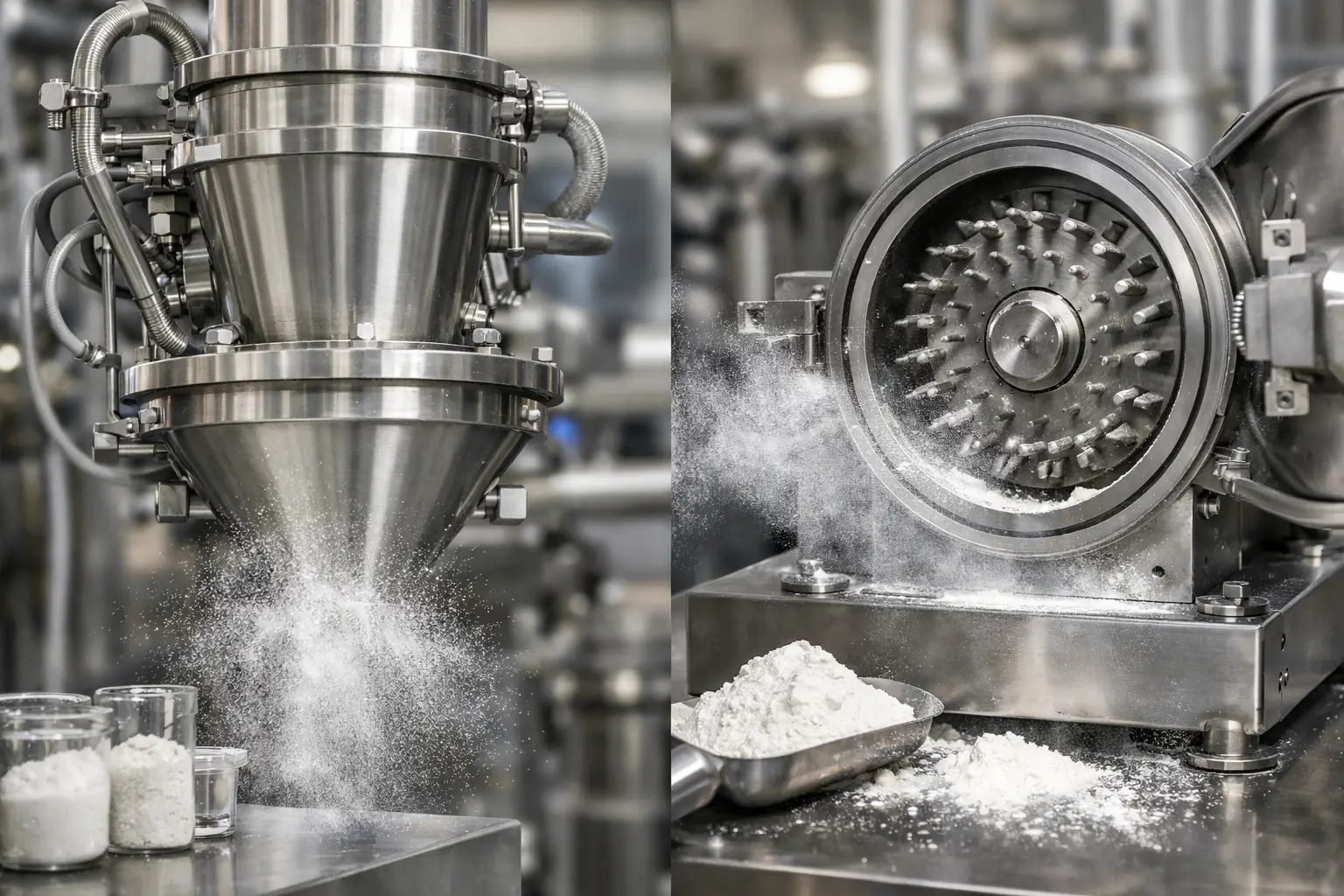
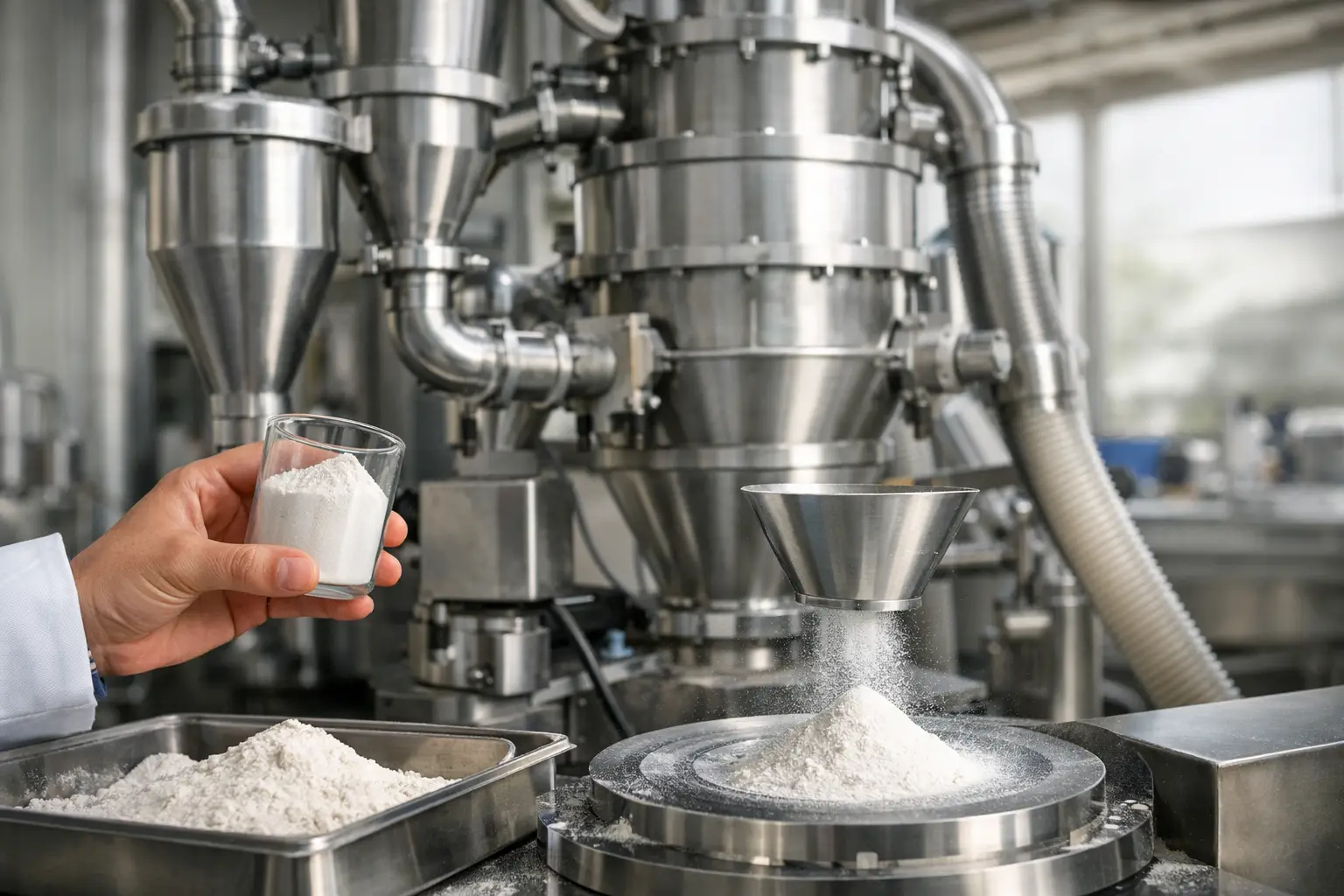
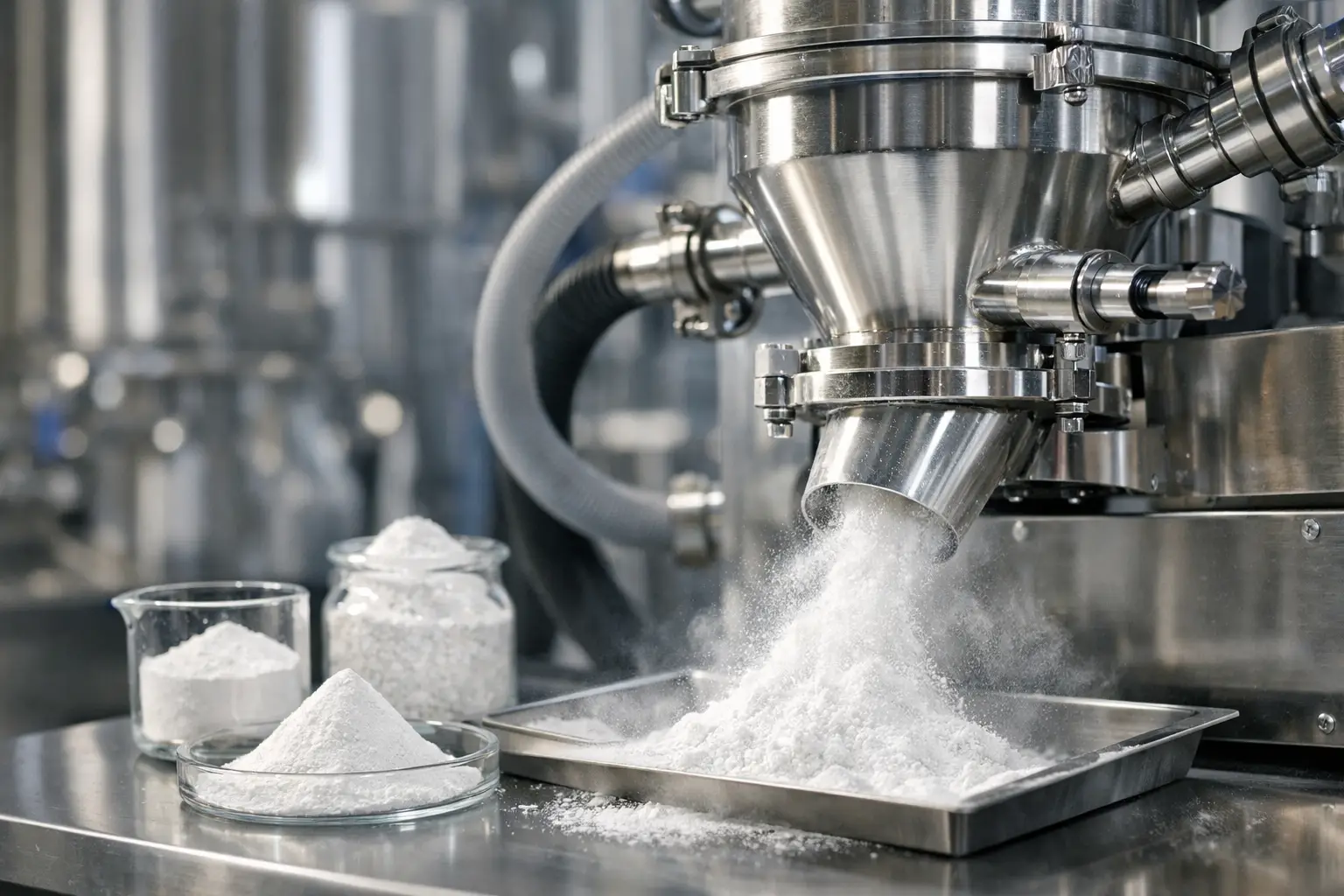
Different milling technologies solve different problems. Jet mills are often selected for ultra-fine particle reduction, low contamination potential, and narrow particle size distribution. Air classifier mills can combine impact milling and classification in a single system, which can improve efficiency for certain battery powders. Pin mills and hammer mills may be useful for pre-processing, deagglomeration, or less demanding stages where throughput matters more than ultra-tight micron control. Cryogenic grinding may be necessary for heat-sensitive or difficult materials that degrade under conventional conditions.
The right choice depends on the material and the process objective. A line designed for high-volume cathode precursor processing will not necessarily match the needs of a solid-state electrolyte development program. That is why engineered customization matters. The mill, classifier, feed system, containment strategy, and collection method all influence final powder quality.
Contamination control is not optional
In battery material production, contamination is not a secondary issue. It is a core process variable. Metallic wear, cross-batch residue, ambient moisture, and airborne particulates can all compromise product quality.
That makes system design especially important. Contact surface materials, wear protection, sealing, cleaning access, and dust collection all need to align with the chemistry being processed. For high-value battery powders, contamination reduction may justify a more specialized milling approach even if the upfront capital cost is higher. The long-term cost of off-spec material, quality investigations, and reduced cell performance can be far greater.
Manufacturers should also evaluate how contamination risk changes as they scale. A process that works in a controlled pilot environment may become less stable at production volumes if feed variability, component wear, or cleaning frequency are not addressed early.
Scale-up is where many battery projects lose momentum
Battery material development often looks strong at bench scale, then stalls during pilot or commercial expansion. The reason is straightforward. Powder behavior does not always scale linearly.
Residence time, heat generation, classifier efficiency, feed consistency, and product collection can all change as production volume increases. A material that appears stable in a small batch may agglomerate, smear, or drift out of specification in a larger continuous process. That is why the top solutions for battery materials must include scale-up planning from the start.
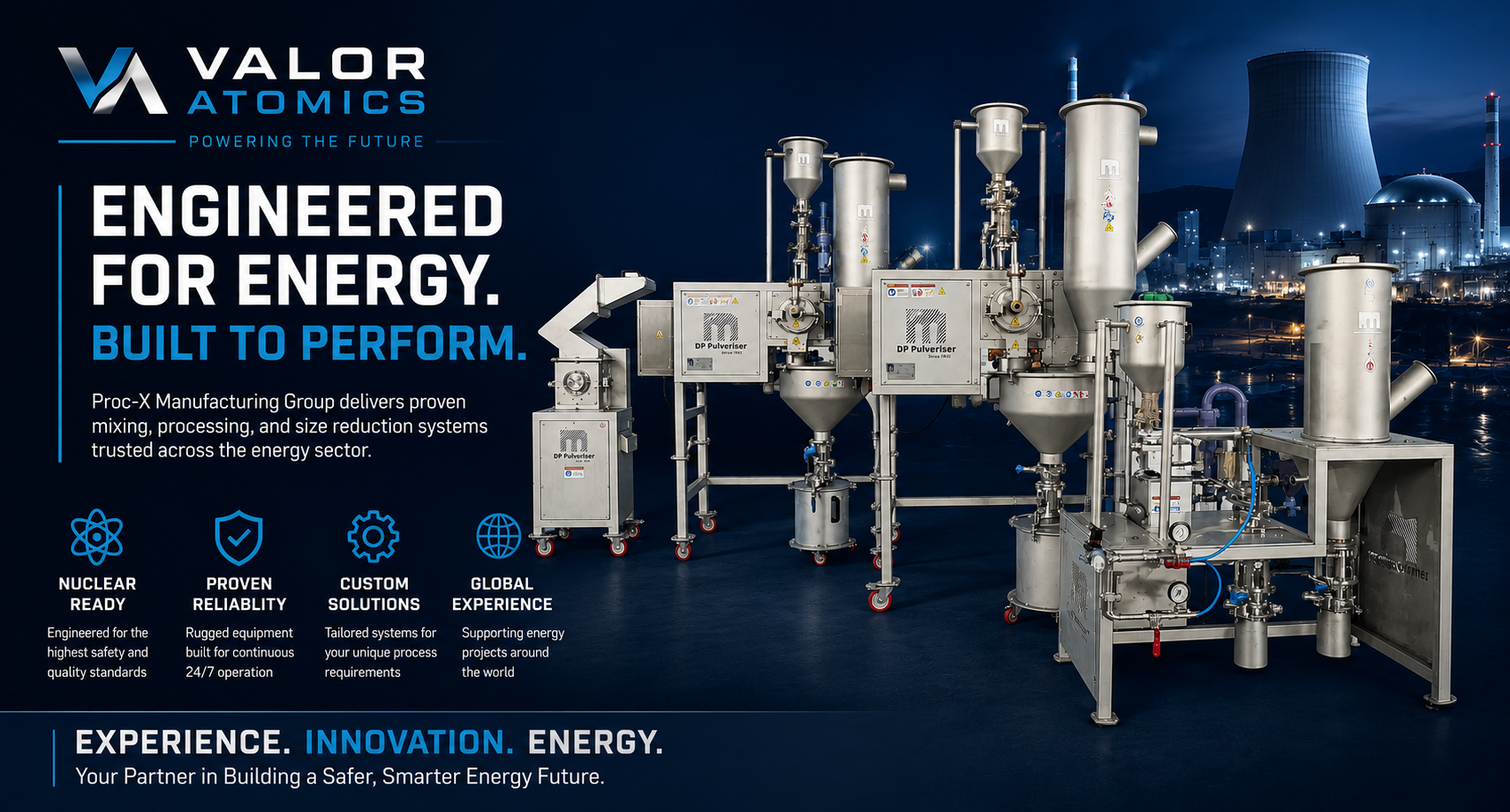
This is also where a process partner can add measurable value. Equipment should be matched not only to the target particle size but to the operating realities of the plant. That includes throughput, uptime expectations, maintenance access, available utilities, containment requirements, and future expansion plans. DP Mills works with manufacturers facing these kinds of demands by engineering particle processing systems around application-specific production goals rather than generic equipment assumptions.
What manufacturers should prioritize when evaluating solutions
For most battery powder applications, better decisions come from asking tighter process questions. What particle size distribution is actually required, not just preferred? How much contamination can the chemistry tolerate? Is the material heat-sensitive, abrasive, or moisture-reactive? Does the process need inerting, closed-loop handling, or wear-resistant construction? What happens to yield and quality at full production rates?
These questions shift the discussion from equipment features to production outcomes. That is the right frame for battery manufacturing, where consistency and control matter as much as chemistry selection.
The market will keep changing. New cathode formulations, silicon-rich anodes, recycled feedstocks, and solid-state materials will all place new demands on powder processing. The manufacturers that move efficiently will be the ones that treat particle engineering as part of battery performance, not just a step before mixing. A better material helps, but a better-controlled process is often what makes it viable.