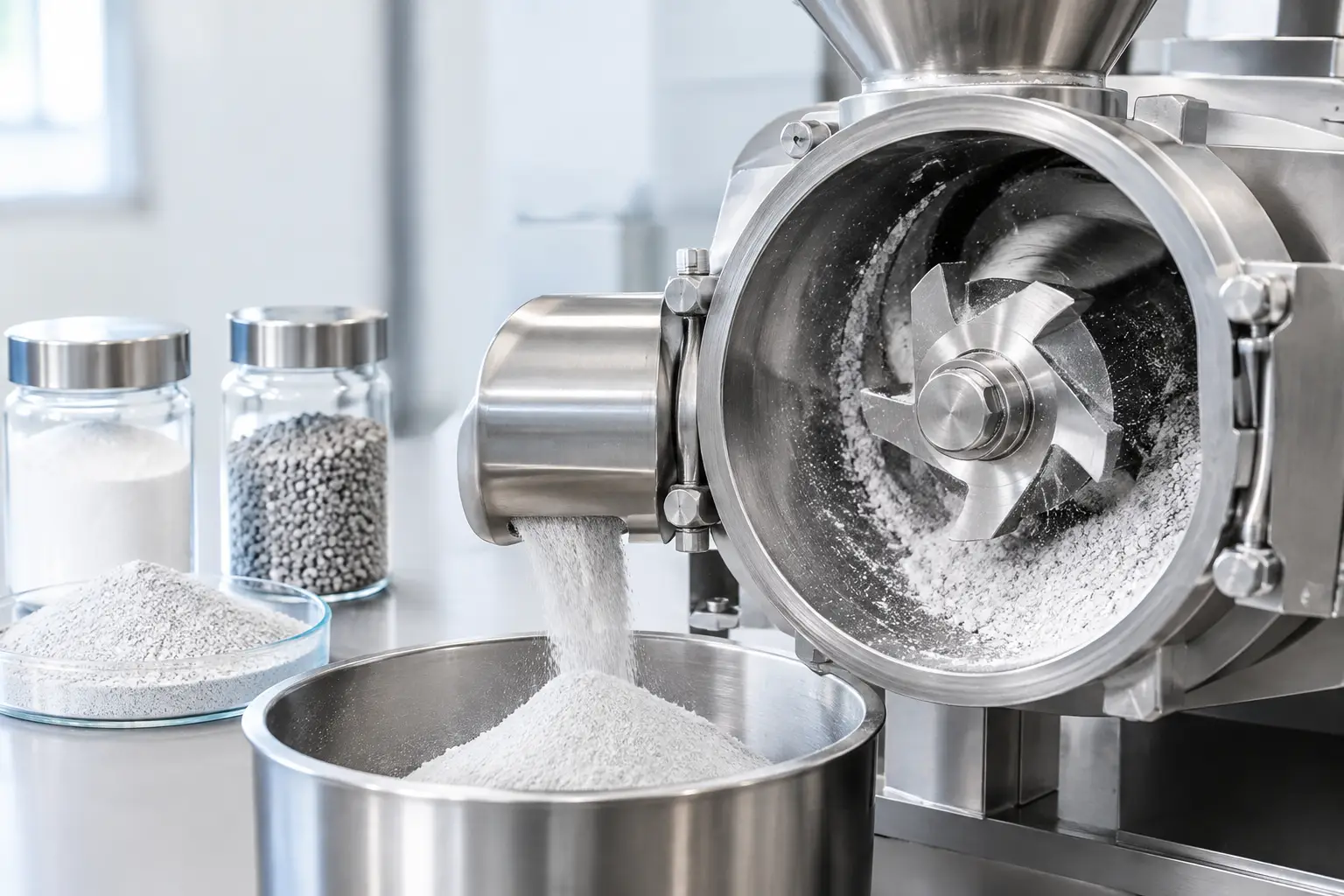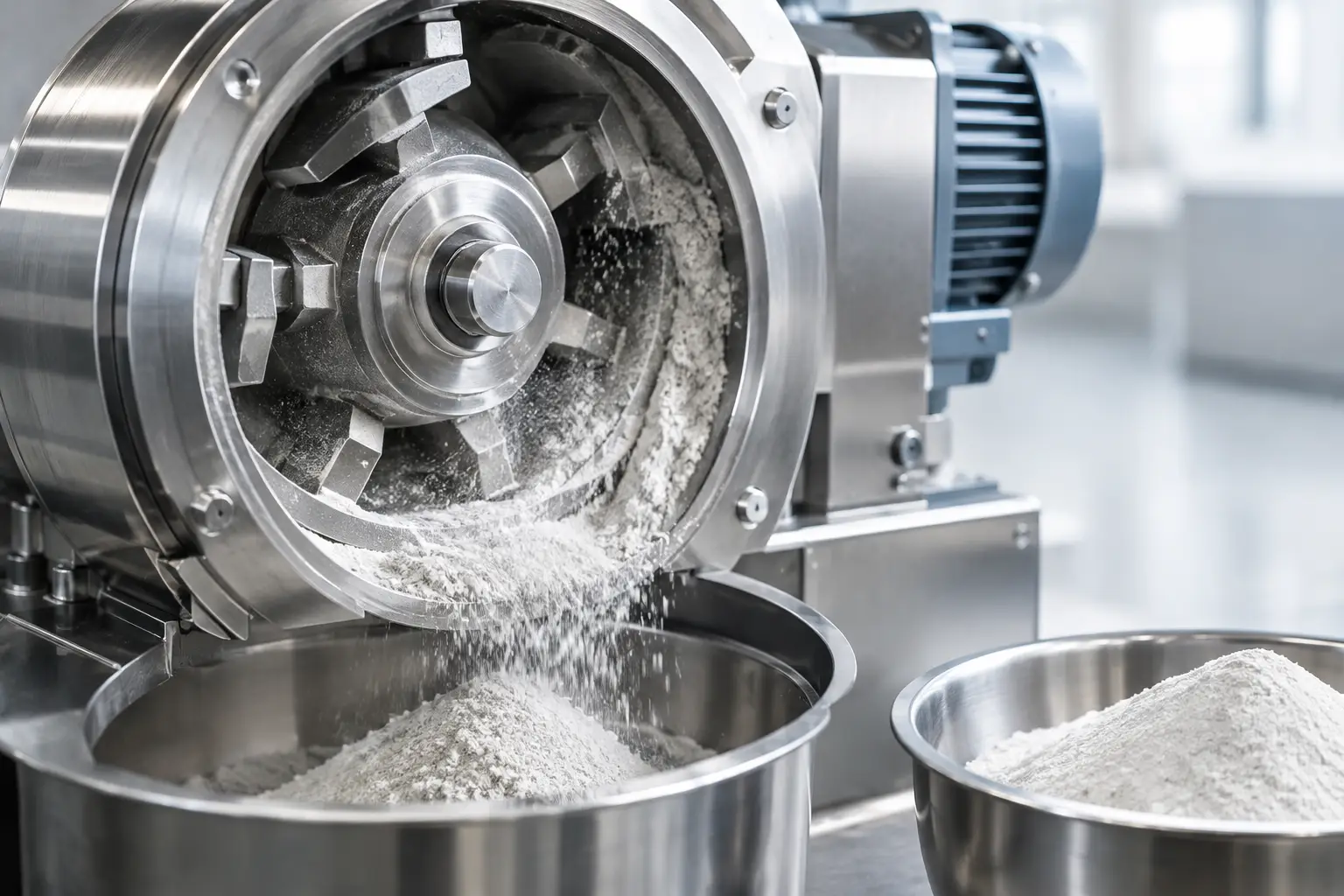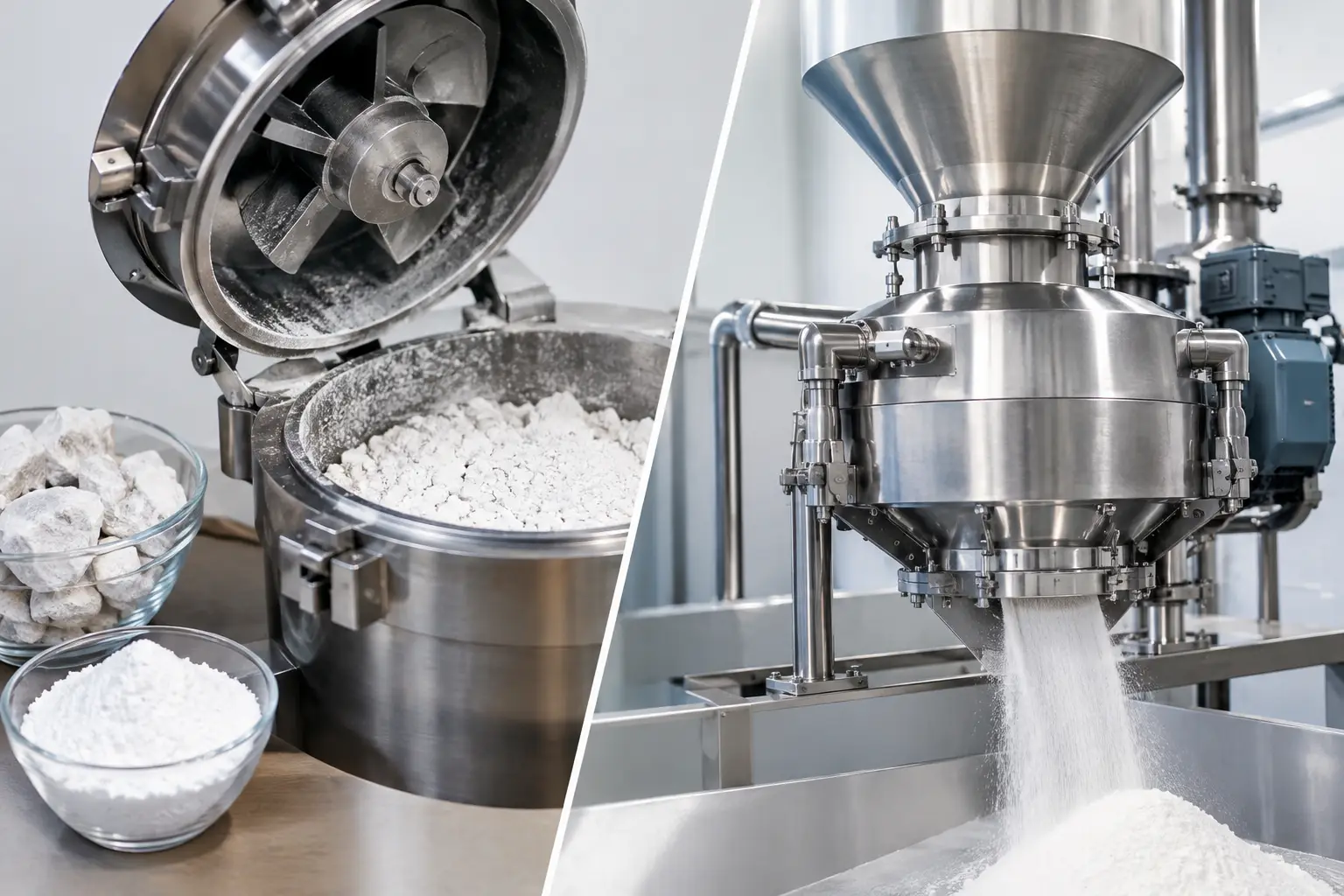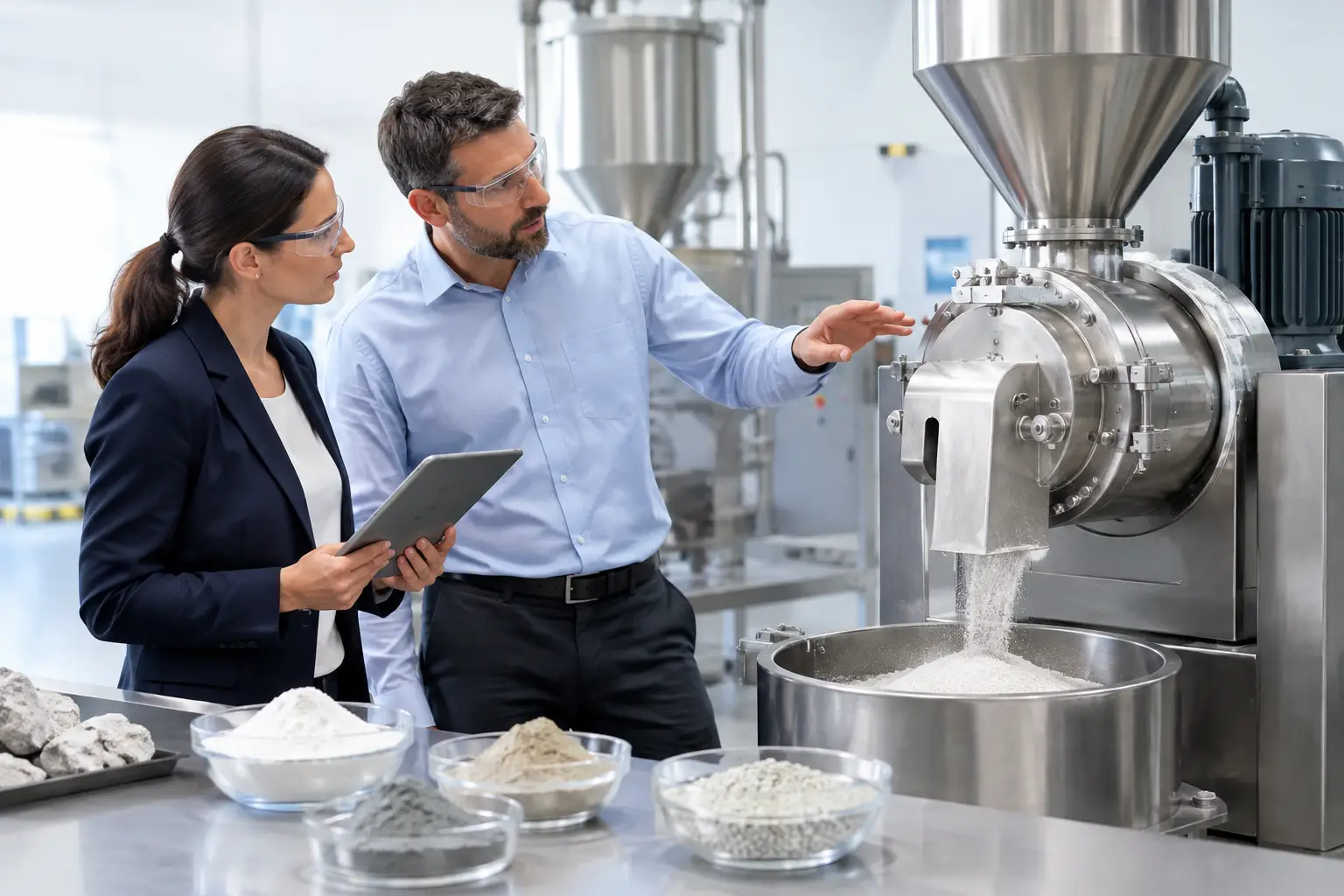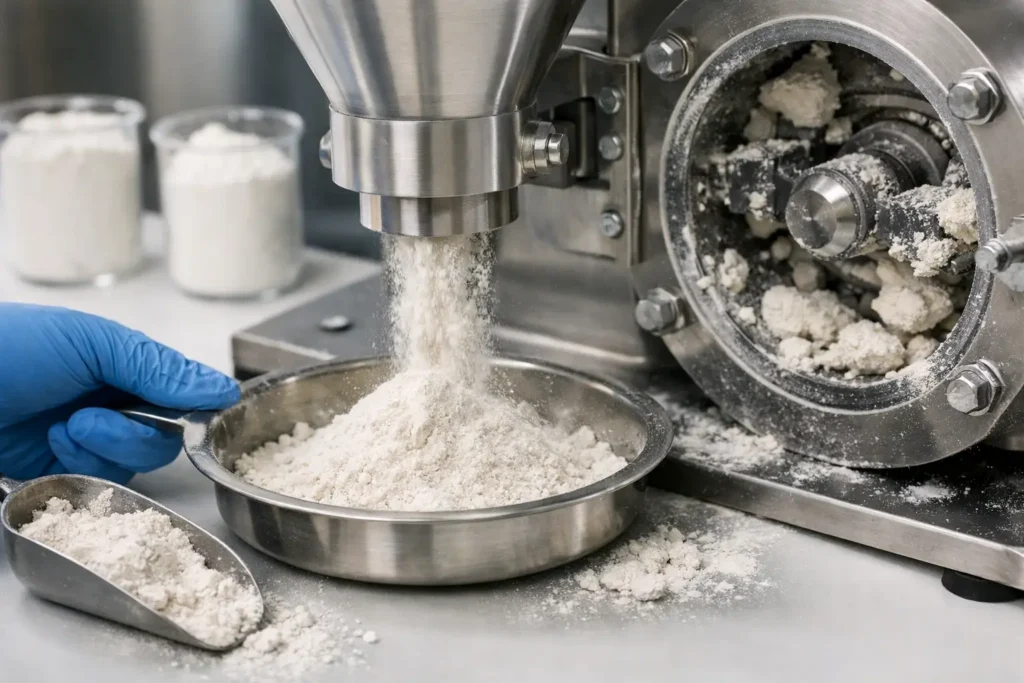
A powder that flows consistently during one production run and forms hard lumps during the next is rarely an isolated material problem. Agglomeration usually results from the interaction of material properties, ambient conditions, particle size distribution, and equipment operating parameters. Understanding how to prevent powder agglomeration starts with identifying the binding mechanism before changing mill settings or adding flow aids.
For manufacturers in pharmaceutical, food, chemical, battery, mineral, and advanced-material applications, the effects extend beyond poor flow. Agglomerates can create off-spec particle size distributions, reduce classifier efficiency, cause feeder interruptions, increase product retention, and introduce variability into downstream blending, coating, compaction, or packaging. The right response is an engineered process control strategy, not a single corrective action.
Why Powder Agglomeration Occurs
Agglomeration occurs when fine particles adhere to one another strongly enough to form larger clusters. Those clusters may be soft and easily dispersed, or dense and stable enough to survive conveying, screening, and milling. The difference matters because a soft, moisture-driven agglomerate requires a different solution than a thermally fused or electrostatically bound cluster.
Moisture is a frequent cause. Hygroscopic powders can absorb water vapor from the surrounding air, creating liquid bridges between particles. As the moisture redistributes or evaporates, those bridges can become solid bridges through crystallization, dissolution and recrystallization, or binder activation. Materials such as sugars, salts, mineral powders, specialty chemicals, and many food ingredients may be particularly sensitive to humidity changes.
Heat can produce a similar result without visible moisture. During size reduction, friction and impact raise product temperature. If the material approaches its softening point, glass transition temperature, melting range, or a point where surface oils become mobile, particles can smear, coat internal surfaces, and adhere to one another. Fine powders are especially susceptible because their high surface area increases contact opportunities.
Electrostatic charge, broad particle size distribution, excess fines, and compression during storage can also contribute. Very fine particles may cling through van der Waals forces or static attraction. A broad distribution allows fines to fill void spaces between larger particles, increasing packing density and reducing flow. Long storage periods under load can consolidate a powder into cohesive masses that are difficult to break apart consistently.
How to Prevent Powder Agglomeration at the Source
The most reliable approach is to control the conditions that create cohesion before the material reaches a bottleneck. That begins with a clear understanding of the powder’s moisture sensitivity, thermal behavior, particle morphology, and target particle size distribution.
Control Moisture From Receiving Through Packaging
Relative humidity in a processing room can be as significant as a mill setting. Establish acceptable moisture content and environmental limits for the material, then measure both rather than relying on operator observation. A powder may appear dry while carrying enough surface moisture to change its flow behavior.
For hygroscopic products, use sealed receiving and transfer systems, conditioned make-up air, and appropriately designed storage containers. Limit open handling time between processing steps. If drying is required, confirm that the drying method does not create a fragile, highly electrostatic powder that clumps again during transfer.
The correct moisture target depends on the application. Driving moisture too low may improve flow but increase dusting, static charge, product degradation, or energy use. In food and pharmaceutical processing, it may also affect functionality, dissolution, compressibility, or stability. The objective is controlled moisture, not simply the lowest possible moisture level.
Limit Heat Generation During Size Reduction
Temperature should be treated as a process variable, especially with heat-sensitive, waxy, oily, low-melting, or polymeric materials. Monitor inlet, outlet, and product temperatures where practical, then relate those readings to particle size results, throughput, and observed buildup.
Several operating changes can reduce thermal load: lowering feed rate, optimizing rotor or classifier speed, adjusting airflow, and avoiding unnecessary recirculation. However, each adjustment has a trade-off. Reducing speed may lower heat but produce a coarser distribution. Increasing airflow may improve cooling and classification but can change residence time, collection efficiency, or energy demand.
When conventional milling cannot keep the product below its critical temperature, cryogenic grinding may be appropriate. Cooling with liquid nitrogen or another engineered cooling approach can make elastic or tacky materials more brittle, reduce smearing, and improve particle fracture. It also adds operating complexity and cost, so it should be selected based on material trials and production economics rather than temperature alone.
Avoid Producing More Fines Than the Process Can Tolerate
A tight particle size distribution often improves flowability because it limits the amount of ultrafine material available to coat larger particles and increase cohesive forces. Milling systems should be selected and tuned for the required distribution, not only for a nominal top size.
Jet mills and air classifier mills are often effective where precise control of fine particle production is critical. Their performance depends on feed consistency, air quality, classifier settings, and the relationship between material hardness and desired cut point. Hammer, pin, turbo, universal, and cone mills may be better suited to other materials and target ranges. The key is matching the milling mechanism to the material’s fracture behavior and the downstream process requirement.
If the process requires a high percentage of fines, address cohesion through containment, conditioning, and handling design rather than forcing a coarser grind that compromises product performance.
Design the Material Path for Flow, Not Just Transfer
Agglomeration frequently becomes visible in hoppers, feeders, transfer lines, and collection equipment, but the root cause may have started upstream. A system that processes powder successfully must also move, separate, and discharge it without creating stagnant zones or excessive compaction.
Use hopper geometry and wall finishes that suit the powder’s measured flow properties. Steep walls alone do not guarantee mass flow. Cohesive materials may require flow aids, agitation, vibration, air pads, or mechanical discharge devices, but these should be applied carefully. Excess vibration can compact certain powders, while poorly designed air injection can introduce moisture or segregate the product.
Pneumatic conveying requires similar attention. High conveying velocity can break soft agglomerates, but it can also generate heat, static, attrition, and additional fines. Low velocity may reduce damage but increase line deposits or plugging. Dense-phase and dilute-phase conveying should be evaluated against the powder’s fragility, particle size, distance traveled, and allowable temperature rise.
Collection equipment must discharge reliably as well. Filter media, hopper angles, rotary valves, and discharge transitions should be designed to minimize product hold-up. Retained powder can absorb humidity, age, and detach later as lumps that appear to be a milling issue.
Manage Static Charge and Contamination Risks
Static is most common in dry, fine, low-conductivity powders and becomes more severe when humidity is low or transfer velocities are high. It can cause powder to cling to mill chambers, classifiers, filters, containers, and packaging equipment. The resulting deposits may eventually release as agglomerates or create cross-contamination concerns.
Ground and bond conductive equipment, verify continuity during maintenance, and select appropriate hoses, gaskets, filters, and collection components for the application. Antistatic additives can help in some formulations, but they must be compatible with product specifications, regulatory requirements, and downstream performance. In tightly controlled applications, equipment design and environmental management are generally preferable to relying on additives.
Material buildup also increases contamination risk. Product contact surfaces should be accessible for inspection and cleaning, with minimal crevices, ledges, and dead zones. This is particularly important when a facility processes multiple formulations, allergen-sensitive food ingredients, active pharmaceutical ingredients, or battery materials where foreign material can affect final performance.
Validate Changes With Process Data
Operators may recognize agglomeration by sight, but visual inspection alone cannot establish whether a corrective action is working. Build a practical baseline using particle size distribution, moisture content, bulk density, flow characteristics, product temperature, mill power draw, throughput, and reject or rework rates.
Then change one meaningful variable at a time during development or controlled trials. For example, compare two feed rates at the same classifier speed and airflow, or evaluate moisture-conditioned material against the current incoming specification. This makes it possible to distinguish a true improvement from normal raw-material variation.
A useful trial should also assess the entire process path. A powder may leave the mill free-flowing and agglomerate after collection, storage, or transfer. Sample at multiple points: feed material, mill discharge, collector discharge, hopper outlet, and finished package. That sequence identifies where cohesive behavior begins and prevents unnecessary changes to a well-performing mill.
When Equipment Changes Are Justified
Equipment modifications are justified when current machinery cannot maintain the required particle size, temperature, containment, or throughput window. The best solution may be improved air classification, a different milling principle, cooled processing, a redesigned feed system, or an integrated milling and collection arrangement that reduces exposure to humidity and handling steps.
DP Mills approaches these decisions as process questions rather than catalog selections. Material testing and application review can establish whether agglomeration is driven by thermal load, moisture pickup, excess fines, static, or poor transfer conditions. That distinction supports an equipment configuration built around reliable production performance.
The practical goal is not to eliminate every particle-to-particle interaction. It is to create a stable operating window where powder remains within specification from receiving through final discharge. When moisture, temperature, particle size, and material handling are controlled together, agglomeration becomes a manageable process variable instead of a recurring production disruption.