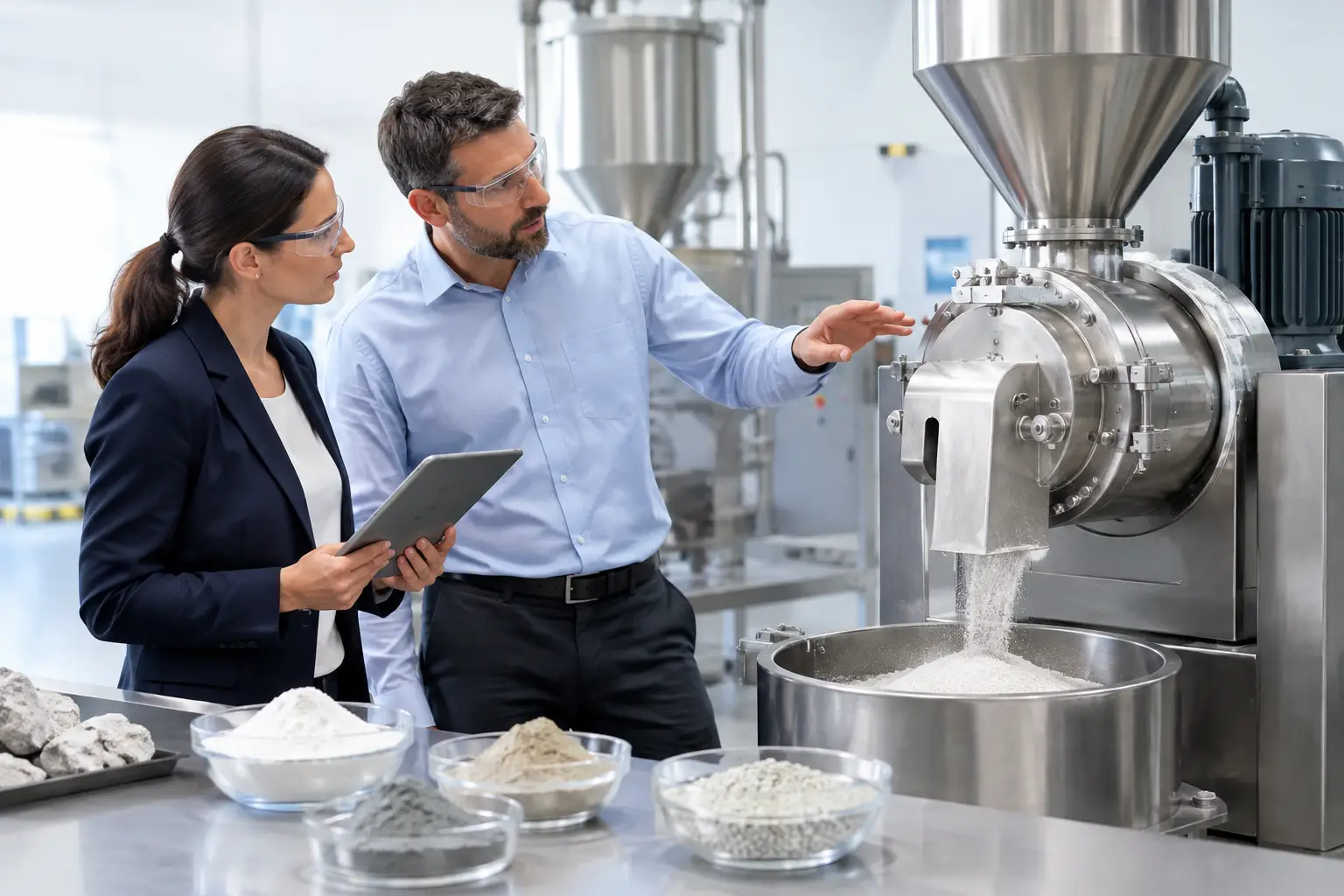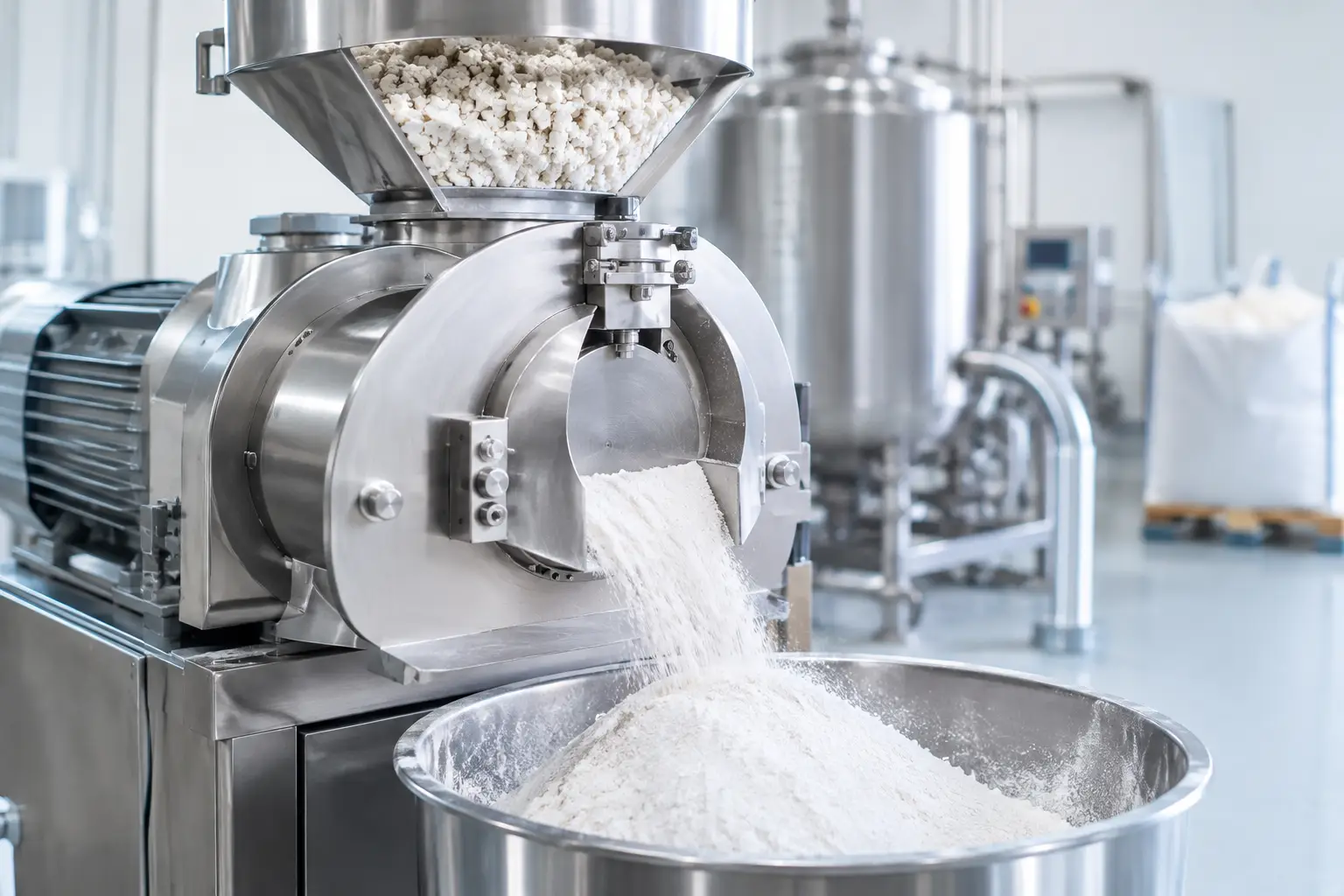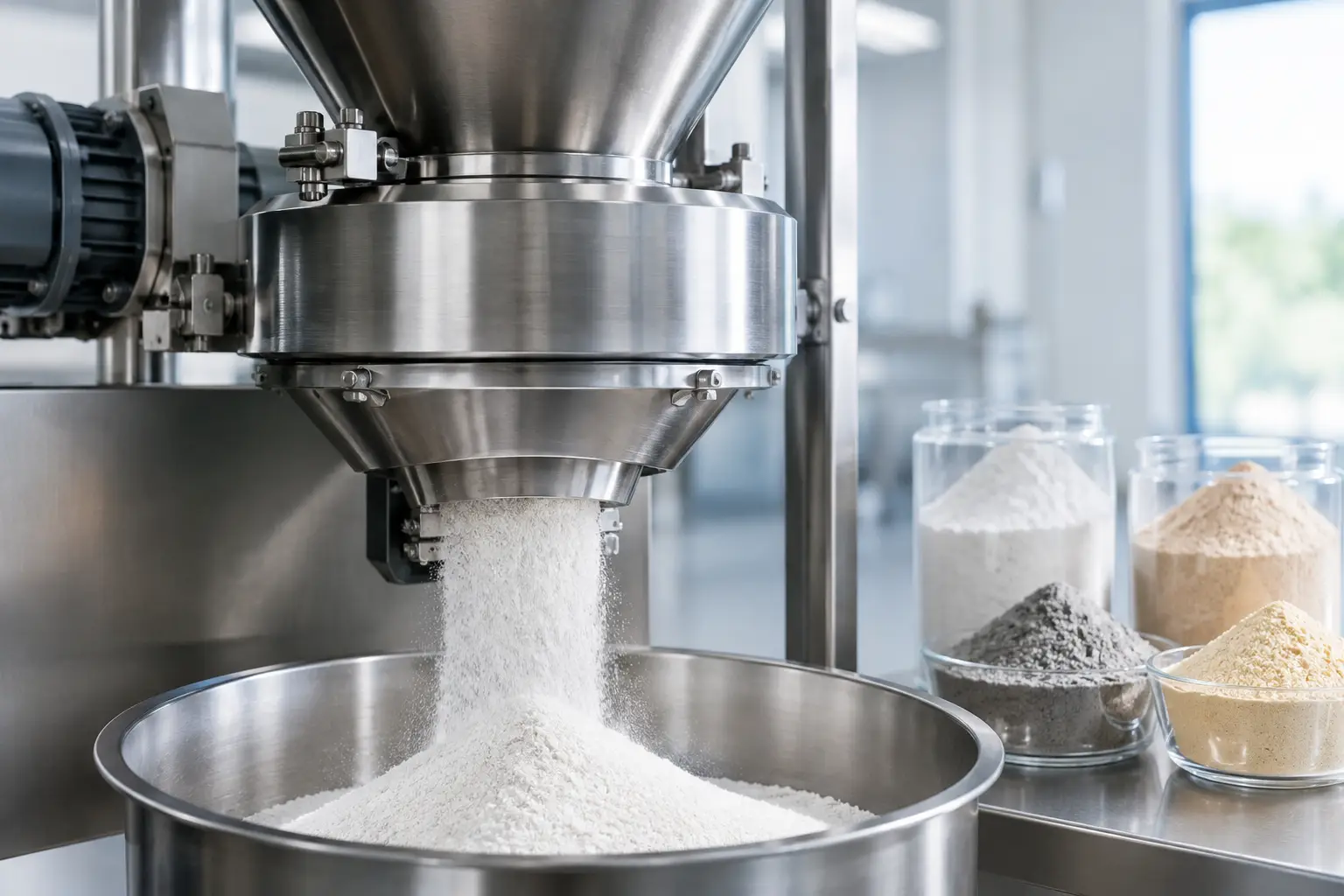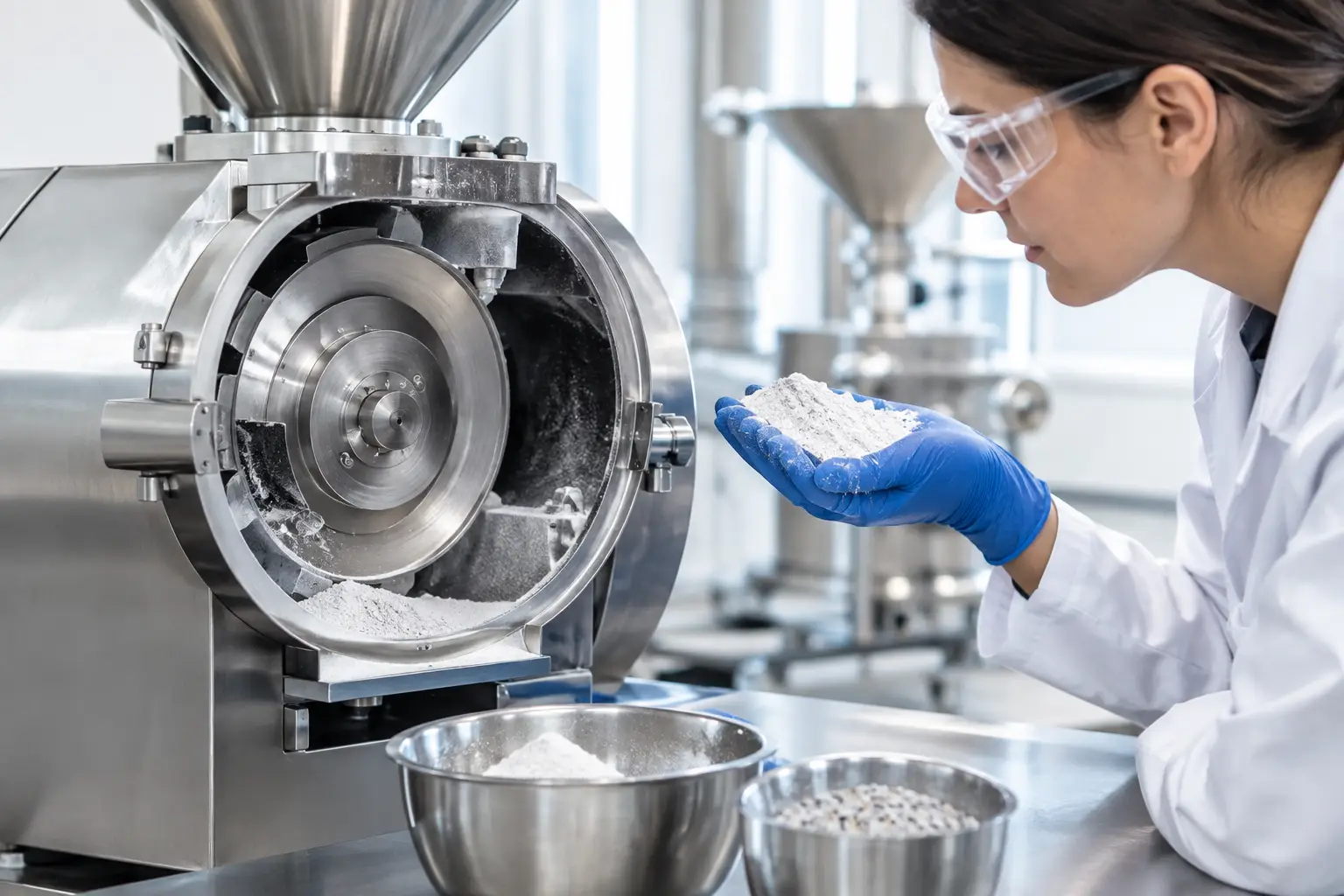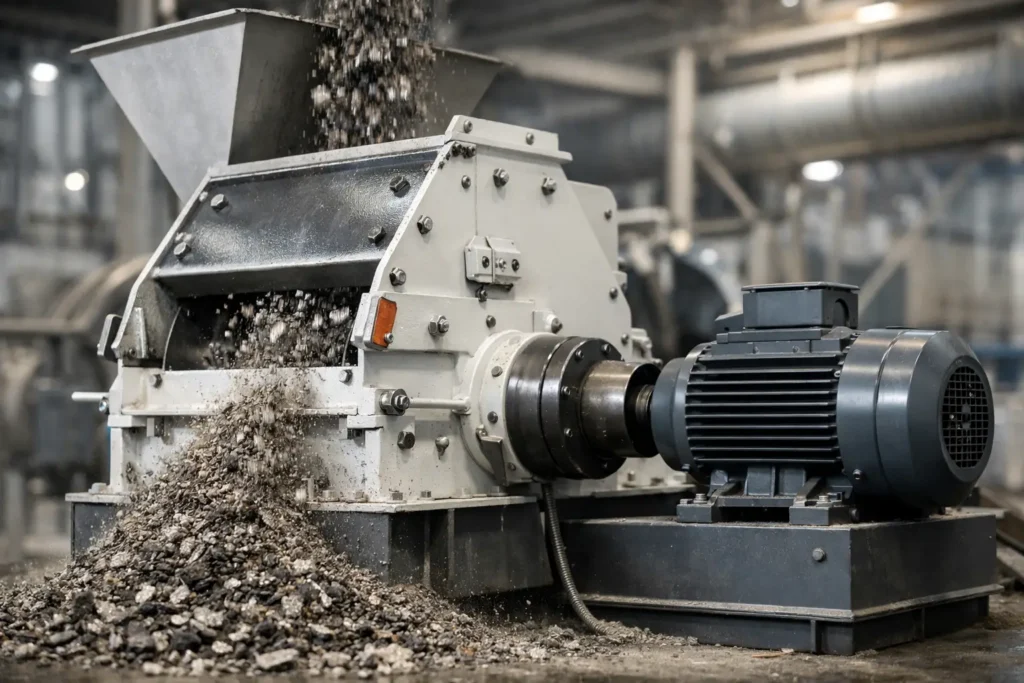
When a production line starts missing particle size targets, the root cause is often not the material alone. It is the interaction between feed properties, rotor speed, screen selection, airflow, and how the mill handles impact inside the grinding chamber. That is why hammer mills remain a widely used solution in industrial size reduction – and why selecting the right system matters just as much as choosing the right milling principle.
Hammer mills are valued for their simplicity, high throughput potential, and ability to process a broad range of materials. In the right application, they offer dependable performance with efficient reduction of friable and moderately hard products. In the wrong application, they can generate excess fines, create unwanted heat, or struggle with sticky and highly abrasive materials. For manufacturers focused on consistency, uptime, and operating cost, those differences are not minor details. They define production performance.
How hammer mills work
A hammer mill reduces material primarily through repeated impact. Feed enters the milling chamber and encounters a high-speed rotor fitted with hammers or blades. As the rotor turns, the hammers strike the material and accelerate it against breaker plates, liners, or the screen. Particle reduction continues until the material is small enough to pass through the screen openings and exit the mill.
This basic operating principle is straightforward, but process results depend on more than impact alone. Rotor tip speed influences the force of reduction. Screen size helps determine the final particle range. Hammer design affects how aggressively the product is broken down. Chamber geometry, airflow, and feed rate all influence residence time, heat generation, and throughput.
For many operations, that combination of adjustable variables is the main advantage. A hammer mill can often be tuned to meet a practical production target without introducing unnecessary system complexity.
Where hammer mills perform best
Hammer mills are commonly used when the objective is efficient bulk size reduction rather than ultra-fine precision milling. They are well suited for materials that fracture under impact and can move cleanly through the grinding chamber.
In food and nutraceutical processing, they are often used for grains, spices, sugar, dried ingredients, and other brittle or fibrous materials where throughput and repeatable reduction are important. In chemical processing, they can be effective for resins, salts, and certain powders or granules that require controlled reduction before blending, conveying, or downstream classification. In mineral and industrial applications, they are frequently used for coarse-to-medium grinding steps where rugged operation matters more than micron-level control.
They can also serve as a practical pre-milling stage ahead of finer grinding technologies. In many process lines, reducing feed size upstream improves the efficiency of a secondary mill and stabilizes overall system performance.
The main advantages of hammer mills
The strongest case for hammer mills is operational practicality. They can deliver high throughput in a relatively compact footprint, and they are capable of handling a wide range of feed sizes when properly configured. For manufacturers managing variable raw materials, that flexibility can be valuable.
Another advantage is mechanical simplicity. Compared with some alternative milling technologies, hammer mills are often easier to understand, easier to integrate, and easier to maintain at the plant level. Wear components are accessible, and screen changes can allow operators to adjust output characteristics without redesigning the entire system.
Cost is also part of the equation. For many applications, hammer mills provide an efficient balance between capital investment and production capacity. If the target particle size does not require tight top-size control or narrow distribution, a hammer mill may be the most economical path to reliable throughput.
That said, economical does not mean generic. Mill configuration still needs to match the product, process conditions, and plant goals.
Where hammer mills have limitations
Impact milling is not ideal for every material. Heat-sensitive products may degrade if residence time is too long or if the rotor speed is too aggressive. Sticky products can build up inside the chamber, reducing efficiency and increasing cleaning time. Highly abrasive materials can accelerate wear on hammers, liners, and screens, which affects both maintenance frequency and operating cost.
Particle size distribution is another consideration. Hammer mills can produce a broad distribution, especially when processing materials that shatter unevenly. That may be acceptable for some applications, but it can be a problem where tight specification control is required. In those cases, an air classifier mill, pin mill, or jet mill may be better suited depending on the material and target size.
Dust generation and containment also deserve attention. Because hammer mills operate at high speed and rely on impact, they can produce significant fines and airborne particulate if the system is not designed with proper aspiration, sealing, and collection. In regulated industries, containment and sanitation requirements may shape the equipment decision as much as grinding performance.
Key design factors that affect performance
Two hammer mills with similar horsepower ratings can deliver very different results. Performance is driven by design details and how those details align with the process.
Rotor speed is one of the most influential variables. Higher tip speed generally increases impact energy and can drive finer reduction, but it may also increase heat, wear, and fines generation. Lower speed may improve product handling for certain materials, though it can reduce throughput or leave more oversize.
Screen configuration matters just as much. Hole size affects the final product range, but open area, thickness, and screen pattern also influence discharge efficiency. A screen that is too restrictive can raise internal temperature, reduce capacity, and increase residence time. A screen that is too open may improve throughput but sacrifice particle control.
Hammer style and arrangement shape the breakage pattern. The number of hammers, their thickness, swing or fixed configuration, and edge profile all affect impact behavior. Material feed characteristics add another layer. Moisture content, bulk density, hardness, friability, and fiber length can shift milling performance significantly, even within the same product family.
That is why process testing is often the difference between an acceptable installation and a high-performing one.
Selecting hammer mills for your process
The right selection starts with the end requirement, not the machine catalog. Engineers should first define the target particle size range, required throughput, acceptable temperature rise, contamination limits, and downstream process demands. A hammer mill that works well for coarse reduction ahead of blending may not be the right choice for a line feeding precision classification or strict formulation control.
It is also worth looking closely at the material itself. Does it fracture cleanly under impact, or smear and agglomerate? Is it abrasive enough to drive high wear costs? Does it present sanitation, explosion protection, or containment concerns? These questions shape the true suitability of the technology.
System integration is just as important as the mill body. Feeding method, inlet design, airflow management, dust collection, discharge handling, and controls all affect consistency. An underfed or poorly aspirated hammer mill will not deliver stable performance no matter how well the rotor is designed.
For manufacturers scaling from pilot to production, the challenge is often repeatability. A lab result does not automatically translate to plant output. Scale-up should account for feed variability, production duty cycle, cleaning requirements, and maintenance access, not only target particle size.
Maintenance, uptime, and long-term value
Hammer mills are often described as simple machines, but production reliability still depends on disciplined maintenance. Worn hammers reduce impact efficiency. Damaged or blinded screens affect particle size and throughput. Rotor imbalance can create vibration, shorten bearing life, and compromise safety.
The best long-term outcomes come from designing for serviceability at the start. Quick access to wear parts, practical screen changes, durable construction materials, and predictable spare part schedules all reduce downtime. In demanding applications, those details often have more impact on total operating cost than the initial purchase price.
This is where an engineering-driven approach matters. DP Mills works with manufacturers to evaluate not just whether a hammer mill can run a product, but whether it can run that product consistently, cleanly, and economically within the full process environment.
When a hammer mill is the right choice
Hammer mills make sense when a process needs dependable size reduction, strong throughput, and a practical mechanical design for friable to moderately hard materials. They are especially effective when the application does not require ultra-tight particle size distribution and when the system is configured around the actual behavior of the product.
They are less effective when heat sensitivity, stickiness, extreme abrasiveness, or precision fine grinding define the process. In those cases, another milling technology may deliver better control and lower long-term risk.
The most reliable equipment decisions come from matching the mill to the material, the target specification, and the realities of plant operation. When those factors are aligned, a hammer mill becomes more than a basic grinder. It becomes a productive, scalable part of a well-engineered size reduction system.
For manufacturers evaluating milling options, that is the real question to ask: not whether hammer mills are broadly effective, but whether the right hammer mill design fits the way your process needs to perform tomorrow as well as today.