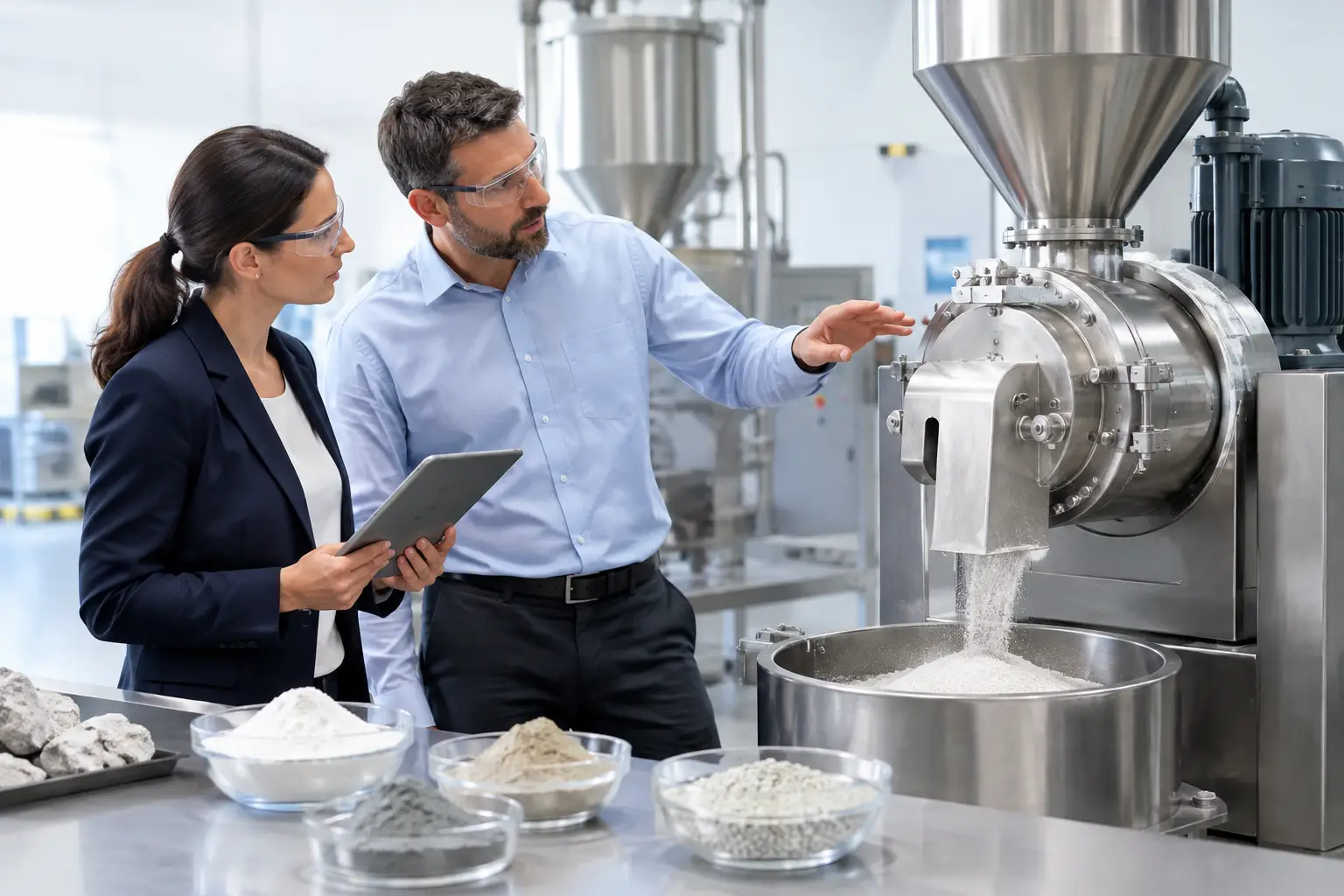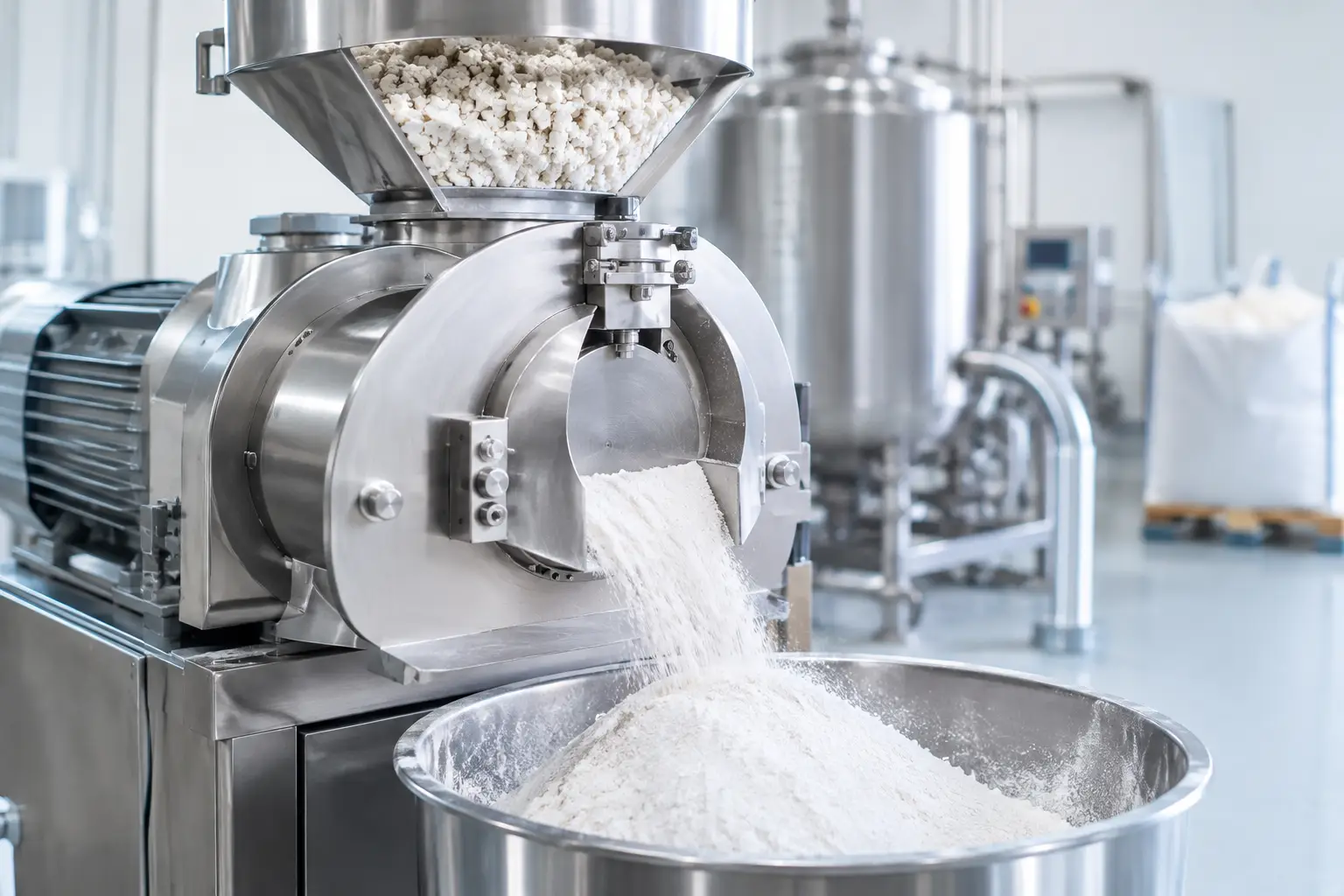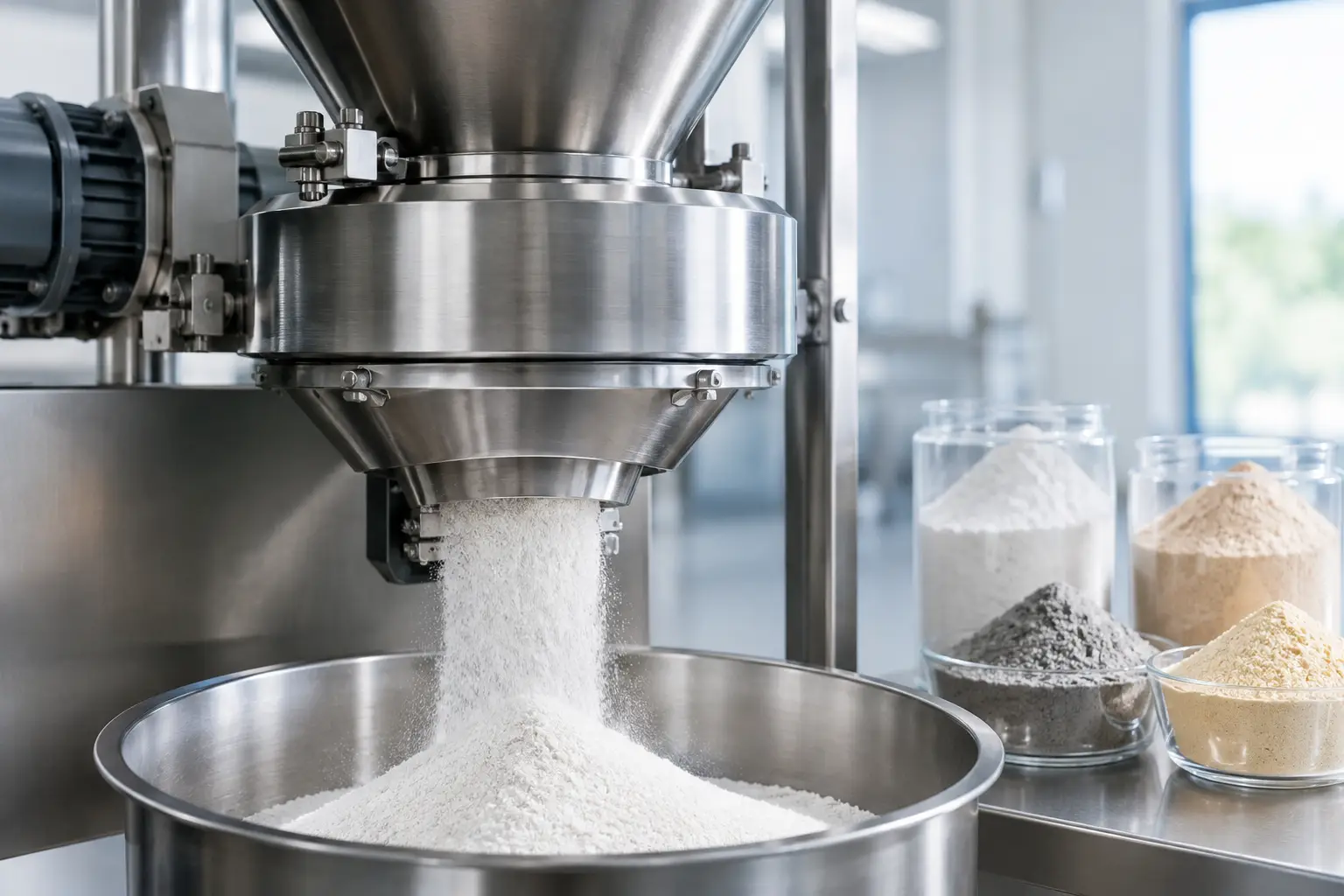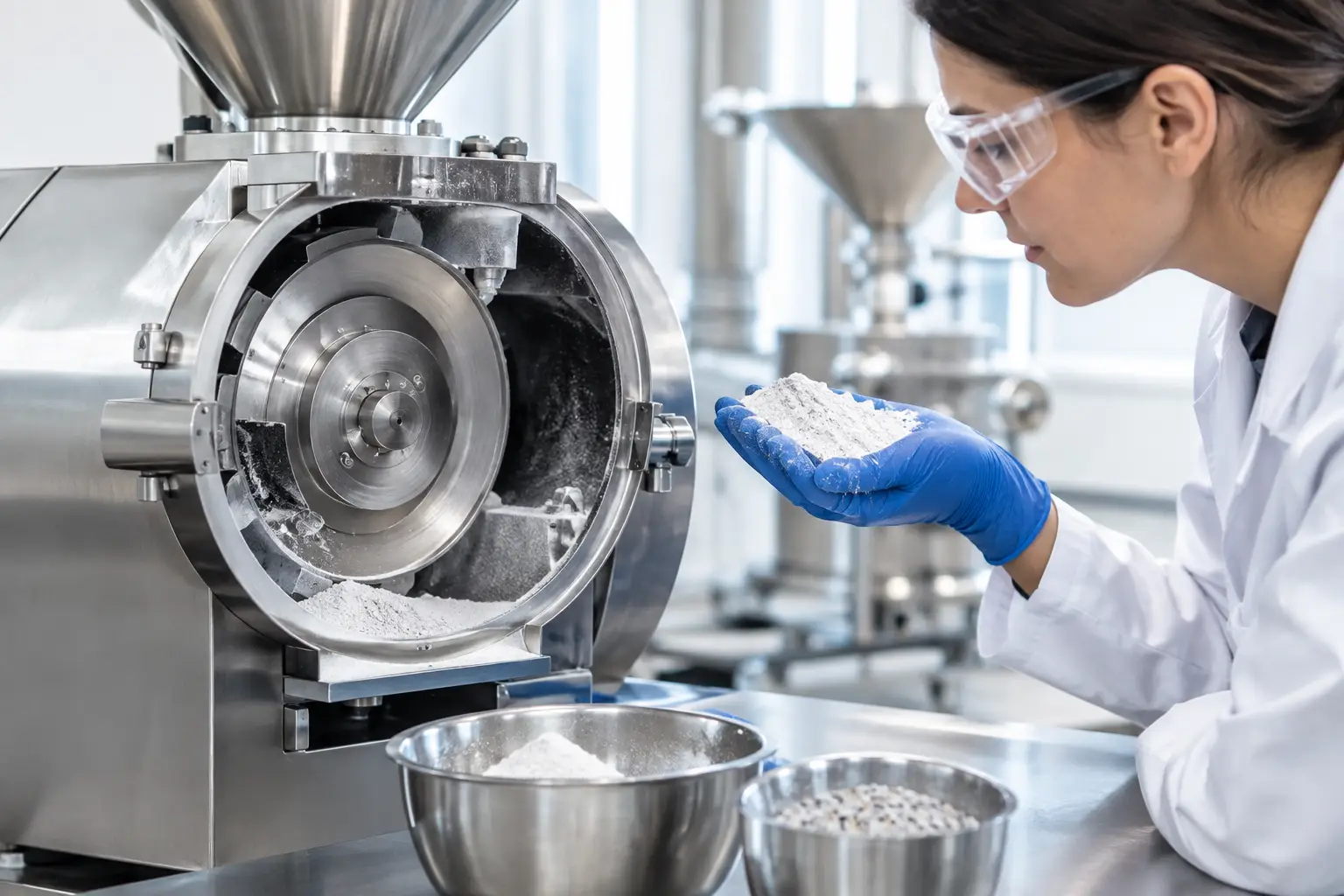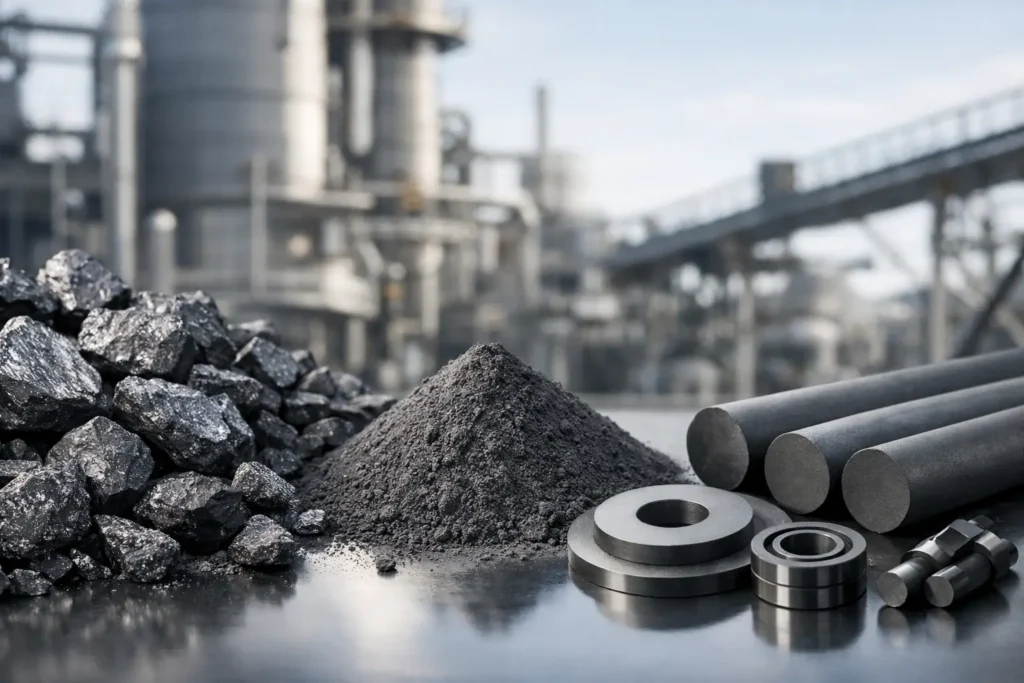
Graphite looks simple on paper. In production, it rarely is. Its lubricity, plate-like structure, dust behavior, and sensitivity to contamination can turn size reduction into a process control problem very quickly, especially when product performance depends on tight particle distribution and repeatable bulk behavior.
For manufacturers working with graphite in battery materials, industrial minerals, friction compounds, conductive additives, or specialty chemicals, milling is not just a size reduction step. It is a quality step, a throughput step, and often a downstream yield step. The wrong equipment choice can lead to excessive fines, poor flowability, media contamination, temperature rise, and inconsistent end-product performance.
Why graphite behaves differently in milling
Graphite presents a set of processing characteristics that do not fit neatly into standard milling assumptions. It is relatively soft on the Mohs scale, but that does not mean it is easy to process well. Its crystal structure promotes cleavage, and its natural lubricity can reduce grinding efficiency in some mechanical systems.
This matters because many mills rely on impact, shear, or attrition forces that behave differently when the material itself tends to slide, smear, or flatten rather than fracture in a predictable way. In practice, manufacturers may see a broad particle size distribution, too much ultrafine material, or inconsistent product morphology from one lot to the next.
Graphite also creates housekeeping and containment challenges. Fine graphite dust is lightweight, mobile, and conductive. That combination affects not only dust collection strategy, but also equipment sealing, grounding, maintenance practices, and plant cleanliness.
What manufacturers are usually trying to control
The target specification for graphite depends heavily on the end use. Battery applications may require precise control over particle size, shape retention, purity, and surface behavior. Industrial applications such as lubricants, refractories, seal materials, and conductive compounds may allow broader ranges, but they still demand repeatability.
In most cases, the process team is balancing five variables at once: top size, fines generation, contamination risk, throughput, and energy input. Improving one can easily disrupt another. A system that pushes capacity may create too much heat. A mill that achieves finer output may also increase wear or broaden the distribution beyond what the application can tolerate.
That is why graphite processing should be approached as an engineered system, not just a mill selection exercise.
Graphite milling methods and where each fits
No single milling technology is right for every graphite application. Material source, feed size, target fineness, purity requirements, and production scale all influence the best approach.
Jet milling for high purity and fine particle control
Jet mills are often a strong fit when graphite requires fine particle size with minimal contamination. Because the system uses high-velocity gas rather than mechanical grinding components to drive particle-to-particle reduction, it can reduce the risk of metallic pickup compared with some contact-based milling methods.
This makes jet milling particularly relevant for high-value graphite applications where purity is critical. It also offers strong control at finer particle ranges. The trade-off is that jet milling is not always the most energy-efficient option for coarser targets, and feed preparation becomes important. If upstream sizing is inconsistent, the jet mill may not deliver the expected stability or throughput.
Air classifier mills for controlled distribution
Air classifier mills can be effective when manufacturers need a tighter top cut while maintaining efficient continuous production. The integrated classification function allows oversize material to remain in the grinding zone until it meets the target specification, which supports more controlled output than simple impact milling alone.
For graphite, this can be valuable when the objective is a specific particle size band rather than simply reducing average size. The key is matching rotor design, classifier settings, and airflow to the behavior of the material. If the system is not tuned correctly, graphite can still generate excess fines or exhibit reduced internal grinding efficiency.
Pin mills, hammer mills, and universal mills for upstream reduction
When feedstock enters the process at a larger size, mechanical mills such as hammer mills, pin mills, or universal mills may serve as pre-grinding stages. These technologies can reduce bulk feed to a more manageable size before final micronization or classification.
Used appropriately, they support overall process economics by moving the coarse reduction load upstream. Used carelessly, they can introduce unnecessary wear, heat, and broad particle size distribution that complicates downstream finishing. For graphite, this is where staged processing often outperforms a single-pass strategy.
Contamination control is not optional
With graphite, contamination is often the issue that separates acceptable product from rejected material. In battery and advanced material markets, very small amounts of metallic contamination can affect electrochemical performance, product stability, or downstream qualification.
That is why equipment material of construction, wear surfaces, seals, and conveying interfaces deserve as much attention as the mill itself. Even if the graphite is not especially abrasive, repeated mechanical contact in the wrong areas can introduce trace contamination over time.
The same principle applies to system layout. Poor transfer design, ineffective dust collection, or difficult cleanout can compromise product integrity. Conductive dust that migrates into unintended areas can also affect electrical components and maintenance reliability.
In some operations, the best solution is not just a different mill, but a more integrated process design with controlled feeding, closed-loop conveying, efficient classification, and cleaner product handling from inlet to packaging.
Particle size is only part of graphite performance
Manufacturers sometimes focus heavily on D50 and overlook the broader processing picture. With graphite, that can be a costly mistake. Two products with similar median particle size may behave very differently in blending, compaction, slurry preparation, conductivity, or final product performance.
Particle shape, surface area, tap density, and fines content all influence how graphite performs downstream. In battery applications, for example, particle morphology can affect packing behavior and electrode consistency. In industrial compounds, excess fines may create dusting issues or disrupt dispersion. In lubricants or conductive formulations, the balance between flake integrity and size reduction can matter more than hitting one central particle size number.
That is why process development should include more than a single particle size target. It should account for how the milled graphite behaves in the next step of production.
Scaling graphite processing from lab to production
Graphite processes that work at pilot scale do not always scale linearly. Feed consistency, air handling, system residence time, and classifier performance can shift meaningfully as throughput increases. A setup that delivers excellent test results in short runs may become unstable in continuous manufacturing if system dynamics were not considered early.
For that reason, scale-up planning should evaluate the full process envelope. That includes expected feed variation, target production rates, acceptable contamination thresholds, operating temperatures, and maintenance access. It also means understanding whether the application needs flexibility for multiple graphite grades or a dedicated line optimized for a narrow specification.
This is where an engineering-led approach matters. The equipment must fit the material, but the process must also fit the operation. Throughput goals, uptime expectations, dust containment requirements, and downstream integration all affect what the best solution looks like.
Common graphite processing problems and what they usually indicate
When a graphite line underperforms, the root cause is often visible in the output. Excessive ultrafines may point to too much impact energy, poor classification, or an oversized residence time window. Inconsistent PSD can indicate unstable feed rate, poor airflow balance, or recirculation issues. Rising temperature may signal that the mill is working harder than the material and target require.
Contamination trends usually suggest wear in high-contact zones, unsuitable internal materials, or system cleaning problems. Low throughput can come from more than mill capacity alone. It may reflect poor feeding characteristics, particle agglomeration, or a mismatch between the selected technology and the graphite grade being processed.
These are not minor tuning issues. Left unresolved, they affect yield, operating cost, and product reliability.
Choosing a graphite processing partner
Graphite processing works best when equipment selection is tied to application knowledge. A supplier should be able to discuss more than target fineness. They should be prepared to address contamination pathways, heat management, classification efficiency, scalability, dust behavior, and how the system will perform under real production conditions.
For manufacturers evaluating new graphite capacity or upgrading legacy equipment, the strongest results typically come from a tailored process design rather than a standard machine dropped into an existing line. That may include staged milling, integrated classification, specialized materials of construction, or a system configuration built around containment and cleanability. Companies such as DP Mills support this type of application-driven development because graphite rarely rewards a generic approach.
Graphite can be processed efficiently and consistently, but only when the system is designed around how the material actually behaves. The closer the process aligns with the application, the easier it becomes to protect quality, maintain throughput, and build a line that keeps performing well after startup.