When a process line needs tighter particle size control without the heat, wear, or contamination risks that come with mechanical impact, the question usually comes up quickly: what is jet milling, and is it the right fit for the application? In many powder processing environments, that question is less academic than operational. It affects product quality, throughput, compliance, and the long-term cost of running the system.
Jet milling is a particle size reduction method that uses high-velocity compressed air or gas to accelerate particles and create particle-on-particle collisions. Instead of relying on grinding media, hammers, pins, or other mechanical components to break material down, a jet mill uses fluid energy. That distinction is what makes the technology especially valuable for heat-sensitive, contamination-sensitive, and high-purity applications.
What is jet milling in practical terms?
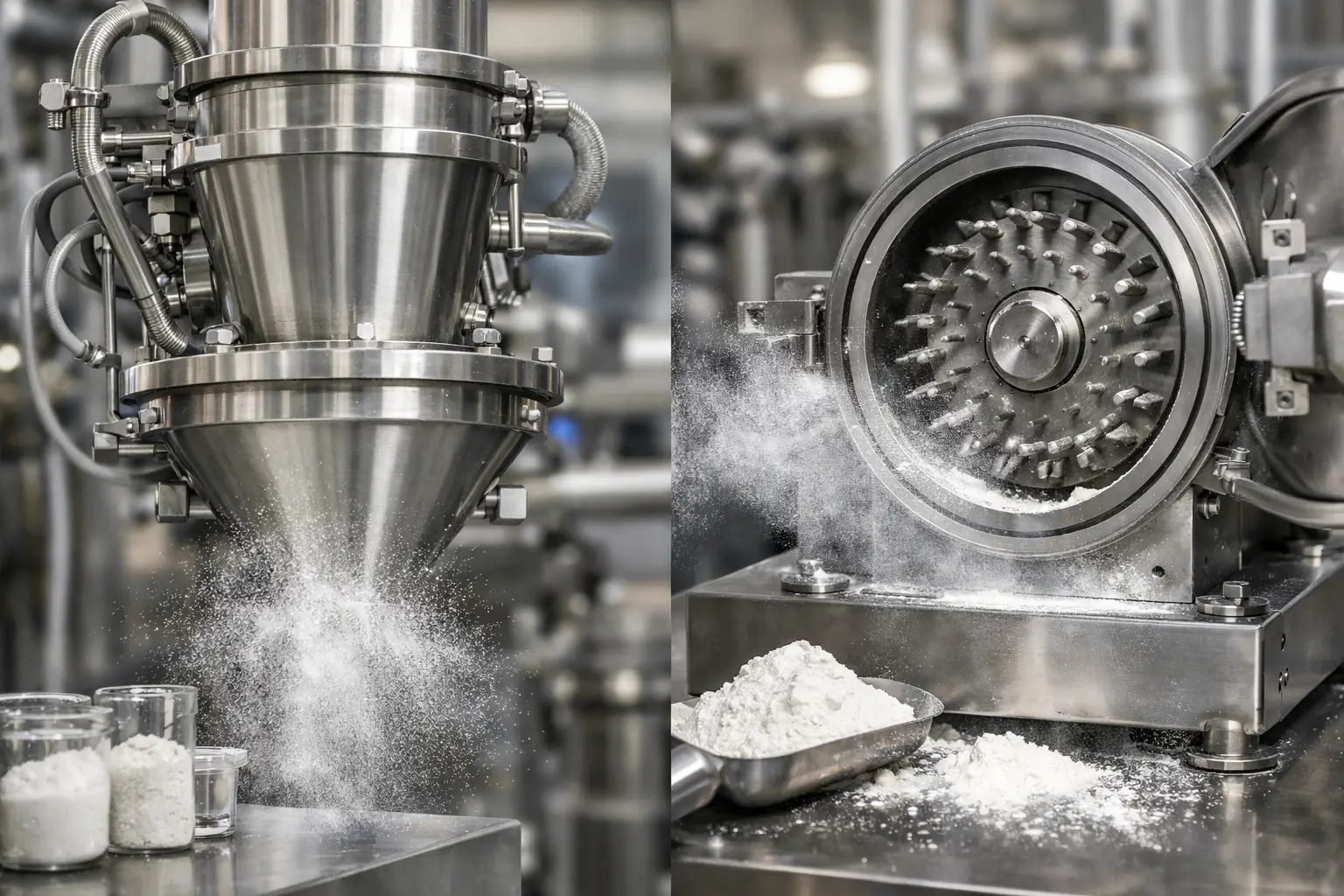
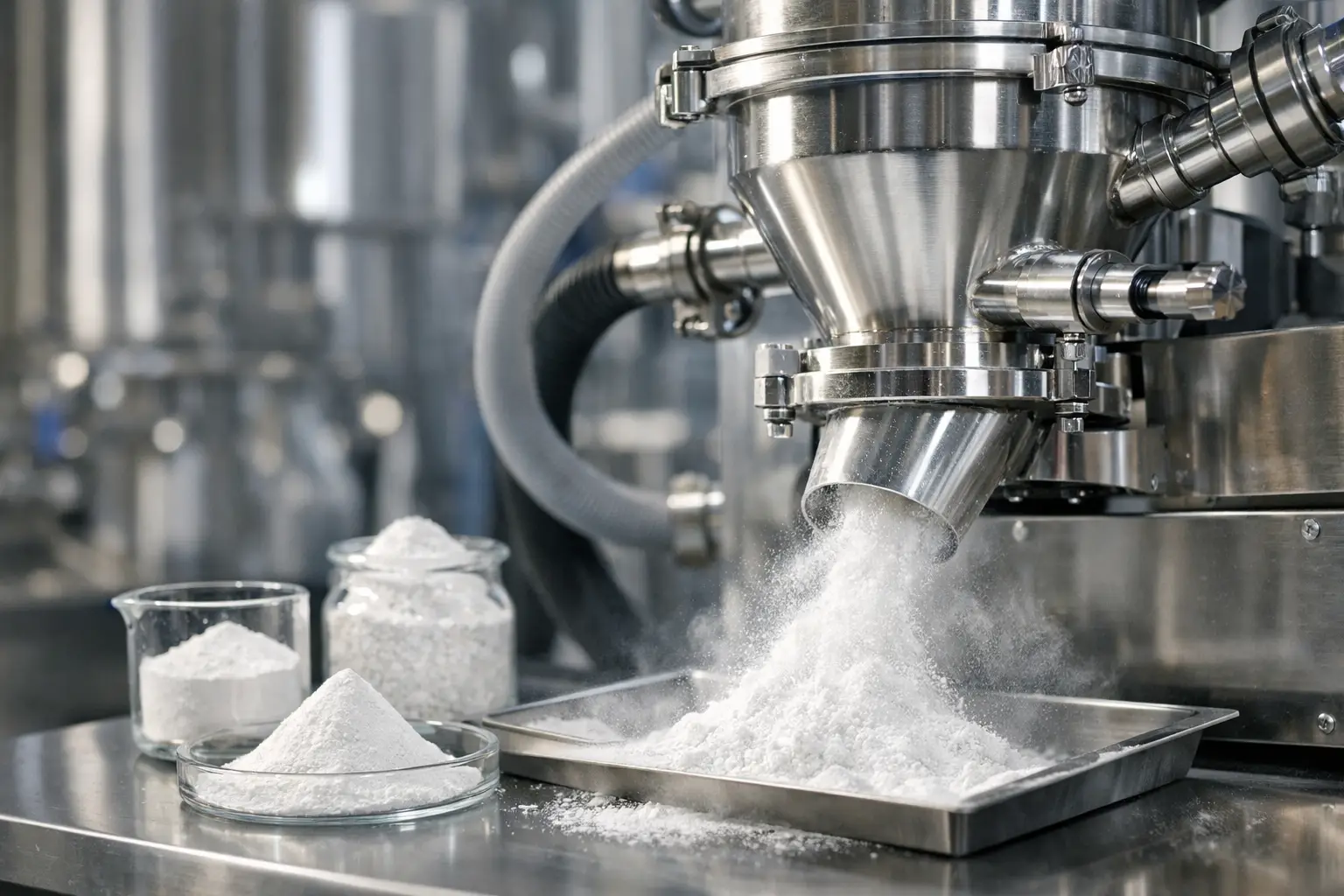
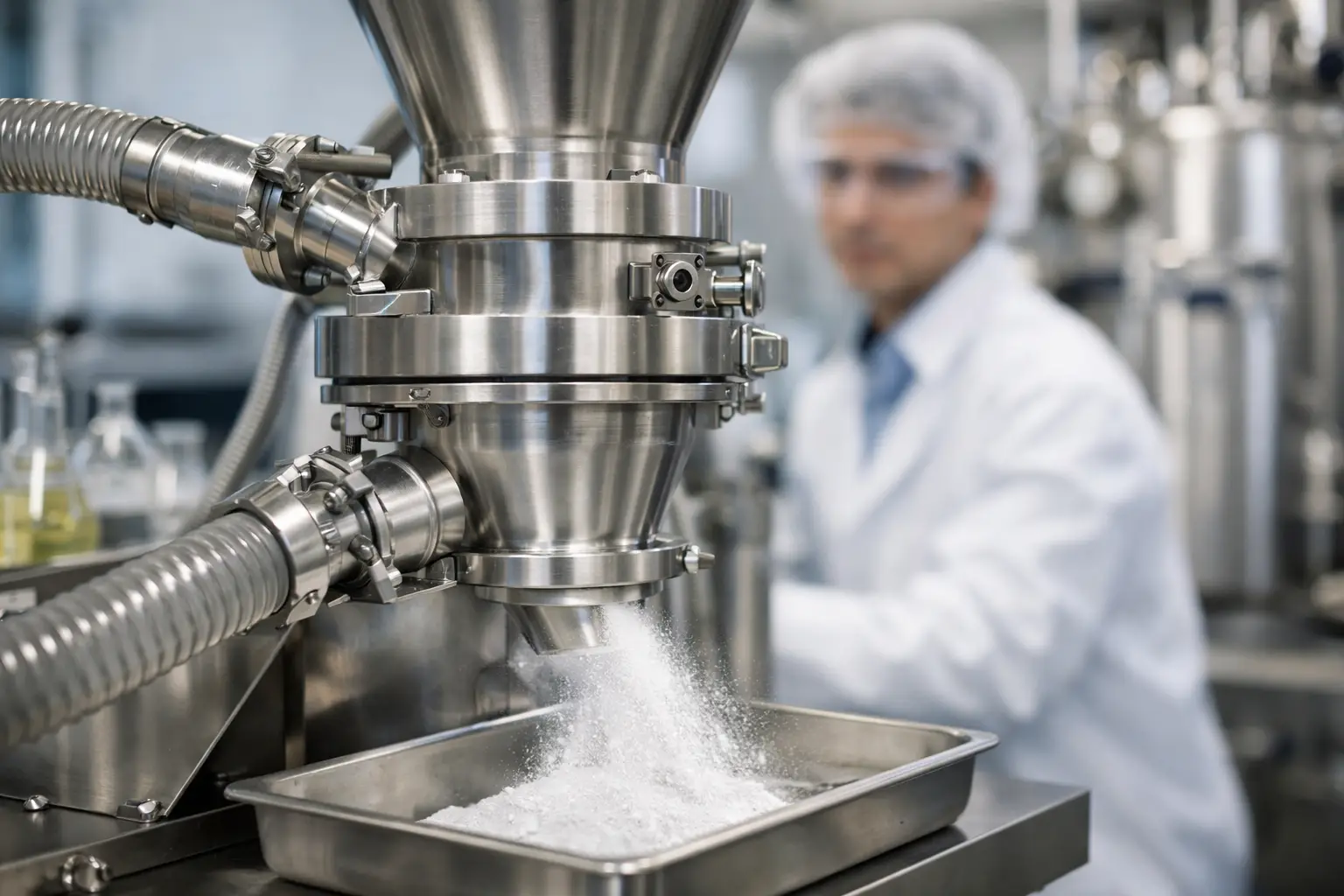
At a practical level, a jet mill is designed to micronize powder by using energy from compressed gas rather than direct mechanical contact. Material enters the milling chamber, where jets of air or gas create intense turbulence and very high particle velocities. As particles collide with one another, they fracture into smaller sizes.
Because the size reduction mechanism is driven primarily by inter-particle collision, there is minimal contact with internal machine surfaces compared with traditional impact mills. That can reduce wear and help maintain product purity, particularly when processing abrasive or high-value materials.
The process also tends to generate less heat than many mechanical milling methods. That matters when working with pharmaceuticals, nutraceuticals, specialty chemicals, battery materials, pigments, and other products where temperature rise can affect functionality, stability, or downstream performance.
How jet milling works
Although jet mill configurations vary, the operating principle is consistent. Feed material is introduced into a grinding chamber. Compressed air or another process gas enters through nozzles at high speed, creating a spiral or opposed flow pattern depending on the mill design. The resulting energy causes particles to accelerate and collide.
As particles become fine enough, they are carried out of the grinding zone. In many systems, an internal air classifier controls the top cut size, allowing only particles below a target size to exit while larger particles remain in circulation for further reduction. This is one reason jet milling can achieve narrow particle size distributions when the system is properly engineered and tuned.
Performance depends on more than air pressure alone. Feed rate, material hardness, particle shape, moisture content, density, required top size, and gas flow all influence results. In production settings, successful jet milling is usually a matter of balancing size reduction targets with throughput, energy consumption, and yield.
Why manufacturers choose jet milling
Jet milling is not the answer for every powder processing challenge, but it offers clear advantages in the right operating window.
One of the biggest reasons manufacturers specify jet mills is fine particle size capability. Jet mills are commonly used when the target is in the micron or low-micron range, especially where a conventional mill may struggle to achieve the same fineness without excessive heat or broad distribution.
Another major advantage is contamination control. Since the process relies on particle-to-particle impact, there are fewer opportunities for metal pickup from moving grinding elements. For pharmaceutical and advanced material applications, this can be a decisive factor.
Thermal protection is another important benefit. Mechanical mills often transfer more heat into the product through friction and impact. Jet mills still involve energy input, but they are often better suited for temperature-sensitive materials that degrade, smear, soften, or react under elevated temperatures.
Manufacturers also value the precision of classification. In systems with integrated classifiers, operators can tune particle size more closely than with simpler milling methods. That level of control can improve dissolution rates, flow behavior, blending consistency, reaction rates, and final product performance.
Where jet milling fits best
Jet milling is most effective when product requirements are demanding enough to justify the technology. That usually means applications where fine particle size, narrow distribution, purity, or low-temperature processing have measurable value.
In pharmaceuticals, jet mills are often used for active ingredients and excipients where micronization affects bioavailability and blend uniformity. In food and nutraceutical processing, they can support fine grinding of heat-sensitive ingredients while helping preserve functional properties. In chemicals and specialty materials, they are often chosen for pigments, polymers, catalysts, and performance additives where particle size influences dispersion or reactivity.
Battery and advanced material processing is another area where jet milling can be especially relevant. Material integrity, contamination reduction, and tightly controlled particle size are often critical to downstream product performance. The same is true for many mineral and ceramic applications, although material abrasiveness and production economics need careful evaluation.
What is jet milling compared with mechanical milling?
The simplest comparison is that jet milling uses fluid energy, while mechanical mills use physical grinding components. Hammer mills, pin mills, and similar technologies often offer strong throughput and can be very effective for coarser or intermediate particle size reduction. They may also be more energy-efficient for certain materials and target sizes.
Jet mills generally become more attractive as fineness requirements increase and as the cost of heat damage, contamination, or poor particle size control rises. If a product only needs moderate reduction, a jet mill may be more system than the process requires. If the process demands micronization with strict quality targets, the technology can justify itself quickly.
That is why mill selection should not be based on particle size alone. The right question is not just whether a jet mill can achieve the target size. It is whether it can do so consistently, at the required throughput, with acceptable operating cost and process reliability.
Limits and trade-offs to consider
Jet milling has clear strengths, but it also comes with trade-offs that process teams should evaluate honestly.
Compressed air or gas consumption is one of the most significant. Jet mills can be energy-intensive, especially at larger production volumes. If the target size can be achieved with a lower-energy mechanical system, that option may offer a better total operating cost.
Throughput can also be a limiting factor. Extremely fine milling often means slower production rates compared with coarser grinding technologies. For some facilities, that is acceptable because product value is high and precision matters more than volume. For others, throughput constraints may push the decision toward a different milling solution or a staged process.
Material behavior matters as well. Feed with excessive moisture, stickiness, or poor flow can challenge jet mill performance. Some products may need upstream drying, conditioning, or controlled feeding to perform well. Softer materials may deform rather than fracture efficiently, which changes the economics of the process.
Noise, dust handling, air system capacity, and containment requirements should also be part of the discussion. A jet mill does not operate in isolation. Its real performance depends on the full system, including feeding, classification, collection, controls, and environmental management.
Key factors in selecting a jet mill system
For manufacturers evaluating jet milling, application data is more valuable than generic equipment claims. The material’s hardness, friability, bulk density, abrasiveness, starting top size, and sensitivity to heat all shape the system design.
The target specification matters just as much. A requirement for D50 performance is different from a strict top cut requirement, and both are different from a need for narrow distribution with minimal fines. Those distinctions affect nozzle design, classifier configuration, gas requirements, and overall system sizing.
Production goals should guide the final decision. A pilot line, an R&D operation, and a full-scale continuous manufacturing environment may all process the same material differently. Maintenance expectations, sanitation requirements, cleanability, automation level, and integration with upstream and downstream equipment also deserve attention early in the selection process.
This is where an engineering-driven approach makes a practical difference. A properly matched system should be built around the material and the production objective, not around a standard machine frame alone.
When jet milling makes the most sense
Jet milling tends to make the most sense when manufacturers are trying to solve a specific problem that other technologies struggle to address. That may be contamination from metal contact, poor control of fine particle size, thermal degradation, or an inability to meet a tight product specification at scale.
It also makes sense when the value of the finished material is high enough that particle quality directly affects profitability. In those cases, the cost of imprecise milling often exceeds the cost of the equipment and utility demand needed to do the job correctly.
For companies running demanding powder processes, understanding what is jet milling is really about understanding where fluid energy milling creates better production outcomes than conventional alternatives. The most effective milling systems are not chosen by category alone. They are chosen because they solve the actual process problem with the right balance of precision, efficiency, and reliability.
If your application calls for micronization, tight particle control, and low-contamination processing, jet milling deserves a serious look – not as a default option, but as a high-performance tool when the process truly requires it.
Come see the Proc-X Manufacturing Group Inc. difference