Milling Oxides, Sulfates, and Phosphates: Challenges and Solutions with DP Pulverizers
Introduction
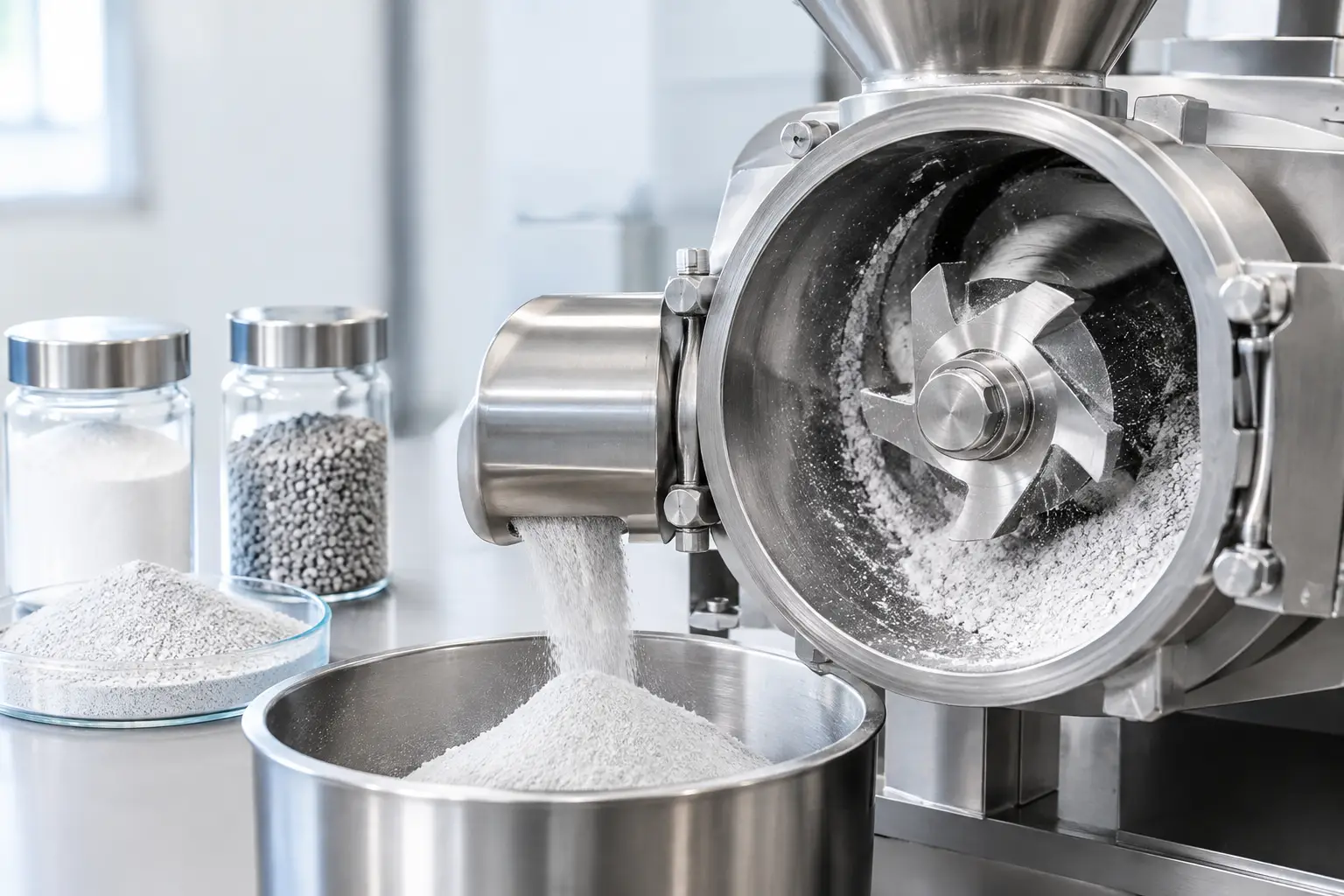
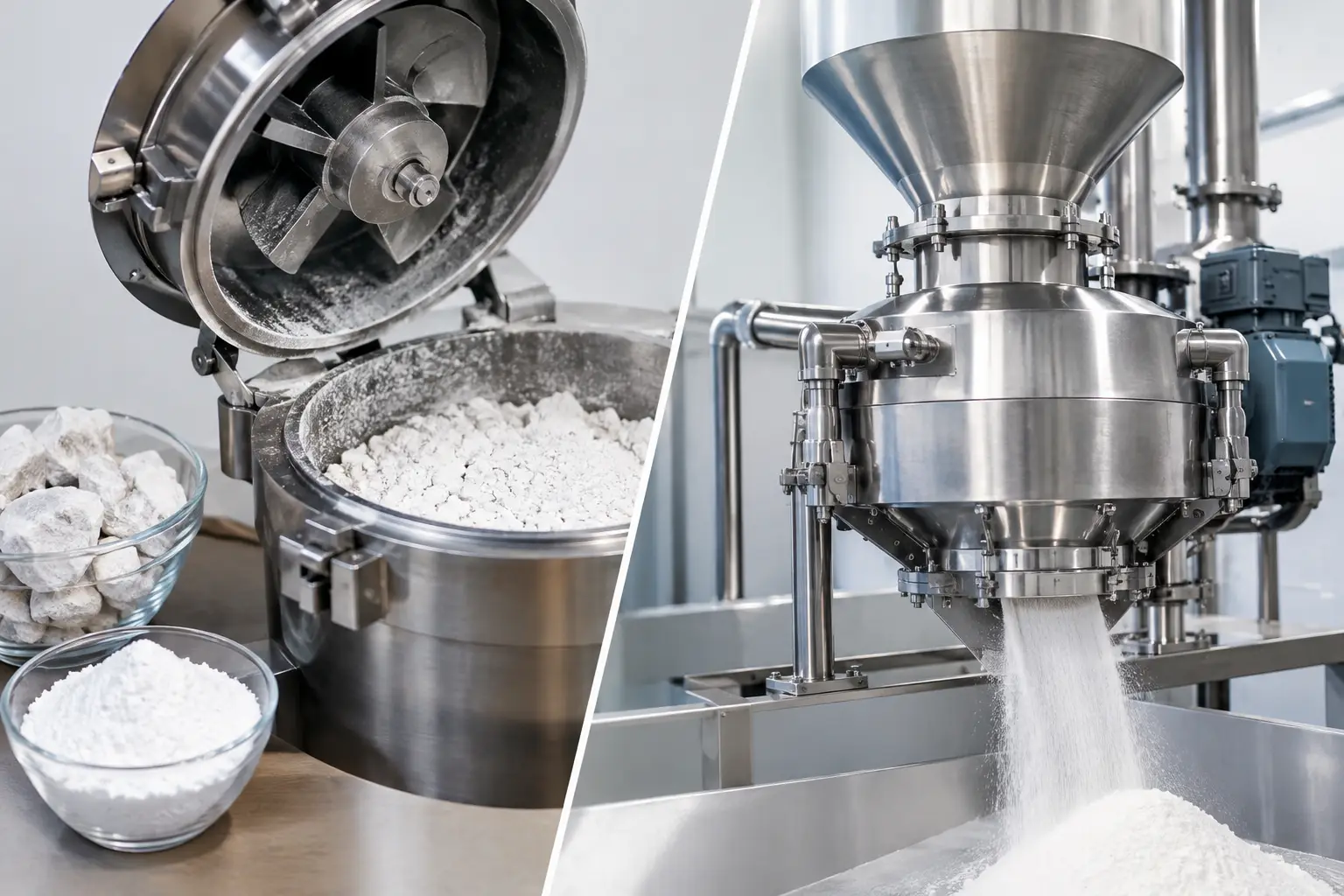
Oxides, sulfates, phosphates, and similar inorganic compounds are the backbone of industries ranging from agriculture and chemicals to batteries and advanced materials. These raw materials often arrive in prill, granular, or crystalline form, but downstream applications demand controlled particle sizes, precise distributions, and consistent quality.
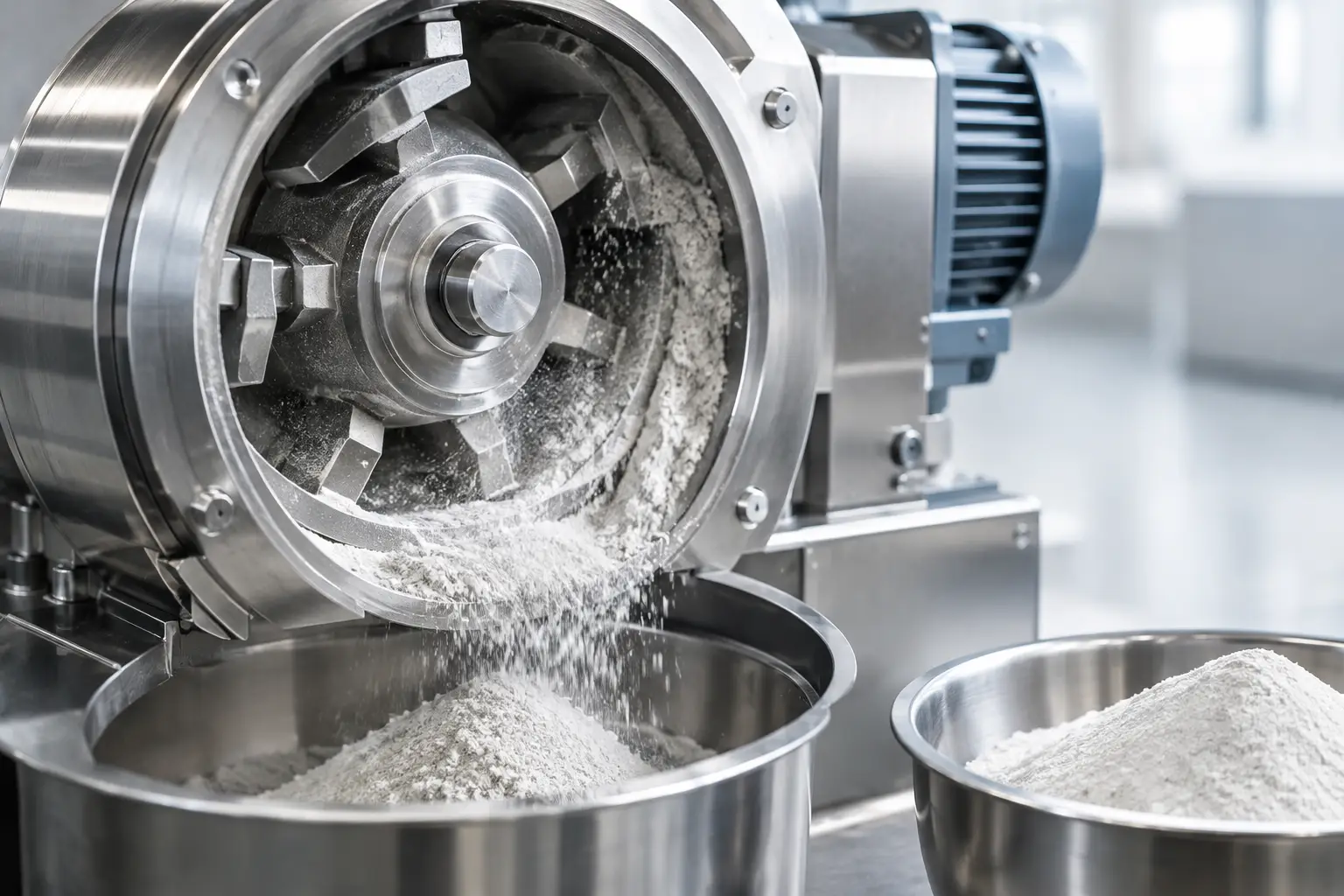
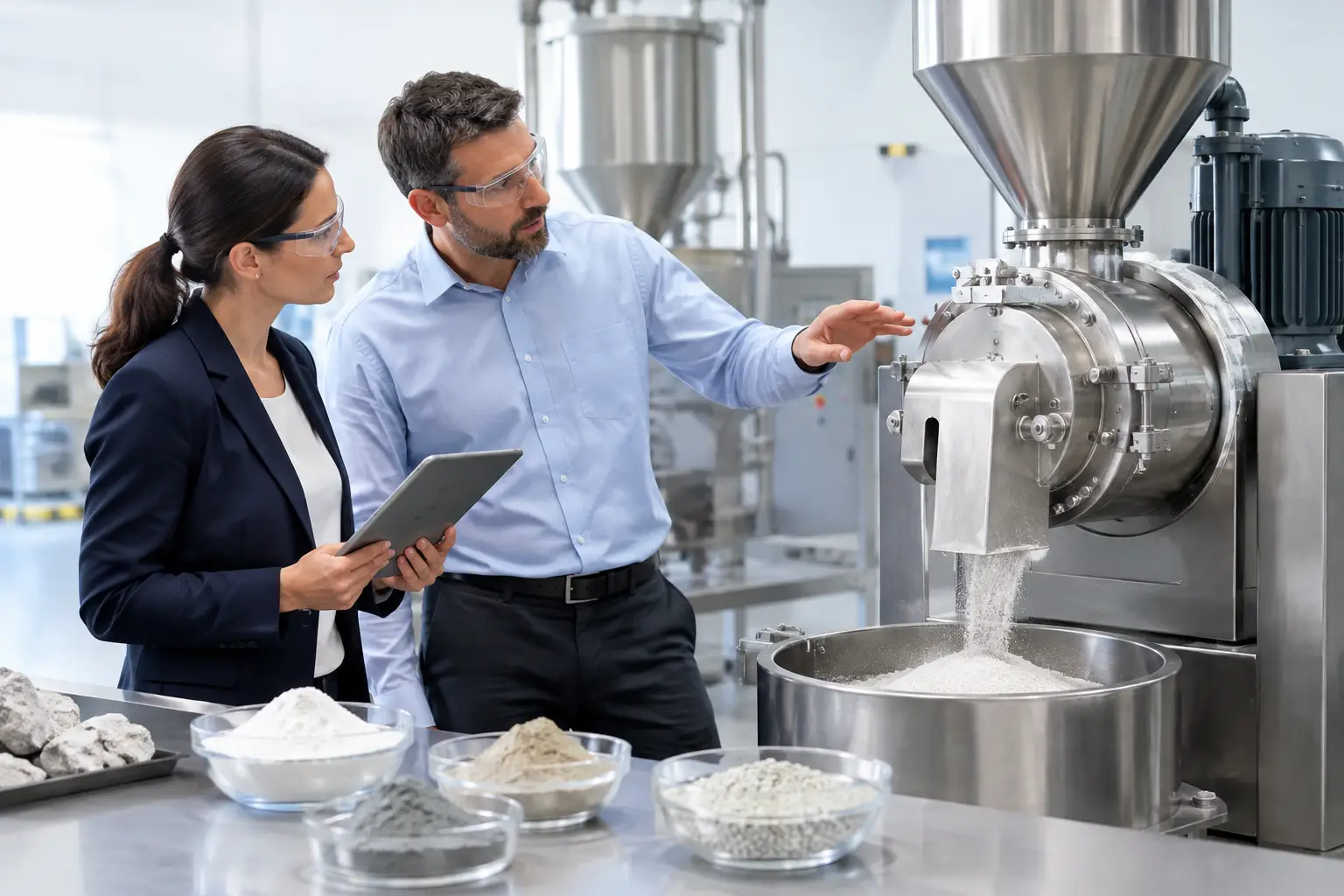
Milling these compounds at scale presents unique challenges. From corrosion and abrasion to dust management and particle size control, processors must balance performance, safety, and long-term durability of equipment. This article explores the trials and tribulations of milling chemically aggressive salts and minerals—and how DP Pulverizers delivers solutions through its range of advanced milling systems.
The Trials & Tribulations of Milling Salts and Inorganics
1. Corrosion Resistance
- The challenge: Sulfates and phosphates are chemically aggressive, attacking carbon steel and even standard stainless steel under certain conditions. Long-term exposure causes pitting, contamination, and premature equipment failure.
- The consequence: Rising maintenance costs, unplanned downtime, and off-spec product due to contamination from corroded surfaces.
2. Abrasion & Wear
- The challenge: Oxides such as alumina, iron oxide, and titanium dioxide are highly abrasive. Pin tips, hammers, classifier edges, and housings wear quickly under continuous impact.
- The consequence: Frequent replacement of parts, reduced throughput, and inconsistent particle size distribution.
3. Particle Size Control
- The challenge: Applications demand different cuts—from coarse granules to fine powders below 50 microns. Over-grinding wastes energy and risks caking, while under-grinding reduces solubility and reactivity.
- The consequence: Poor process efficiency and inconsistent product quality.
4. Hygroscopicity and Caking
- The challenge: Many sulfates and phosphates absorb moisture from ambient air, leading to bridging in hoppers, build-up inside ducts, and clogged filters.
- The consequence: Unsteady feed, downtime for cleaning, and reduced filter life.
5. Dust Management and Safety
- The challenge: While most inorganics are not highly explosive, fine dust can still present respiratory hazards, equipment fouling, and regulatory concerns. In some blends, explosivity cannot be ruled out.
- The consequence: Health and safety risks, compliance issues, and costly environmental controls.
The DP Pulverizers Answer
Tailored Mill Selection
DP Pulverizers offers a full suite of milling technologies designed to match the material and the target particle size:
- Hammer Mills – robust coarse grinders for conditioning prills and granules to 300–1,000 μm.
- Pin Mills – versatile, impact-based systems for mid-fine grinding, delivering 150–400 μm with consistent PSD.
- Air Classifier Mills (ACM) – the workhorse for fine and controlled milling of salts and oxides, capable of 75–150 μm in one pass with dynamic classification.
- Jet Mills – for ultra-fine applications below 20 μm, using compressed air or gas for contamination-free grinding.
Materials of Construction
DP Pulverizers understands that “one steel does not fit all.” Equipment is available in:
- 316L stainless steel for general corrosion resistance.
- Duplex and 904L stainless steels for high chloride environments.
- Hastelloy C-276 where extreme chemical resistance is needed.
- Hardox/AR liners for high-impact zones.
- Ceramic and tungsten carbide wear kits for classifiers, pins, and edges.
Engineered for Longevity
- Replaceable wear liners and quick-change components extend life and simplify maintenance.
- Double mechanical seals or air-purged labyrinth seals protect bearings from corrosive dust.
- PTFE-laminated filters and stainless cages ensure long service life in baghouses.
Process Control & Automation
- PLC/HMI with recipe management ensures consistent performance.
- Adjustable classifier speeds and feeder controls deliver precise PSD tuning.
- Integrated ΔP monitoring and vibration trending provide predictive maintenance tools.
Dust & Hygiene Solutions
- Reverse-pulse baghouses with PTFE filters control emissions.
- Hygroscopic powders are managed with sealed transfer, dehumidified air sweeps, and anti-bridging feeders.
- Optional ATEX isolation and explosion vents are available for safety compliance.
Benefits of Partnering with DP Pulverizers
- Proven throughput: Systems sized to 1,000 kg/h and beyond, with scalable designs.
- Reduced OPEX: Energy-efficient mills and wear-resistant liners cut running costs.
- Cleaner operations: Integrated dust management and sealed transfers.
- Tailored engineering: Each system is matched to the customer’s raw material, fineness target, and site environment.
- Global support: Installation, training, and lifecycle service through DP Pulverizers’ worldwide network.
Conclusion
Milling oxides, sulfates, phosphates, and related compounds is not a matter of choosing a single machine—it is a balance of chemistry, particle engineering, and equipment durability. The trials and tribulations of corrosion, abrasion, caking, and dust are real, but solvable.
With decades of experience and a portfolio spanning hammer mills to jet mills, DP Pulverizers delivers tailored, corrosion-resistant, and high-performance milling systems that keep your process running smoothly and your product within specification.
When the raw materials are aggressive, DP Pulverizers provides the technology to tame them.