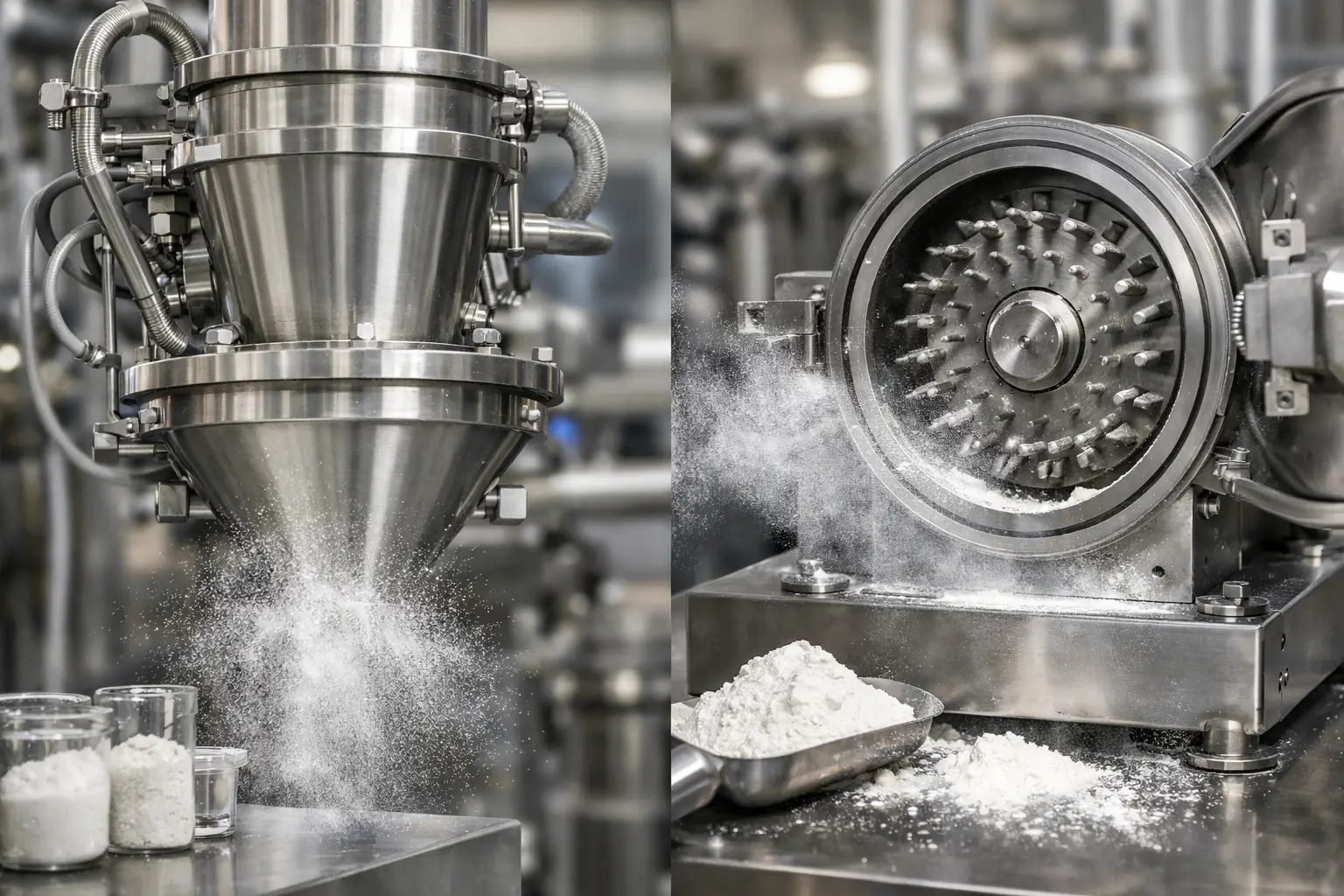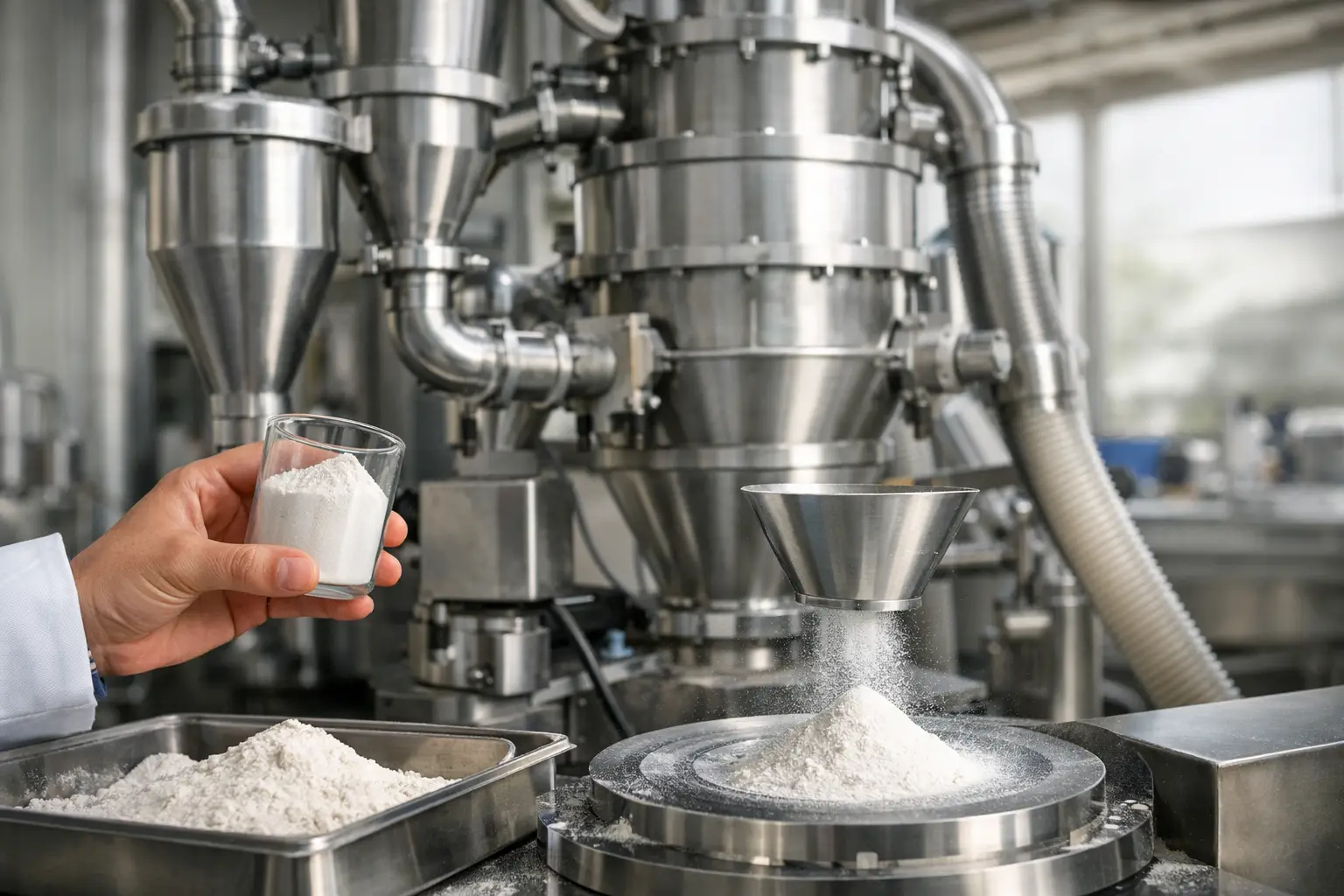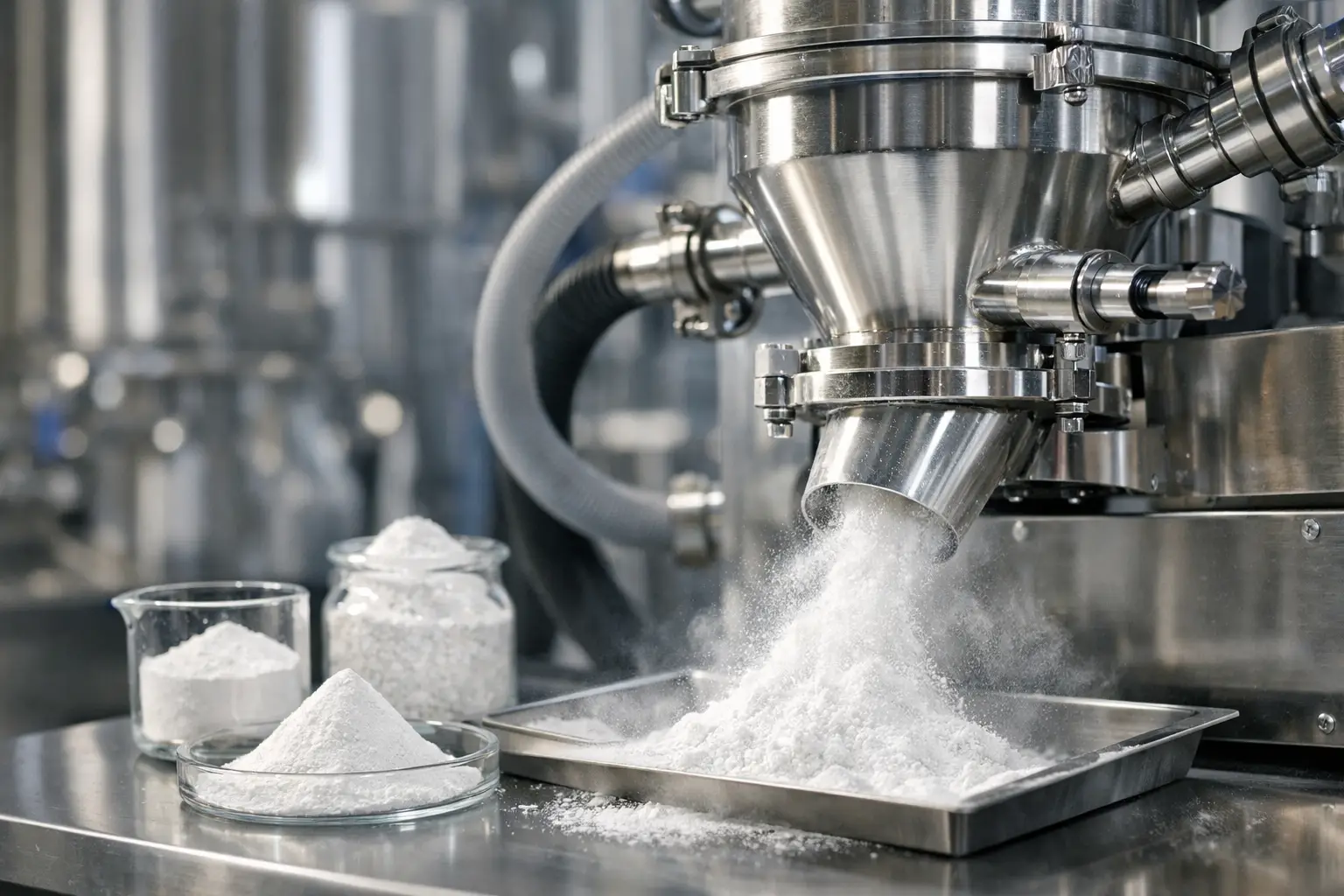
A milling system that looks right on paper can still become the source of poor yield, excessive heat, broad particle size distribution, or cleaning headaches once it reaches the production floor. That is why an industrial milling equipment guide should start with process reality, not catalog categories. In demanding manufacturing environments, the right mill is the one that matches material behavior, target particle size, throughput requirements, contamination limits, and the way the line needs to run every day.
How to use this industrial milling equipment guide
Equipment selection is rarely about finding the single most powerful machine. It is about finding the milling technology that produces the required particle profile consistently while protecting product integrity and supporting uptime. The same material may perform very differently under impact, attrition, compression, or fluid energy, and those differences directly affect capacity, operating cost, and downstream performance.
For process engineers and plant managers, the most useful approach is to evaluate mills through five practical questions. What is the feed material like? What final particle size or distribution is required? How sensitive is the product to heat, contamination, or over-processing? What throughput is needed today and at scale? And how will the system be cleaned, maintained, and integrated into the broader process?
Start with the material, not the machine
Material characteristics determine more than many buyers expect. Hardness matters, but it is only one variable. Friability, moisture content, bulk density, oil content, abrasiveness, thermal sensitivity, and tendency to agglomerate all shape how a product responds to milling.
A brittle mineral may reduce efficiently in an impact mill with strong throughput. A sticky botanical or high-fat food ingredient may smear, blind screens, or build up heat in the same design. Fine chemical powders may require tight top-size control and closed-loop containment, while battery materials may call for contamination-sensitive construction and very specific particle morphology outcomes.
This is where many projects go off track. Teams often specify a target micron range before confirming how the material behaves under actual processing conditions. Lab and pilot testing help reduce that risk because they show not only whether a target size is possible, but whether it is achievable at practical rates and with acceptable energy input.
The main milling technologies and where they fit
Jet mills
Jet mills are typically selected when very fine particle size is required and contamination control is a priority. They use high-velocity gas streams rather than mechanical grinding media, which makes them well suited for pharmaceuticals, advanced chemicals, and high-purity materials. Their strengths are fine particle production, reduced mechanical wear contact, and strong performance with heat-sensitive materials.
The trade-off is throughput and operating cost. Jet milling is not always the most economical choice for coarse reduction or high-volume duty where ultrafine output is not necessary. Compressed gas demand and system complexity should be evaluated carefully.
Air classifier mills
Air classifier mills combine impact milling with internal classification, making them a strong option when tighter particle size control is needed than a basic impact mill can provide. They are widely used in food, chemical, and mineral applications because they offer a practical balance between fineness, throughput, and process control.
They are often a good fit when you need narrower particle size distribution without moving into a full jet milling system. Performance still depends heavily on feed characteristics and classifier settings, so application tuning matters.
Hammer mills
Hammer mills remain a common solution for coarse to medium grinding where high throughput and straightforward operation are priorities. They are often used for bulk solids, agricultural inputs, minerals, and some chemical products. Their appeal is simple – they are productive, relatively familiar to plant teams, and effective for many size reduction tasks.
But hammer mills are not universal answers. They can generate more heat, produce broader particle distributions, and create wear challenges with abrasive materials. If your process depends on tight top-size control or minimal fines, another technology may be a better fit.
Pin mills and turbo mills
Pin mills are frequently used for fine grinding of friable materials, especially where high-speed impact can achieve efficient reduction. They are common in food, chemicals, and powder coating applications. Turbo mills can provide similar advantages with strong air handling and fine grinding capability.
These technologies can deliver excellent results, but not every material tolerates their energy input well. Heat-sensitive or smear-prone products may require lower-temperature or differently staged approaches.
Universal mills and cone mills
Universal mills offer flexibility across a range of particle sizes and applications, which can be useful in multiproduct environments. Cone mills are often chosen for deagglomeration, delumping, and controlled size reduction in pharmaceutical and nutraceutical processes where gentle handling and predictable output are important.
Neither should be selected just because they are versatile. Flexibility has value, but if the process window is narrow, a more specialized mill may deliver better consistency.
Cryogenic grinding systems
Some materials simply do not mill well at ambient temperature. Elastomers, waxes, high-fat materials, and thermally sensitive compounds may soften, smear, or degrade before reaching target size. Cryogenic systems address that by lowering product temperature during processing, making brittle fracture possible where standard milling fails.
The benefit is better grindability and product protection. The trade-off is added complexity, operating cost, and cryogen handling requirements. When the material demands it, though, cryogenic grinding can shift a process from unreliable to repeatable.
Particle size is only part of the specification
A frequent mistake in equipment selection is focusing only on average particle size. In production, distribution width, top size, fines generation, and particle shape can be just as important. A powder with the right median size may still underperform in blending, dissolution, flow, compaction, coating, or reaction behavior if the distribution is too broad.
That is why the milling objective should be tied to the final product function. If downstream processing requires uniform feeding, narrow classification may matter more than absolute fineness. If the product is used in tablets, suspensions, batteries, or specialty coatings, morphology and thermal history may influence quality as much as size itself.
Throughput, uptime, and energy use matter just as much
The best particle size result in a test setting does not automatically translate into a good production system. A mill has to sustain output under real operating conditions. Feed consistency changes. Operators change shifts. Upstream and downstream equipment create constraints. Maintenance windows tighten.
A practical industrial milling equipment guide has to account for these realities. Higher-speed systems may achieve the target size, but if wear parts need frequent replacement or energy demand is excessive, the process may become expensive to maintain. A lower-intensity mill may offer better total value if it supports reliable output, easier maintenance, and stable operation over long campaigns.
This is where engineered system design becomes important. Feed method, air handling, dust collection, classifier setup, discharge arrangement, and controls all affect actual line performance. Milling efficiency is never just about the mill head itself.
Contamination control and cleanability should be decided early
In regulated and high-value applications, contamination risk is a primary selection factor. Product-contact materials, internal geometry, seal design, wear surfaces, and clean-in-place or washdown requirements should be addressed before the equipment is specified. Waiting until procurement to ask about cleanability often leads to compromises.
For pharmaceutical, nutraceutical, food, and advanced material processes, the wrong mill can introduce unacceptable risks through metal contact, residual hold-up, or difficult teardown. For abrasive products, internal wear can shorten service life and affect purity. In these cases, the mill design and material of construction are directly tied to product quality.
Integration usually determines success
A mill that performs well as a standalone machine can still become a bottleneck if it is poorly integrated. Feed uniformity, conveying method, explosion protection strategy, dust containment, automation level, and packaging or downstream classification all influence results.
This is one reason experienced manufacturers often prefer a process partner over a general equipment vendor. At DP Mills, that engineering perspective is central to how milling systems are evaluated – not as isolated machines, but as part of a working production environment with measurable performance targets.
What a good selection process looks like
The strongest projects usually follow a disciplined path. First, define the production objective in operational terms: target size distribution, capacity, temperature limits, contamination requirements, and cleaning expectations. Next, assess material behavior through testing or prior production data. Then compare technologies based on how they perform under those specific conditions, not just on generic capability charts.
After that, validate how the system will scale. A mill that performs well in pilot quantities must also support full production economics, maintenance plans, and operator use. Finally, review the entire process line. Ancillary equipment, controls, and containment features should be aligned with the milling objective from the start.
The right mill is rarely the one with the broadest claims. It is the one engineered around the demands of your material, your quality standard, and your production reality. If you approach selection with that level of discipline, milling becomes less of a recurring problem and more of a controllable advantage.