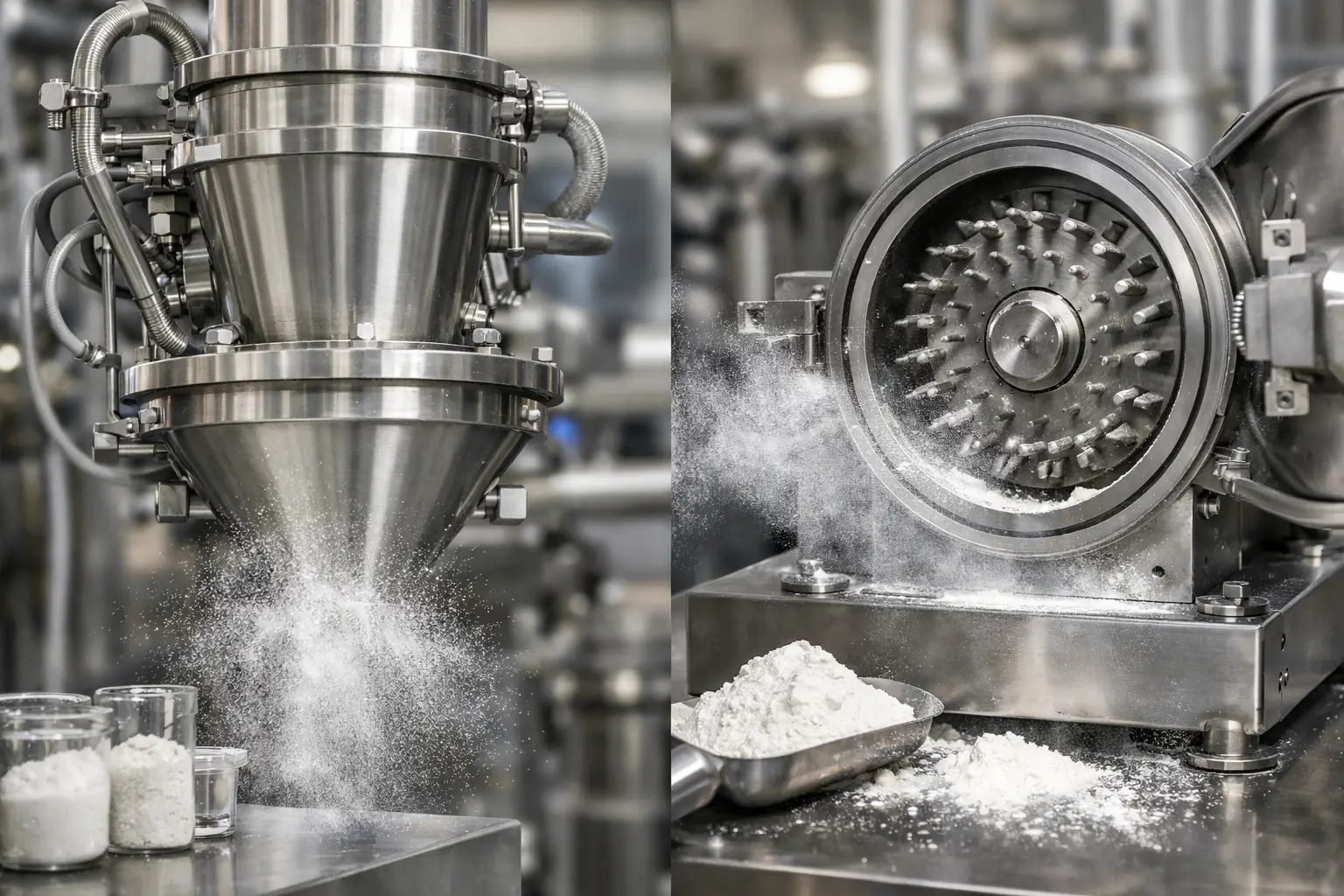
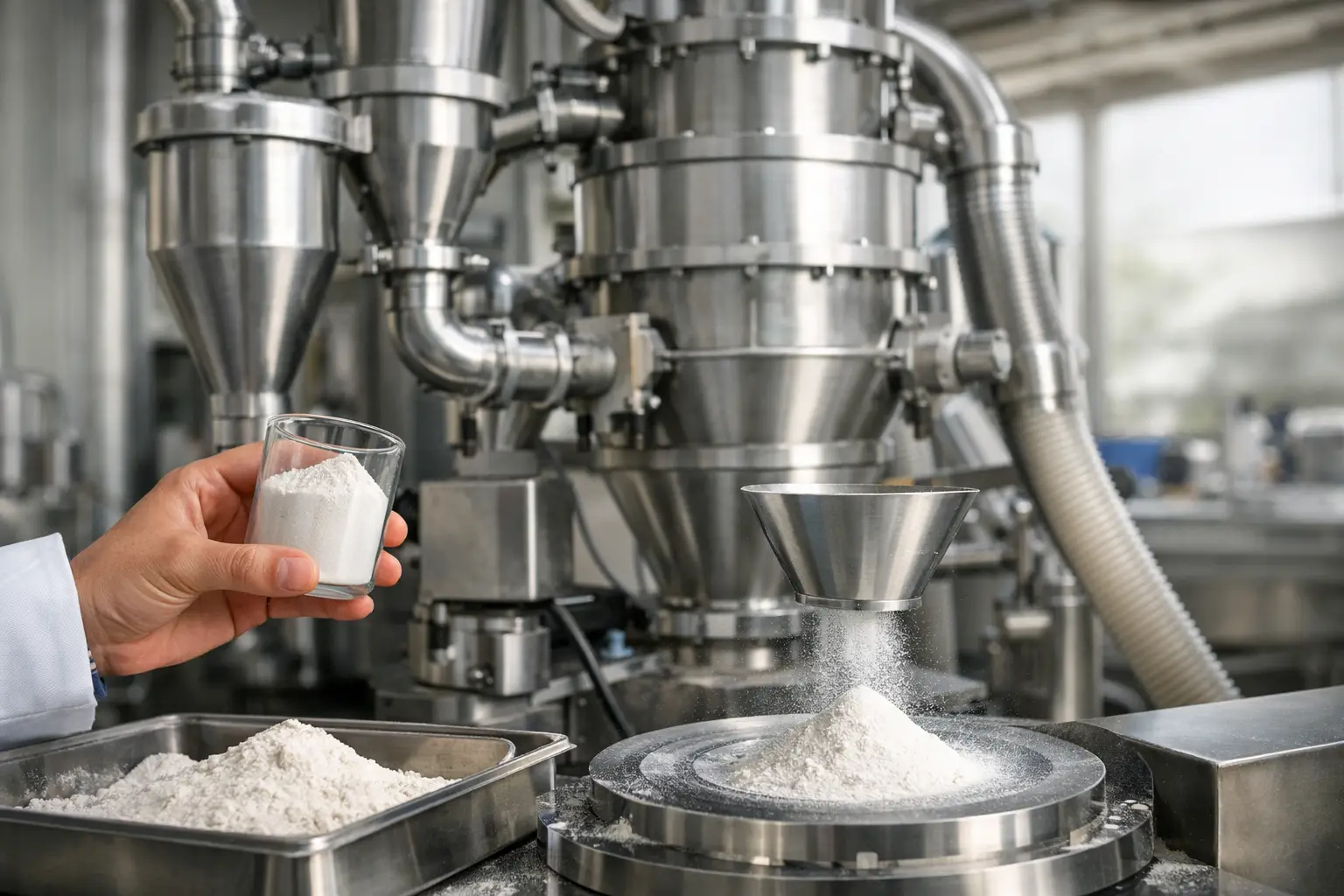
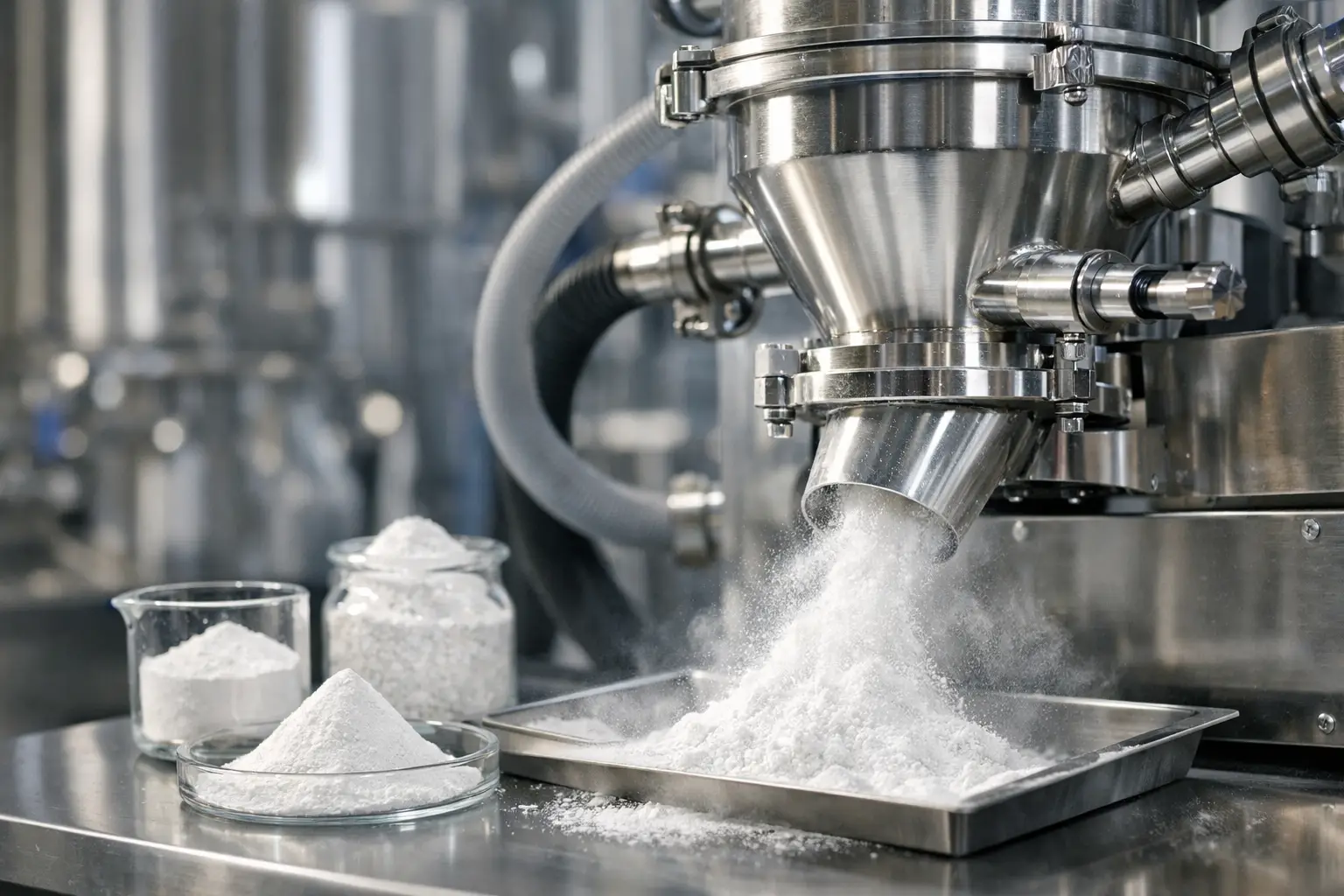
Tablet weight drifting out of range. Granules bridging in the hopper. A blend that looked acceptable in development but behaves differently on the production floor. These are the kinds of issues that make cone mill pharmaceutical manufacturing more than a simple size reduction step. In many pharmaceutical processes, the cone mill sits at a critical control point where flowability, uniformity, downstream compression performance, and cleaning requirements all intersect.
A cone mill is often selected because it can condition powders and granules with less aggression than impact-driven technologies. That matters when the product is friable, heat sensitive, or tightly tied to downstream content uniformity and dissolution targets. Used correctly, it helps create a more consistent, process-ready material. Used without enough attention to screen selection, rotor speed, feed behavior, and material properties, it can become a hidden source of variability.
Where cone mill pharmaceutical manufacturing fits
In pharmaceutical production, cone mills are commonly used for deagglomeration, delumping, sizing wet or dry granulation, and conditioning material before blending, tableting, encapsulation, or packaging. Their role is usually not extreme micronization. Instead, they are designed to produce a more uniform and manageable particle population while preserving product integrity.
That distinction is important. If the objective is fine particle reduction to a narrow micron range, a cone mill may not be the right primary technology. But when the requirement is to break soft agglomerates, improve powder flow, reduce oversize granules, or prepare a consistent feed for the next process step, a cone mill is often a practical and efficient choice.
For pharmaceutical manufacturers, that translates into operational value. More uniform feed can support steadier die fill, fewer flow interruptions, and improved batch-to-batch repeatability. In continuous or high-throughput environments, those gains can have a direct effect on uptime and line efficiency.
How a cone mill works in pharmaceutical manufacturing
A cone mill generally uses a rotating impeller or rotor inside a conical screen. Material enters the process zone and is driven against the screen, where granules or powder pass through apertures once they reach the required size. The design is straightforward, but performance depends heavily on how the machine is configured for the product.
Screen hole size has a direct effect on final particle distribution. Rotor speed influences the intensity of the milling action and the residence time within the chamber. Impeller design affects how material is conveyed and sheared. Feed rate matters as well. Overfeeding can increase heat, reduce consistency, and create unnecessary stress on the product.
In practice, cone milling is less about brute force and more about controlled conditioning. That is one reason it is widely used in pharmaceutical environments where product sensitivity and process repeatability carry equal weight.
Why manufacturers choose cone mills
The main advantage of a cone mill is balance. It offers enough mechanical action to improve particle uniformity and flow behavior, but it is usually gentler than high-impact milling systems. For many formulations, that balance reduces the risk of excessive fines generation, which can affect compression, segregation, dusting, and dissolution.
This is especially relevant in wet granulation and dry granulation workflows. After granule formation and drying, manufacturers often need a controlled way to bring the material into a narrower, usable size range. A cone mill can help trim oversize granules without excessively damaging the rest of the distribution.
Another reason for its widespread use is containment and cleanability. Pharmaceutical operations need equipment that supports hygienic design, reproducible cleaning, and changeover efficiency. Cone mills are commonly configured for sanitary construction, accessible disassembly, and integration into contained handling systems. Those factors matter just as much as particle size when evaluating equipment for regulated production.
The process variables that matter most
In cone mill pharmaceutical manufacturing, the machine itself is only part of the equation. Material behavior drives results. A free-flowing granule with low moisture content will respond very differently than a cohesive powder, a moisture-sensitive API blend, or an abrasive excipient-rich formulation.
Screen selection is one of the first variables to evaluate. Smaller apertures can tighten the output distribution, but they may also reduce throughput and increase the chance of heat buildup or screen blinding. Larger apertures can support capacity, but they may allow too much oversize to pass for the needs of the downstream process.
Rotor tip speed also requires careful control. Higher speed can improve delumping efficiency and output consistency, yet it may generate more fines and more frictional heat. Lower speed may preserve product structure, but it can leave behind too many oversize particles if the feed is not already well conditioned.
Then there is feed consistency. Even a well-designed mill will struggle if upstream granulation is highly variable or if the incoming bulk density swings from batch to batch. Milling performance is always tied to what the process delivers into the chamber.
Trade-offs in cone mill pharmaceutical manufacturing
Cone mills are highly effective, but they are not universal solutions. If a product is extremely hard, highly abrasive, or requires a very fine finished particle size, another milling technology may be more suitable. Hammer mills, pin mills, jet mills, or air classifier mills can offer different advantages depending on the target result.
There is also a trade-off between product protection and throughput. A gentle setup may preserve granule structure and limit fines, but it can reduce production rate. A more aggressive setup may improve capacity, but it can shift the size distribution in ways that create downstream issues. The right answer depends on the formulation, the batch size, and the quality attributes that matter most.
For that reason, equipment selection should not stop at a basic specification sheet. Pharmaceutical manufacturers need to evaluate the mill in the context of the entire process – from feeder behavior and containment requirements to cleaning validation and final dosage form performance.
Scaling from development to production
One of the most common pain points in pharmaceutical processing is scale-up. A cone mill that performs well in a pilot setting may not behave exactly the same way at commercial throughput if feed presentation, dwell time, or upstream granulation conditions change.
Successful scale-up requires more than matching screen size and rotor speed. It requires understanding how the material responds to mechanical stress at different feed rates, how the equipment integrates into the broader line, and how process controls maintain consistency over time. Small differences in bulk density, moisture, and feed uniformity can become significant when production volumes increase.
This is where engineered customization and application support add real value. Manufacturers benefit from equipment designed around the process, not just selected from a standard catalog. At DP Mills, that engineering-first approach is central to how milling systems are evaluated for performance, reliability, and long-term production fit.
Contamination control, cleaning, and uptime
In pharmaceutical environments, performance is inseparable from compliance. A mill that delivers acceptable sizing but creates cleaning bottlenecks or raises contamination concerns can quickly become a production liability.
Cone mills used in pharmaceutical manufacturing are often evaluated for material contact surface quality, ease of disassembly, gasket design, accessibility, and compatibility with washdown or clean-in-place strategies where appropriate. If changeovers are frequent, these features can affect available production time as much as the milling action itself.
Wear resistance is another practical concern. Over time, rotor and screen wear can shift product consistency and increase the risk of metallic contamination if not properly monitored. Preventive maintenance and component inspection should be treated as part of process control, not just equipment upkeep.
What to evaluate before selecting a cone mill
The best cone mill choice starts with the product and the process objective. Is the goal simple deagglomeration, controlled granule sizing, or pre-blend conditioning? Is the formulation heat sensitive or friable? Does the application prioritize throughput, narrow distribution, containment, or fast changeover?
It is also important to assess how the mill will fit into the full production environment. Inlet and outlet handling, dust control, upstream feeding, downstream transfer, automation needs, and validation requirements all affect whether the equipment will perform as intended in daily use.
A cone mill should not be judged only by whether it can reduce size. It should be judged by whether it can do so consistently, cleanly, and economically at the required production scale.
For pharmaceutical manufacturers, that is the real value of cone mill pharmaceutical manufacturing. It is a controlled conditioning step that can stabilize flow, support uniformity, and improve downstream process behavior when it is properly matched to the formulation and operating conditions. The most effective systems are the ones engineered around actual material behavior, actual production constraints, and the performance standards the line has to meet every day.
When a mill is selected with that level of process discipline, it stops being just another machine in the line. It becomes a reliable part of how quality gets built into the batch.