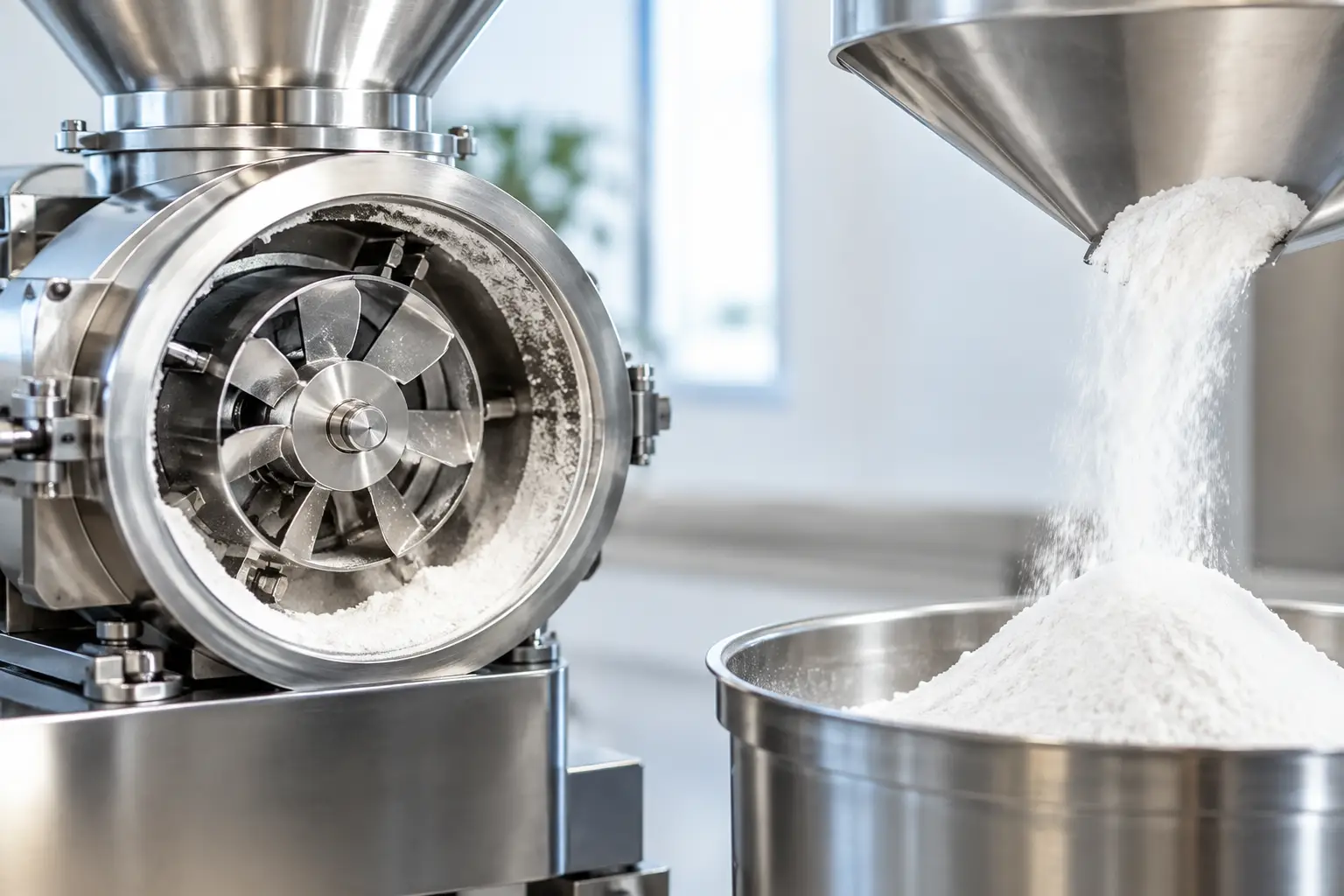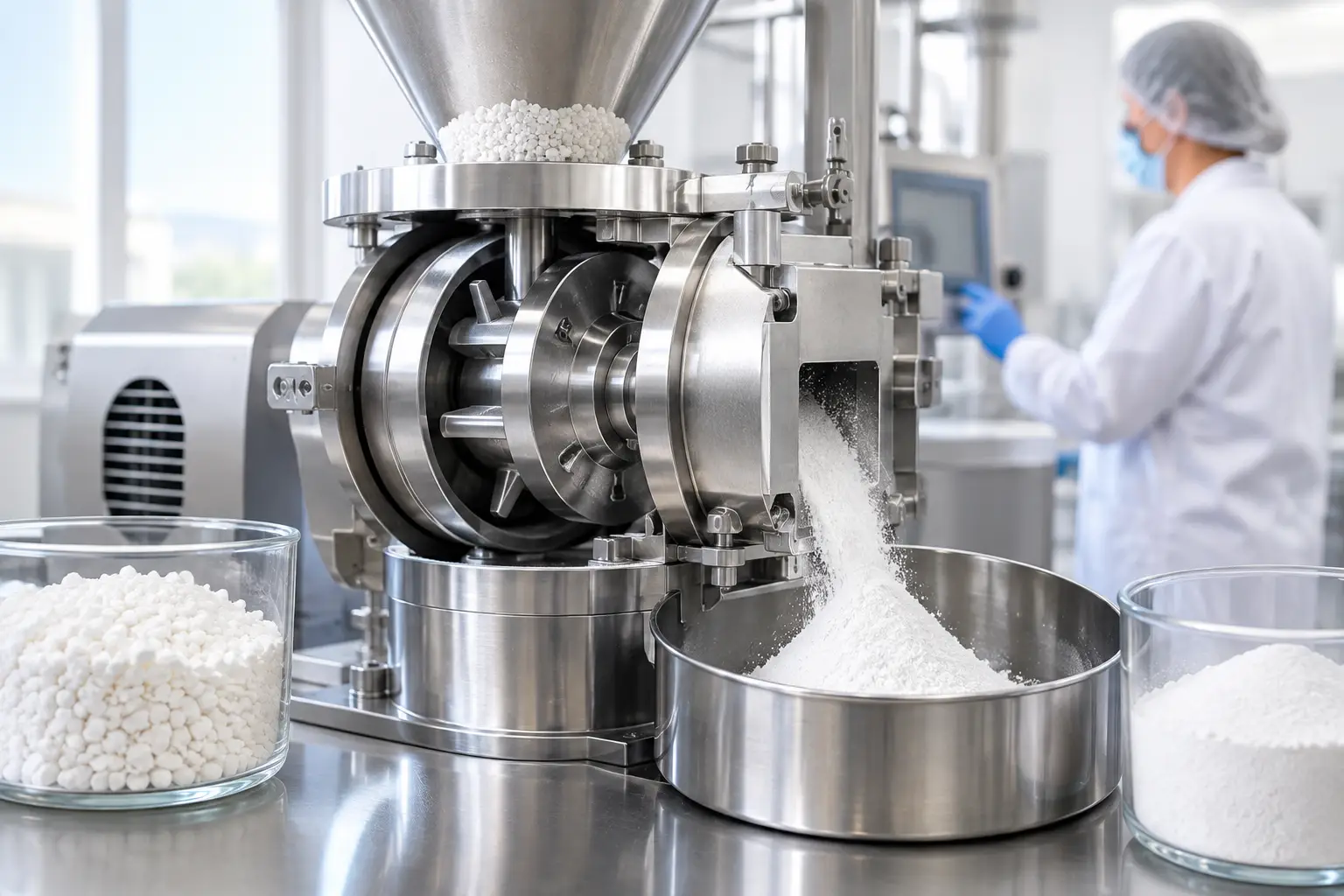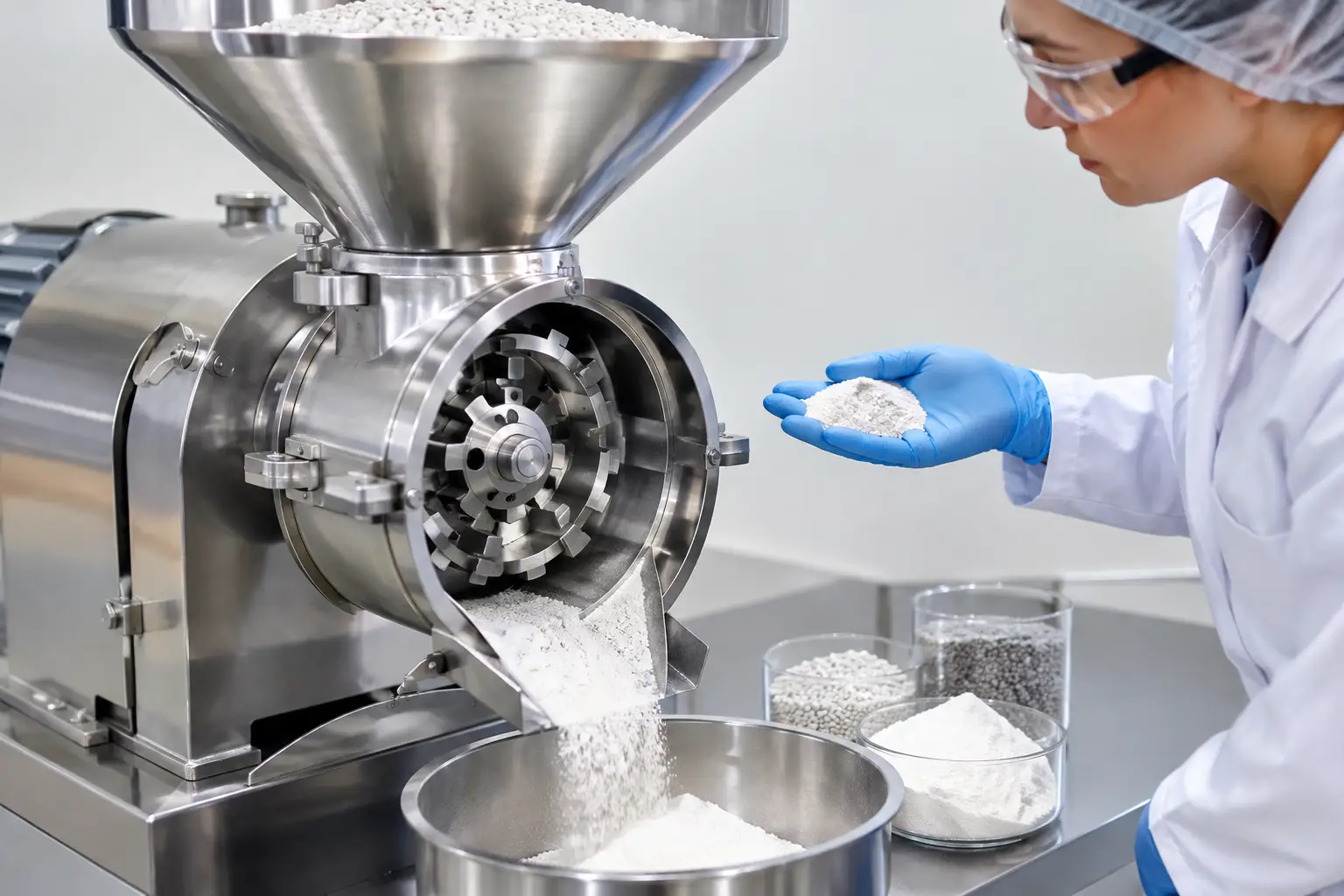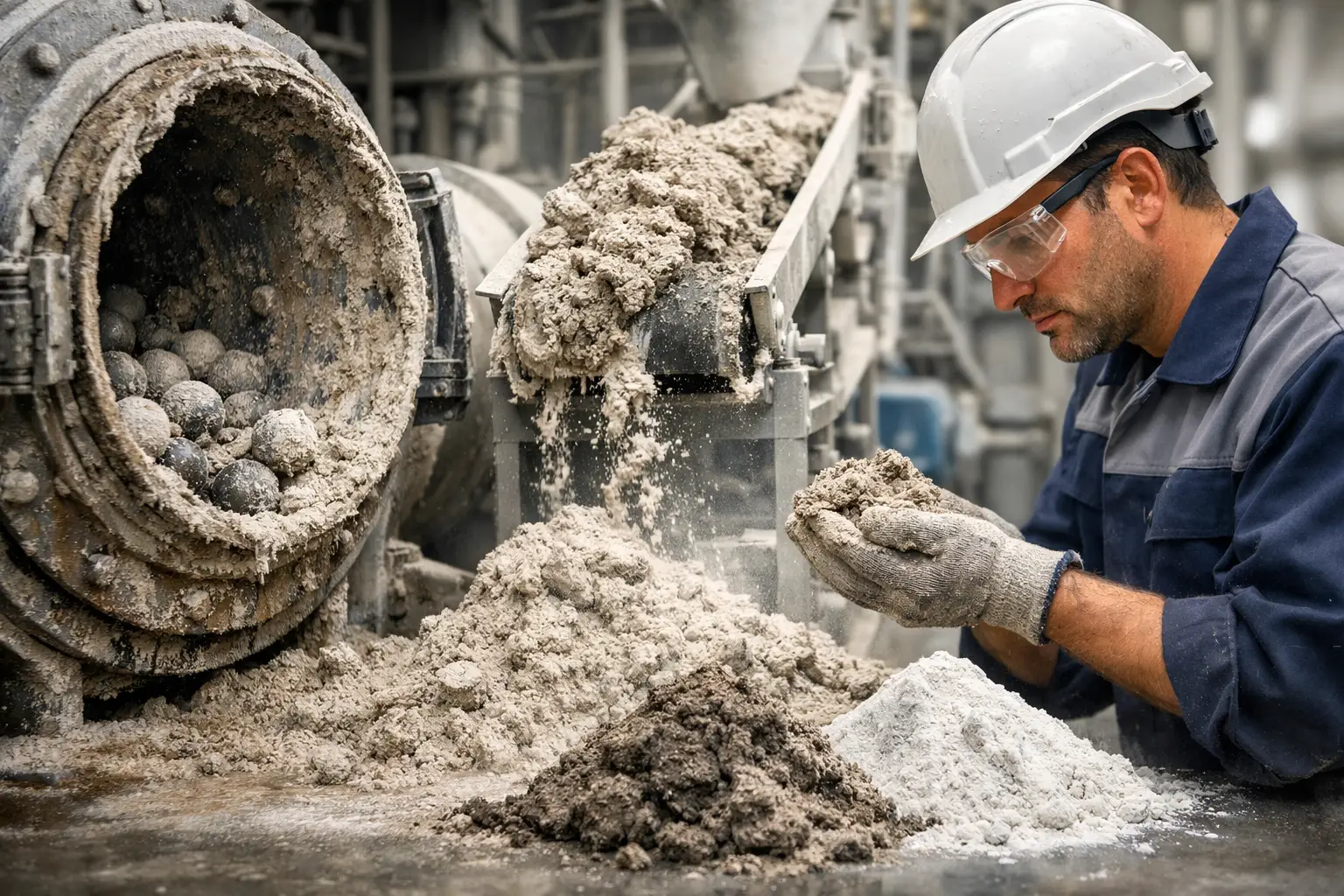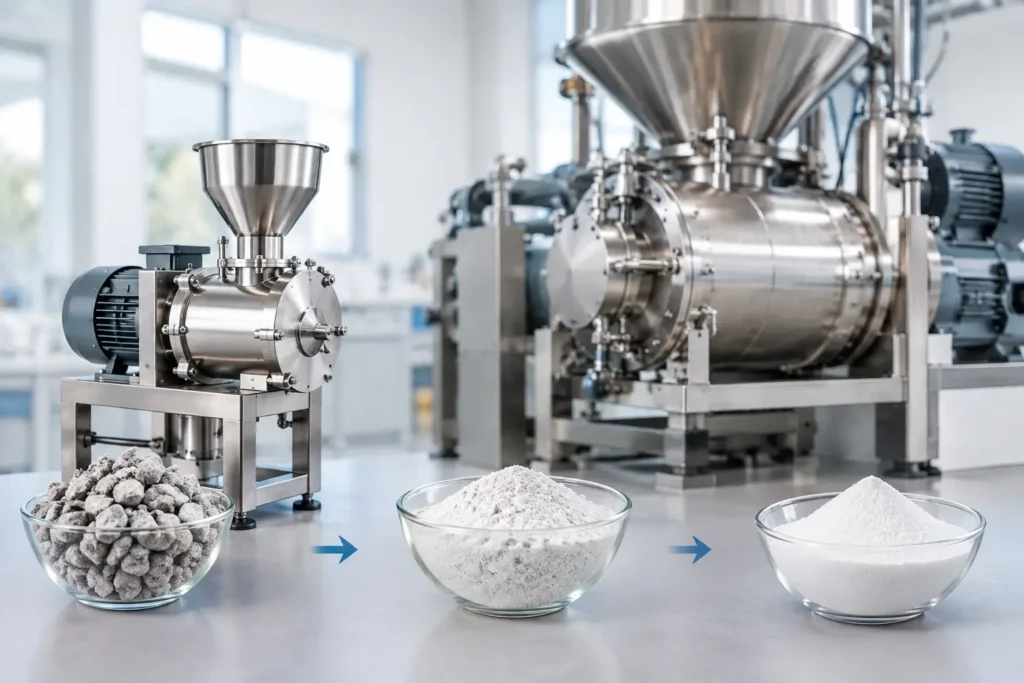
A pilot mill can produce an excellent sample while a production line produces a wider particle size distribution, excessive heat, or an unmanageable dust load. That gap is where process scale up milling succeeds or fails. Moving from development quantities to commercial throughput is not simply a matter of installing a larger machine. It requires preserving the material conditions that created the target result while accounting for changes in energy input, airflow, residence time, feed behavior, and downstream handling.
For process engineers and operations teams, the objective is clear: achieve the required particle size distribution at production rate without compromising product integrity, containment, uptime, or operating cost. The path to that result begins with a disciplined understanding of the material and the entire process around the mill.
Why Process Scale Up Milling Is Not Linear
A common assumption is that doubling mill capacity will double output while maintaining the same product profile. In practice, milling performance does not scale in a straight line. A larger chamber changes material hold-up and flow patterns. Higher feed rates can alter bed density and residence time. Air volume, classifier speed, rotor tip speed, and discharge conditions may all need to be adjusted to maintain the intended cut point and particle shape.
The same material can behave differently at larger scale because of changes in feed presentation. Fine powders may bridge, flood, or segregate in a hopper that performed well during a small trial. Fibrous, waxy, hygroscopic, or heat-sensitive materials can become particularly difficult as run duration increases. A short pilot campaign may not reveal temperature buildup, wear, screen blinding, or accumulation at transfer points that becomes evident during an eight-hour production shift.
Scale-up also changes the consequences of small process variations. A modest shift in moisture content, bulk density, or incoming particle size may be absorbed in a lab-scale run. At commercial throughput, that same variation can create unstable motor load, an off-spec oversize fraction, or a throughput bottleneck. Successful scale-up therefore depends on defining an operating window, not just selecting a nominal machine size.
Start With Material Characterization
The mill should be selected around the material and target specification, not the other way around. Before setting scale-up targets, establish the physical properties that influence size reduction performance. These include feed particle size and shape, hardness, friability, moisture level, bulk density, flowability, abrasiveness, melting or softening behavior, and sensitivity to oxygen or heat.
Material characterization should also consider the required product attributes beyond a single D50 value. Many applications require control of D10, D90, top size, fines content, particle morphology, surface area, or flow behavior. In pharmaceutical and nutraceutical processing, the particle size distribution may directly affect dissolution, blend uniformity, or tableting performance. In battery and advanced materials, contamination, particle shape, and narrow classification performance can be as critical as median size. Food and chemical producers may place greater emphasis on thermal control, sanitation, dust containment, and consistent bulk density.
The target specification should be measurable and realistic. A request for a finer product often comes with trade-offs: lower throughput, higher energy consumption, greater wear, or a need for more precise classification. Understanding those trade-offs early prevents a system from being designed around an output target that cannot be sustained economically.
Match Milling Technology to the Scale-Up Objective
Different milling technologies create size reduction through different mechanisms. The appropriate approach depends on material behavior, target size, capacity, and product sensitivity.
Hammer mills and universal mills are often effective for coarse to intermediate grinding where high throughput and practical versatility are priorities. Screen selection, rotor configuration, and tip speed strongly influence the resulting distribution. They may be well suited to materials that fracture readily, but screen blinding and heat generation must be evaluated for sticky or temperature-sensitive products.
Pin mills and turbo mills can provide efficient impact grinding for many crystalline, brittle, and food-related materials. Their performance depends on controlled feed rate, rotor speed, and airflow. For tighter particle size requirements, an air classifier mill combines impact milling with dynamic classification, allowing oversized particles to remain in the grinding zone while acceptable fines exit with the air stream.
Jet mills are typically considered when very fine particle sizes, low contamination, or minimal mechanical contact are required. They are valuable for heat-sensitive, high-purity, and advanced materials, but compressed gas demand and feed conditioning must be assessed as part of the total operating cost. Cryogenic grinding may be the better route for materials that soften, smear, or degrade under ambient milling temperatures, including elastomers, spices, waxy products, and certain polymers.
No technology is universally superior. The best choice is the one that delivers the required distribution and material integrity at the expected production rate with manageable utility use, maintenance requirements, and cleaning procedures.
Use Pilot Trials to Build a Process Window
A pilot trial should produce more than a representative sample. It should generate the engineering data required to predict commercial behavior. That means testing across a meaningful range of feed rates, rotor or classifier speeds, airflow settings, and, where relevant, screen configurations or grinding gas pressures.
During trials, record product particle size distribution alongside process conditions. Throughput alone is not a useful scale-up metric if product quality changes as the feed rate rises. Track mill motor load, outlet temperature, pressure drop, airflow, feed stability, yield, and collected product characteristics. If the material is prone to agglomeration or static charging, observe whether collection efficiency changes over time.
Longer pilot runs are especially valuable. They expose conditions that short trials can hide, including progressive warming, coating in the mill, filter loading, wear, and feeder inconsistency. When the production process will operate continuously, a trial that lasts only a few minutes offers limited evidence of sustained performance.
It is also useful to test variability intentionally. Run material at the expected high and low moisture levels, evaluate different incoming feed sizes, and assess normal lot-to-lot changes. The goal is not to prove that the mill can make a good product under ideal conditions. The goal is to understand which variables require control to keep production within specification.
Scale the System, Not Only the Mill
Many production bottlenecks occur outside the milling chamber. A mill sized for the required rate can still underperform if the feeder cannot deliver material consistently, the pneumatic conveying line has excessive pressure loss, or the dust collector limits airflow. Process scale up milling must address the complete material path from receiving through final collection and packaging.
Feed systems deserve particular attention. Loss-in-weight feeders, screw feeders, vibratory feeders, rotary valves, and agitated hoppers each respond differently to materials with poor flow characteristics. A feed system that pulses or surges can create a broad particle size distribution even when the mill itself is correctly configured. Hopper geometry, bridging prevention, level control, and refill strategy should be evaluated as part of the process design.
Air handling is equally central for air classifier mills, jet mills, and pneumatically conveyed systems. Fan performance, filter area, duct sizing, cyclone efficiency, and pressure control affect classification behavior, product recovery, and containment. Changes in filter condition can alter system resistance over a production campaign, which is why instrumentation and operating procedures matter as much as initial equipment sizing.
For hazardous, potent, or high-value materials, containment and recovery requirements must be incorporated from the beginning. The selected system may require sealed transfer, inerting, explosion protection, sanitary construction, clean-in-place capability, or specialized wear-resistant contact surfaces. Retrofitting these requirements after equipment selection is usually more costly and less effective.
Define Acceptance Criteria Before Commercial Design
A commercial scale-up program benefits from clear, shared acceptance criteria. Product quality requirements should specify the allowable particle size distribution, moisture, temperature exposure, contamination limits, and yield. Production criteria should include expected net throughput, operating hours, changeover expectations, cleaning requirements, and allowable downtime.
The design team should also identify what conditions require intervention. For example, a rising outlet temperature may trigger reduced feed rate or chilled process air. A shift in D90 may require a classifier adjustment, a screen inspection, or confirmation of incoming feed size. Establishing these responses in advance turns process knowledge into repeatable operating practice.
Instrumentation supports this discipline. Monitoring feed rate, mill power, pressure, temperature, classifier speed, airflow, and differential pressure gives operators early indication of drift. The right level of automation depends on the application, but critical variables should be visible, trendable, and connected to the product specification.
Plan for Sustained Production Performance
The first successful production run is an important milestone, not the end of scale-up. A capable process must maintain performance across shifts, operators, material lots, and maintenance cycles. Wear components, screens, liners, classifier wheels, and seals should be selected with the material’s abrasiveness and contamination requirements in mind. A system designed for easy inspection and efficient replacement reduces downtime and helps prevent gradual quality drift.
Operating documentation should capture the proven process window, startup sequence, normal setpoints, cleaning method, inspection intervals, and response to common deviations. This is particularly valuable when production must meet strict quality or compliance requirements. It also protects the investment made during pilot development by ensuring that commercial operators can reproduce the validated conditions.
DP Mills approaches scale-up as an engineering exercise that connects material testing, equipment selection, system integration, and sustained plant performance. The right production solution is rarely defined by capacity alone. It is defined by how reliably the entire system delivers the required product day after day.
The most useful question before committing to a production mill is not, “How large should the machine be?” It is, “What process conditions must remain controlled for this material to meet specification at rate?” Answer that question with pilot data and a complete system view, and the transition to production becomes far more predictable.