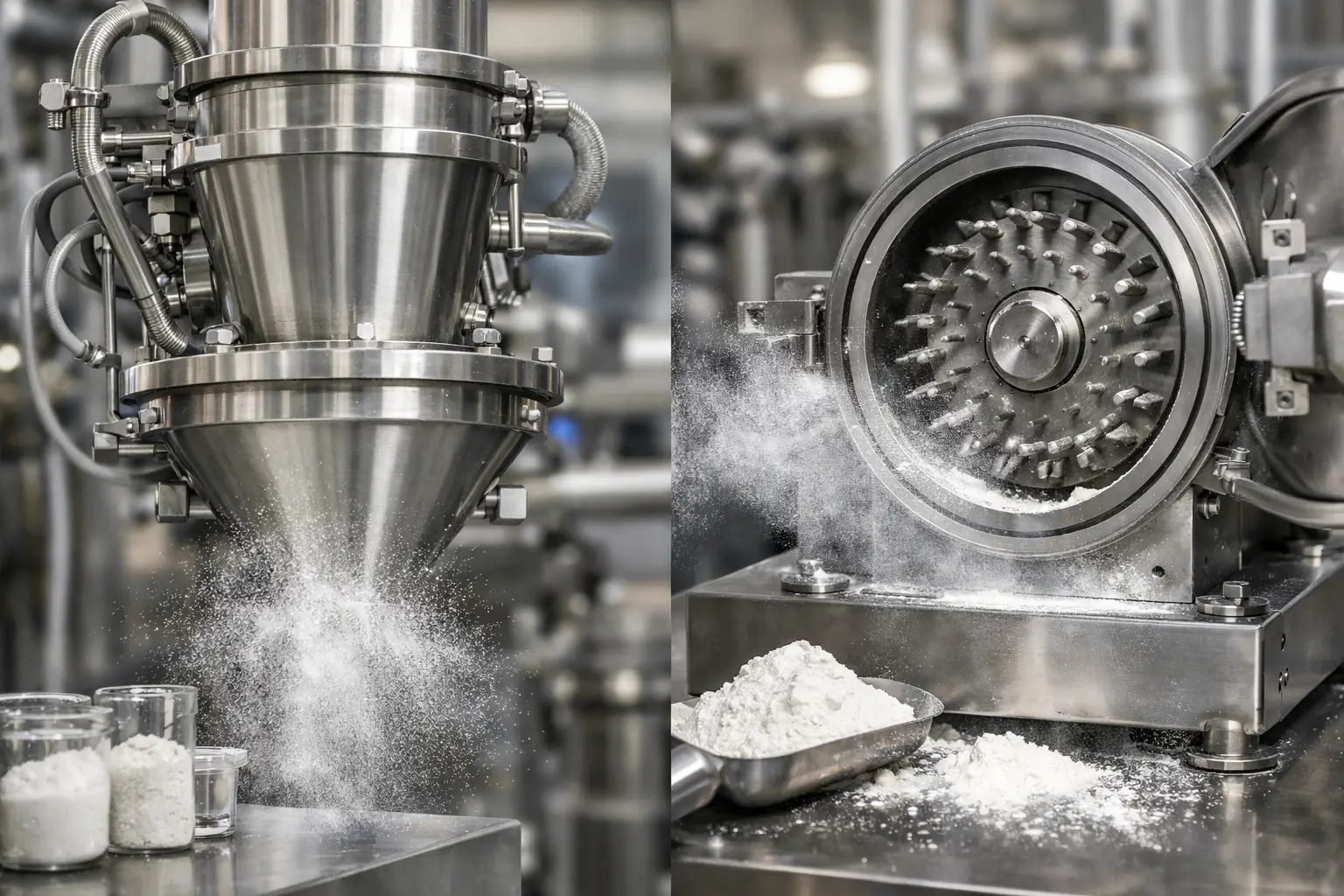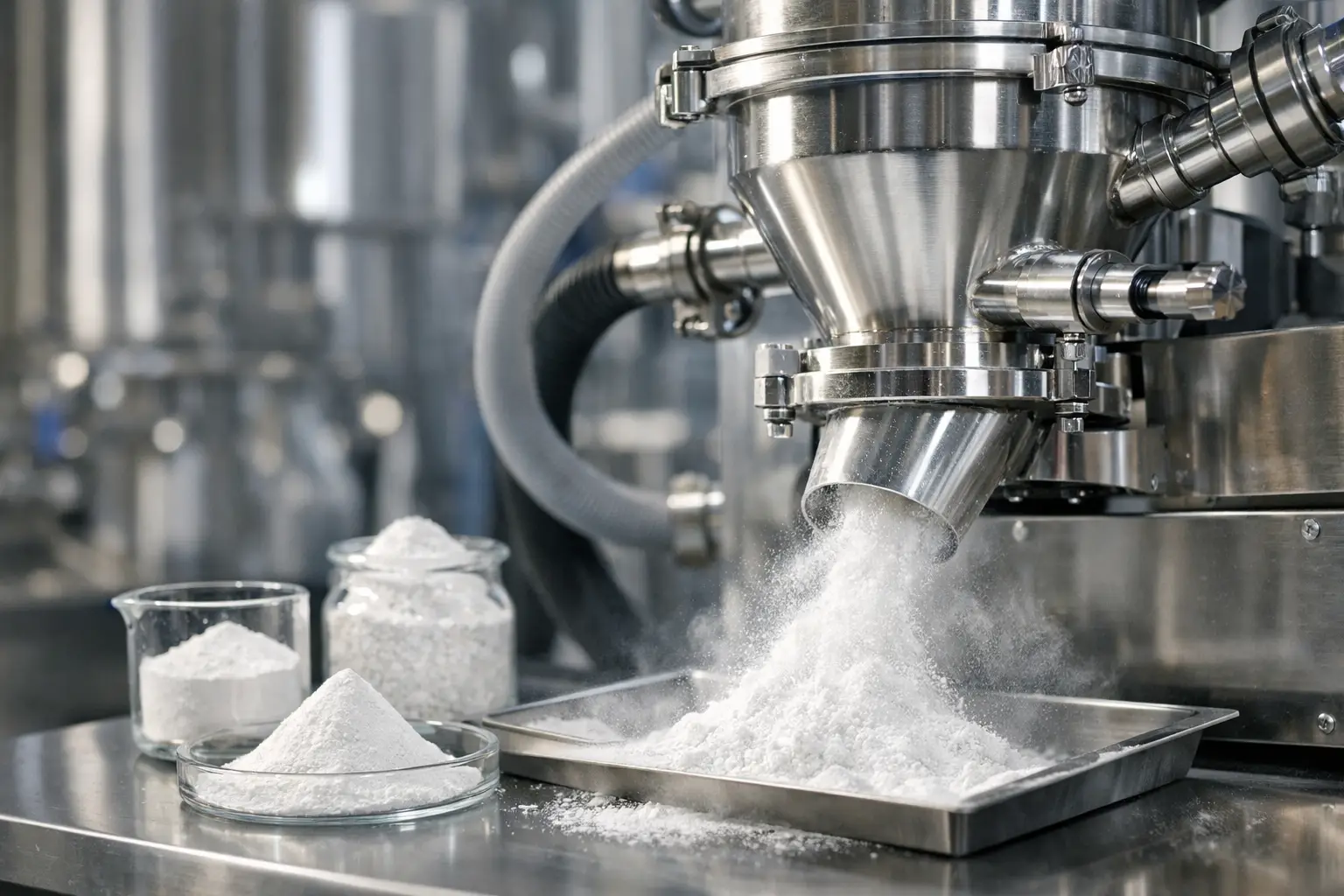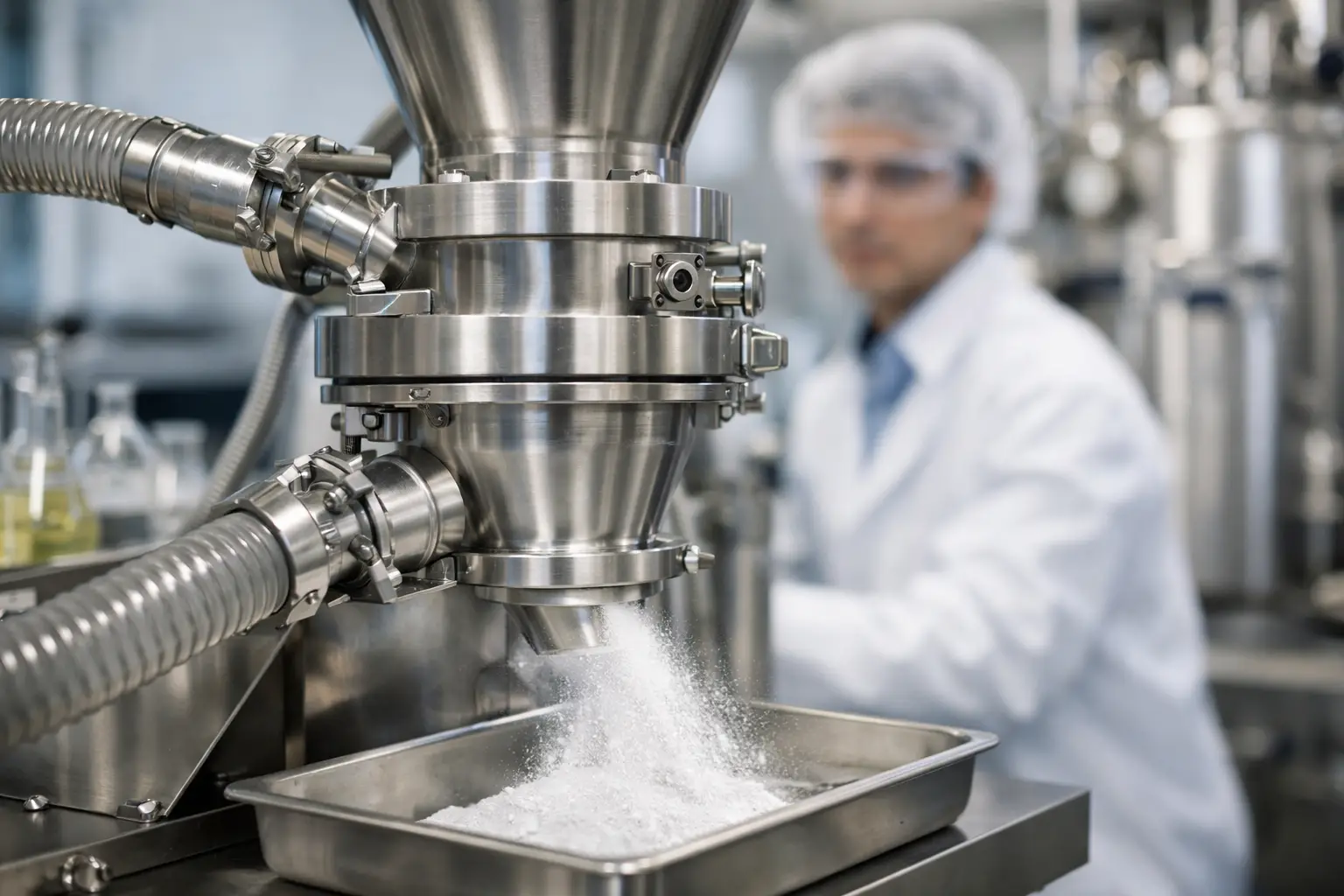
Abrasive powder changes the milling conversation fast. What works well for a soft chemical or friable nutraceutical ingredient can become a wear problem when the feed is silica-rich, ceramic-based, mineral-heavy, or otherwise aggressive to process surfaces. That is why manufacturers often ask, can jet mills handle abrasive powders? The answer is yes in many cases, but only when the mill, internals, and overall system are matched to the material and the production objective.
Jet milling is often attractive for abrasive applications because it reduces one of the biggest causes of contamination and wear in conventional mechanical milling – direct, high-force contact between moving grinding tools and the product. In a jet mill, particle size reduction occurs primarily through particle-to-particle collision in a high-velocity gas stream. That basic principle can make jet mills a strong option for demanding materials, but it does not eliminate wear entirely. The real question is not whether a jet mill can process abrasive powders at all. It is whether the specific abrasive powder, target particle size, throughput, and purity requirements fit the right jet mill design.
Why abrasive powders are different
Abrasive materials do more than erode metal. They influence maintenance intervals, contamination risk, classifier performance, and the total operating cost of the system. Powders with high hardness, angular particle shape, or dense mineral content tend to attack impact zones, nozzles, classifiers, liners, valves, and conveying components.
In many mechanical mills, that wear concentrates on hammers, pins, screens, or liners because the equipment depends on direct tool-to-product impact. With abrasive feedstocks, those components can wear quickly, which affects particle size consistency and can introduce unacceptable contamination into the finished product. For industries such as advanced materials, battery, specialty chemicals, and certain mineral applications, that is not a small issue. It can directly affect downstream performance and product acceptance.
Can jet mills handle abrasive powders in practice?
Yes, they often can, and in some applications they are a better fit than conventional impact mills. The reason is straightforward. Jet mills use compressed gas energy to accelerate particles and create inter-particle collisions, so the grinding action is less dependent on mechanical contact surfaces.
That does not mean the system is wear-free. Abrasive particles still travel at high velocity through nozzles, mill chambers, classifiers, bends, and product collection components. Over time, those surfaces can erode. The practical advantage is that wear can be reduced, controlled, and engineered around far more effectively than in many mechanical milling approaches.
This is where application knowledge matters. A jet mill handling alumina, silica, tungsten compounds, ceramic powders, or hard mineral blends may perform very well if the system uses appropriate wear-resistant materials and the process conditions are set correctly. The same mill, if configured with standard internals and pushed beyond its intended operating envelope, can become an expensive maintenance issue.
Where jet mills perform well with abrasive materials
Jet mills tend to make the most sense when the process demands fine particle size, narrow distribution, and low contamination. They are especially valuable when heat generation must be limited or when the product is too sensitive for aggressive mechanical milling.
For abrasive powders, the strongest fit is usually in applications where contamination control matters as much as size reduction. If even minor wear from hammers, pins, or grinding media would compromise product quality, a fluid energy approach becomes much more attractive. This is one reason jet milling is often considered for advanced ceramics, specialty minerals, battery materials, and high-purity chemical products.
Jet mills can also offer advantages when a manufacturer needs very fine top cuts that would be difficult to achieve consistently with other technologies. Integrated classification helps maintain tighter control over the final particle size, which is important when abrasive materials are used in coatings, electronics, energy storage, or engineered powder systems.
The main limits of jet milling abrasive powders
The right answer still depends on the process target. Abrasive powders are not all the same, and jet milling is not automatically the best option for every hard material.
One limitation is wear in high-velocity zones. Nozzles and classifiers are often the first areas evaluated because they experience concentrated particle flow. If the material is extremely hard and the required throughput is high, component life may become a critical economic factor.
Another consideration is energy consumption. Jet mills are effective for fine grinding, but compressed gas is not cheap. If the product only needs a relatively coarse cut, a different technology may deliver lower operating cost. In those cases, the decision is not just about whether the jet mill can do the work. It is about whether it is the most efficient choice for the plant.
Feed characteristics also matter. Some abrasive materials are dense and flow well. Others are abrasive but cohesive, moisture-sensitive, or prone to agglomeration. Those properties can influence feeder design, classifier settings, and collection efficiency. A technically suitable jet mill still needs a process system built around the full behavior of the powder.
System design is what determines success
When evaluating whether jet mills can handle abrasive powders, the mill alone is only part of the answer. The full system design determines long-term performance.
Material selection for wetted parts is one of the first decisions. Depending on the application, wear-resistant liners, hardened internals, ceramics, or other specialized construction materials may be appropriate. The goal is to reduce erosion while maintaining the cleanliness level the product requires.
Classifier configuration matters as well. Fine classification improves product control, but it also introduces rotating or high-exposure components that may see wear over time. The operating balance between target fineness, yield, and component life needs to be established during process evaluation, not after installation.
The same applies to upstream and downstream equipment. Feeders, valves, cyclones, filters, and conveying lines can become wear points if they are not specified correctly. A mill designed for abrasive duty can still underperform if the rest of the powder handling system is not engineered for the same service conditions.
This is one reason experienced manufacturers look beyond catalog specifications. A system that works well with an abrasive mineral at pilot scale may need different line velocities, collection hardware, or wear protection to remain reliable in continuous production.
How to evaluate abrasive powder suitability
The best approach is to start with the material, not the machine. Hardness is important, but it is not the only factor. Particle shape, density, moisture level, feed size, friability, purity requirements, and target throughput all affect whether a jet mill is the right solution.
Testing is usually the fastest way to separate theory from reality. A controlled trial can show whether the material reaches the required particle size, how the classifier behaves, what throughput is realistic, and where wear is likely to concentrate. It can also reveal whether another milling technology would be more practical for the required production rate.
For example, if the product must stay exceptionally pure and reach a very fine distribution, a jet mill may justify its operating cost through contamination reduction and product performance. If the product is abrasive but the size target is modest and throughput is high, a different mill design may offer better value over time.
That is why engineered customization matters. At DP Mills, abrasive powder applications are evaluated from a process standpoint – not just by asking what machine is available, but by determining what combination of milling principle, material construction, classification, and system integration will perform reliably in production.
What manufacturers should ask before specifying a jet mill
The most useful questions are practical ones. How hard is the material, and how does it behave under impact? What purity level is required? What particle size distribution actually matters to downstream performance? What wear rate is acceptable before maintenance interrupts production? And what is the true cost of contamination, downtime, or off-spec material?
Those questions usually lead to a more accurate decision than simply asking whether a jet mill can process an abrasive powder. In many cases, it can. The better question is whether it can do so at the required quality level, operating cost, and maintenance interval for the plant.
That is where process expertise makes the difference. Abrasive powders can be handled successfully with jet milling, but only when the system is engineered around real production conditions. The right design protects product quality and equipment life at the same time – and that is what makes a milling solution sustainable beyond the first successful trial.