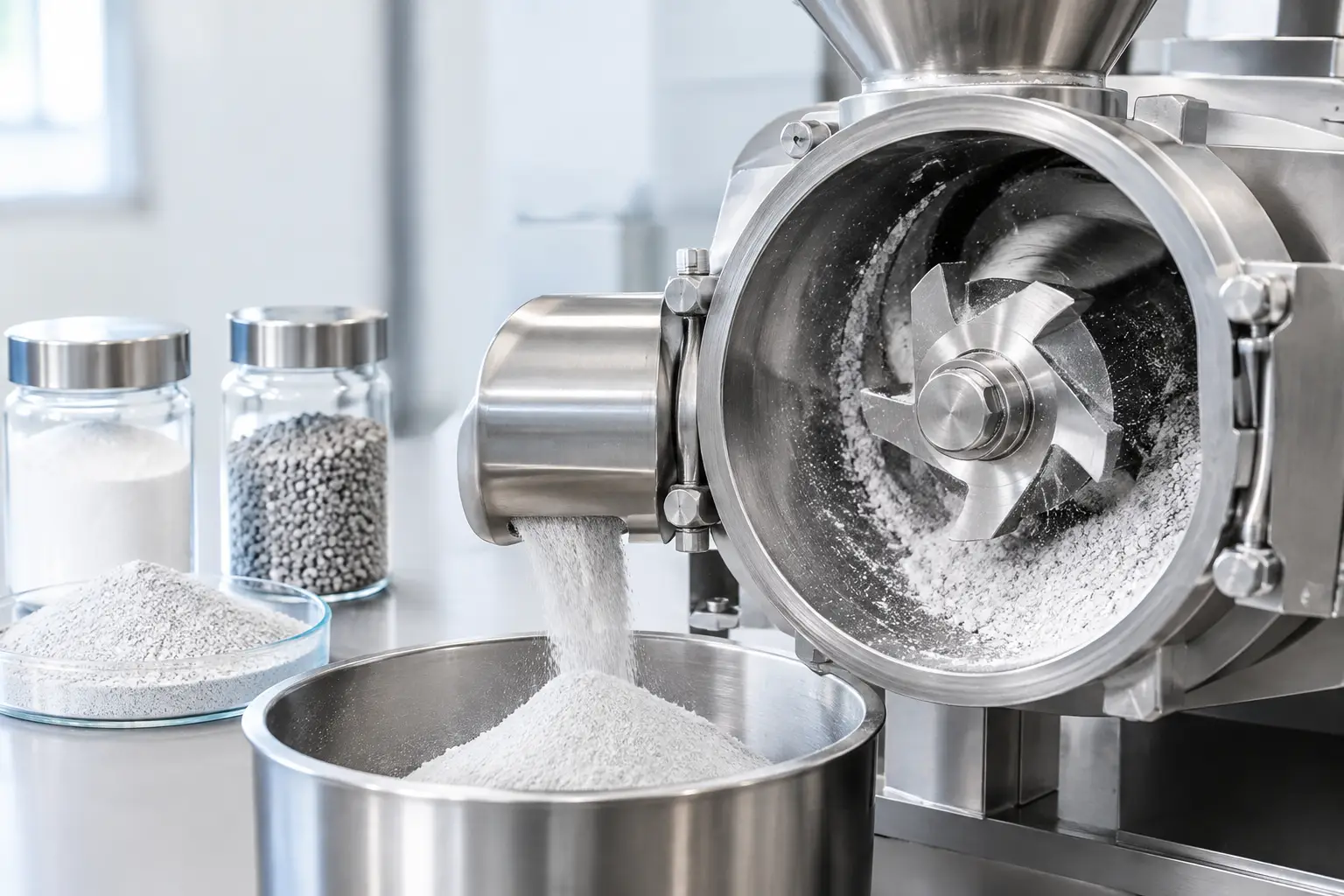
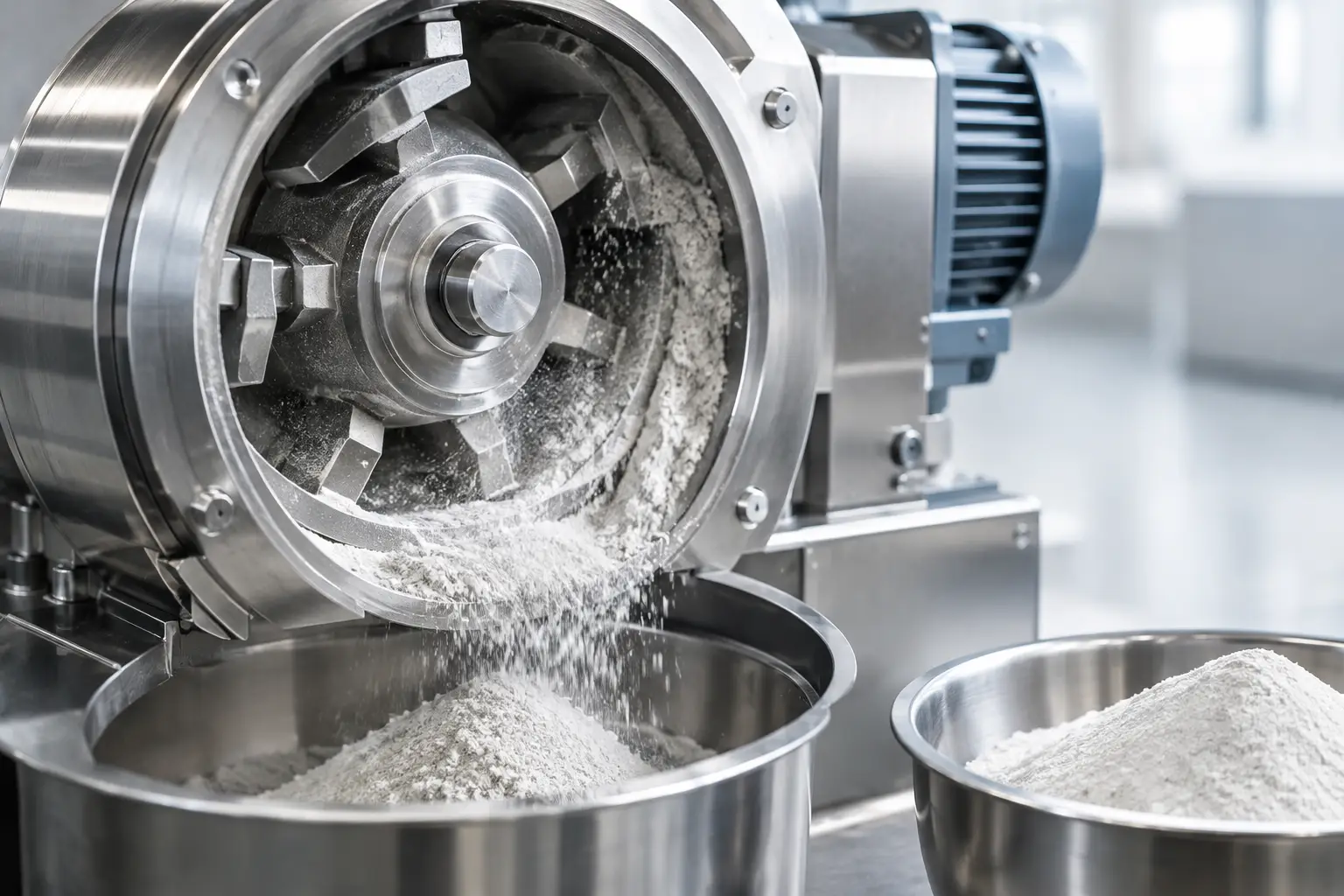
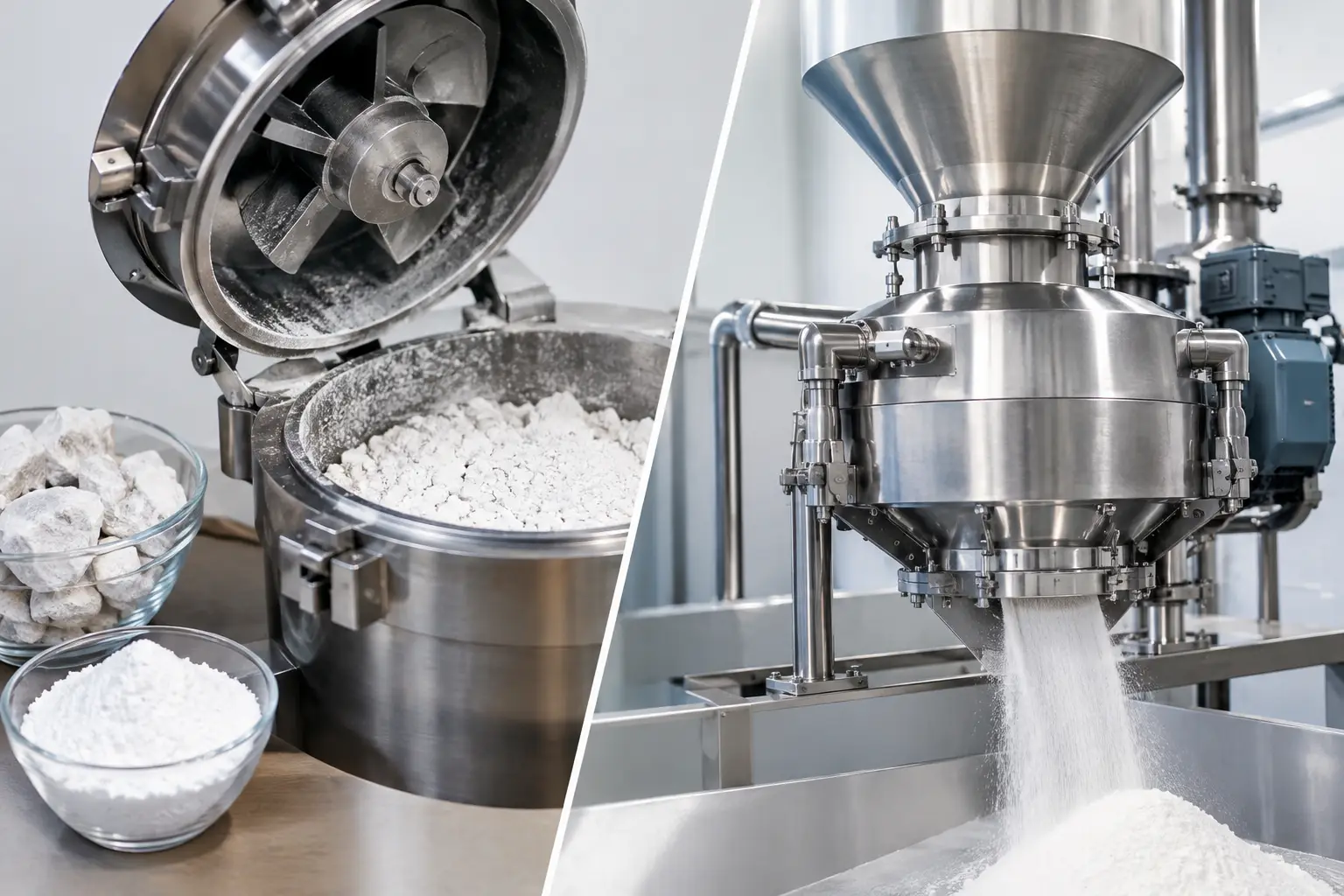
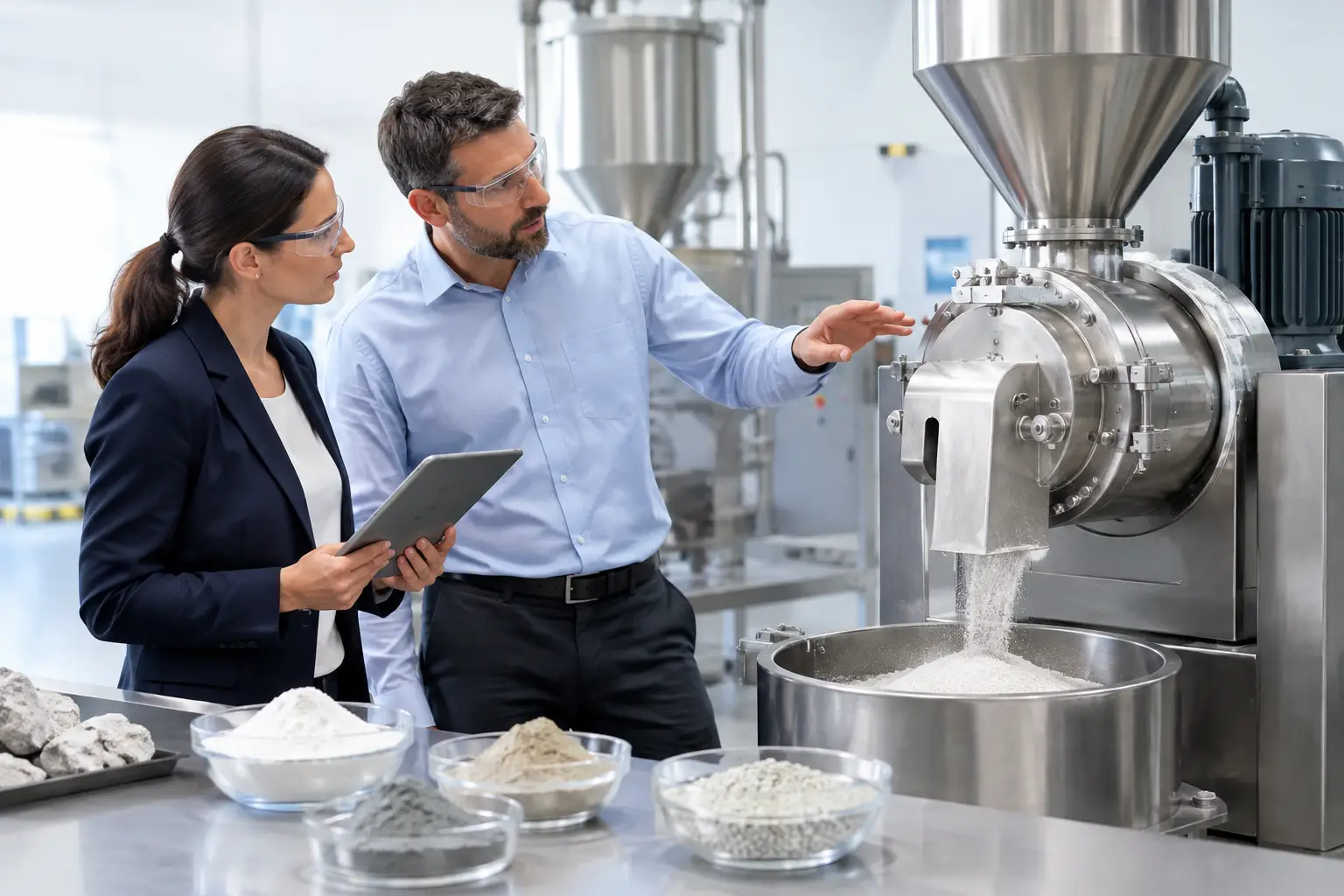
A containment problem rarely begins at the dust collector. It usually starts where a powder is charged, discharged, sampled, transferred, or where a mill is opened for cleaning. In pharmaceutical manufacturing, pharma powder containment systems must control those points as a connected process – not as a collection of enclosures added after equipment selection. The result affects operator exposure, batch integrity, cleaning time, production availability, and the facility’s ability to handle more potent products in the future.
For process engineers and plant managers, the central question is not simply whether a system can capture visible dust. It is whether the entire material path maintains control under normal production conditions, during planned interventions, and when process variables change. A well-engineered solution balances containment performance with material flow, access, cleanability, throughput, and practical operation.
What Pharma Powder Containment Systems Must Control
Pharmaceutical powders behave differently from one formulation to another. Fine, cohesive materials can bridge in hoppers, adhere to transfer lines, and create dust clouds when displaced air has no managed path. Low-bulk-density powders may demand large conveying volumes. Hygroscopic compounds may require a closed, conditioned environment. Highly potent APIs introduce exposure limits that can make an otherwise acceptable open handling step unsuitable.
Containment therefore starts with a defined exposure-control target. Occupational exposure limits, toxicity data, dose, particle characteristics, batch size, and handling frequency should all inform the required containment strategy. The same cone mill may be appropriate for two products, while the feed, discharge, sampling, and cleaning arrangements differ substantially because one product requires a higher level of operator protection.
Primary containment keeps product within the process equipment and transfer path. This includes sealed charging interfaces, contained mills, closed receivers, gasketed connections, split butterfly valves, and properly designed filter housings. Secondary containment provides another protective layer through room design, directional airflow, pressure cascades, and local extraction. Both matter, but relying on room ventilation to correct poor primary containment is a costly and unreliable approach.
The design must also prevent cross-contamination. Product retained in dead legs, flexible connections, filter media, discharge chutes, or inaccessible mill internals can compromise the next batch. Containment and cleanability are not competing objectives when the system is engineered correctly. They are two requirements of the same process design.
Containment Is an Integrated Milling Decision
Size reduction is often one of the most challenging containment steps because it combines powder movement, energy input, air movement, and frequent product-contact access. The right mill depends on the target particle size, material hardness, heat sensitivity, feed behavior, and capacity requirement. The containment arrangement must then be designed around how that mill actually operates.
A jet mill, for example, can produce fine particle distributions using high-velocity gas streams. Its containment design must manage pressure boundaries, product collection, filter performance, and controlled access to the grinding chamber. Air classifier mills add the need to manage process air and classifier operation while maintaining a sealed product path. Hammer, pin, turbo, universal, and cone mills may require different feed isolation, discharge sealing, and cleaning access depending on the product and duty cycle.
A common mistake is specifying a containment enclosure before defining the milling process. An enclosure can limit exposure at an access point, but it cannot resolve inconsistent feeding, inadequate discharge, pressure imbalance, or a mill that generates more heat or fines than the formulation can tolerate. Process performance and containment performance should be developed together.
Focus on the transfer points
The highest-risk points are often outside the mill itself. Charging a raw material container, connecting an intermediate bulk container, collecting milled product, withdrawing a sample, changing a filter, and breaking down equipment for cleaning all require deliberate engineering. A fully enclosed grinder with an open discharge drum is not a contained system.
Transfer interfaces should match the production model. For lower-volume work, a contained glovebox or bag-in/bag-out approach may be appropriate. For repeated commercial production, automated or semi-automated docking, contained IBC handling, vacuum transfer, and closed discharge can reduce intervention time and variability. There is no universal answer: more automation can improve repeatability and lower exposure potential, but it increases capital cost, controls complexity, and maintenance requirements.
Engineering Priorities That Determine Real-World Performance
Containment performance should be evaluated as a process requirement, not an equipment feature. The most effective projects define measurable operating conditions early and use them to guide system layout, component selection, and acceptance testing.
Key priorities include:
- Material characterization: Particle size, bulk density, flowability, moisture sensitivity, electrostatic behavior, abrasiveness, and cohesiveness influence both milling and contained transfer.
- Exposure target: The required performance level should be based on toxicological assessment and task-specific exposure risk, rather than a generic equipment classification.
- Pressure and airflow control: Every charging and discharge event displaces air. Managed venting, filtration, and pressure control prevent that air from carrying powder into the work area.
- Cleaning strategy: Product-contact surfaces, seals, filters, and hard-to-reach zones must support the required cleaning method and verification approach.
- Maintainability: Filters, screens, wear parts, and mill internals need service access that does not create an uncontrolled exposure event.
These factors are interdependent. A highly polished interior may improve cleanability but does not eliminate the need to avoid dead zones. A higher-capacity filter may reduce pressure drop but still require a contained change-out strategy. A sealed connection may improve containment but create operational difficulty if operators cannot reliably align and secure it. Engineering decisions should reflect how the system will be used across every shift, not only how it looks during factory acceptance.
Design for Normal Operation and Non-Routine Work
Many containment concepts perform well while equipment is closed and running. The more revealing test is what happens when operations are not routine. Consider a plugged transfer line, an out-of-spec particle size result, a screen change, a filter replacement, or a need to inspect a mill chamber between campaigns. If the procedure depends on extensive manual handling of exposed product, the containment design has a gap.
This is why task analysis is essential. Map each operator interaction from receiving through charging, milling, collection, sampling, cleaning, and waste handling. Identify where powder could escape, where residue can accumulate, and where a person must intervene. The resulting design may include isolation valves, wash-in-place or clean-in-place features, contained liner handling, extraction at a specific access point, or a revised equipment arrangement that eliminates a transfer altogether.
Cleaning deserves particular attention in multiproduct facilities. Wet cleaning can be effective for certain products and equipment configurations, but it introduces drying time, wastewater considerations, and potential corrosion issues. Dry cleaning can reduce turnaround time and avoid moisture exposure, but it may require more carefully engineered access and residue recovery. The appropriate method depends on product properties, cleaning validation requirements, campaign length, and facility practices.
Verifying Containment Without Disrupting Production
A credible containment program includes verification. Commissioning should confirm that seals, valves, filters, controls, and airflow arrangements work as intended under realistic conditions. For products with stringent exposure targets, surrogate powder testing and industrial hygiene monitoring can help assess performance during the tasks that matter most.
Verification should not end at startup. Wear on gaskets, degraded flexible connectors, incorrect filter installation, and changes in operating procedures can gradually reduce performance. Preventive maintenance, inspection intervals, operator training, and documented change control protect the original design intent.
Production data also has value. Unexplained weight loss, frequent housekeeping demands, filter loading changes, rising differential pressure, or recurring material buildup may indicate a containment or process problem before it becomes an exposure event. Engineers should evaluate those signals alongside throughput, yield, particle size distribution, and downtime.
Selecting a System That Can Scale
Pilot-scale requirements are often different from commercial production, but the containment philosophy should remain consistent. A small system may use manual handling and contained enclosures, while a larger line relies on IBCs, closed vacuum transfer, automated controls, and dedicated collection. The transition should preserve the critical material-handling principles established during development.
Scalability also means allowing for formulation changes. A system designed only around one free-flowing powder may struggle when a future product is finer, stickier, more potent, or more heat sensitive. DP Mills approaches these decisions by connecting milling technology, material behavior, containment requirements, and downstream handling into one engineered process solution rather than treating them as separate purchases.
The best containment design is the one operators can run consistently, technicians can maintain safely, and quality teams can validate with confidence. When containment is engineered into the powder path from the first feed connection to final collection and cleaning, it becomes a practical contributor to reliable pharmaceutical production rather than a barrier around it.