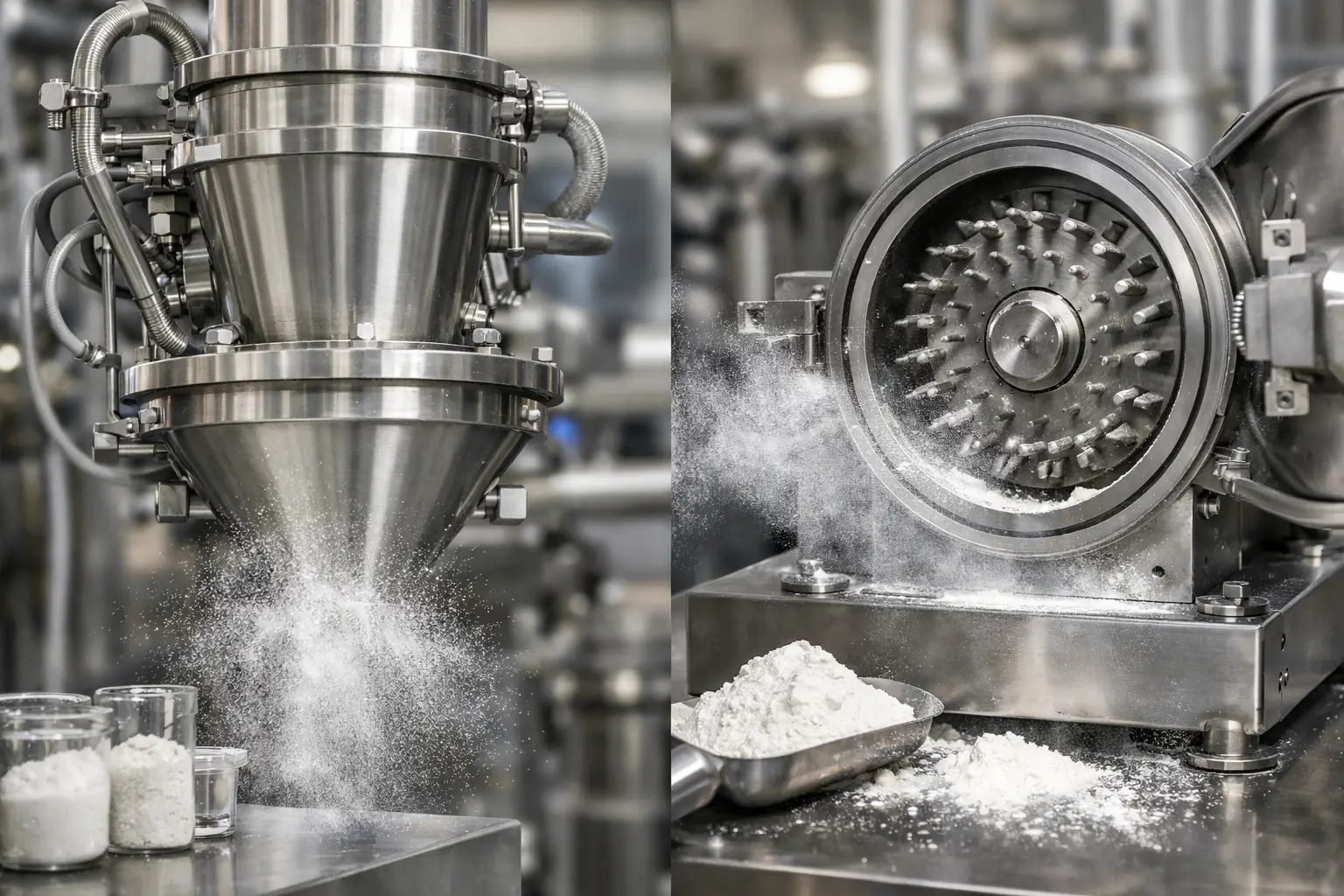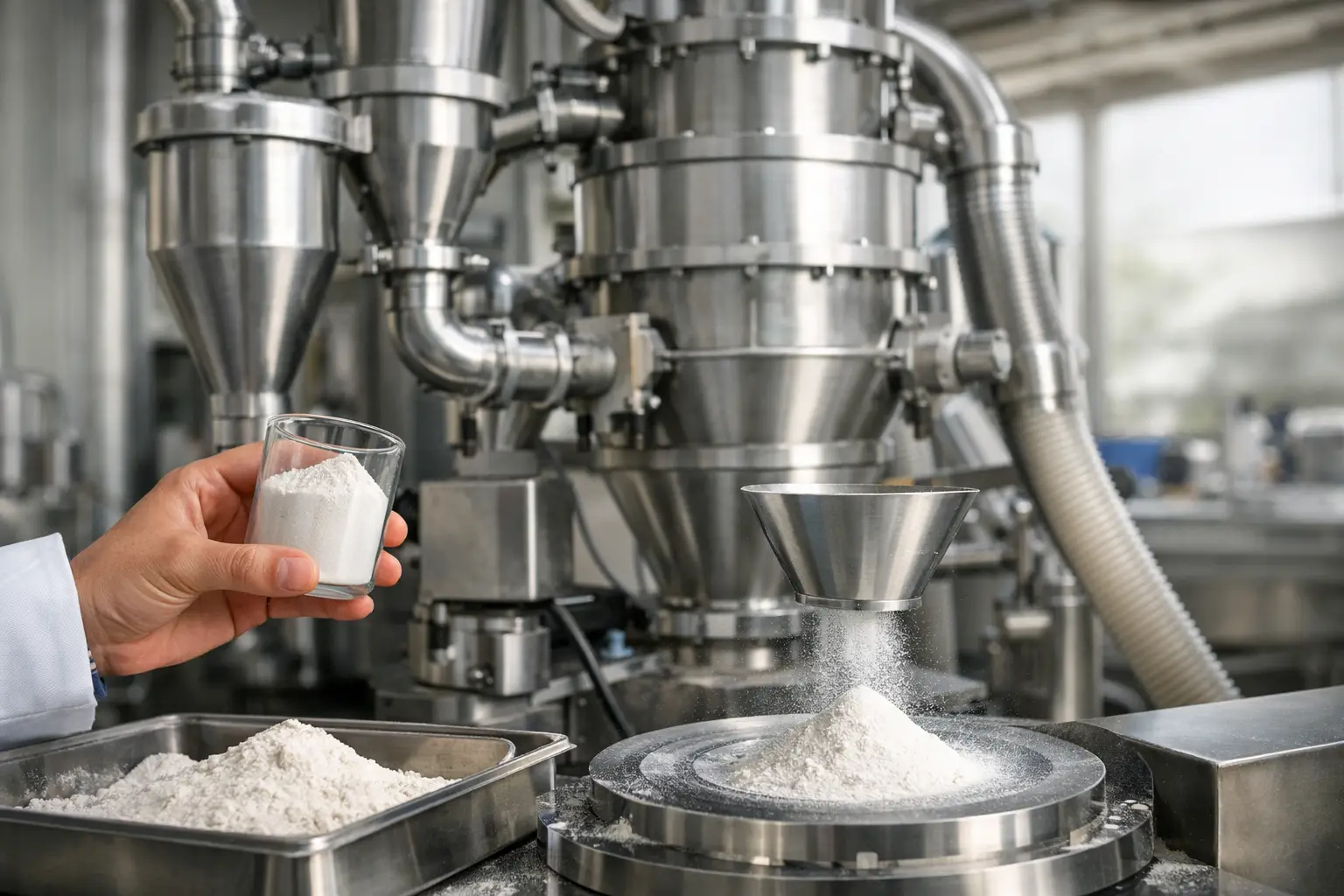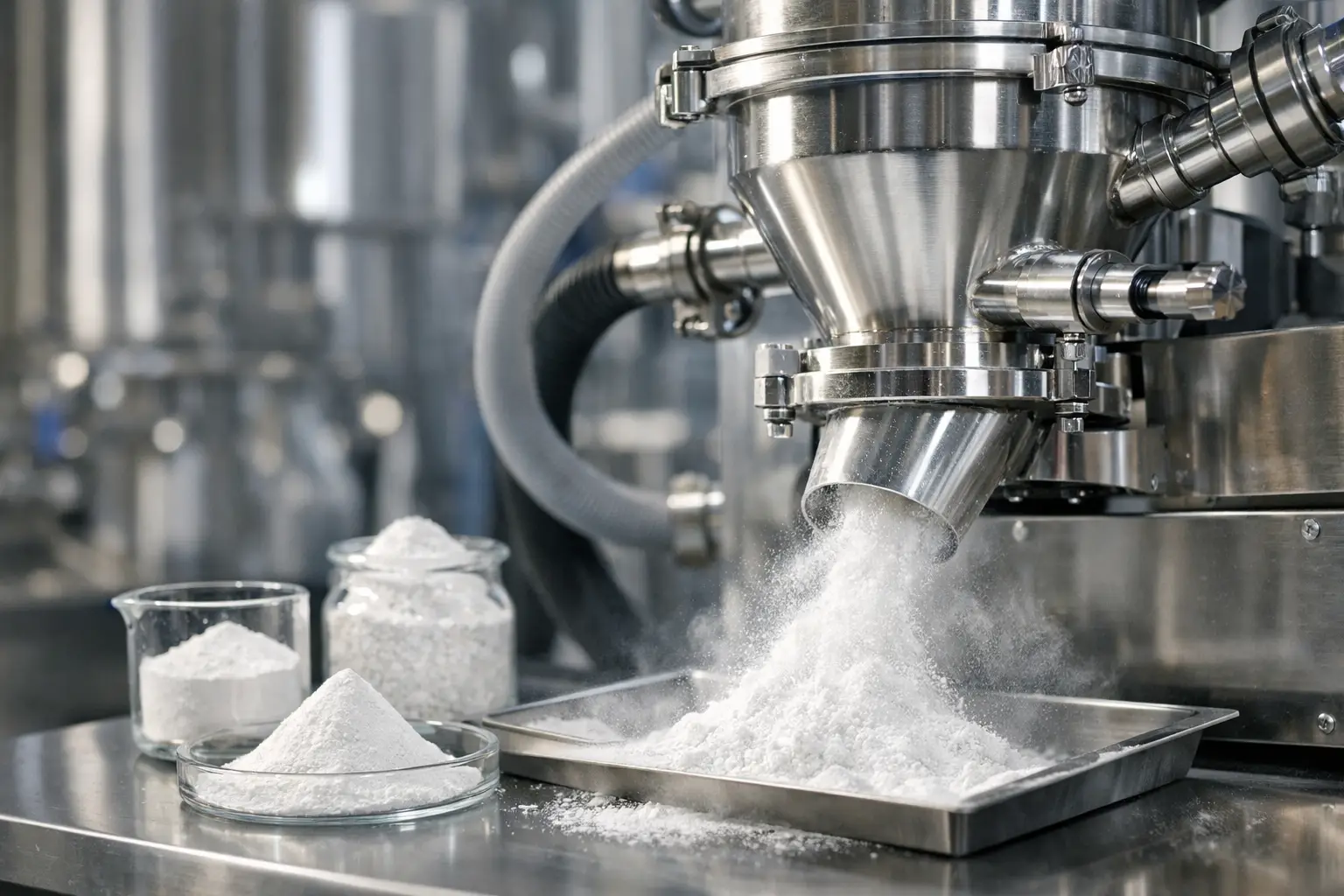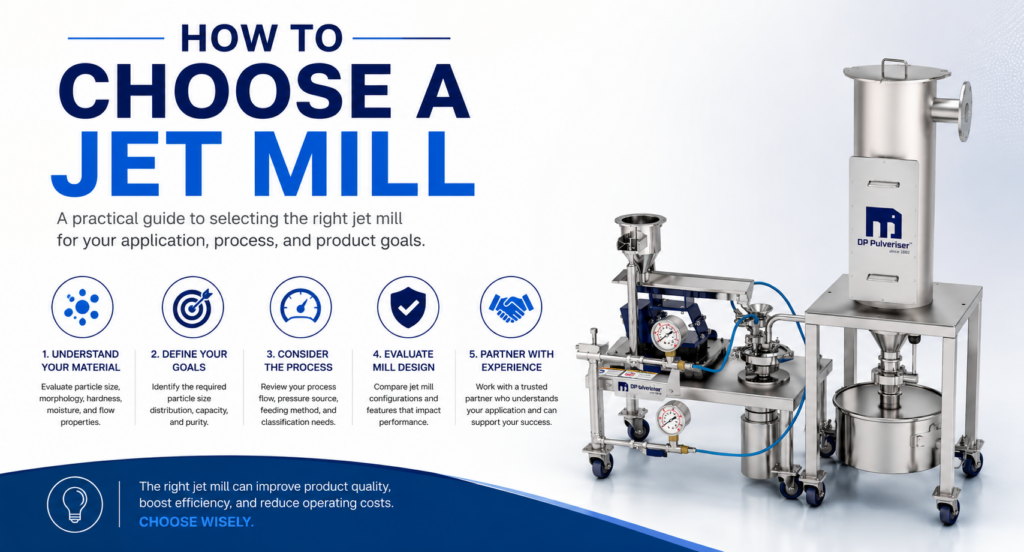
A jet mill can solve a particle size problem and create three new process problems if it is matched to the wrong material, capacity, or production target. That is why understanding how to choose jet mill technology starts with the process, not the machine alone. For manufacturers handling high-value powders, abrasive materials, heat-sensitive products, or tight particle size specifications, the right selection decision affects yield, consistency, uptime, and total operating cost.
How to choose jet mill based on process goals
Jet mills are designed for fine grinding by using high-velocity gas streams to accelerate particles and create particle-on-particle size reduction. That operating principle makes them especially effective when contamination control, low heat input, and very fine end products matter. It also means they are not automatically the best answer for every powder processing application.
The first question is straightforward: what problem is the mill expected to solve? In some plants, the main issue is achieving a tighter top cut. In others, it is reducing metal contamination from mechanical wear, preserving material integrity, or increasing throughput without overheating the product. Those goals can point to different jet mill configurations, classifier arrangements, gas requirements, and system layouts.
A useful selection process begins by defining five operating targets clearly: required particle size distribution, hourly throughput, product sensitivity, contamination limits, and integration with the existing line. If one of those variables is vague, the equipment decision usually becomes less reliable.
Start with the particle size requirement
Particle size specification is often the primary reason manufacturers move toward jet milling. If the target is in the micron or sub-micron range, and the process requires a narrow distribution with minimal oversize, a jet mill may be a strong fit. But the target should be more specific than a general statement such as fine powder.
Engineers should look at D50, D90, and any top-size limitation that affects downstream performance. A battery material, active pharmaceutical ingredient, specialty chemical, or advanced mineral can each require very different control windows. Some applications need a narrow distribution to improve flowability or reaction performance. Others need controlled surface area or precise dispersion behavior.
This matters because not all jet mills produce the same result. Fluidized bed jet mills with integrated classification typically provide tighter control and more consistent fine cuts than simpler opposed jet designs. If the process depends on repeatability lot after lot, classification efficiency becomes just as important as grinding intensity.
Material behavior matters more than many buyers expect
The same jet mill can perform very differently depending on the feed material. Hardness, friability, moisture content, bulk density, agglomeration tendency, and thermal sensitivity all influence selection.
A brittle material may reduce efficiently and reach fine targets with manageable energy use. A tougher or more elastic product may resist fracture and require more grinding energy, which can affect capacity and operating cost. Sticky or moisture-prone materials can create buildup, unstable flow, and poor classifier performance. Abrasive materials can benefit from the low-contact nature of jet milling, but system internals still need to be evaluated carefully for wear resistance.
Feed condition is equally important. A jet mill is not usually the right machine for large feed lumps or highly variable upstream material. If feed size is inconsistent, performance becomes inconsistent. In many production environments, the best jet mill installation includes controlled upstream feeding, pre-size reduction, or conditioning to stabilize the process.
Throughput and efficiency are where trade-offs appear
One of the most common mistakes in jet mill selection is focusing only on achievable fineness while underestimating capacity requirements. As target particle size becomes finer, throughput generally drops and energy demand rises. That trade-off is not a design flaw. It is part of the physics of fine grinding.
If your plant needs high throughput at a moderately fine size, another milling technology may sometimes offer better economics. If your application requires very fine particle size with low contamination and minimal heat, the jet mill may justify the higher compressed gas demand. The right answer depends on what the product and process can tolerate.
This is why pilot testing is so valuable. It helps establish realistic production rates at the target specification instead of relying on nominal equipment assumptions. For scale-up decisions, actual test data is far more useful than broad performance estimates.
Do not evaluate throughput in isolation
Capacity should be reviewed together with feed rate stability, gas consumption, classifier speed, product yield, and recycle load. A system that appears productive on paper may lose value if it generates excessive off-spec material or requires frequent process adjustments. Reliable throughput is usually more valuable than peak throughput.
Consider contamination control and product purity
In pharmaceutical, food, nutraceutical, specialty chemical, and advanced material applications, contamination is often a deciding factor. Jet mills are frequently selected because they reduce direct mechanical contact with grinding media, which helps limit wear-related contamination compared with some impact-based systems.
That advantage still depends on machine design and material of construction. If product purity is critical, assess whether the system requires stainless steel contact surfaces, polished finishes, ceramic liners, tungsten carbide components, or other engineered options. The correct construction depends on the chemistry, abrasiveness, and purity threshold of the application.
Cleaning requirements should also be reviewed early. If the process involves frequent product changeovers, allergen control, or strict batch integrity, accessibility and cleanability may matter as much as grinding performance. A technically capable mill that is difficult to clean can become a production constraint.
How to choose a jet mill with the right process gas
Most jet mills operate with compressed air, but some applications call for inert gas such as nitrogen. That decision is not secondary. It can shape the full system design.
If the material is combustible, oxidization-sensitive, solvent-bearing, or otherwise reactive, inert gas milling may be required for safety and product stability. In those cases, manufacturers need to evaluate not only the mill itself but also gas recovery, containment, pressure control, and system sealing. The mill cannot be selected independently from those supporting requirements.
Utilities matter here. A jet mill is only as practical as the plant infrastructure supporting it. Compressed air volume, pressure stability, dew point control, and filtration quality all affect actual performance. When those utilities are undersized or inconsistent, even a well-designed mill will not deliver expected results.
Look beyond the mill to the full system
Jet milling performance depends heavily on the total system layout. Feed delivery, air handling, product collection, dust containment, controls, and downstream transfer all affect results.
For example, poorly controlled feeding can create unstable grinding conditions. Inadequate dust collection can affect housekeeping and product recovery. Weak instrumentation can make it difficult to maintain repeatable particle size. When comparing equipment options, it is worth asking whether the supplier is evaluating the application as a full process system or simply quoting a standalone machine.
This is often where an engineering-driven approach creates value. A properly integrated system can improve yield, reduce operator intervention, and simplify scale-up from pilot to production.
Maintenance and uptime should be part of selection
Jet mills have fewer moving grinding components than many mechanical mills, but that does not mean maintenance can be ignored. Classifier components, nozzles, valves, seals, filters, and wear surfaces still affect reliability. The practical questions are simple: how easy is the system to inspect, how predictable are wear intervals, and how quickly can the plant return to service?
For operations running tight schedules, maintainability is not a secondary benefit. It is a capacity issue.
Validate with application testing, not assumptions
The best answer to how to choose jet mill equipment is usually developed through process testing. Material behavior at production conditions is difficult to predict from theory alone, especially for challenging powders.
Well-designed testing helps confirm achievable particle size, throughput, gas demand, product temperature, yield, and cleanliness. It also reveals issues that might otherwise show up after installation, such as poor feedability, unexpected agglomeration, or classifier limitations.
For many manufacturers, the most effective path is to work with an equipment partner that can evaluate the powder, review production goals, and recommend whether a jet mill is the right choice at all. In some cases, an air classifier mill, pin mill, or another engineered system may be more practical depending on the specification and economics. That kind of guidance usually leads to better long-term results than forcing every application into one technology category.
A strong jet mill decision is rarely about buying the most advanced machine in a brochure. It is about selecting the system that consistently meets your size target, supports your throughput, protects product integrity, and fits the realities of your plant. When those factors are aligned, the mill becomes more than a size reduction step. It becomes a stable part of production performance.