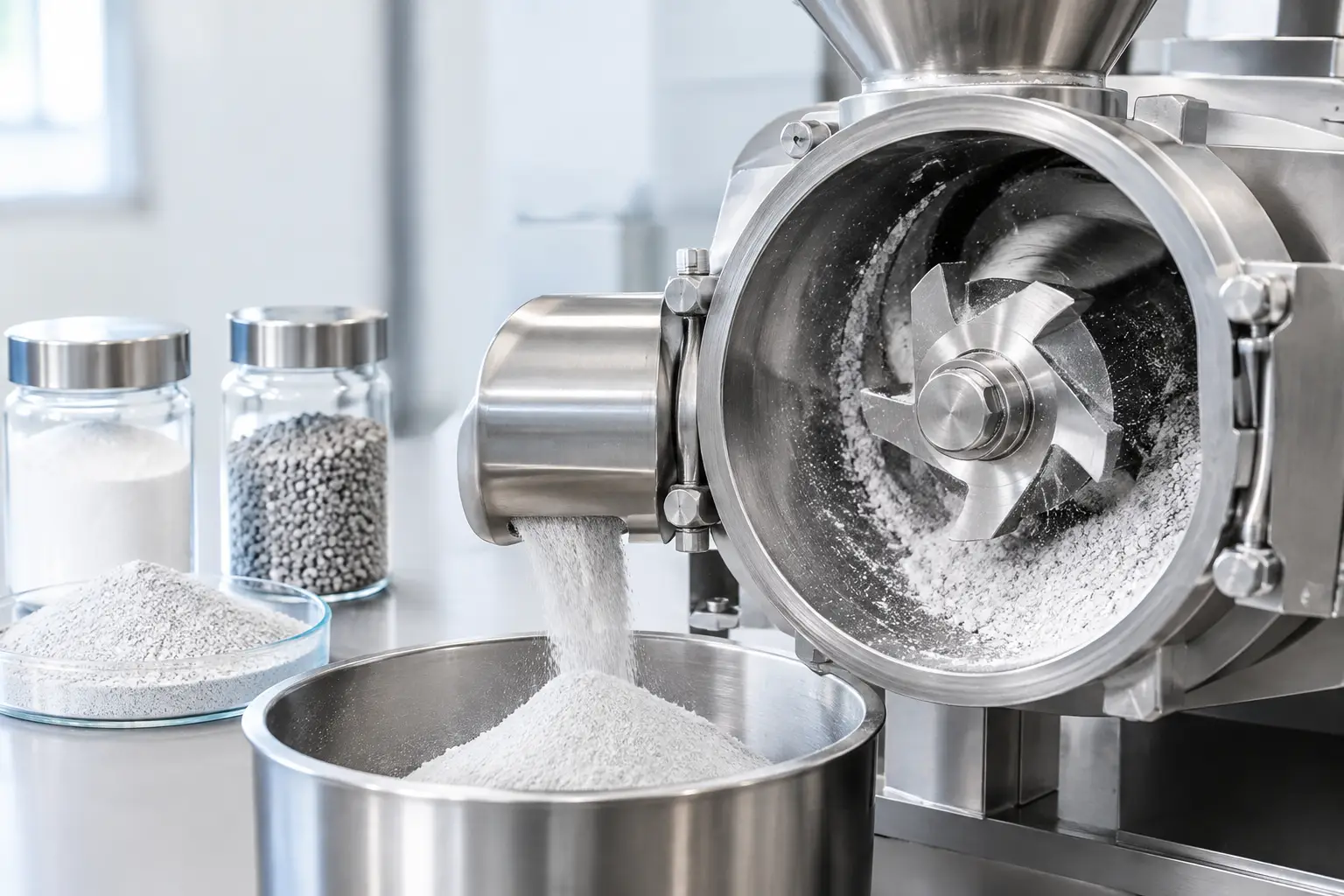
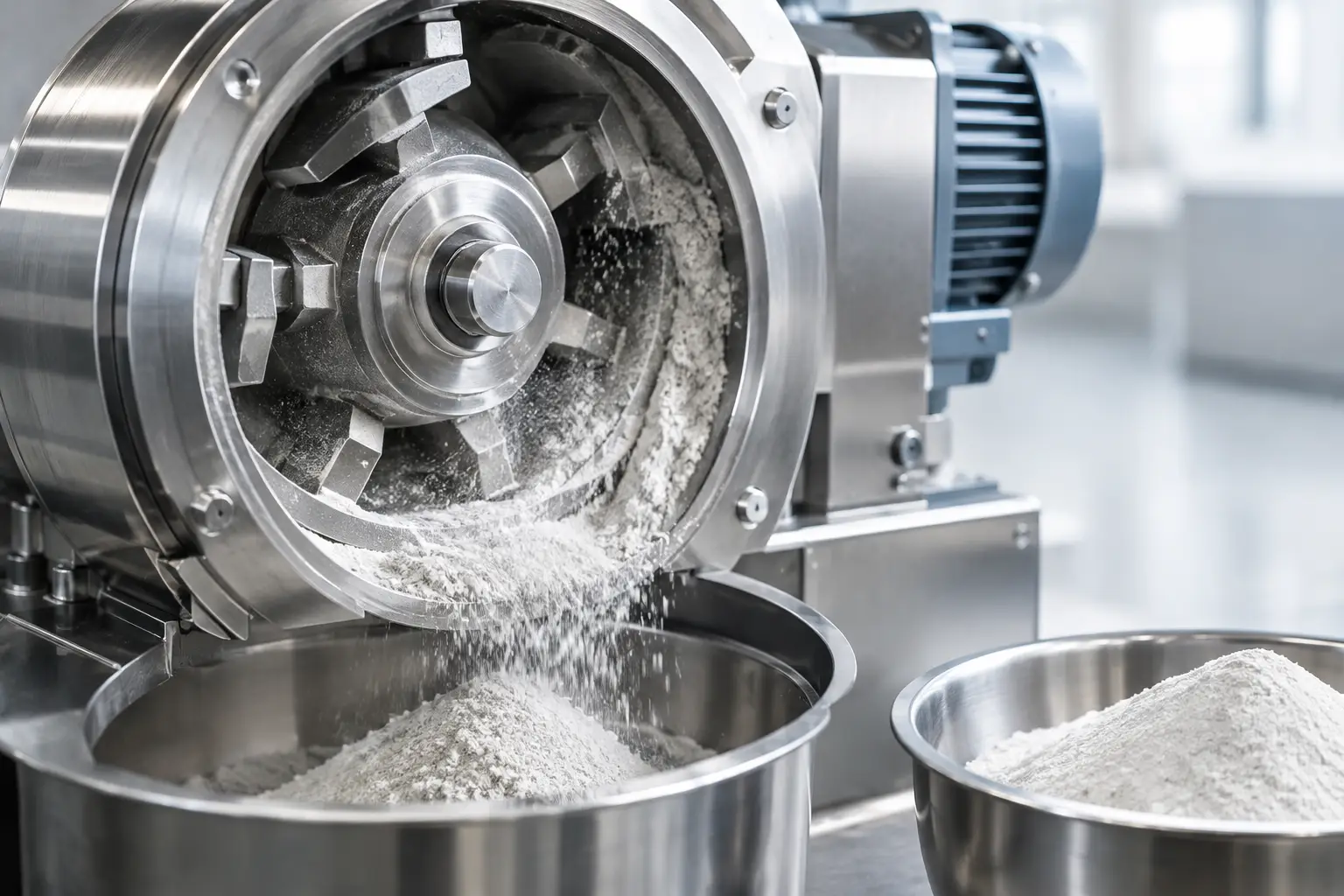
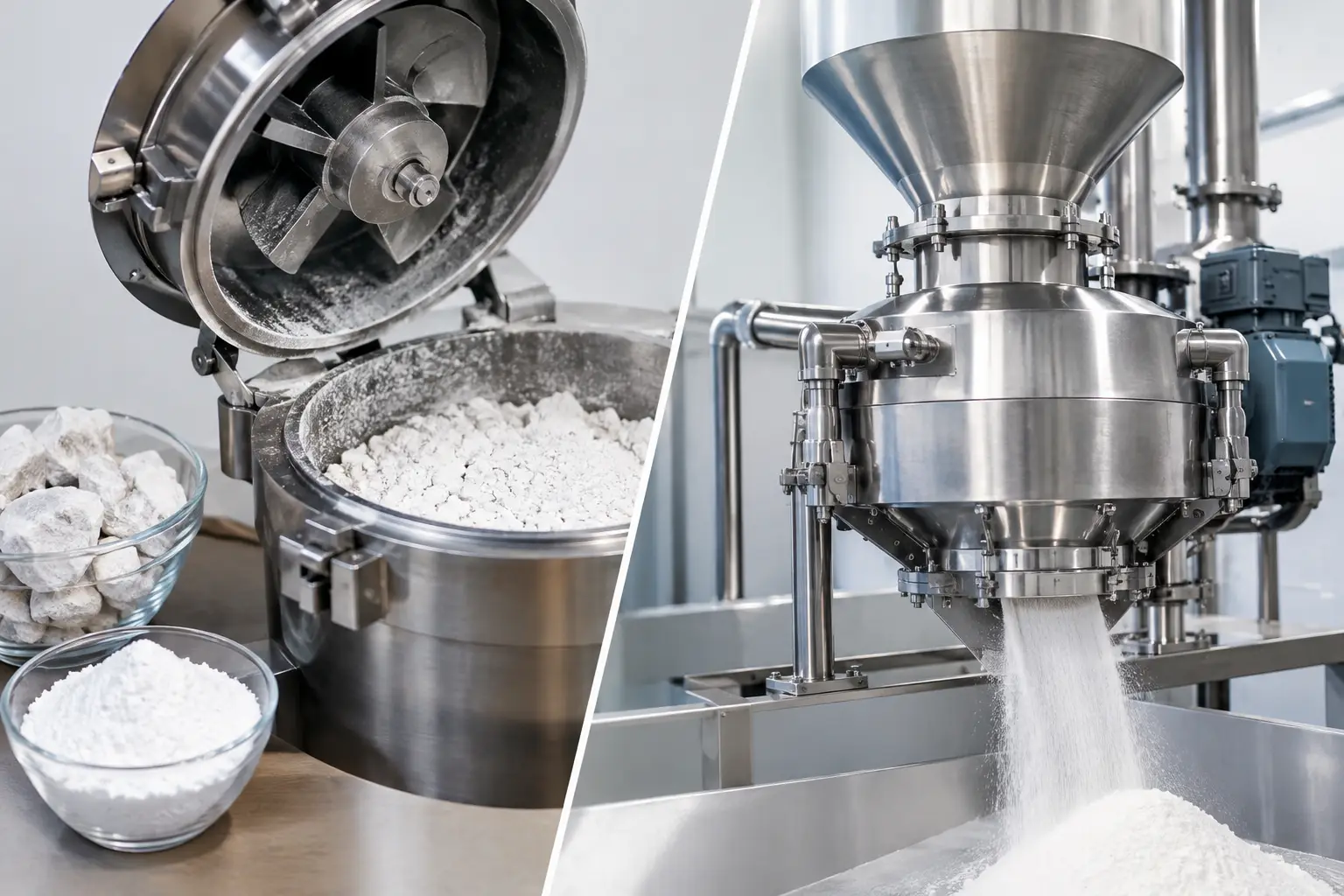
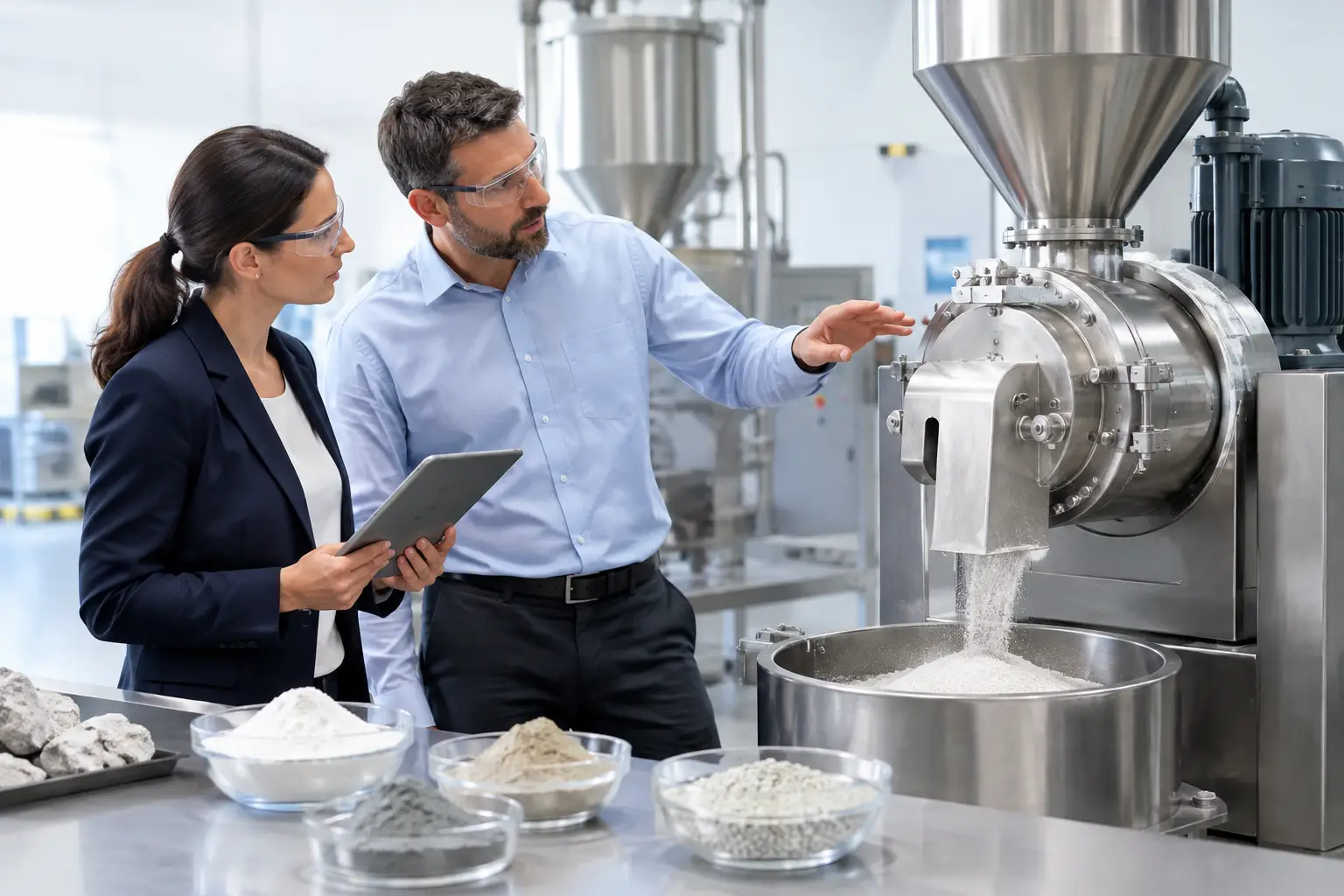
Particle size reduction is no longer evaluated only by the median micron result on a certificate of analysis. Advanced particle engineering trends are pushing manufacturers to manage the full particle size distribution, particle shape, surface condition, flow behavior, and contamination risk as connected process variables. For operations producing high-value powders, the question is increasingly not whether a mill can reach a target size, but whether the complete system can hold that result reliably at production scale.
This shift is visible across pharmaceuticals, battery materials, food ingredients, specialty chemicals, minerals, and engineered materials. Tighter specifications, more difficult feedstocks, and higher pressure on operating costs are changing how processing teams select and validate milling technology. The most useful trends are not equipment buzzwords. They are practical changes in how particle engineering is designed, measured, and controlled.
Advanced Particle Engineering Trends Affecting Mill Selection
Particle size distribution is replacing single-number targets
A D50 value remains useful, but it rarely tells the whole production story. Two materials can share the same median particle size while behaving very differently in blending, conveying, compaction, dissolution, coating, or downstream classification. Excess fines may increase dusting and reduce flow. Oversized particles may affect texture, reactivity, coating quality, or electrode performance.
As a result, manufacturers are placing more emphasis on distribution width, top size control, and batch-to-batch repeatability. This changes the milling conversation. A system must be assessed for how it produces and controls the entire curve, not simply its ability to make a fine powder during a short trial.
Air classifier mills and jet mills are often considered when narrow distributions and precise top-cut control are required. Their suitability still depends on material behavior, required capacity, hardness, moisture sensitivity, and allowable operating cost. A hammer mill, pin mill, or turbo mill may be the more effective choice when the target is coarser, the product is friable, or high throughput matters more than an extremely narrow distribution.
Material sensitivity is driving lower-heat processing strategies
Heat generated during size reduction can alter a product well before operators see visible evidence of a problem. Thermally sensitive foods may lose flavor or functionality. Waxy and oily materials can smear, screen blind, or build up inside the mill. Pharmaceuticals and nutraceuticals may require careful control to preserve product attributes. Some polymers, elastomers, and advanced materials become difficult to fracture when they soften.
This is why cryogenic grinding continues to expand beyond niche applications. Lowering material temperature can make tough or elastic feedstocks more brittle, improve fracture behavior, and reduce agglomeration. It can also help preserve volatile compounds and limit heat-related degradation. However, cryogenic processing adds complexity through nitrogen consumption, insulation requirements, safety procedures, and operating cost. It is most effective when those trade-offs are justified by better product quality, higher recovery, or a process that conventional milling cannot stabilize.
For other materials, the answer may be better airflow, staged milling, lower energy input, or a mill configuration that limits residence time. The right thermal strategy starts with actual material testing rather than an assumption based on the material name alone.
Contamination control is becoming a core design requirement
In regulated and high-purity applications, contamination control is no longer a secondary equipment feature. Metal wear, cross-product carryover, gasket degradation, lubricant exposure, and dust escape can all create quality and compliance risks. Battery, pharmaceutical, nutraceutical, and specialty chemical manufacturers are especially focused on controlling these pathways.
Equipment design must support the required cleanliness standard from feed to discharge. Depending on the application, that may include sanitary construction, polished contact surfaces, minimized dead zones, sealed transfer points, wear-resistant liners, specialized alloys, and cleaning access that is practical for the plant team. A system designed for fast product changeover may prioritize different details than one dedicated to a single abrasive mineral.
The trade-off is real. More stringent containment and cleanability can increase capital cost and maintenance planning requirements. Yet a lower initial-cost system can become expensive if it produces recurring losses through rejected batches, difficult cleaning, unplanned downtime, or excessive wear. The appropriate design level should reflect the material’s value, purity specification, hazard profile, and production schedule.
Closed-loop systems are improving yield and operator safety
Powder processing is increasingly treated as an integrated material-handling operation rather than a stand-alone milling step. Modern systems combine controlled feeding, milling, air classification, collection, screening, conveying, and dust management into a coordinated process. This approach can reduce manual handling, improve yield, and limit variation caused by inconsistent feed conditions.
Closed-loop processing is particularly valuable for fine, dusty, hygroscopic, potent, or oxygen-sensitive materials. Stable feed rate and air balance can have a direct effect on particle size distribution and throughput. Proper collection design also affects product recovery. A mill can perform well mechanically while the overall process underperforms because fines are lost in collection equipment or material accumulates at transfer points.
For combustible dust applications, system design must also address the applicable hazard assessment and protection strategy. The correct approach depends on the powder’s explosibility characteristics, process configuration, building constraints, and local requirements. Dust collection should never be treated as an add-on after core equipment has been selected.
Digital Process Data Is Moving Into the Mill Room
The next stage of particle engineering is not full automation for its own sake. It is better visibility into the variables that cause a process to drift. Manufacturers are using real-time and near-real-time data to monitor feed rate, motor load, classifier speed, air pressure, temperature, differential pressure, vibration, and product quality indicators.
This information supports faster troubleshooting and more disciplined scale-up. When a particle size distribution shifts, teams can compare operating conditions to known successful production runs instead of relying only on operator experience or end-of-batch testing. Trending can also identify gradual wear in impact components, classifiers, screens, and seals before performance falls outside specification.
That said, data quality matters more than data volume. Adding sensors without clear process questions can create noise rather than insight. The best monitoring plans focus on variables that materially influence product performance, uptime, energy use, or maintenance decisions.
Scale-up is becoming more application-specific
A successful lab trial does not guarantee predictable full-scale performance. Feed properties can change with lot size, moisture exposure, storage time, bulk density, and upstream processing. Airflow, residence time, transport behavior, and heat transfer also behave differently as capacity increases.
Advanced particle engineering programs therefore use pilot work to build operating windows, not just to produce a single acceptable sample. The objective is to understand how the material responds as feed rate, milling energy, classification settings, and temperature change. That knowledge makes it easier to specify a system that can absorb normal feed variation without sacrificing quality.
A practical scale-up plan should evaluate more than particle size. It should include throughput, yield, product temperature, dust behavior, wear rate, cleanability, and the consistency of the downstream process. A powder that meets size specification but bridges in a hopper or produces poor tablet compression has not solved the manufacturing problem.
Energy Efficiency Is Being Measured Against Product Value
Energy use remains an important trend, particularly for fine and ultrafine grinding where incremental size reduction can require substantially more power. But the lowest kilowatt-hour figure is not always the lowest-cost operating point. A process that uses more energy but reduces rework, improves yield, eliminates a second pass, or raises throughput may provide better overall economics.
The strongest efficiency gains often come from matching technology to the material and target specification. They also come from stable feeding, appropriate classifier settings, well-designed airflow, and preventive maintenance that keeps the system operating as intended. Worn components, leaks, poor collection efficiency, and improper air balance can quietly consume capacity and energy.
DP Mills approaches these decisions as process-engineering questions, because the milling chamber is only one part of the result. Equipment selection should account for feed preparation, containment, conveying, collection, controls, and the product requirements that define success.
What These Trends Mean for Manufacturing Teams
The most significant change is that particle engineering is becoming an upstream driver of product performance and plant economics. Tighter control of size, shape, heat exposure, and contamination can improve a downstream operation before the material ever reaches a blender, reactor, press, coating line, or packaging machine.
For process teams, the practical next step is to identify where current variation originates. It may be an inconsistent feed, an overly broad distribution, material buildup, insufficient classification, excessive heat, or a collection system that does not match the milling process. Each issue points to a different solution, and no single mill technology is correct for every material.
The manufacturers that gain the most from these advanced particle engineering trends will be those that define performance in operating terms: acceptable distribution, usable throughput, recoverable yield, manageable maintenance, controlled contamination, and repeatable production. That is the standard a particle processing system must meet long after the initial test run is complete.