Essential Oil Recovery During Pepper Milling
Advanced Milling Systems for Spice Processing
Pepper milling is more than a simple size-reduction operation. When dried peppers are ground into powder, their internal cell structure is ruptured, releasing volatile aromatic compounds, essential oils, and oleoresins that define the flavor, aroma, and value of the finished spice.
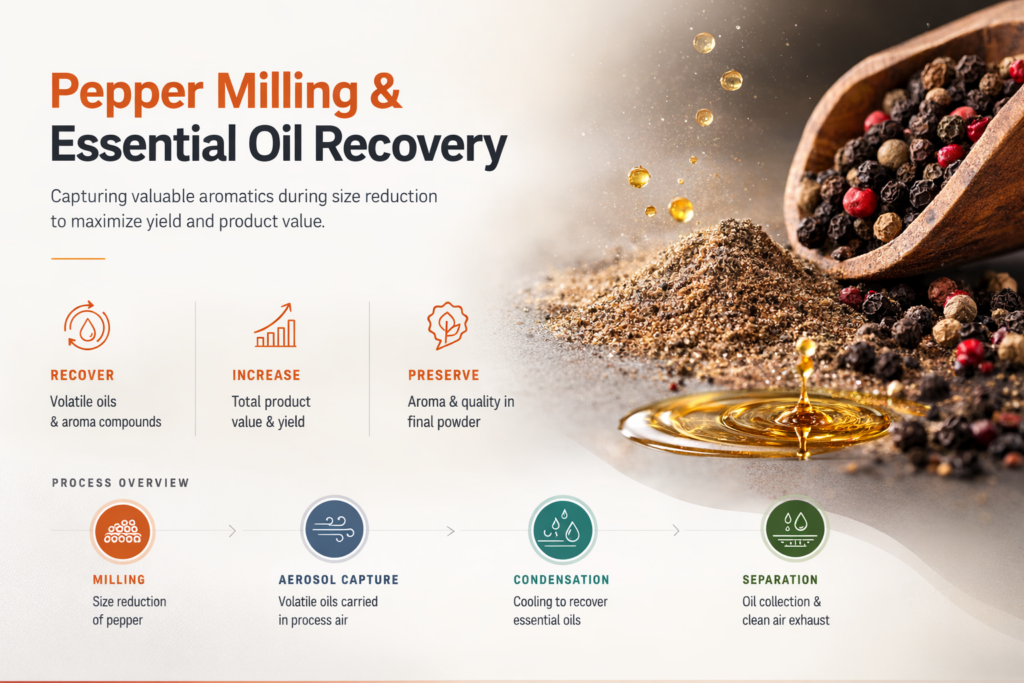
During high-energy milling, a portion of these volatile compounds can escape with the process air stream. Without proper recovery systems in place, valuable aromatic oils can be lost during production. Modern milling technology allows manufacturers to capture these oils and convert what was once considered a process loss into an additional product stream.
At DP Pulverizers, advanced milling and air handling systems make it possible to efficiently grind peppers while simultaneously recovering essential oils released during the process.
Understanding the Science of Pepper Milling
Dried peppers contain a complex mixture of compounds responsible for their distinctive sensory properties. These include:
• Essential oils responsible for aroma
• Oleoresins containing flavor compounds
• Capsaicinoids responsible for heat
• Volatile terpene compounds that contribute to fresh spice notes
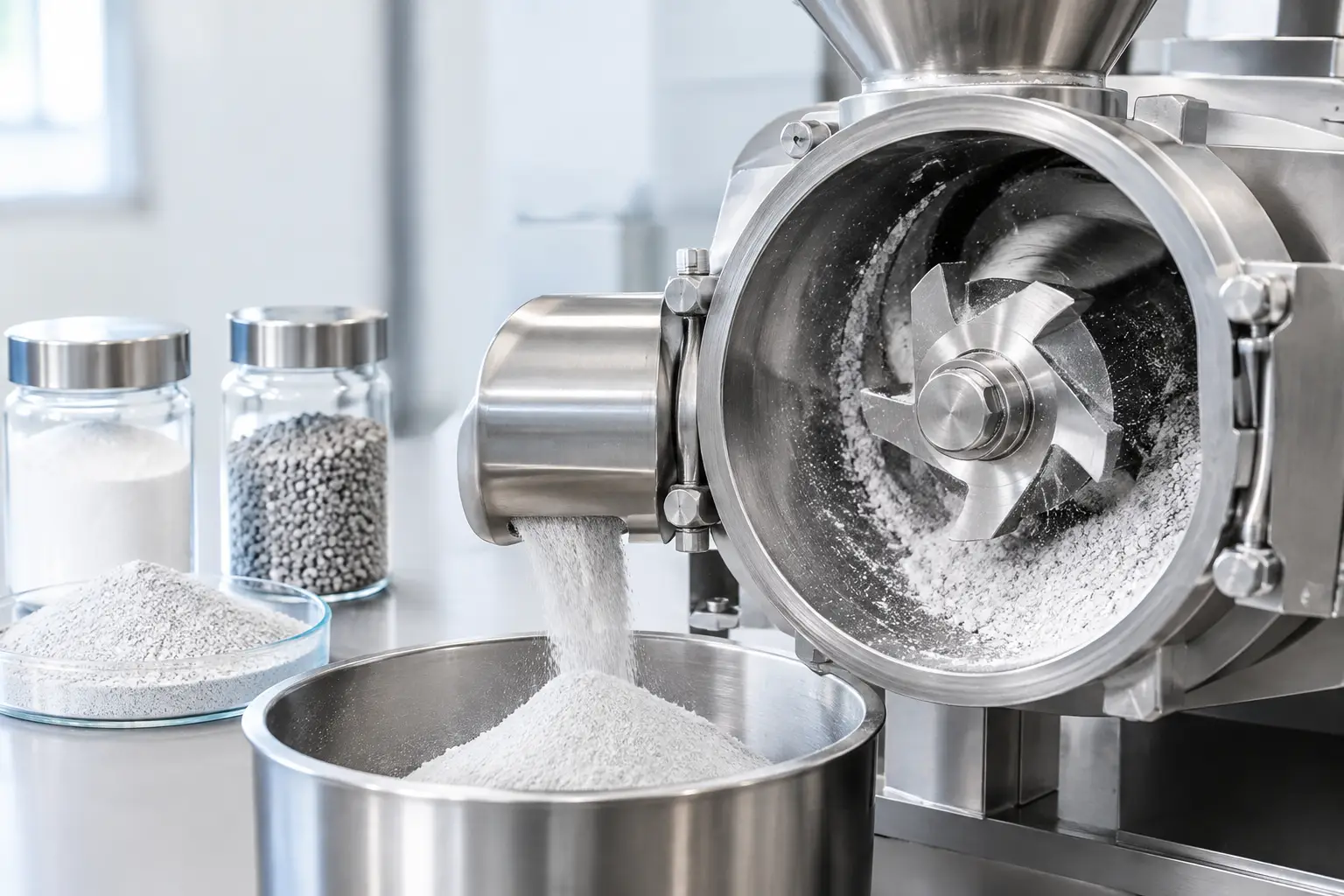
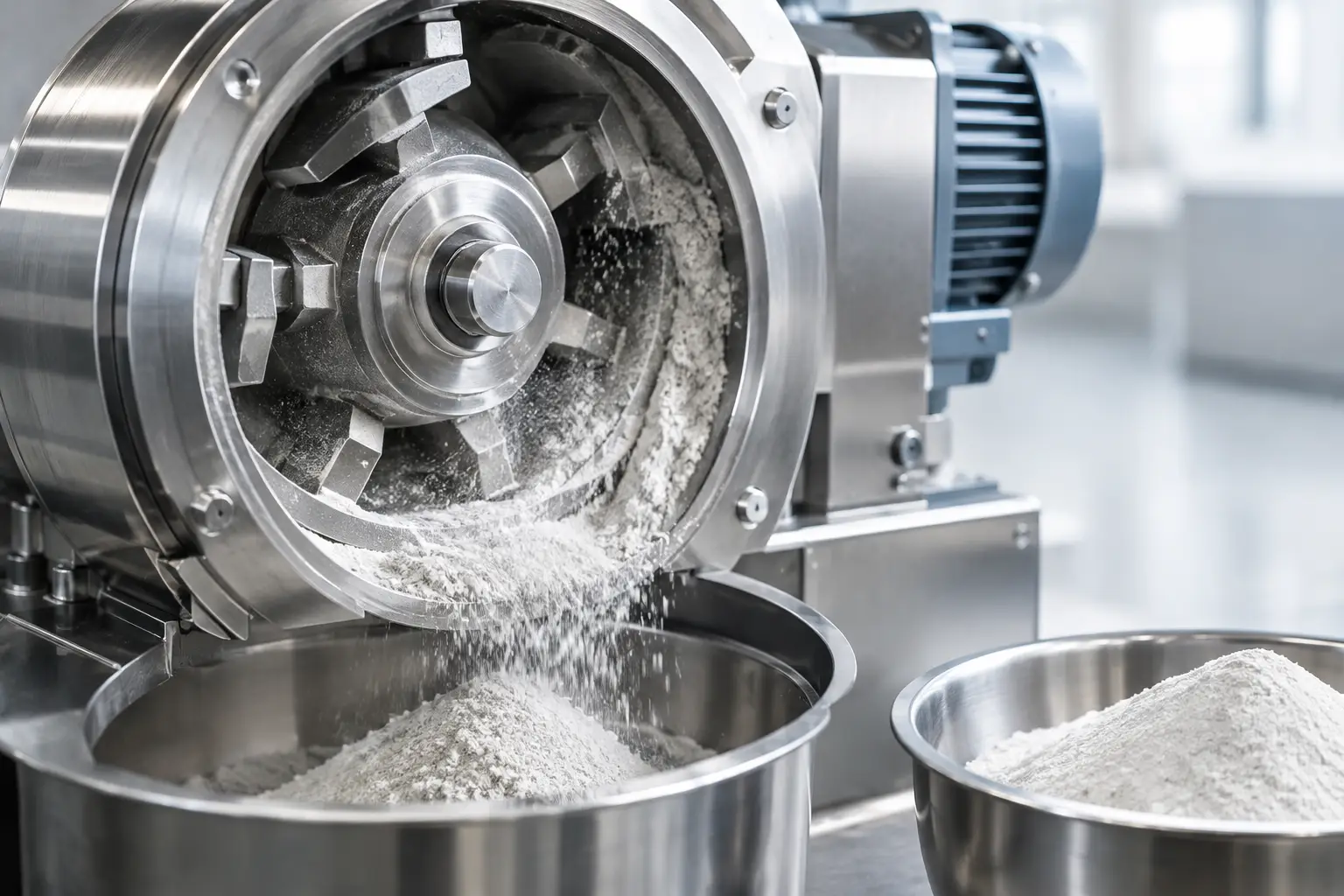
When peppers undergo size reduction inside high-speed grinding equipment such as pin mills, turbo mills, or classifier mills, the cell walls fracture and release these compounds.
The mechanical energy of the milling process generates heat and airflow, which can carry oil vapors and fine aerosolized droplets out of the grinding chamber. If these vapors are not captured, a portion of the pepper’s natural aromatic fraction is lost to the exhaust system.
Advanced milling systems address this challenge by integrating air management, condensation, and separation technologies that allow producers to recover valuable oils while maintaining consistent powder quality.
The Role of Process Air in Spice Grinding
Most industrial spice milling systems operate with controlled airflow. This airflow serves several important functions:
• Removing heat from the grinding zone
• Conveying fine powder to downstream separation systems
• Controlling particle size classification
• Preventing material buildup inside the mill
However, this airflow can also carry volatile aromatic compounds released during grinding.
Instead of allowing these compounds to escape, modern milling systems route the process air through a series of recovery stages designed to capture both powder and essential oils.
Recovering Essential Oils from the Milling Process
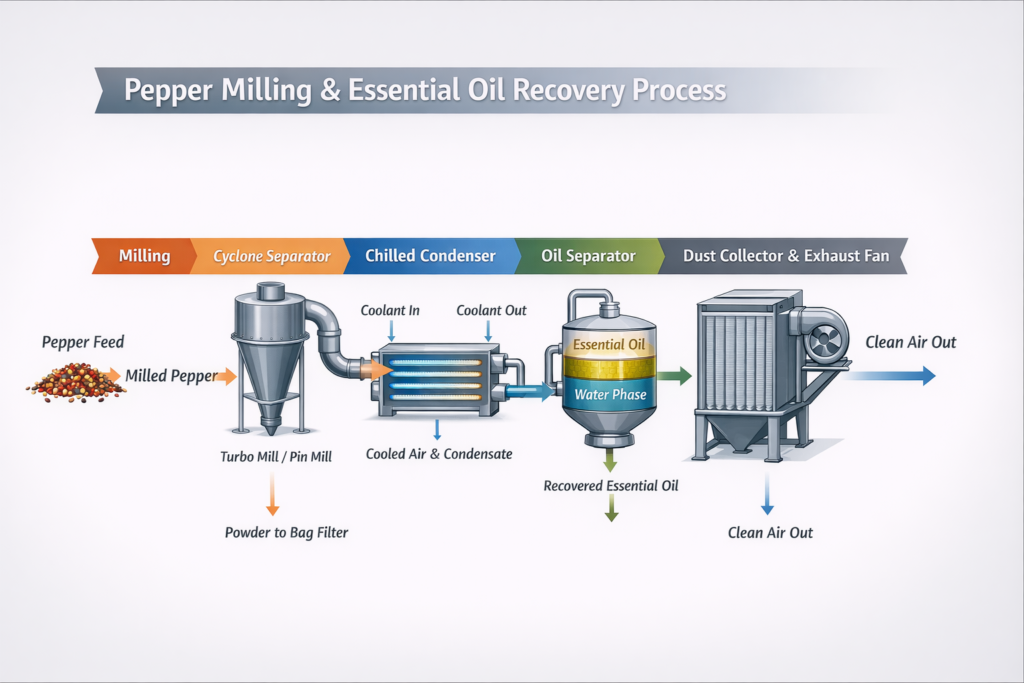
A typical pepper milling system designed for aroma recovery includes several stages.
Particle Separation
The first stage typically uses a cyclone separator to remove the majority of the milled pepper powder from the process air stream. This step ensures that only fine aerosols and vaporized compounds remain in the airflow.
Aroma Condensation
The air stream then passes through a cooled condenser or heat exchanger. As the air temperature drops, volatile compounds condense into liquid form.
These condensates contain essential oils and aromatic fractions released during grinding.
Oil Separation
The condensed liquid can then be directed to a separation vessel where oil and water phases naturally divide due to differences in density. The recovered oil fraction can be collected and used as a valuable secondary product.
Air Filtration
Finally, the remaining air passes through a dust collection system before being safely exhausted.
Benefits of Essential Oil Recovery in Spice Milling
Integrating aroma recovery technology into pepper milling systems provides several advantages for spice manufacturers.
Increased Product Value
Essential oils and oleoresins extracted during grinding can be collected and sold as high-value ingredients used in food flavoring, seasonings, nutraceuticals, and fragrance applications.
Improved Flavor Retention
Capturing volatile compounds helps maintain the sensory integrity of pepper powders by controlling aroma loss during processing.
Higher Process Efficiency
Recovering oils reduces material loss and improves overall yield from raw pepper inputs.
Cleaner Processing Environment
Capturing aromatic vapors reduces odors and airborne oils in processing facilities, improving plant hygiene and working conditions.
Advanced Milling Technology for Spice Processing
At DP Pulverizers, milling systems designed for botanical and spice applications incorporate precision engineering to maximize efficiency and product quality.
Depending on the required particle size and production capacity, pepper milling systems may utilize:
• High-speed pin mills for fine spice powders
• Turbo mills for efficient particle size reduction
• Air classifier mills for tight particle size control
• Integrated air handling systems for aroma recovery
These technologies allow processors to produce consistent pepper powders while maintaining the natural flavor characteristics of the raw material.
Unlocking Additional Value from Pepper Processing
Pepper contains between 2% and 4% essential oil, along with significant quantities of oleoresins and aromatic compounds. During large-scale milling operations, even a small percentage of recoverable oil can represent a substantial additional revenue stream.
By combining advanced milling systems with aroma recovery technology, spice manufacturers can transform what was once a process loss into a valuable product.
Recovering essential oils during pepper grinding not only enhances product quality but also improves the economics of spice processing.