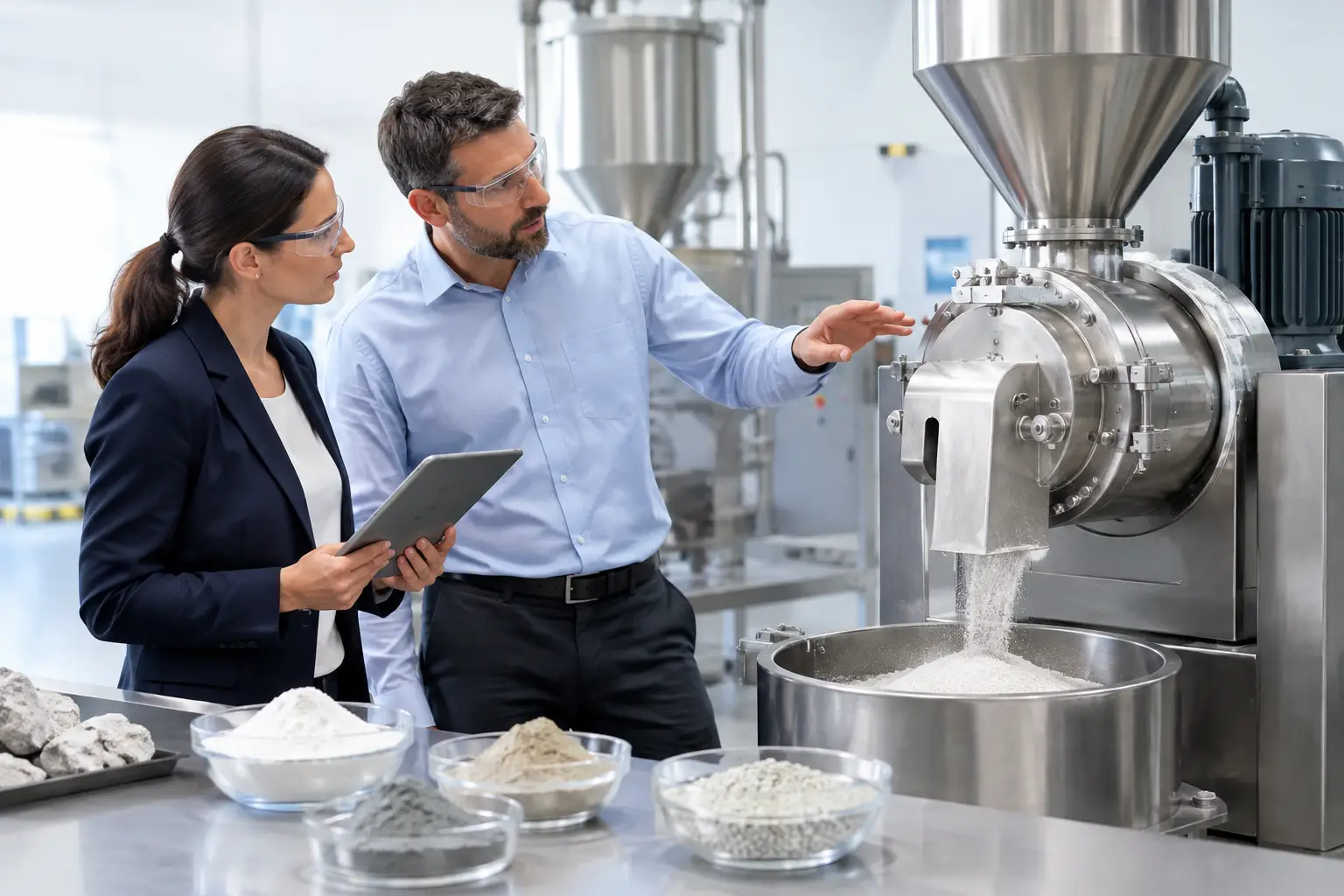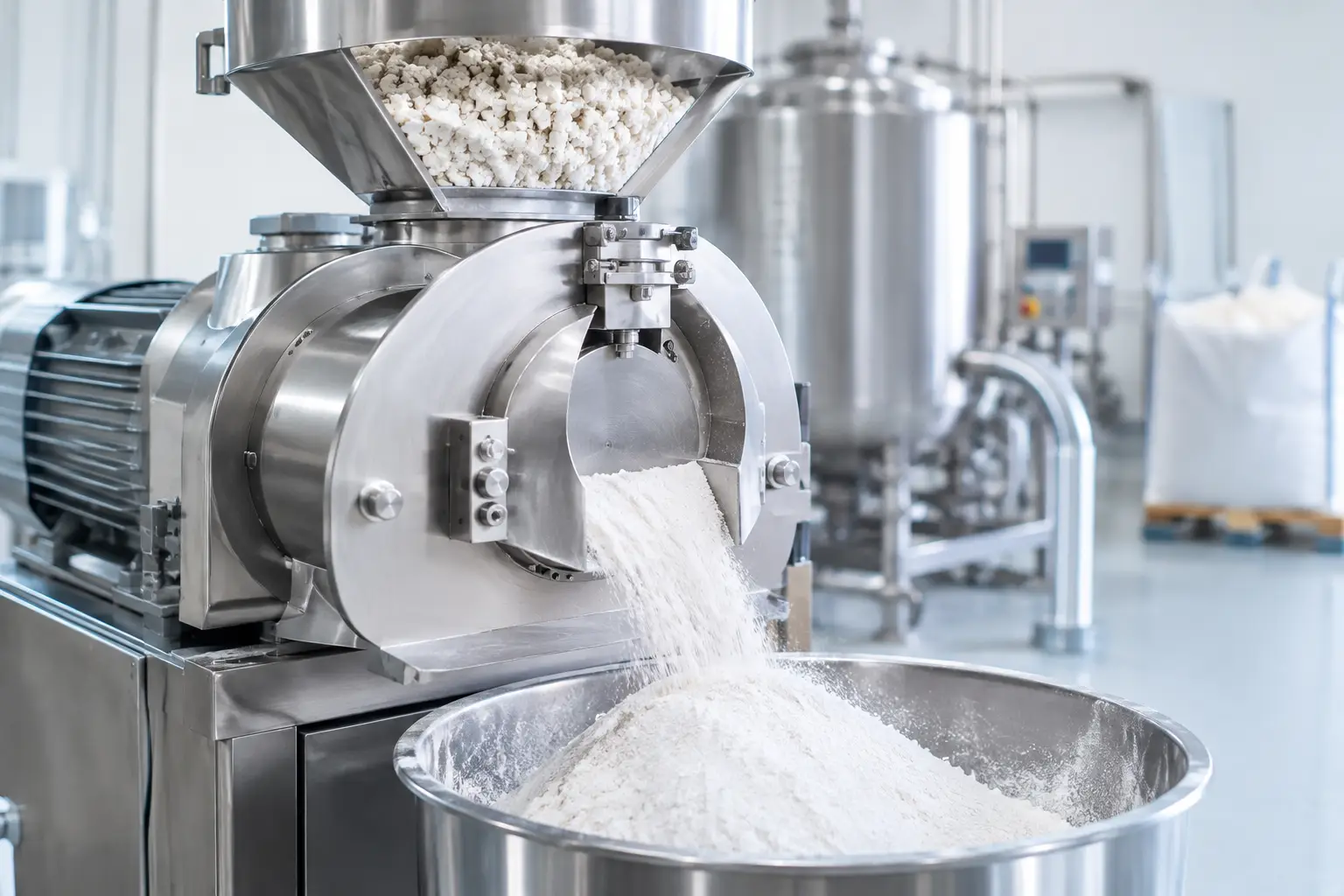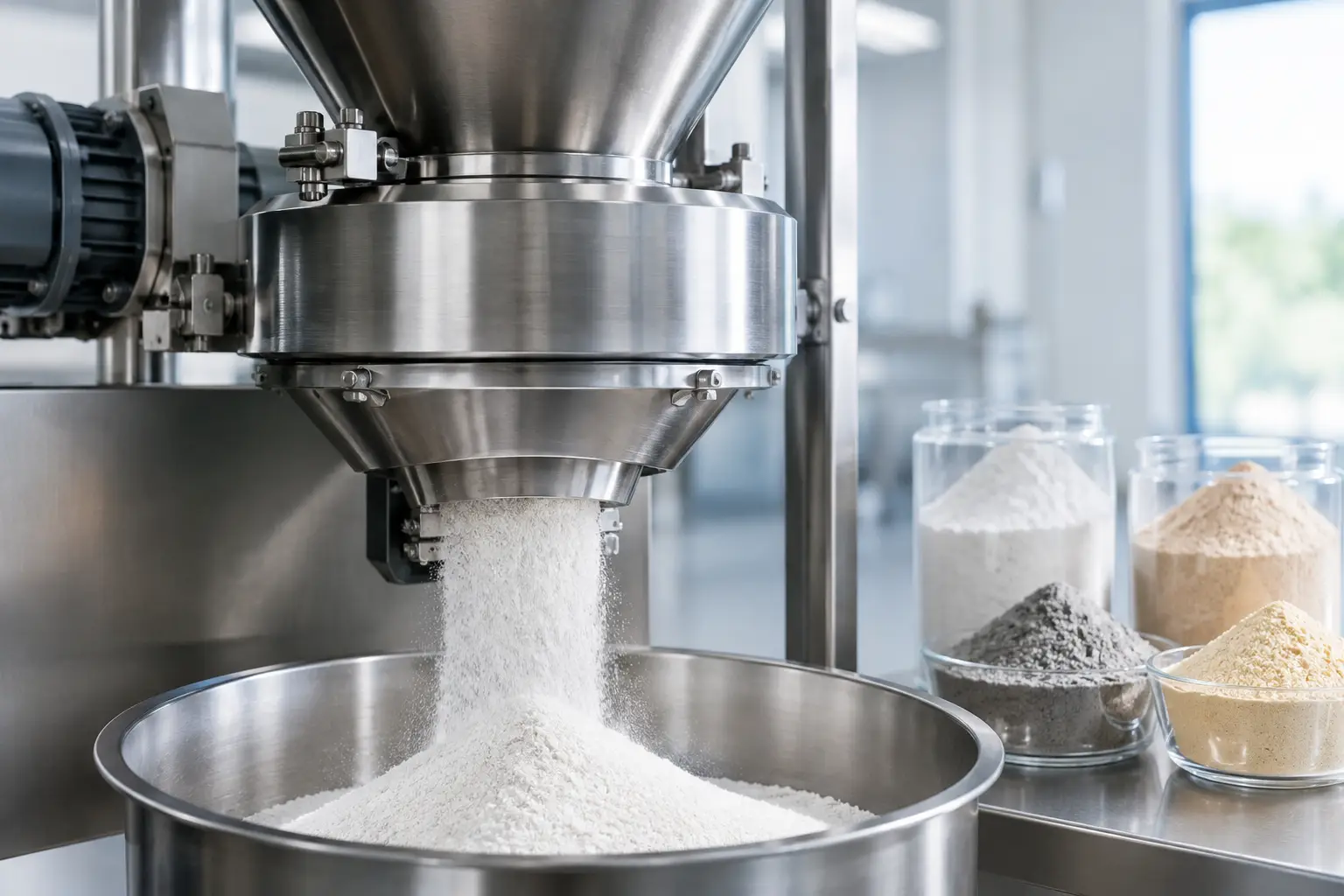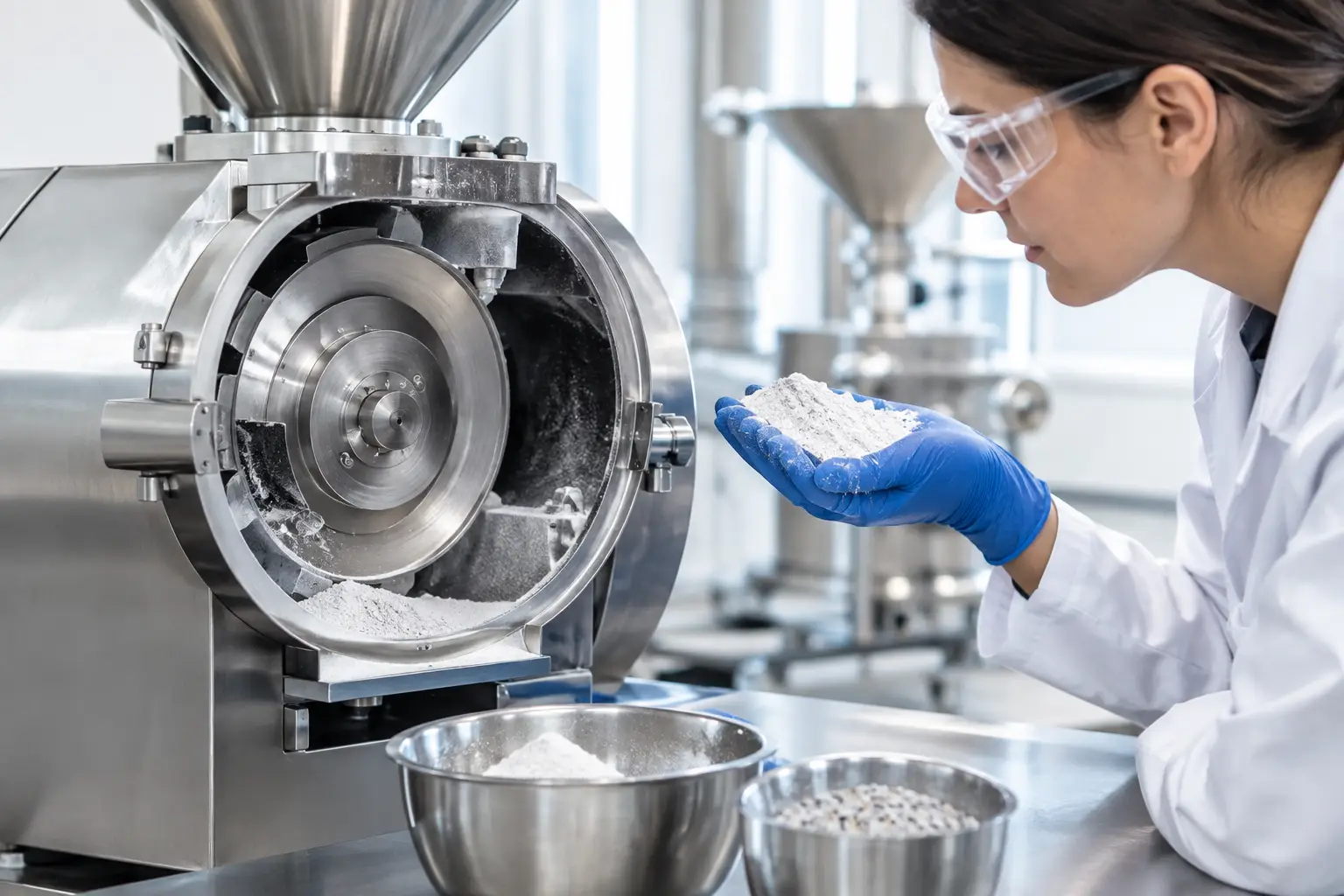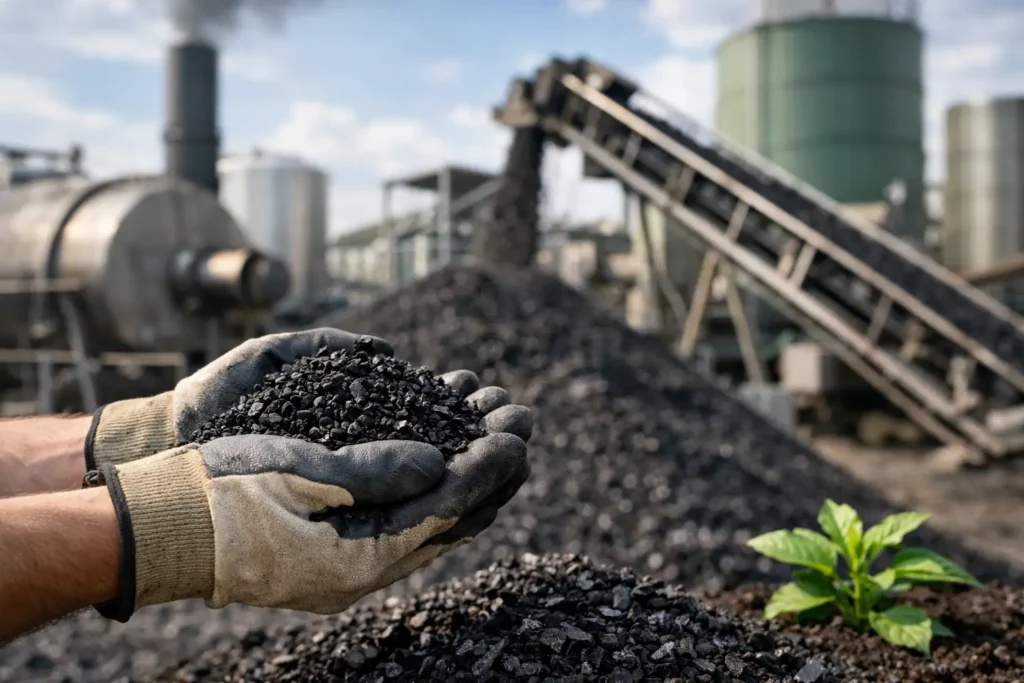
A biochar product can look acceptable in bulk and still create major problems downstream. Oversized particles can limit blending performance, excessive fines can increase dust load and handling loss, and inconsistent moisture can disrupt packaging, pelletizing, or further formulation. That is why biochar processing is not simply a matter of crushing material until it appears uniform. It requires controlled size reduction, classification, and material handling built around the actual behavior of the feedstock and the finished product specification.
Biochar has moved well beyond niche agricultural use. Manufacturers now process it for soil amendments, environmental remediation, carbon-focused products, specialty additives, and emerging industrial applications. As volumes increase and product requirements tighten, processing performance matters more. A system that works at pilot scale may not hold particle size, throughput, or cleanliness at commercial production rates.
Why biochar processing is more complex than it looks
Biochar is not a single material. Its processing behavior changes significantly based on feedstock source, pyrolysis conditions, carbon content, residual volatiles, ash level, and moisture. Wood-derived char, agricultural waste char, and biosolid-based char can behave very differently in a mill or classifier.
Some grades are relatively friable and reduce quickly with modest energy input. Others are more abrasive, denser, or structurally irregular, creating broader particle size distributions and more wear on equipment. If the process is designed around a generic assumption that all biochar mills the same way, performance usually suffers.
The target specification also drives complexity. A coarse soil product has very different processing requirements than a fine powder intended for blending into granules, composite materials, or filtration media. In some applications, the goal is simply top-size reduction. In others, the process must control both top size and fines content while limiting contamination and preserving throughput.
Core stages in biochar processing
Most industrial biochar processing lines involve some combination of drying, feeding, milling, classification, collection, and packaging or downstream transfer. The right sequence depends on incoming material condition and final use.
Feed preparation and moisture control
Moisture is one of the first variables to evaluate because it affects flowability, milling efficiency, and classifier performance. Wet or variable-moisture biochar can bridge in hoppers, feed unevenly, and reduce grinding efficiency. It may also agglomerate during processing, making particle size control less predictable.
In some operations, a light drying step is enough to improve consistency. In others, moisture control must be integrated tightly with the size reduction system to keep production stable. Overdrying can also be a problem if it increases dusting and material loss, so the correct target is application-specific rather than simply as dry as possible.
Size reduction
This is the stage most people focus on, but mill selection should follow material testing, not assumption. Biochar can be brittle, dusty, low-density, and sensitive to handling conditions. Those traits affect how it responds to impact, attrition, and high-speed particle-to-particle reduction.
Hammer mills are often used for initial reduction where feed is relatively coarse and high throughput is required. They can be effective for bulk top-size reduction, but they may generate wider distributions depending on screen selection, rotor speed, and feed consistency. Pin mills and universal mills may offer more controlled reduction for certain grades, especially when a tighter output range is needed.
For fine powders, air classifier mills or jet mills may become more relevant, particularly where narrow particle size control or lower contamination risk is important. The trade-off is that finer processing usually increases system complexity and can affect throughput, energy use, and collection design.
Classification and fines control
Not every biochar product needs tight classification, but many commercial operations benefit from it. Classification helps separate usable product from oversize that should be returned for additional milling. It also improves consistency for customers who need predictable bulk density, dispersibility, or blending behavior.
Fines control is especially important in biochar because excessive ultrafines can create handling issues, dust exposure concerns, filter loading, and packaging variability. At the same time, some applications specifically require a high-surface-area fine powder. The process target needs to be defined clearly before equipment is selected.
Choosing equipment for biochar processing
There is no single best mill for every biochar line. The better question is which milling and classification approach aligns with the feed, specification, throughput target, and operating constraints.
When simple reduction is enough
If the product is sold as a relatively coarse amendment with broad particle tolerance, a straightforward reduction system may be the best answer. In these cases, durability, feed handling, and throughput often matter more than achieving an ultra-tight distribution. A hammer mill or similarly rugged impact-based solution can fit well if dust collection and wear protection are addressed properly.
When tighter control matters
If the product is going into formulated blends, activated carbon alternatives, remediation media, or engineered industrial products, consistency becomes far more important. A system with integrated classification may be justified to manage top size and reduce off-spec variation. That is where engineered milling solutions typically create value – not by making the line more complicated, but by making output more predictable.
When contamination and wear become priorities
Biochar processing can be abrasive depending on mineral content and residual ash. Equipment wear affects not just maintenance cost but also contamination risk and process stability. Material-of-construction choices, wear liners, rotor design, and access for maintenance all matter. A lower-cost mill can become expensive quickly if wear parts fail often or metal contamination creates product quality issues.
Common production issues and what causes them
Many biochar plants experience the same operating problems, even when the feedstock changes.
One is inconsistent particle size. This usually traces back to feed variability, inadequate metering, poor moisture control, or a mill selected for throughput rather than specification. Another is excessive dust. That can come from over-grinding, poor air balance, or a process that generates more fines than the collection system can manage effectively.
Heat can also become a concern, particularly in fine grinding applications. While biochar is generally thermally stable, heat buildup can still affect product handling, dust behavior, and system cleanliness. In enclosed systems, airflow design and collection strategy become important for both process efficiency and safe operation.
Then there is throughput loss over time. Plants often see good early performance that gradually declines. The cause may be worn internals, classifier drift, buildup in the system, inconsistent feed density, or a process line that was never fully matched to the material. This is where application expertise matters. The issue is rarely solved by increasing rotor speed and hoping for the best.
Process design considerations beyond the mill
A successful biochar line depends on more than the grinding chamber. Feeding, conveying, dust collection, screening, and packaging all influence final performance.
Low-density materials can be difficult to feed consistently, especially when bulk density varies from batch to batch. Poor feed control leads directly to unstable particle size and uneven mill loading. Collection equipment also needs attention because fine biochar can challenge filters and create housekeeping burdens if capture efficiency is not adequate.
System layout matters as well. A mill that performs well in testing can still struggle in production if the air system is undersized, the transfer path causes buildup, or the discharge arrangement promotes segregation. Integrated design usually delivers better results than treating each machine as a separate purchase.
For that reason, manufacturers evaluating biochar processing should look at the complete line: feed characteristics, throughput goals, target distribution, dust management, wear profile, and future scalability. A process designed only for current output may become a bottleneck once volumes rise or specifications tighten.
Why testing matters in biochar processing
Because biochar properties vary so much, process development should be based on actual material evaluation whenever possible. Lab and pilot trials help determine how the material fractures, how much fines it generates, what particle size range is realistic, and where the practical throughput limits are.
Testing also helps clarify trade-offs. A finer product may be achievable, but only with lower throughput or additional classification. A simpler mill may meet the spec, but only if feed moisture stays within a narrow band. These are useful decisions to make before equipment is installed, not after the line is underperforming.
For manufacturers planning commercial-scale production, the strongest approach is to treat biochar processing as a controlled particle engineering challenge rather than a basic crushing step. That mindset leads to better equipment choices, more stable operations, and a product that performs consistently in the field or in downstream manufacturing.
As biochar markets continue to mature, processors that can deliver repeatable particle size, dependable throughput, and cleaner operation will be in a stronger position than those relying on improvised size reduction. The difference often comes down to process discipline and equipment engineered around the material instead of forcing the material through a generic system.