A milling system that performs well at room temperature can fail quickly when the material softens, smears, deforms, or loses critical properties under heat. That is exactly when to use cryogenic grinding becomes a serious process question, not a theoretical one. For manufacturers working with heat-sensitive, elastic, oily, or otherwise difficult feedstocks, lowering the material temperature during size reduction can be the difference between unstable production and repeatable throughput.
What cryogenic grinding is designed to solve
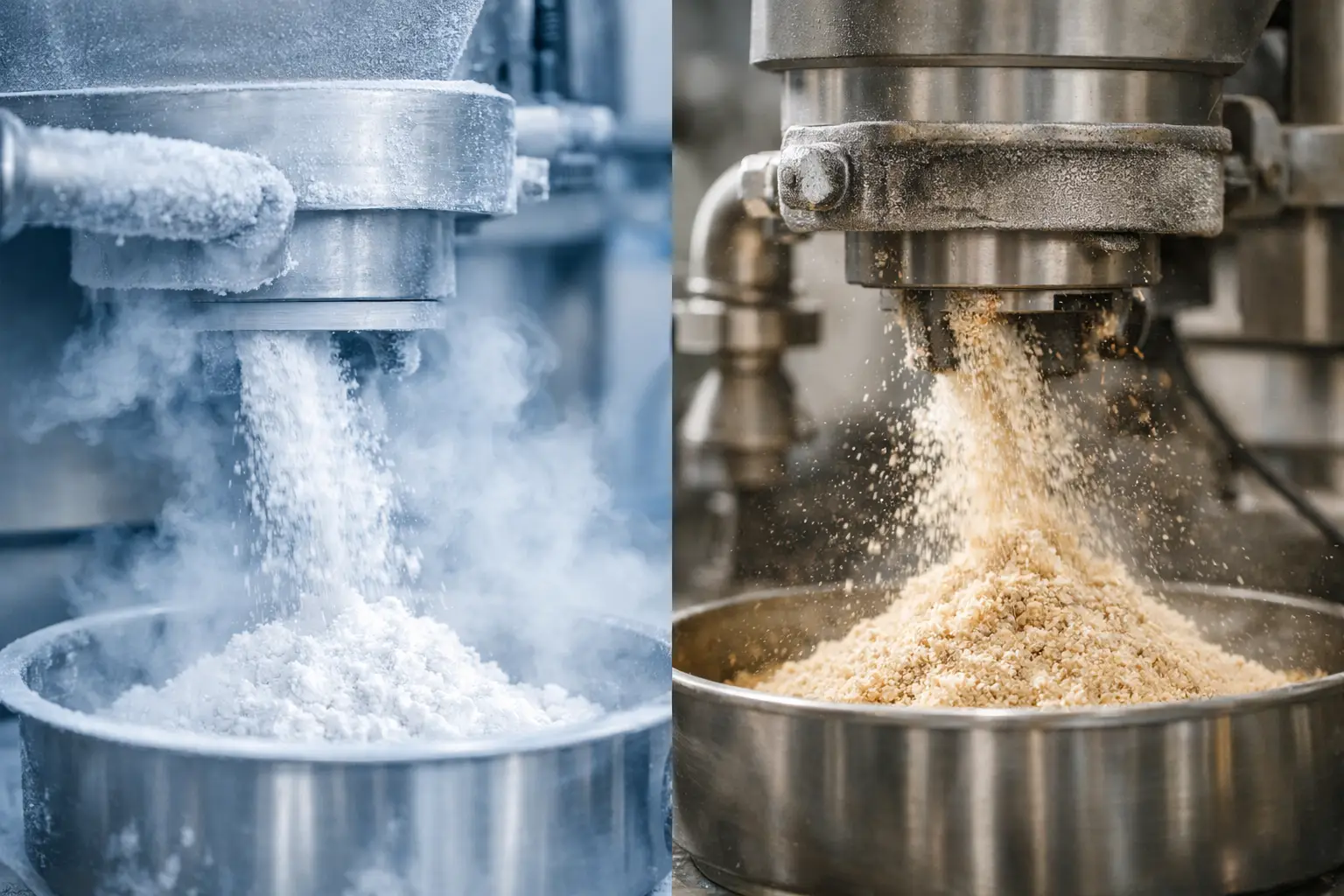
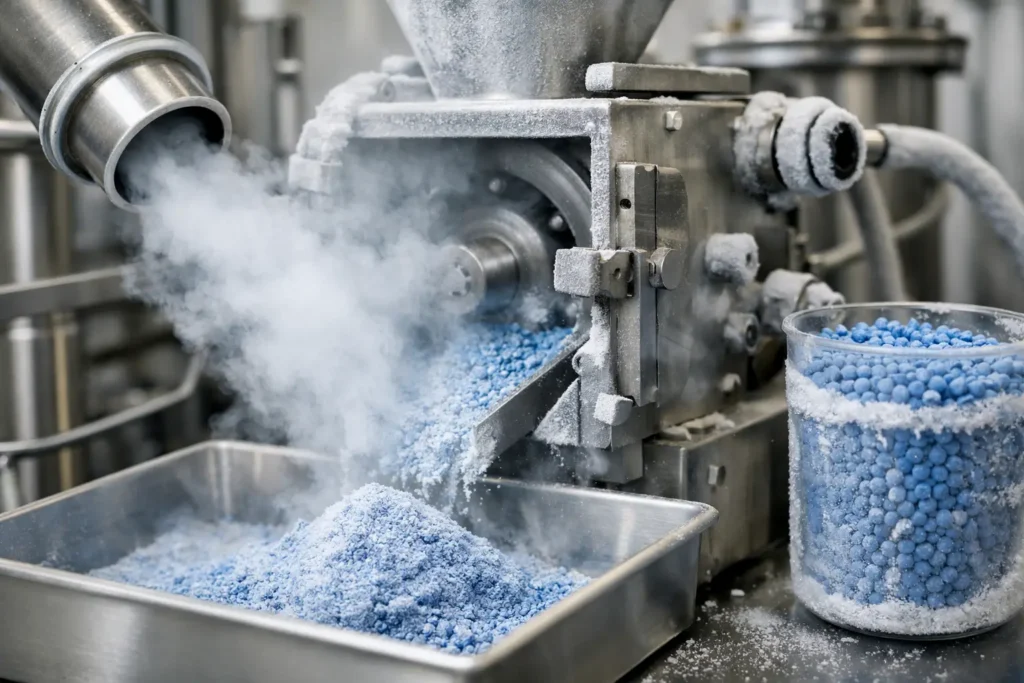
Cryogenic grinding uses very low temperatures, typically created with liquid nitrogen, to embrittle materials before or during milling. Instead of stretching, smearing, melting, or agglomerating under mechanical stress, the material fractures more cleanly. That change in material behavior is the core value of the process.
In practical terms, cryogenic operation is not about cooling for its own sake. It is used to improve grindability, protect product integrity, and stabilize particle size reduction for materials that behave poorly in conventional ambient milling. In many cases, it also helps reduce sticking inside the mill, minimizes screen blinding, and improves downstream handling.
For process engineers and plant teams, the real question is not whether cryogenic grinding is advanced. It is whether the material and production target justify the added complexity of low-temperature operation.
When to use cryogenic grinding in production
The clearest answer to when to use cryogenic grinding is when heat generated during milling changes the material in ways that hurt quality or process performance. That can show up in several ways depending on the product.
Heat-sensitive materials
Some materials degrade chemically or physically when exposed to even moderate temperature rise during milling. Pharmaceuticals, nutraceutical actives, specialty chemicals, and certain advanced materials may lose potency, experience phase changes, oxidize, or develop unwanted thermal history. In these cases, cryogenic grinding helps preserve the original material characteristics while still achieving the target particle size.
This is especially relevant when a narrow specification must be maintained lot after lot. If ambient milling produces drifting results as mill temperature rises over the course of a run, cryogenic processing can create a more stable operating window.
Elastic, tough, or impact-resistant materials
Rubber, thermoplastics, elastomers, and similar materials often resist conventional size reduction because they absorb energy instead of fracturing. At room temperature, they may flex, smear, or wrap rather than break. Lowering the temperature shifts the material into a more brittle state, making effective grinding possible.
This is one of the most established uses for cryogenic systems. If a material behaves more like it is being torn than milled, cryogenic conditioning is often worth evaluating.
Oily, waxy, or sticky products
Food ingredients, spices, resins, waxes, and certain chemical intermediates can become problematic under ambient grinding because released oils or softened surfaces create buildup. That leads to reduced throughput, internal coating, and inconsistent particle size distribution.
By reducing the product temperature, cryogenic grinding can limit stickiness and improve free-flowing behavior during milling. It can also help preserve volatile compounds in products where aroma, flavor, or functional chemistry matter.
Fine grinding where temperature affects yield
Some applications require finer particle sizes than ambient equipment can reliably achieve without excessive heat generation. As particle size targets become finer, specific energy input rises. That added energy often translates into temperature, which can trigger agglomeration or product loss.
In these situations, cryogenic operation is not only about protecting the material. It can also improve yield by allowing finer grinding without turning the product into a processing problem.
Material warning signs that point to cryogenic grinding
In many plants, the need for cryogenic grinding becomes obvious through recurring production issues rather than through lab theory. If the product cakes inside the mill, clogs screens, coats internals, or shows large variation between start-up and steady-state operation, temperature may be part of the problem.
Other warning signs include noticeable odor loss in flavor-bearing products, melting or softening during the run, poor recovery of fine material, and excessive downtime for cleaning. A conventional mill may still be mechanically sound, but the material behavior may be mismatched to ambient processing.
For R&D and scale-up teams, another signal is when lab results look promising under short runs but full-scale performance falls apart. Small batches often do not generate the same thermal load seen in continuous production. Cryogenic testing can reveal whether heat buildup is the real limiting factor.
Where cryogenic grinding adds value by industry
The value of cryogenic grinding depends heavily on the application. In food and spice processing, it is often chosen to preserve volatile oils, maintain color, and improve flowability. In polymer and rubber processing, it is commonly used to make tough or elastic materials brittle enough for efficient particle reduction.
In pharmaceutical and nutraceutical manufacturing, cryogenic operation may support temperature control for active ingredients, excipients, and compounds that are sensitive to degradation or physical change. In chemicals and advanced materials, it can help with difficult feedstocks that smear, clump, or lose performance when milled hot.
Battery and specialty material applications can also benefit when thermal exposure changes particle morphology, chemistry, or handling behavior. The process advantage is rarely just one thing. It is often a combination of better size reduction, lower contamination risk from fouling and overprocessing, and more stable production.
The trade-offs to evaluate before choosing cryogenic grinding
Cryogenic grinding can solve major process limitations, but it is not the default answer for every difficult material. Liquid nitrogen use adds operating cost. The system also requires proper insulation, controls, safe handling practices, and process tuning to manage cooling rate, residence time, and final grind performance.
There is also a balance between embrittlement and overcooling. Too little cooling may not change the material enough to improve fracture behavior. Too much can reduce process efficiency, increase nitrogen consumption, or create handling challenges after discharge if moisture condensation becomes an issue.
For some products, a different mill type at ambient conditions may solve the problem more economically. For others, a hybrid approach works best, such as pre-cooling combined with a specific rotor, screen, or classifier configuration. This is why application testing matters. Cryogenic grinding should be selected because it improves the total process outcome, not simply because the material is difficult.
How to decide when cryogenic grinding is the right choice
The best decision framework is operational, not theoretical. Start with the material behavior under actual milling stress. Does it soften, smear, agglomerate, lose volatile content, or degrade as energy input rises? If yes, low-temperature processing should be considered.
Next, look at the production objective. If the goal is coarse reduction with acceptable yield and no thermal sensitivity, cryogenic operation may be unnecessary. If the goal is fine particle size, strict product integrity, high recovery, and stable long-run performance, the case becomes much stronger.
Then evaluate cost in the full process context. A room-temperature system may appear less expensive until lost yield, downtime, cleaning, quality variation, or rejected batches are included. In many demanding applications, the right cryogenic system improves total operating performance enough to justify the added utility and controls.
This is where an engineered process approach matters. Equipment selection should reflect feed characteristics, required particle size distribution, throughput targets, contamination constraints, and integration with upstream and downstream operations. A properly designed cryogenic grinding system is not just a cold mill. It is a controlled size reduction process built around material behavior.
When to use cryogenic grinding instead of forcing ambient milling
If operators are constantly compensating for heat-related problems, the process is already giving you the answer. When a material must be milled colder to fracture properly, preserve quality, or maintain throughput, pushing harder at ambient conditions usually adds cost without solving the root issue.
Cryogenic grinding is most valuable when it changes the material from difficult to process into predictable to process. That distinction matters in production environments where consistency, uptime, and quality directly affect profitability. For manufacturers dealing with temperature-sensitive or hard-to-grind materials, the right low-temperature system can turn an unstable operation into one that runs with control.
The most useful next step is often simple: test the material under realistic process conditions and let the data show whether cryogenic grinding is solving a real limitation or just adding complexity.