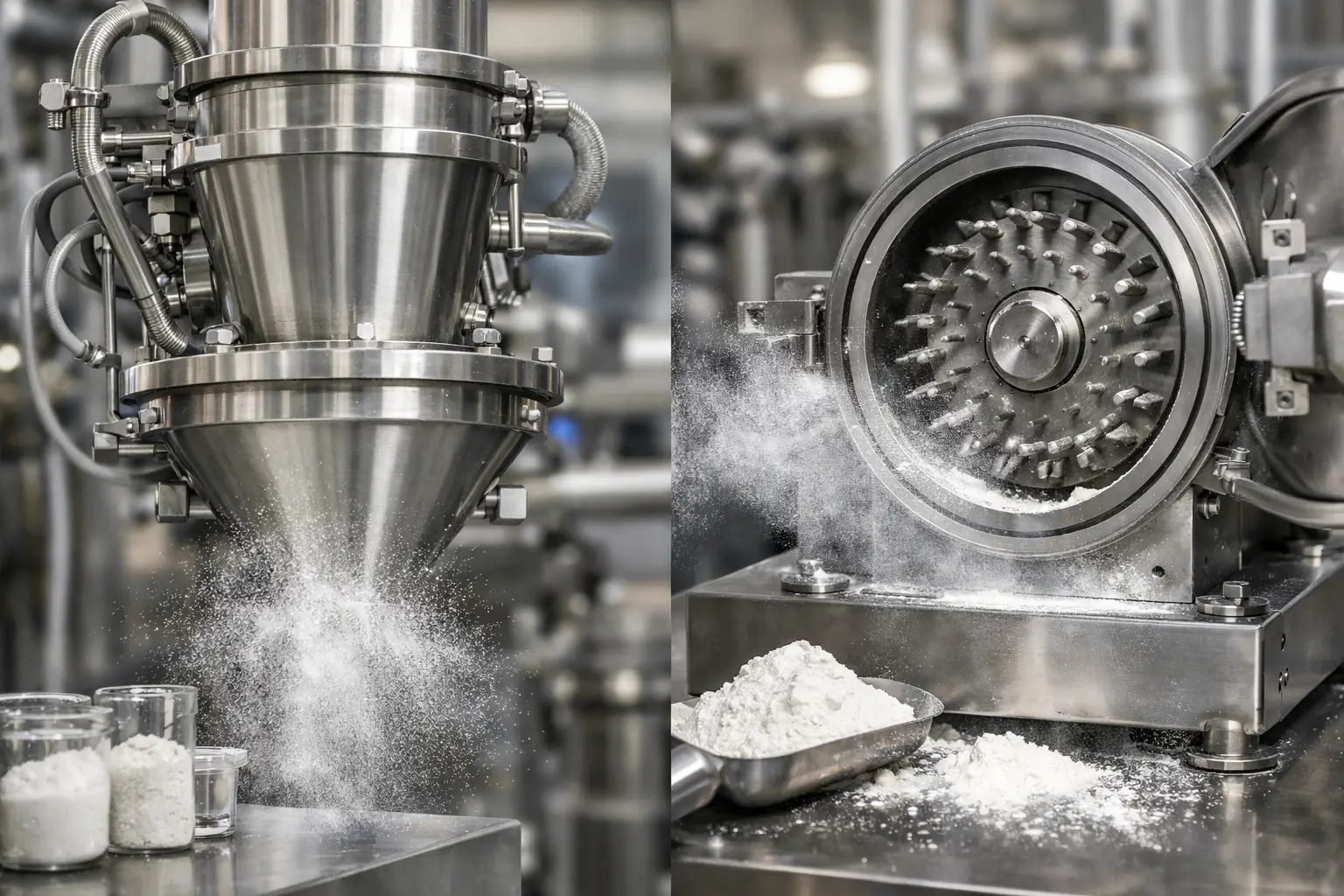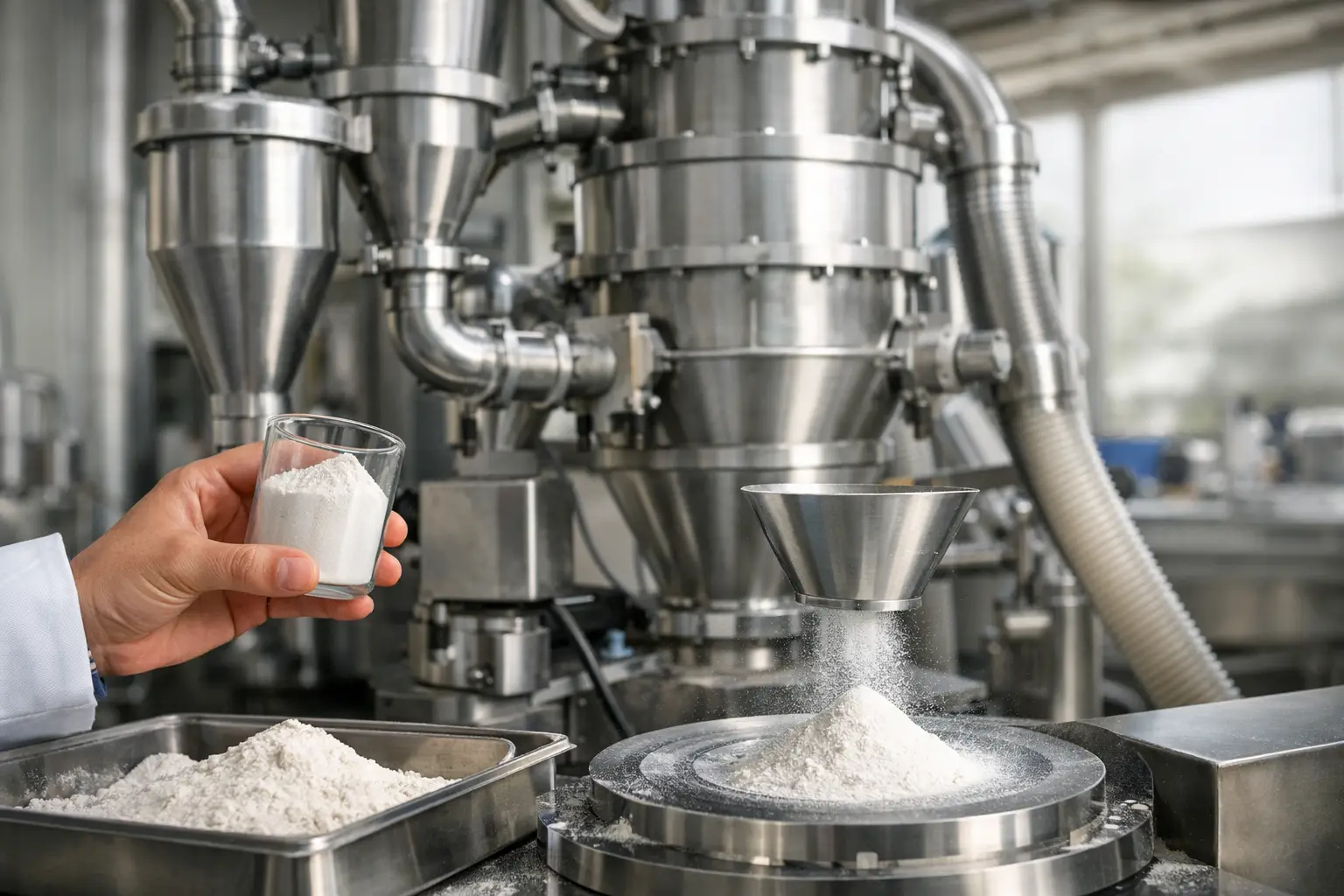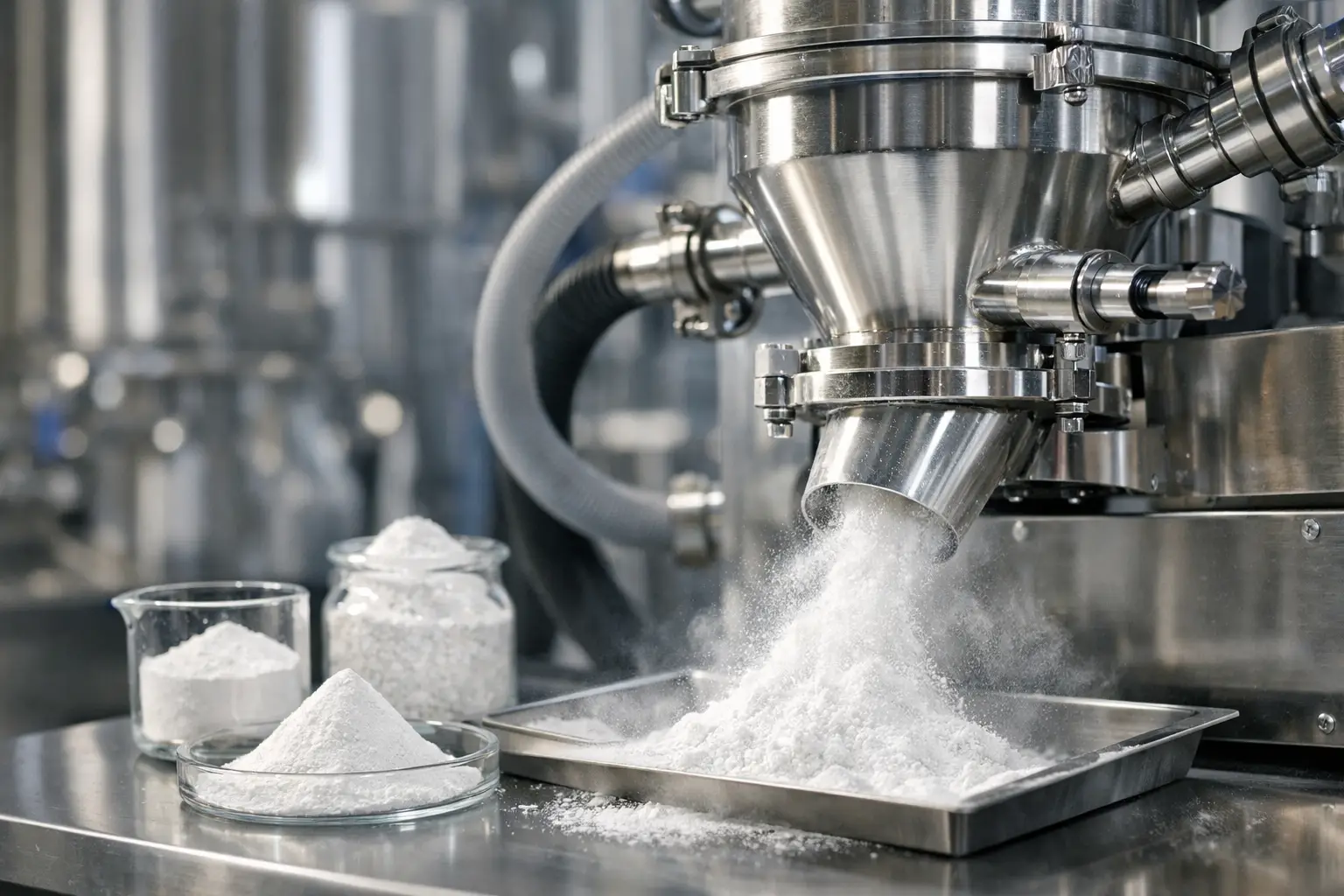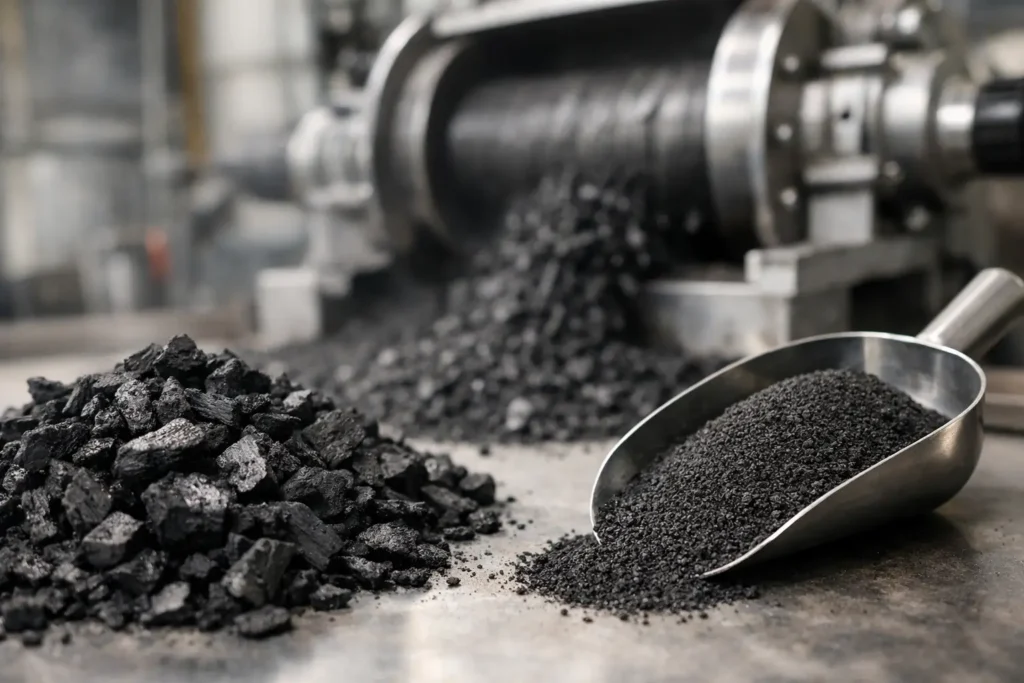
Biochar milling becomes a process bottleneck faster than many manufacturers expect. On paper, biochar looks simple enough to reduce in size. In production, it often behaves like a light, dusty, abrasive, low-density material that can challenge feed stability, particle size control, containment, and downstream consistency all at once.
That combination matters because particle size is rarely a cosmetic specification. In biochar applications, it can affect surface area, blending performance, dispersion, reactivity, bulk density, packaging behavior, and final product value. Whether the material is headed for soil amendment, filtration media, industrial filler, carbon-based formulations, or advanced material development, the milling step has a direct impact on product performance and plant efficiency.
Why biochar milling is more complex than it looks
Biochar is not a uniform raw material. Its behavior depends heavily on feedstock, pyrolysis conditions, residual moisture, fixed carbon content, ash level, pore structure, friability, and contaminant load. Two biochars that appear similar in bulk form can respond very differently once they enter a mill.
Some grades fracture easily and generate a broad particle size distribution with minimal energy input. Others resist size reduction, recirculate excessively, or create high dust volumes that complicate collection and housekeeping. Low bulk density can also affect how consistently the material feeds into the grinding zone, especially when the system was originally designed around denser powders.
This is why equipment selection for biochar milling should start with material behavior, not just target micron size. A process that works for one carbonaceous material may produce poor throughput, excessive fines, or unstable operation with another.
The real process goals behind biochar milling
Most operations are not simply trying to make biochar smaller. They are trying to achieve a controlled particle profile that supports a larger production objective. That objective may be better blending into fertilizers, more predictable flow in a batching system, improved surface interaction in a filtration application, or tighter consistency for engineered products.
In practice, the key targets usually include particle size distribution, throughput, yield, contamination control, and dust management. Heat generation can also matter, depending on the downstream use and whether the process must preserve certain material characteristics. If the milled product is part of a higher-value formulation, consistency from batch to batch becomes just as important as average size.
That is where many systems fall short. A mill may technically reduce the product, but still create too many oversized particles, too much dust below spec, or too much variability over long production runs.
Choosing the right milling method for biochar
There is no single best mill for every biochar application. The right choice depends on feed characteristics, final size requirements, required throughput, and how the product will be handled after milling.
Hammer mills and impact-based reduction
For coarser size reduction and initial stage processing, hammer mills are often a practical option. They can handle larger feed sizes and deliver strong throughput, especially when the objective is to reduce raw or pre-crushed biochar into a manageable intermediate product.
The trade-off is control. Hammer milling can generate a wider particle size distribution, particularly with friable materials that shatter unevenly. For applications that tolerate a broader cut, that may be acceptable. For products requiring narrow top size control or more uniform fines, a secondary milling stage is often needed.
Pin mills and universal mills
Pin mills and universal mills can offer a more controlled reduction path for certain biochar grades, especially when the goal is a finer powder without moving into ultrafine processing. These technologies can be effective where moderate fineness, consistent throughput, and practical maintenance access matter.
However, material variability still plays a major role. Highly brittle biochar may produce more fines than expected, while fibrous or incompletely carbonized fractions can reduce milling efficiency and increase recirculation. The system has to be matched to the actual feed, not the assumed feed.
Air classifier mills for tighter control
When the application demands finer biochar with better particle size control, an air classifier mill can be a strong fit. By combining impact milling with internal classification, the system can help limit oversize material and improve control over the finished distribution.
This approach is especially useful when the product specification is performance-driven and broad variability creates downstream issues. The benefit is not just finer grinding. It is better control over what leaves the system.
Jet milling for specialized fine applications
For advanced applications that require very fine particle sizes, tight distribution, or minimal mechanical contact, jet milling may be appropriate. This is typically not the first choice for commodity biochar because operating economics and throughput expectations have to align with the value of the finished product.
Where it fits, it can support very fine size reduction with low contamination potential. But this is an it depends decision. If the feed is inconsistent or the target market does not justify the processing cost, a less intensive milling approach may deliver better overall value.
Process variables that have the biggest impact
Successful biochar milling depends on more than mill type. Feed condition, system design, and operating discipline all affect the result.
Feed moisture is one of the first variables to review. Even moderate moisture changes can alter flow behavior, increase agglomeration, reduce grinding efficiency, and affect classifier performance. Material that feels dry in storage may still process differently than expected once it enters a high-velocity milling environment.
Feed uniformity matters just as much. Large swings in raw particle size, density, or carbonization level can make it difficult to maintain stable mill loading. That instability often shows up as inconsistent product size, lower throughput, or unnecessary wear.
Air handling is another major factor. Because biochar is light and dusty, conveying velocity, dust collection efficiency, and pressure balance must be engineered carefully. Poor air management can reduce yield, create housekeeping problems, and compromise containment.
Wear should not be overlooked. Depending on ash content and residual mineral composition, some biochar streams can be more abrasive than expected. Over time, wear affects not only maintenance cost but also process consistency, especially in mills where internal geometry strongly influences particle size performance.
Biochar milling and contamination control
For higher-value applications, contamination control can be as important as size reduction. Metallic wear, foreign material from upstream handling, and cross-contamination from previous campaigns can all become concerns, particularly when biochar is used in specialty formulations or functional additives.
This is one reason system design deserves close attention. Mill construction materials, liner selection, cleanout accessibility, and dust collection design all influence product purity and changeover efficiency. A low-cost mill that creates cleaning challenges or introduces unwanted wear may become expensive over time.
Containment is also part of quality control. Biochar fines are easily airborne, and uncontrolled dust affects both product recovery and plant environment. Well-designed systems reduce material loss while supporting safer and cleaner operation.
Scaling from pilot work to production
Biochar producers often start with lab or pilot-scale targets, then run into trouble when they try to scale. The issue is not that the target size changes. The issue is that feeding behavior, residence time, classifier efficiency, heat load, and dust collection dynamics all change with production-scale equipment.
That is why scale-up should focus on the full process window, not a single sample result. A pilot trial might show that a target size is achievable, but production success depends on whether the system can hold that result consistently at required throughput. Reliable scale-up needs application testing, realistic feed material, and careful review of system integration.
For manufacturers evaluating new equipment, this is where an engineering-driven process partner adds value. DP Mills approaches size reduction around the realities of material behavior, process control, and long-term production performance, which is especially important for variable materials like biochar.
What a good biochar milling system should deliver
A strong biochar milling solution should do more than hit a particle size target once. It should feed consistently, maintain stable operating conditions, control dust effectively, and produce a repeatable distribution without excessive waste or downtime.
It should also fit the economics of the application. A highly sophisticated fine grinding system may be technically impressive, but if it adds unnecessary complexity, energy cost, or maintenance burden, it may not be the right process choice. The best system is the one that balances product quality, throughput, reliability, and operating cost against the actual demands of the market.
Biochar has real processing potential, but it rewards disciplined engineering. When the milling step is designed around the material instead of forced through a generic setup, manufacturers gain tighter control, better yield, and a product that performs more predictably where it matters most.