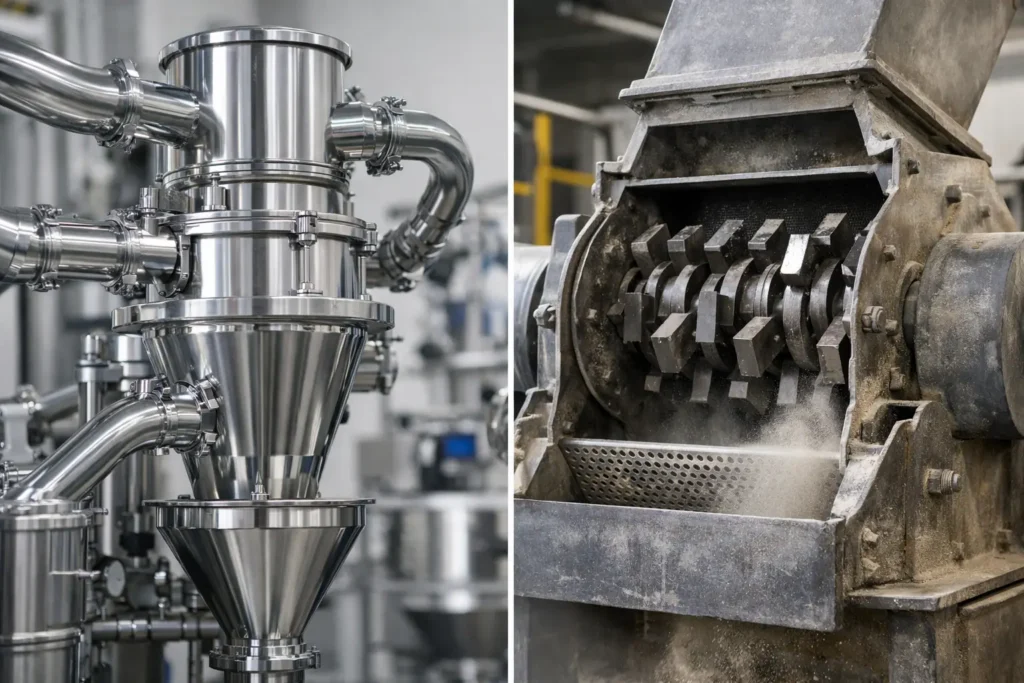
A milling decision usually becomes urgent when the current process starts showing its limits. Particle size drifts, heat affects product quality, wear parts add downtime, or capacity targets keep moving. In that context, the question of jet mill vs hammer mill is not academic – it directly affects product consistency, throughput, contamination control, and total operating cost.
Both technologies reduce particle size, but they do it in very different ways and are built for different processing priorities. Choosing between them is less about which mill is better in general and more about which one is better for your material, target specification, and production environment.
Jet mill vs hammer mill: the core difference
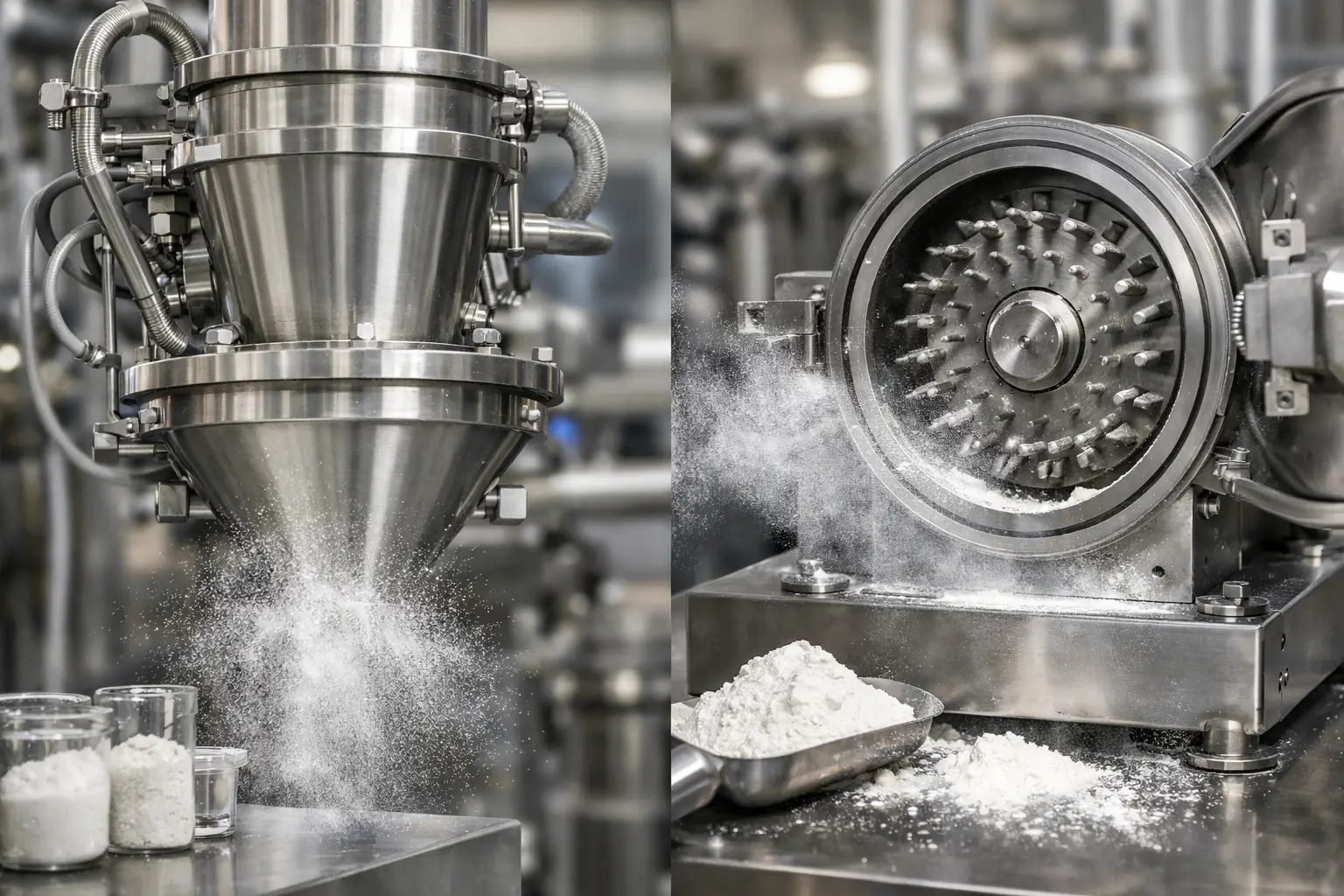
The main difference is the grinding mechanism. A hammer mill uses high-speed mechanical impact. Rotating hammers strike the material and force it through a screen or grinding chamber until the particles are small enough to pass. It is a straightforward, proven approach that supports a wide range of bulk reduction duties.
A jet mill uses high-velocity compressed air or gas to accelerate particles and create particle-on-particle impact. There are no moving grinding tools inside the milling chamber. That design changes the performance profile in important ways, especially when fine particle size, reduced contamination, and lower heat generation are critical.
This is why two mills can both be called size reduction equipment yet behave very differently in production. One is typically selected for efficient coarse to medium grinding with strong throughput potential. The other is selected for tight control in fine or ultrafine applications where product integrity matters as much as output.
How particle size targets change the decision
If the application calls for relatively coarse or moderate particle reduction, a hammer mill is often the practical choice. It can process many materials efficiently, and it is commonly used when exact ultrafine distribution is not the primary requirement. For many food ingredients, minerals, chemicals, and general industrial materials, that balance of simplicity and throughput is attractive.
When the target moves into much finer particle size ranges, the equation changes. Jet mills are designed for fine grinding and can produce much narrower distributions in demanding applications. In pharmaceuticals, battery materials, specialty chemicals, and advanced materials, that capability can be the difference between meeting specification and fighting ongoing quality variation.
The important point is that target particle size is not just a number on a datasheet. It affects flowability, dissolution, reactivity, blending behavior, downstream classification, and final product performance. A process that needs reliable micron-level control usually requires a different milling approach than one focused on basic size reduction.
Distribution matters as much as average size
Manufacturers sometimes focus on average particle size and overlook distribution. A hammer mill may achieve the nominal target, but if the process creates too many fines or oversized particles, downstream performance can still suffer. Jet milling is often preferred when tighter distribution and better repeatability are needed.
That said, tighter control typically comes with higher system complexity and utility demand. The right answer depends on how much value the process gains from improved uniformity.
Heat generation and material sensitivity
Heat is one of the most common reasons a conventional mill stops being the right fit. Mechanical impact in a hammer mill can raise product temperature, especially with soft, low-melting, fatty, fibrous, or heat-sensitive materials. That can lead to smearing, agglomeration, loss of volatile components, or changes in product functionality.
Jet mills are often selected for heat-sensitive materials because the grinding action relies on fluid energy rather than direct mechanical contact with grinding surfaces. The gas expansion effect can help limit temperature rise in the milling zone. For temperature-sensitive actives, nutraceutical ingredients, certain polymers, and specialty chemicals, that can be a major advantage.
This does not mean jet mills are automatically required for every sensitive material. In some cases, feed conditioning, process changes, or cryogenic support can make other milling technologies viable. But when heat is a recurring production problem, a jet mill deserves serious consideration.
Contamination, wear, and product purity
In high-value manufacturing, contamination control is often as important as particle size. Hammer mills include moving mechanical components that contact the product stream, and those parts wear over time. Depending on the material, wear can be modest or severe. Abrasive products accelerate the issue, increasing maintenance frequency and the risk of unwanted metallic contamination.
Jet mills reduce that concern because there are no rotating grinding tools in the milling chamber. Since grinding occurs through particle-on-particle collision, internal wear can be lower in the right application, and product purity can be better protected. That is one reason jet mills are widely used in industries where contamination control is tightly managed.
Material behavior still matters. Very abrasive feedstocks can wear any system, and equipment design details make a difference. But if the process is sensitive to trace contamination, the choice between jet mill vs hammer mill often leans toward jet milling.
Throughput and operating efficiency
Hammer mills are well known for throughput and practical production efficiency. They are often an effective choice for high-capacity operations where the required particle size range is achievable with mechanical impact. They also tend to have a more straightforward operating model, which can simplify maintenance and training.
Jet mills can deliver outstanding fine grinding performance, but they typically require compressed air or gas at significant volume and pressure. That utility demand affects operating cost. In many facilities, the decision is not whether a jet mill can meet the spec, but whether the product value and process requirements justify the energy profile.
This is where application engineering matters. A mill should not be evaluated in isolation. Feed rate, moisture, bulk density, hardness, upstream conditioning, classification requirements, and downstream handling all affect actual efficiency. A lower-cost mill that struggles to hold spec or creates excessive rework is rarely the lower-cost solution over time.
Capital cost versus lifecycle cost
Hammer mills are often attractive from an initial capital standpoint. For many operations, they offer a favorable entry point and dependable performance. But lifecycle cost includes wear parts, maintenance intervals, downtime, cleaning requirements, off-spec production, and energy use.
Jet mills usually involve higher upfront investment and more complex system design, yet they can support better product quality, reduced contamination, and less thermal damage in the right process. For high-value materials, those benefits may outweigh the added cost quickly.
Material types and typical fit
Hammer mills are commonly used for friable materials, bulk solids, agricultural products, some food ingredients, minerals, and general industrial powders where coarse to medium grinding is acceptable. They can also be useful as a pre-grinding stage before a finer milling or classification step.
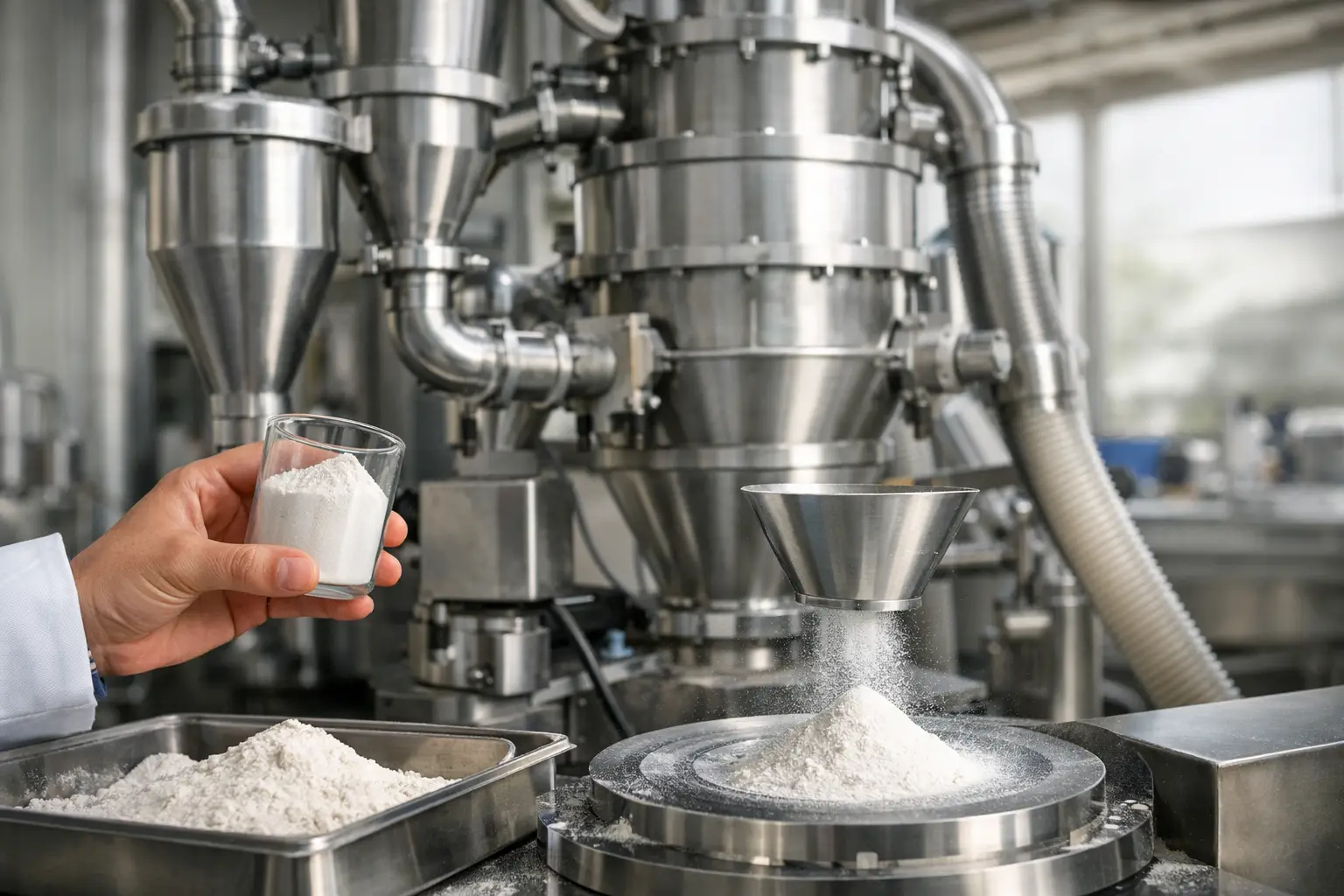
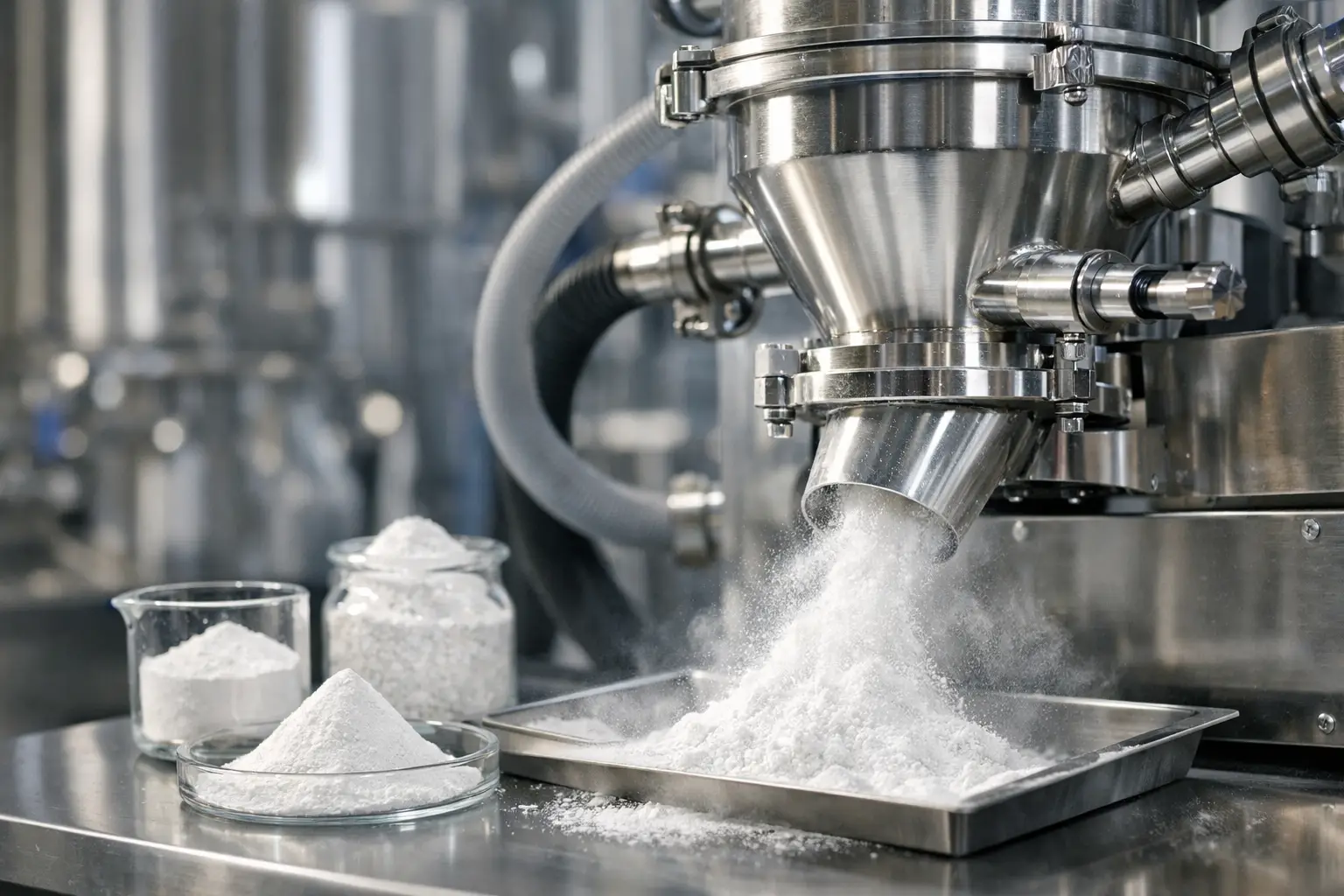
Jet mills are better suited to applications that demand fine particle size, low contamination, and careful thermal control. These often include pharmaceutical powders, nutraceutical ingredients, battery materials, specialty pigments, advanced ceramics, and high-purity chemicals.
There are gray areas. Some materials process well in either system depending on the target specification. Others may be better served by an air classifier mill, pin mill, or cryogenic solution. That is why equipment selection should start with the material and the production objective rather than with a preferred machine type.
What to ask before choosing a mill
A useful mill selection process starts with a few practical questions. What particle size and distribution are required, not just on average but consistently over time? How heat-sensitive is the material? How abrasive is it? What level of contamination is acceptable? What throughput is required today, and what will be required after scale-up?
It is also worth asking how the mill fits into the full process. Feeding, conveying, dust collection, inerting, classification, CIP requirements, and containment expectations all affect system performance. A mill that looks adequate on paper can become a bottleneck if the surrounding process is not considered.
For that reason, manufacturers often benefit from working with an engineering-led partner that can evaluate the complete application rather than simply quoting standard equipment. DP Mills approaches mill selection in that way, aligning equipment design with material behavior, production goals, and long-term operating demands.
When jet mill vs hammer mill is not either-or
Some plants use both. A hammer mill may handle initial size reduction efficiently, while a jet mill performs the final fine grinding step for the fraction of product that requires tight specification. In other cases, process development reveals that a different technology entirely offers the best combination of throughput and control.
That is the real lesson behind the comparison. Milling performance is application-specific. The best decision comes from understanding what the product needs, what the process can tolerate, and where production economics truly sit.
If your process is battling heat, contamination, inconsistent particle size, or scale-up limitations, the right milling technology can remove more than one bottleneck at once. The most useful next step is not choosing a mill by category – it is defining the performance the process must deliver and selecting equipment engineered to meet it reliably.