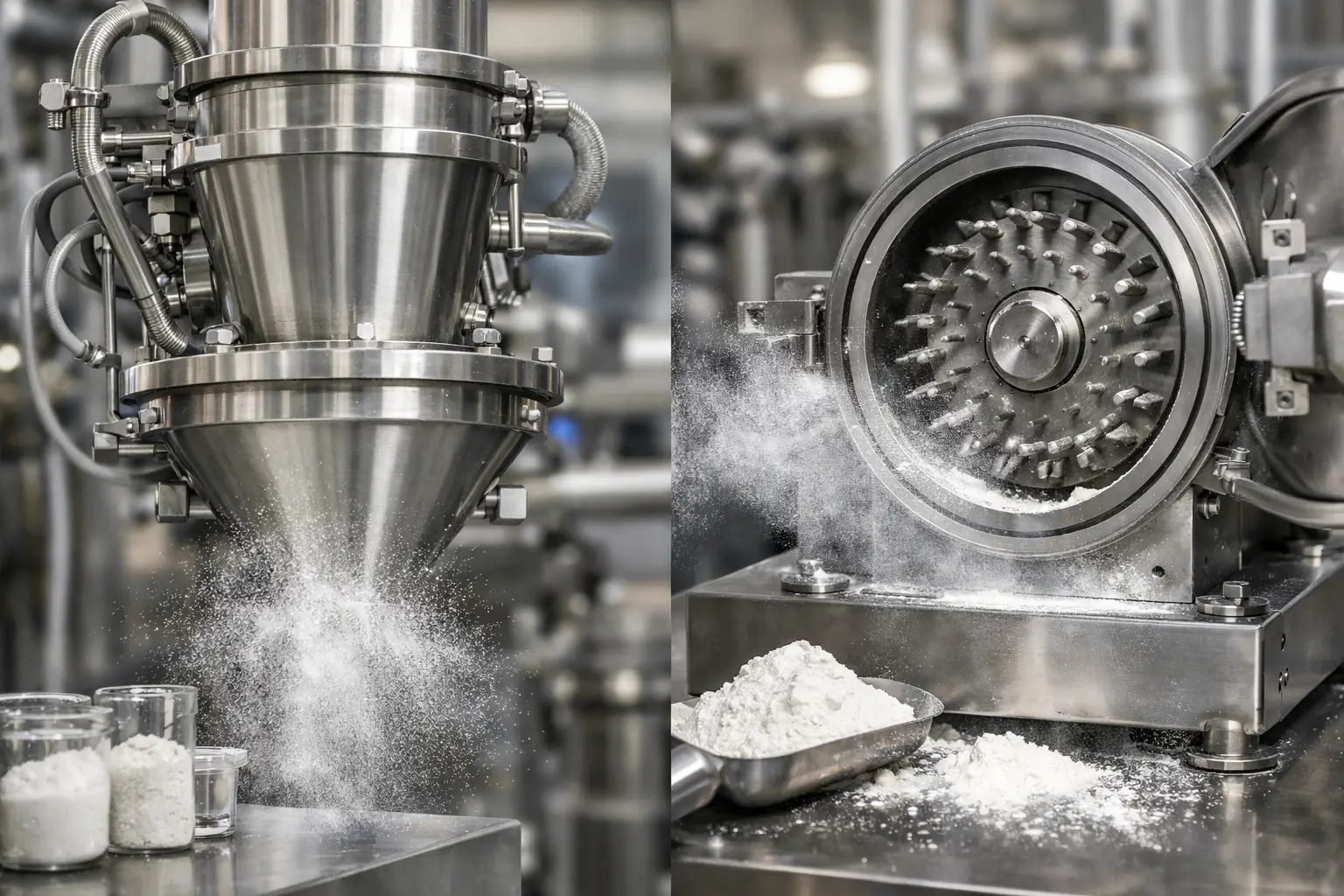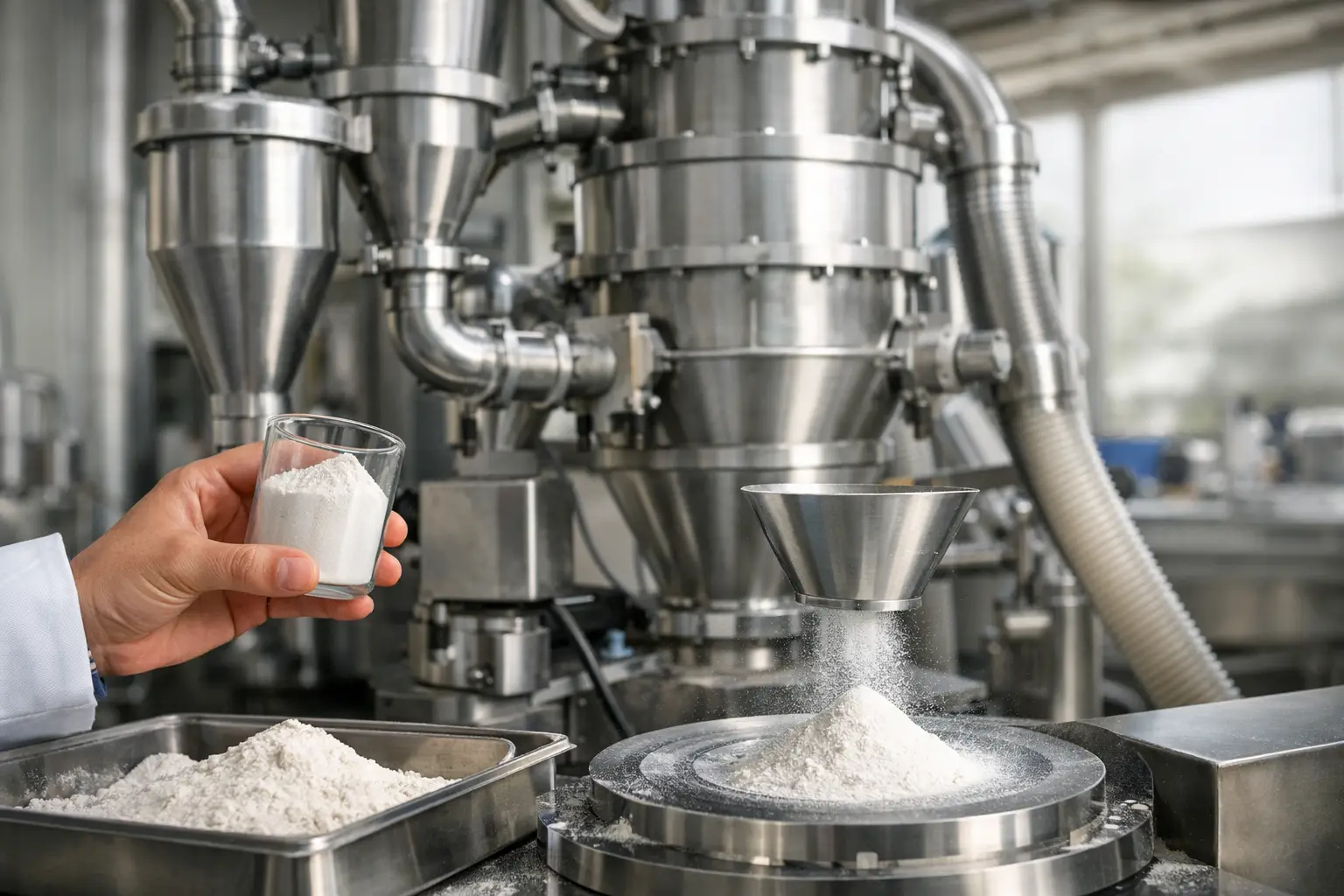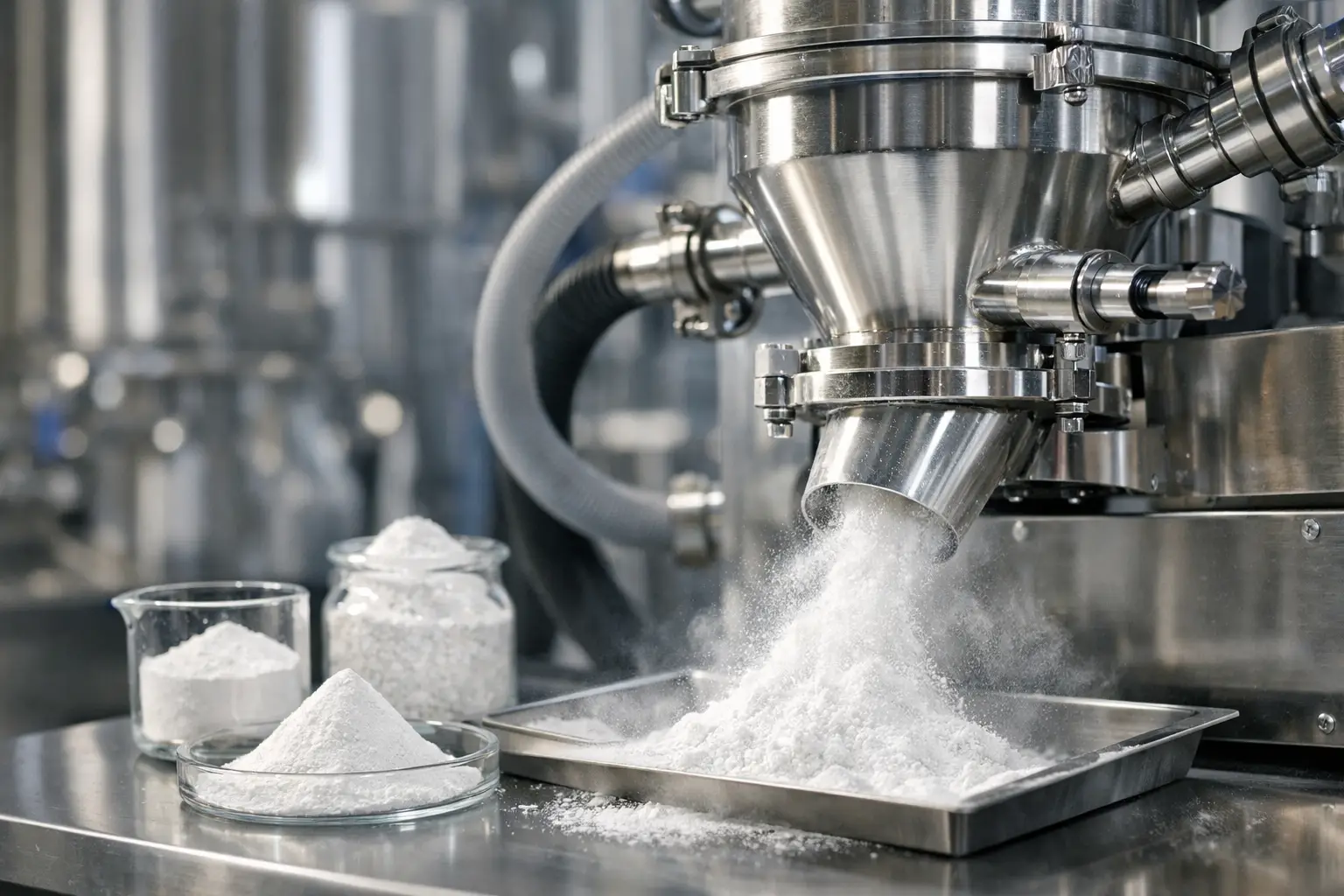
A micronization decision usually looks straightforward on paper until the first production campaign exposes the real constraints. A material that behaved well in lab trials may agglomerate at higher feed rates. A target particle size may be achievable, but only with yield loss, higher energy use, or cleaning complexity that slows batch changeover. That is why selecting pharmaceutical micronization equipment is less about chasing the smallest possible particle and more about building a process that performs consistently under actual manufacturing conditions.
What pharmaceutical micronization equipment must deliver
In pharmaceutical processing, micronization is often tied directly to bioavailability, blend uniformity, dissolution performance, and downstream manufacturability. The equipment has to reduce particle size while protecting product integrity and supporting strict requirements for contamination control, repeatability, and validation.
That creates a more demanding selection process than a simple size reduction project in a general industrial setting. Engineers and operations teams have to evaluate not only particle size distribution, but also heat generation, material sensitivity, electrostatic behavior, dust containment, wear resistance, cleaning access, and how the equipment will integrate with feeding, collection, and containment systems.
For some products, a narrow top size is the main objective. For others, preserving crystal structure or limiting fines matters more than pushing toward the lowest median particle size. The right answer depends on the formulation, the throughput target, and the quality attributes that actually affect product performance.
Common types of pharmaceutical micronization equipment
Jet mills
Jet mills are often the first technology considered for pharmaceutical micronization because they can produce very fine particles with no moving parts in the grinding chamber. Size reduction occurs through high-velocity particle-to-particle collision, which helps reduce mechanical contact and can support lower contamination risk.
They are especially well suited for heat-sensitive materials and applications that require fine particle distributions in the low micron range. That said, jet milling is not automatically the best fit for every pharmaceutical product. Feed characteristics, moisture sensitivity, required throughput, and compressed gas consumption all affect whether the process is practical at scale.
Air classifier mills
Air classifier mills combine impact milling with internal classification, allowing operators to control top size more precisely than with simpler impact systems. In pharmaceutical and related fine powder applications, they can be a strong fit when the target is fine grinding with tighter control over oversized particles.
They are often chosen when manufacturers need more throughput flexibility than a jet mill may offer, but still require controlled particle size performance. The trade-off is that mechanical contact inside the mill means wear, heat, and material sensitivity must be considered carefully.
Pin mills and other impact-based systems
Pin mills can be effective for certain pharmaceutical ingredients, intermediates, and excipients where the target size is fine but not necessarily in the extreme micron range. They are generally valued for high throughput and straightforward operation.
However, they are application dependent. If the product is sticky, highly heat sensitive, or vulnerable to smear and buildup, a pin mill may create more process headaches than value. This is where material behavior matters more than equipment category labels.
Cryogenic systems for difficult materials
Some pharmaceutical compounds resist conventional micronization because they soften, melt, or deform under process heat. In those cases, cryogenic grinding can shift the material into a more brittle state and make size reduction possible without excessive degradation.
Cryogenic systems add complexity and operating cost, so they are rarely the default choice. But for temperature-sensitive materials, they can be the difference between an unstable process and a repeatable one.
How to evaluate pharmaceutical micronization equipment for real production
Start with the material, not the machine
The most reliable equipment decisions begin with a clear understanding of the product. Friability, hardness, moisture content, bulk density, flow behavior, thermal sensitivity, explosibility, and tendency to agglomerate all influence micronization performance.
This is also where many projects go off track. A specification may call for a certain D50 or top size, but without understanding how the material behaves under stress, the selected mill may hit the number while creating other problems – degraded morphology, poor yield, difficult discharge, or unstable continuous operation.
Focus on particle size distribution, not a single point
A single target number does not tell the full story. In pharmaceutical processing, D10, D50, and D90 values often matter together because they influence dissolution, blend behavior, content uniformity, and downstream processing.
A system that delivers an acceptable median size but allows too many coarse particles or excessive fines may create issues later in the process. The best pharmaceutical micronization equipment is the equipment that reaches the required distribution consistently, not just the smallest average particle size during an optimized trial.
Account for containment and contamination control
Containment is not a secondary feature in pharmaceutical environments. Depending on the material and exposure limits, the micronization system may need to support closed transfer, dust-tight operation, integrated collection, and cleaning procedures that align with facility protocols.
Contamination control is just as important. Construction materials, surface finish, wear components, seals, and system design all affect the risk of introducing foreign material into the product stream. For potent compounds or high-purity applications, those details have direct production and compliance implications.
Evaluate throughput at scale
Lab success does not guarantee plant performance. Feed consistency, gas supply, classifier settings, system pressure balance, and material loading can all shift as throughput increases.
That is why scalability should be examined early. The useful question is not simply whether a mill can micronize the material, but whether it can do so at the required production rate with acceptable yield, energy use, uptime, and operator involvement. In many cases, the best equipment choice is the one that balances fineness with stable output rather than maximizing one metric at the expense of the whole process.
Why system design matters as much as the mill itself
Pharmaceutical micronization equipment should be evaluated as part of a complete process, not as a standalone machine. Feeding, air handling, dust collection, product conveying, instrumentation, controls, and discharge design all affect final performance.
An underspecified feeder can create surging that destabilizes particle size. Poor collection efficiency can reduce yield and create housekeeping issues. Inadequate control integration can make it difficult to maintain repeatability from batch to batch. These are not peripheral concerns – they are often the difference between a capable machine and a reliable production system.
For that reason, manufacturers often benefit from working with an engineering-driven supplier that can assess the full process path. DP Mills approaches micronization projects with that broader view, which is especially valuable when materials are difficult, specifications are tight, or future scale-up is already part of the plan.
Trade-offs that should shape the decision
There is no universal best option in pharmaceutical micronization. Jet mills may offer lower contamination risk and finer grinding, but utility costs and throughput limitations can change the economics. Impact-based systems may support stronger throughput, but can introduce more heat and wear. Cryogenic processing can solve difficult material challenges, but with added complexity.
Cleaning and changeover also matter. A highly efficient micronization setup may lose value if it requires excessive downtime between products. Likewise, a system optimized for a single compound may become restrictive in a multi-product environment where flexibility matters as much as peak performance.
Procurement teams often focus on capital cost first, while operations teams focus on uptime and maintenance. R&D may prioritize particle size capability. Quality may focus on cleanability and contamination control. The best equipment decisions bring those priorities together early rather than treating them as separate conversations.
What a strong selection process looks like
A disciplined selection process usually includes application review, material testing, target particle size analysis, throughput evaluation, and system-level design planning. It also includes honest discussion about what the process can and cannot do.
That last point matters. If a supplier promises every combination of ultra-fine size, high throughput, low energy use, simple cleaning, and zero process complexity, caution is warranted. In micronization, performance always involves trade-offs. The goal is not a theoretical ideal. It is a process that delivers repeatable pharmaceutical production with controllable risk and long-term operating value.
When manufacturers frame the decision that way, they tend to choose better. The right micronization system is not the one with the most impressive brochure claims. It is the one engineered around the product, the facility, and the realities of day-to-day production. That is where real process performance starts.