Recycling PLC Boards: Turning Industrial Brains into Circular Value
Recycling PLC boards are the nerve centers of industrial automation. They interpret sensor data, execute logic, and command motors, valves, heaters, and actuators with relentless precision. As automation has exploded across industries, so has the volume of obsolete, damaged, or upgraded PLC boards entering the recycling stream.
Unlike consumer electronics, PLC boards are densely engineered, material-rich, and thermally sensitive. Recycling them profitably requires far more than brute-force shredding. It requires controlled size reduction, thermal discipline, and an understanding of how materials behave when stressed.
This is where modern recyclers separate themselves from scrapyards—and where DP Mills earns its reputation.
What PLC Boards Are Used For (and Why They’re Everywhere)
PLC boards are found across nearly every industrial sector:
In manufacturing, they control assembly lines, robotics, packaging systems, and quality inspection equipment.
In food & beverage, PLCs manage mixing, cooking, chilling, filling, and CIP cycles where timing and temperature matter.
In pharmaceuticals, they ensure batch integrity, validation, and compliance with strict process controls.
In energy and utilities, PLC boards run substations, turbines, water treatment plants, and grid infrastructure.
In transportation and logistics, they manage conveyors, sortation systems, and automated warehouses.
Because PLCs are designed for reliability and long service life, they are built with high-grade materials: multilayer copper traces, gold-plated contacts, solder alloys, fiberglass epoxy substrates, and embedded components containing precious and rare metals.
That’s exactly why recyclers want them—and exactly why careless processing destroys value.
The Hidden Challenge of Recycling PLC Boards: Heat
PLC boards are not forgiving. Excess heat during size reduction creates three major problems:
First, thermal degradation. Epoxy resins soften, smear, and rebind particles, making downstream separation inefficient.
Second, metal loss. Copper can oxidize, solder alloys can melt and fuse, and fine precious-metal fractions can be lost or contaminated.
Third, safety and emissions. Overheating releases fumes and particulates that complicate compliance and operator safety.
Traditional shredders and high-RPM grinders generate heat through friction. They work fast—but they work blind.
Modern PLC board recycling demands controlled energy input, not brute force.
How DP Mills Answers the Needs of PLC Board Recyclers
DP Mills approaches PLC board recycling the way engineers approach sensitive materials: with discipline, control, and options.
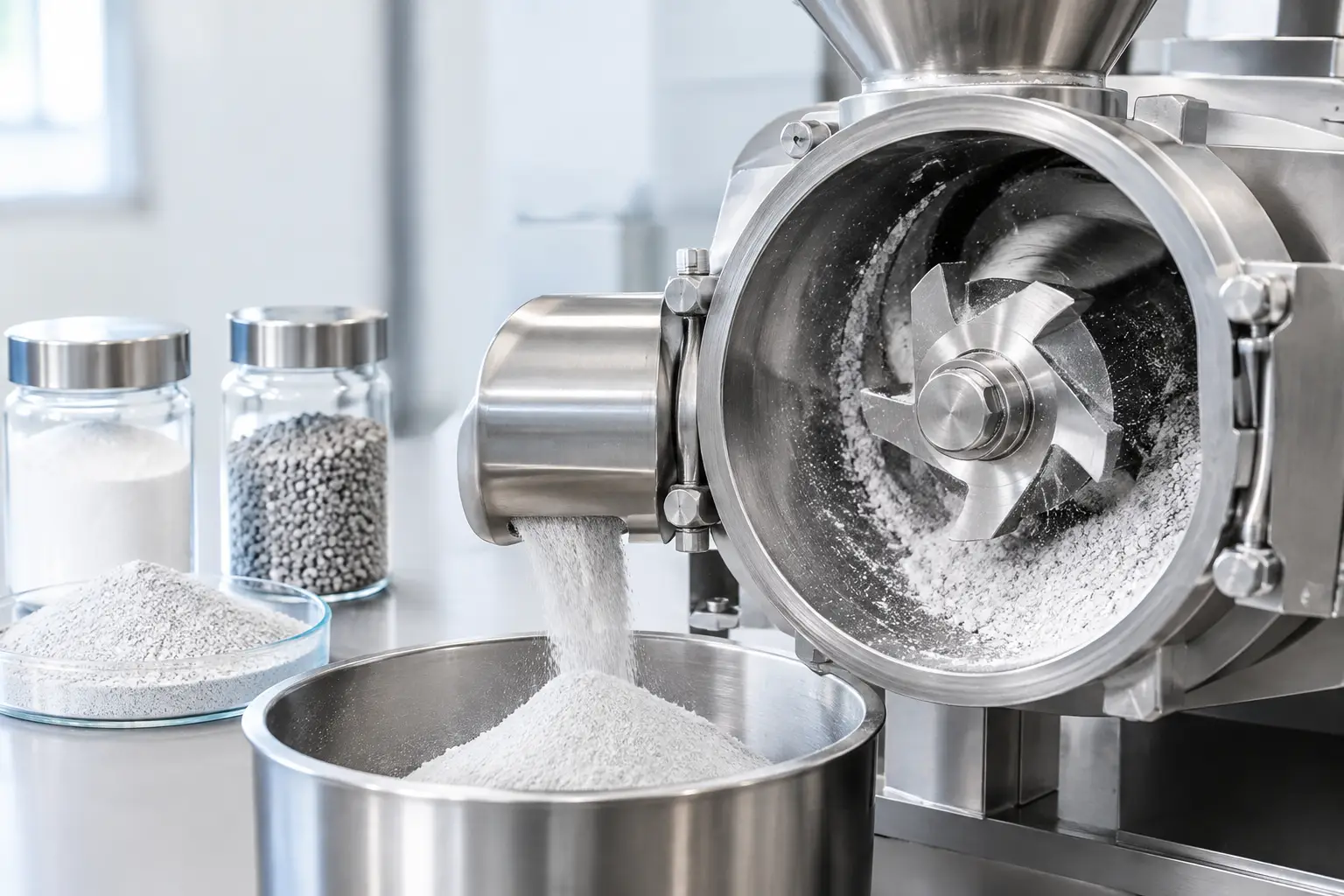
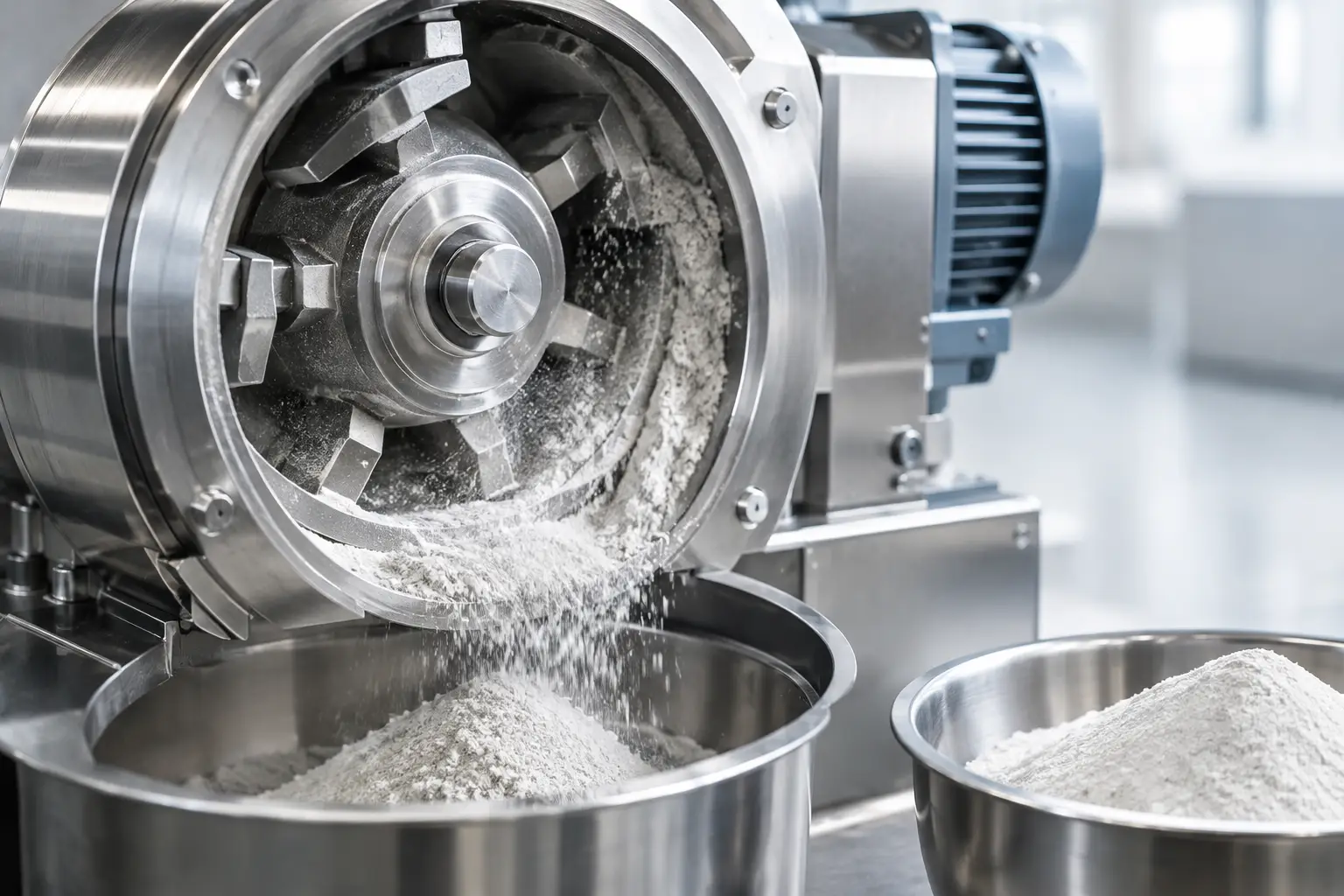
Precision Size Reduction Without Thermal Abuse
DP Mills systems are designed to fracture materials along natural failure planes rather than melting them through friction. This means:
• Lower RPM options that minimize heat buildup
• Optimized rotor and impact geometries for brittle electronic substrates
• Controlled residence time so material exits the mill before heat accumulates
The result is clean liberation of copper, fiberglass, solder, and component metals—without smearing or fusion.
Heat Control as a Design Principle, Not an Afterthought
Heat control isn’t an accessory at DP Mills. It’s baked into the system architecture.
Depending on the recycler’s throughput and material profile, DP Mills can integrate:
• Air-cooled milling to remove friction heat continuously
• Inert or chilled gas environments for extreme thermal sensitivity
• Cryogenic-assisted milling for high-value or resin-heavy PLC boards
By keeping temperatures below degradation thresholds, recyclers preserve material integrity and improve downstream separation efficiency—especially for eddy current, air classification, and density-based systems.
Modular Milling for Multi-Stage Recovery
PLC boards benefit from staged processing rather than one violent pass.
DP Mills supports recyclers with:
• Coarse size reduction to break boards without pulverizing metals
• Intermediate milling to liberate copper and solder fractions
• Fine milling for precious-metal-bearing fines when required
This modular approach lets recyclers tailor their process to market demand—whether selling copper-rich fractions, mixed metal concentrates, or ultra-fine recovery streams.
Industries That Benefit from Proper PLC Board Recycling
Effective PLC board recycling isn’t just about reclaiming metals. It feeds entire industrial ecosystems.
Electronics manufacturers recover raw materials for new components.
Battery and energy sectors reuse refined metals in storage and grid technologies.
Mining and metallurgy benefit from secondary feedstocks with lower environmental cost.
Governments and utilities meet sustainability and ESG targets without sacrificing performance.
Recyclers who invest in controlled milling aren’t just processing waste—they’re stabilizing supply chains.
Leading Recyclers Don’t Chase Throughput—They Chase Yield
The old mindset in recycling was simple: faster equals better. That thinking leaves money on the floor.
High-performing PLC board recyclers focus on:
• Material purity
• Predictable particle size distributions
• Minimal thermal damage
• Consistent downstream separation
DP Mills systems are engineered around yield optimization, not just tons per hour. Over time, that difference shows up in recovered metal percentages, resale prices, regulatory compliance, and customer trust.
Why DP Mills Is a Strategic Partner, Not Just a Machine Supplier
DP Mills doesn’t sell “a mill.” It delivers process thinking.
Each PLC board recycling project is evaluated based on:
• Board composition and resin content
• Target particle sizes
• Heat sensitivity thresholds
• Integration with classifiers, separators, and dust systems
• Future scalability
That’s why DP Mills equipment shows up in facilities that are expanding, not replacing machines every few years. The systems grow with the recycler’s ambition.
The Bigger Picture: PLC Boards as Urban Ore
PLC boards are industrial fossils of progress—dense, valuable, and too important to waste. Recycling them correctly requires restraint, intelligence, and respect for materials science.
DP Mills brings that mindset to the recycling floor.
In a world racing toward automation, electrification, and sustainability, the recyclers who win won’t be the loudest or fastest. They’ll be the ones who understand that controlling heat is controlling value.
And that’s where DP Mills quietly leads.