Protein Milling and Mechanical Protein Fractionation
How Air Classifier Milling Is Transforming Plant Protein Processing
The global demand for plant-based protein ingredients is accelerating at an unprecedented rate. From plant-based meat alternatives to sports nutrition and functional foods, manufacturers around the world are searching for efficient ways to produce high-quality protein ingredients from agricultural crops.
Traditional protein extraction methods often rely on wet processing systems that involve water, chemical treatments, or complex separation equipment. While effective, these systems can be expensive, energy intensive, and difficult to scale.
A growing number of ingredient manufacturers are turning to mechanical protein fractionation, a process that separates protein from starch using precision milling and aerodynamic particle classification.
This approach, often called protein shifting or dry fractionation, allows processors to produce valuable protein concentrates while reducing process complexity.
DP Pulverizers has developed advanced air classifier milling and particle classification systems designed specifically for this application.
Understanding Protein in Plant Materials
Most plant-based protein sources contain a mixture of components that must be separated before the protein can be used in food applications.
Typical crops used for protein production include:
Soybeans
Peas
Lentils
Chickpeas
Rice
Beans and other pulses
Inside these crops, proteins exist alongside starch granules, fiber, and oils within the cellular structure of the plant.
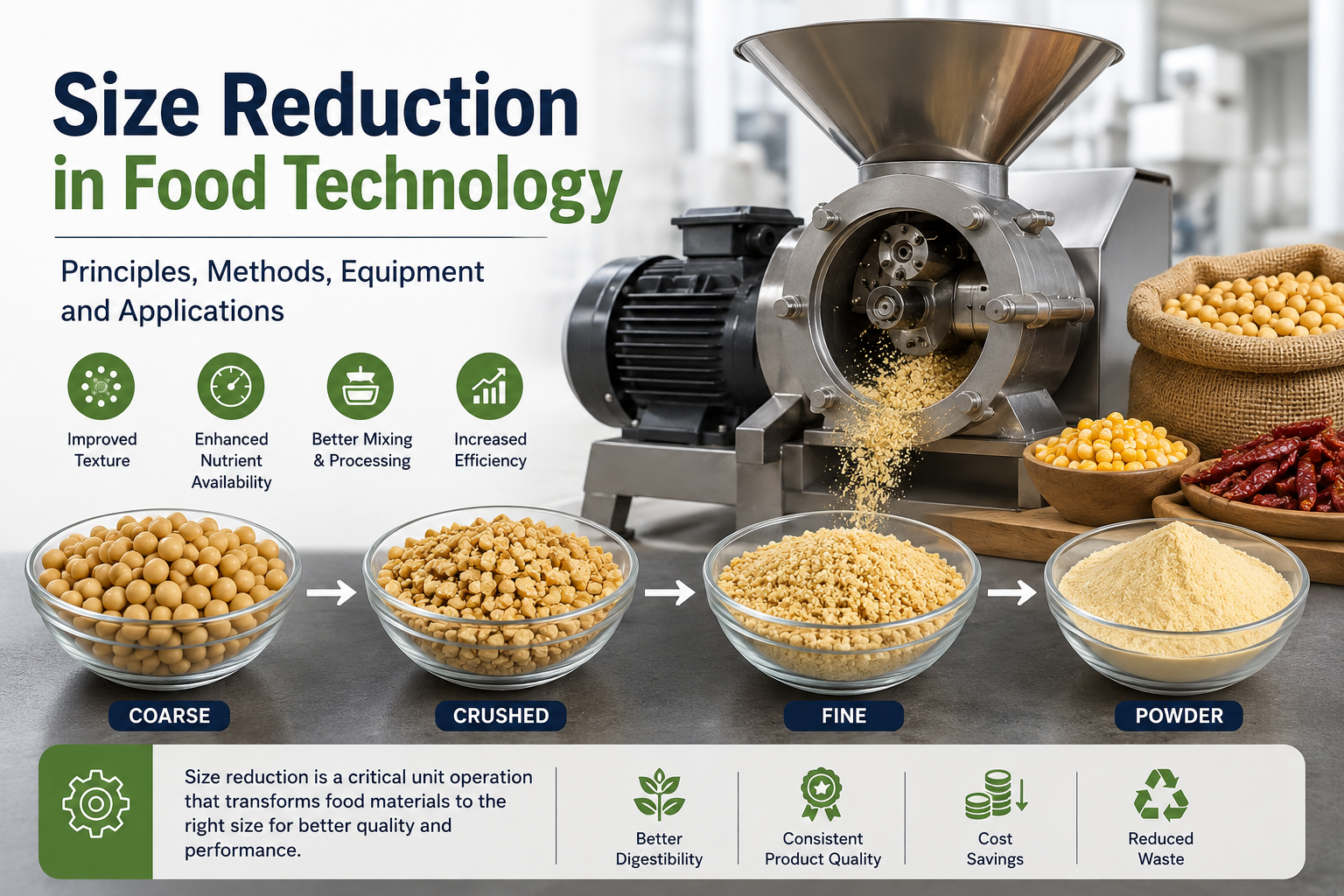
Before protein can be separated, the plant material must first undergo fine particle size reduction.
Milling breaks down the plant cell structure and liberates protein particles from the surrounding starch matrix.
Once the material is finely ground, the components begin to behave differently when exposed to controlled airflow.
This difference in behavior makes it possible to separate the particles using air classification technology.
What Is Mechanical Protein Fractionation?
Mechanical protein fractionation is a dry processing technique that separates protein-rich particles from starch-rich particles using physical forces rather than chemical extraction.
The process relies on two key principles:
Particle size reduction
Aerodynamic particle separation
During milling, the plant material is reduced to extremely fine particles. At this stage, protein particles and starch particles begin to exhibit different densities and aerodynamic characteristics.
When the powder is introduced into an air classifier, controlled airflow separates the particles into different streams.
Fine particles rich in protein move along one path, while heavier starch particles follow another.
This results in two valuable ingredient streams:
A protein-rich fraction used for protein powders and food ingredients.
A starch-rich fraction used in food processing, baking, or industrial applications.
This dry fractionation method allows manufacturers to create valuable ingredients without relying on complex wet extraction processes.
The Role of Air Classifier Mills in Protein Processing
One of the most effective tools for mechanical protein fractionation is the Air Classifier Mill (ACM).
Air classifier mills combine high-speed grinding with integrated particle classification to produce extremely fine and uniform powders.
Inside the mill, a rotor equipped with grinding elements rotates at high speed. As raw material enters the grinding chamber, it is subjected to intense impact and shear forces.
At the same time, airflow carries particles through the milling system into a classification zone.
Particles that reach the desired size exit the system, while larger particles are returned to the grinding chamber for further reduction.
This integrated milling and classification process allows precise control over particle size distribution, which is critical for efficient protein separation.
The Protein Shifting Process
A typical protein fractionation system consists of several integrated process stages.
Raw plant materials are first introduced into a controlled feeding system.
The material enters an air classifier mill, where high-speed grinding reduces the particle size and liberates the protein structures.
The finely milled powder is then transported through an air stream into a high-efficiency air classifier.
Inside the classifier, particles are separated according to their aerodynamic behavior.
The result is two product streams.
A fine fraction containing higher protein concentration.
A coarse fraction containing higher starch concentration.
These product streams are collected independently and can be used in a wide range of food and ingredient applications.
Applications of Mechanical Protein Fractionation
Protein shifting technology is used across many sectors of the food industry.
Pea Protein Production
Pea protein is one of the fastest-growing ingredients in plant-based food production. Dry fractionation allows processors to separate pea protein from starch efficiently while preserving protein functionality.
Soy Protein Processing
Soy remains one of the most widely used plant proteins. Mechanical fractionation provides an alternative method for producing soy protein concentrates without complex wet extraction systems.
Chickpea and Lentil Protein
Many legumes contain valuable protein structures that can be recovered through precision milling and classification.
These proteins are used in plant-based foods, protein powders, and functional food formulations.
Rice Protein Production
Rice protein is commonly used in hypoallergenic food products and sports nutrition supplements.
Air classifier milling provides a method for separating rice protein from starch components.
Advantages of Dry Protein Fractionation
Mechanical protein fractionation offers several important advantages compared to traditional wet extraction processes.
Reduced water consumption
Simplified processing systems
Lower energy requirements
No chemical extraction agents
Higher overall process efficiency
Improved sustainability
Because the process relies on mechanical and aerodynamic separation, it is particularly attractive for manufacturers seeking clean-label production technologies.
DP Pulverizers Solutions for Protein Milling
DP Pulverizers has more than six decades of experience designing advanced size reduction and air classification systems.
The DP Proteinova Protein Shifting System integrates precision air classifier milling with high-performance particle classification to deliver efficient protein separation.
These systems are engineered to provide:
Consistent particle size reduction
Efficient protein-starch separation
High production reliability
Energy-efficient operation
Food-grade processing capability
By combining advanced milling technology with expert process design, DP Pulverizers helps manufacturers unlock the full potential of plant-based protein materials.
The Future of Protein Processing
As global demand for plant-based protein continues to grow, processing technologies must evolve to support higher production volumes and improved ingredient quality.
Mechanical protein fractionation using air classifier milling and aerodynamic separation is emerging as one of the most promising approaches for producing high-value protein ingredients.
For manufacturers seeking efficient and scalable protein processing systems, DP Pulverizers provides the technology and expertise needed to support the next generation of protein production.