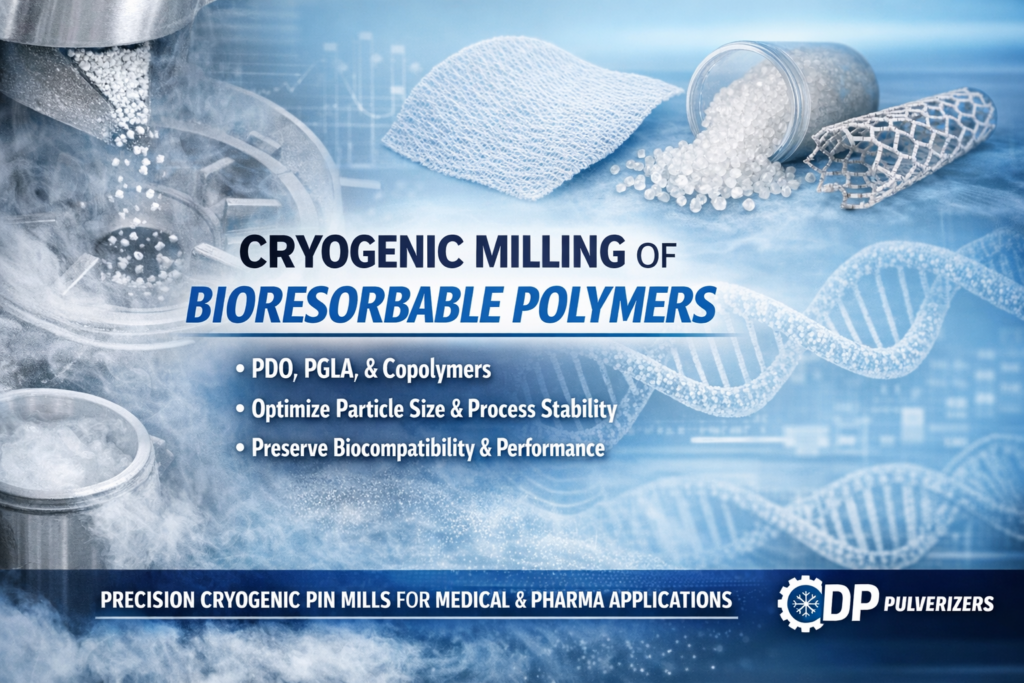
Cryogenic Milling of Bioresorbable Polymers: The Complete Guide to Processing PDO, PGLA & Advanced Copolymers
The rapid growth of bioresorbable polymers is transforming industries ranging from medical devices and pharmaceuticals to advanced materials and additive manufacturing. These materials—engineered to degrade safely within the body—offer unmatched advantages in biocompatibility, controlled degradation, and mechanical performance.
However, when it comes to particle size reduction, bioresorbable polymers present one of the most challenging milling applications in the world.
This is where cryogenic pin milling becomes not just beneficial—but essential.
What Are Bioresorbable Copolymers?
Bioresorbable polymers such as:
- Polydioxanone (PDO / Dioxaprene®)
- Poly(glycolide-co-lactide) (PGLA / PLGA)
- Caprolactone-based copolymers
- Trimethylene carbonate (TMC) blends
are widely used because they can break down into non-toxic byproducts within the human body while maintaining mechanical integrity during their functional life.
Typical Applications
- Implantable medical devices (stents, sutures, scaffolds)
- Drug delivery systems
- Tissue engineering and regenerative medicine
- 3D printing / additive manufacturing powders
- Controlled-release pharmaceutical systems
In fact, these materials are routinely cryogenically milled into powders for advanced applications like additive manufacturing and composite blending.
What Form Do These Materials Come In?
Before milling, bioresorbable polymers are typically supplied as:
- Granules or pellets
- Extruded strands
- Electrospun fibers or fabrics
- Films or sheets
- Bulk polymer blocks
Each form presents completely different milling challenges—especially electrospun materials, which behave more like soft textile fibers than traditional solids.
Why Bioresorbable Polymers Are So Difficult to Mill
Let’s be blunt—these materials fight you every step of the way.
1. Elasticity & Ductility
At ambient conditions, these polymers are:
- Soft
- Flexible
- Energy-absorbing
Traditional milling fails because ductile polymers do not fracture—they deform.
2. Low Glass Transition Temperature (Tg)
Many of these materials have relatively low Tg values, meaning:
- They soften quickly under mechanical energy
- Heat from milling causes smearing, melting, and agglomeration
3. Thermal Sensitivity
These are not commodity plastics:
- Heat can degrade molecular weight
- Alters resorption rates
- Impacts mechanical integrity of final medical devices
4. Fiber & Fabric Behavior
Electrospun materials introduce:
- Low bulk density
- High surface area
- Elastic rebound
- Wrapping and clogging
5. Narrow Temperature Window
The biggest challenge is control:
- Too warm → smearing, agglomeration
- Too cold → brittle fracture, but risk of damage
Maintaining the correct temperature range relative to Tg is the single biggest challenge in processing polymeric biomaterials.
Why Cryogenic Milling Is the Only Real Solution
Cryogenic milling fundamentally changes the game.
By introducing liquid nitrogen (-196°C):
- Polymers become brittle instead of elastic
- Heat generation is suppressed
- Particle size reduction becomes predictable and controllable
Cryogenic grinding is widely used specifically because soft, flexible materials cannot be reduced to fine powders at ambient temperatures without cooling.
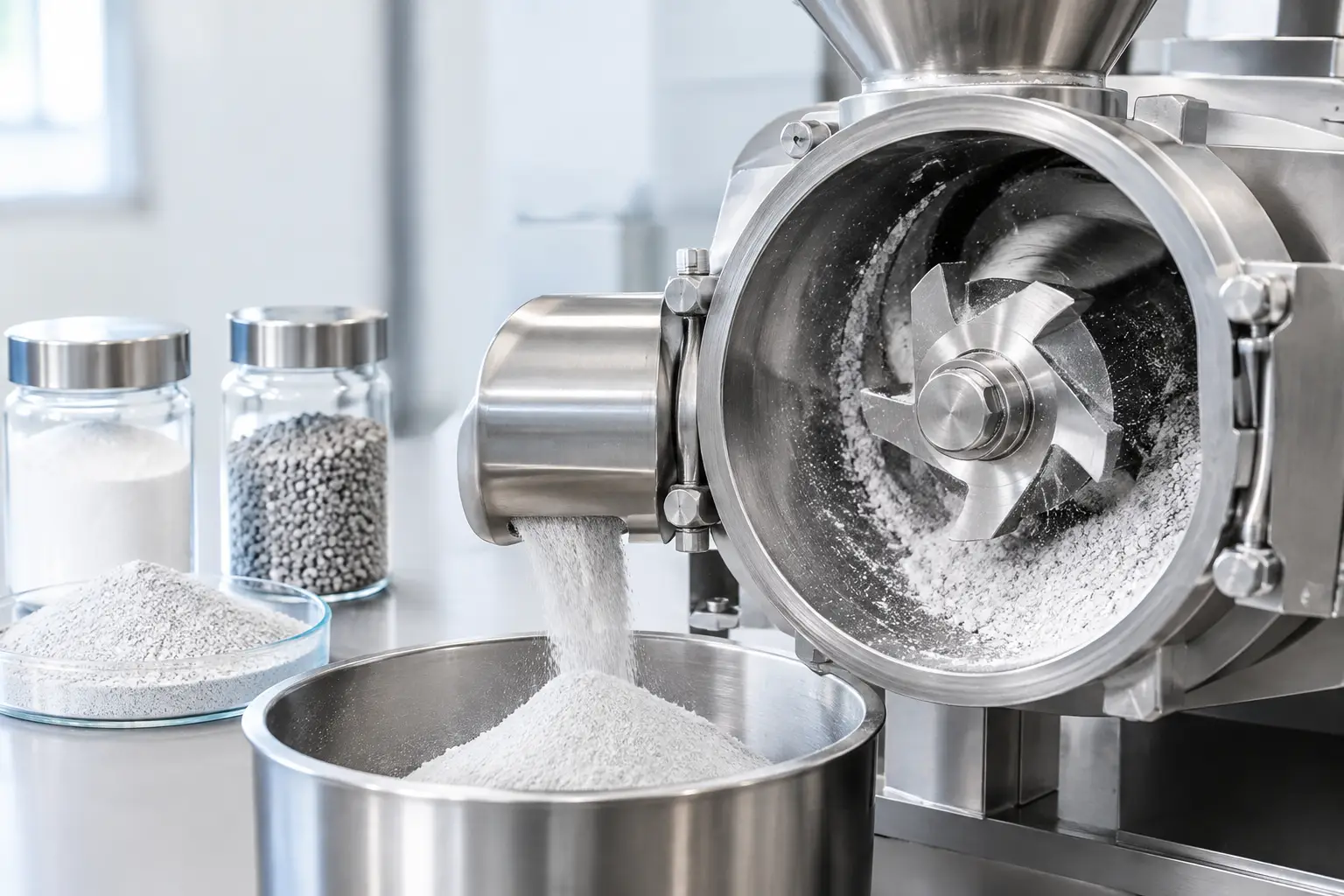
How DP Pulverizers Cryogenic Pin Mills Solve the Problem
This is where engineering separates suppliers from pretenders.
🔹 Controlled Embrittlement
We don’t just “freeze and smash.”
- Controlled LN₂ injection
- Temperature targeting relative to Tg
- Avoid overcooling and polymer damage
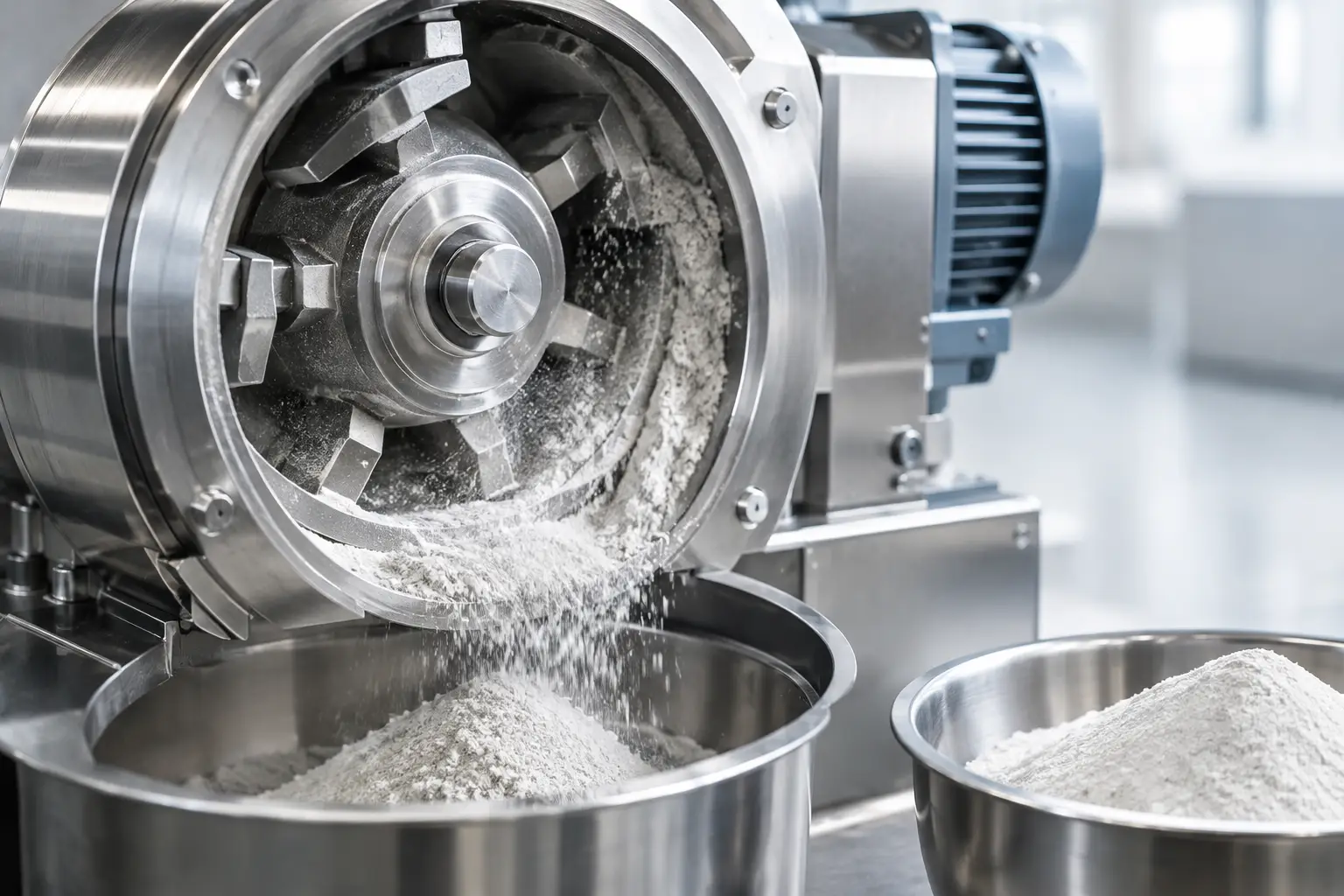
🔹 High-Speed Impact Milling (Pin Mill Design)
- Maximizes particle fracture
- Minimizes residence time
- Reduces thermal exposure
🔹 Pre-Cooling & Conditioning
- Critical for elastic feeds like PDO and PGLA
- Ensures uniform brittleness before milling
🔹 Nitrogen Efficiency Optimization
- Insulated systems
- Vapor utilization
- Controlled injection zones
🔹 Handling Difficult Forms
Especially important for:
- Electrospun fabrics
- Fibrous materials
- Low-density feeds
We engineer:
- Feed conditioning systems
- Densification strategies
- Anti-wrapping solutions
Real-World Milling Challenges (And How We Overcome Them)
❌ Smearing & Agglomeration
✔ Solved by cryogenic embrittlement
❌ Polymer Degradation
✔ Controlled temperature, minimal residence time
❌ Inconsistent Particle Size
✔ Stable milling temperature + high-speed impact
❌ Fiber Wrapping / System Fouling
✔ Engineered feed systems + pin geometry
❌ Poor Flowability Post-Milling
✔ Optimized PSD + downstream blending options
Target Particle Size Capabilities
With DP cryogenic pin mills:
- D90: 20–50 microns (typical)
- Sub-20 micron achievable with optimization
- Narrow PSD for pharmaceutical and AM applications
Who Uses Cryogenic Milling for Bioresorbable Polymers?
This is not a niche market anymore.
Key Industries:
- Medical device manufacturers
- Pharmaceutical companies
- Contract manufacturing organizations (CMOs)
- Biomaterials developers
- Additive manufacturing companies
- Research institutions
Why DP Pulverizers Leads in This Space
Most suppliers can sell you a mill.
Very few can make it work for bioresorbable polymers.
What sets DP apart:
- Deep understanding of polymer behavior vs temperature
- Experience with PDO, PGLA, PCL, and complex copolymers
- Integrated systems (feeding, milling, classification)
- Focus on repeatability, not just throughput
- Designed for scale-up from lab → pilot → production
The Bottom Line
Bioresorbable polymers are redefining modern manufacturing—but they demand precision processing.
If you try to mill them conventionally:
- You get heat
- You get agglomeration
- You get failure
If you mill them correctly:
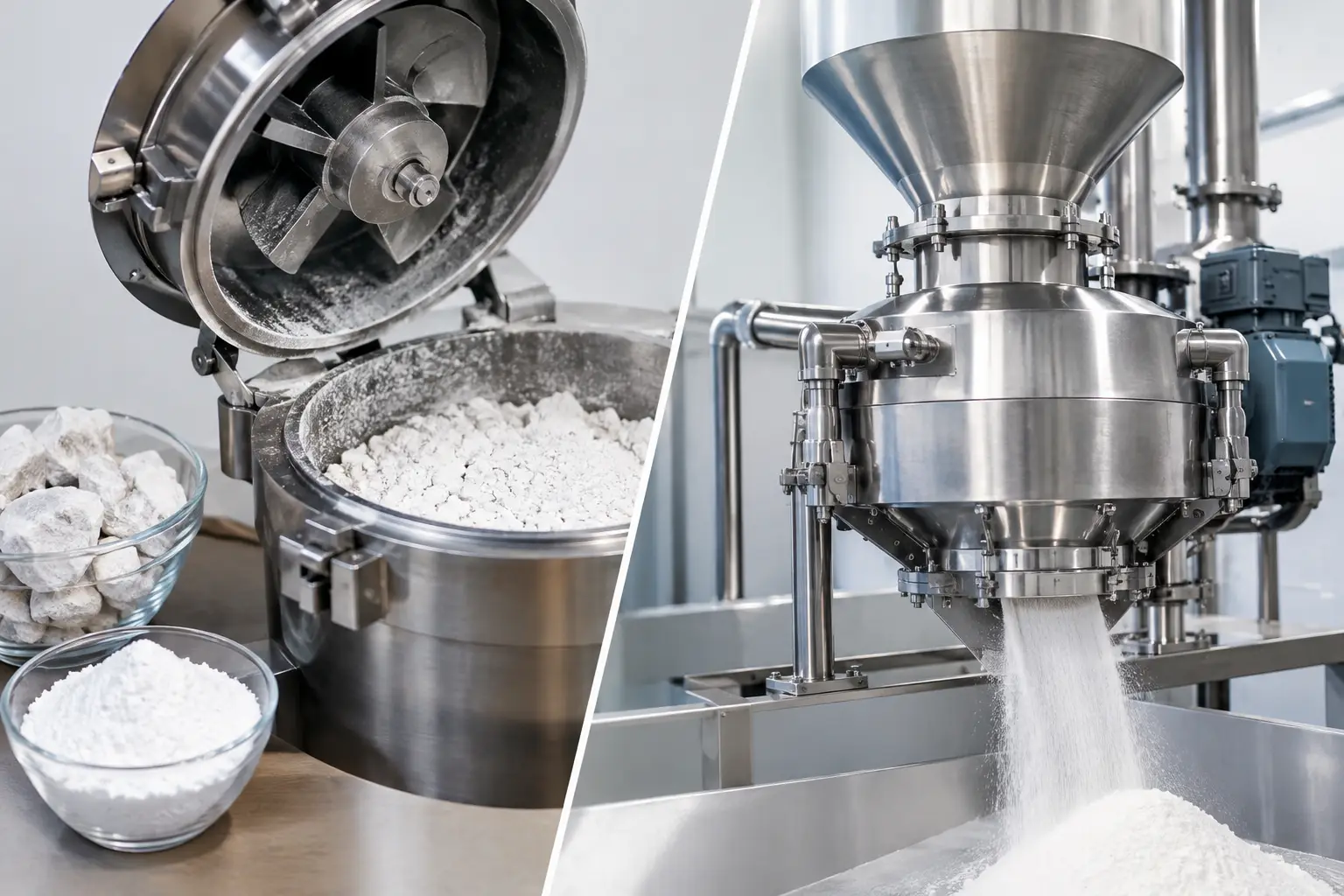
- You get uniform powders
- You preserve material integrity
- You unlock high-value applications
And that’s exactly what DP Pulverizers cryogenic pin mills are engineered to deliver.