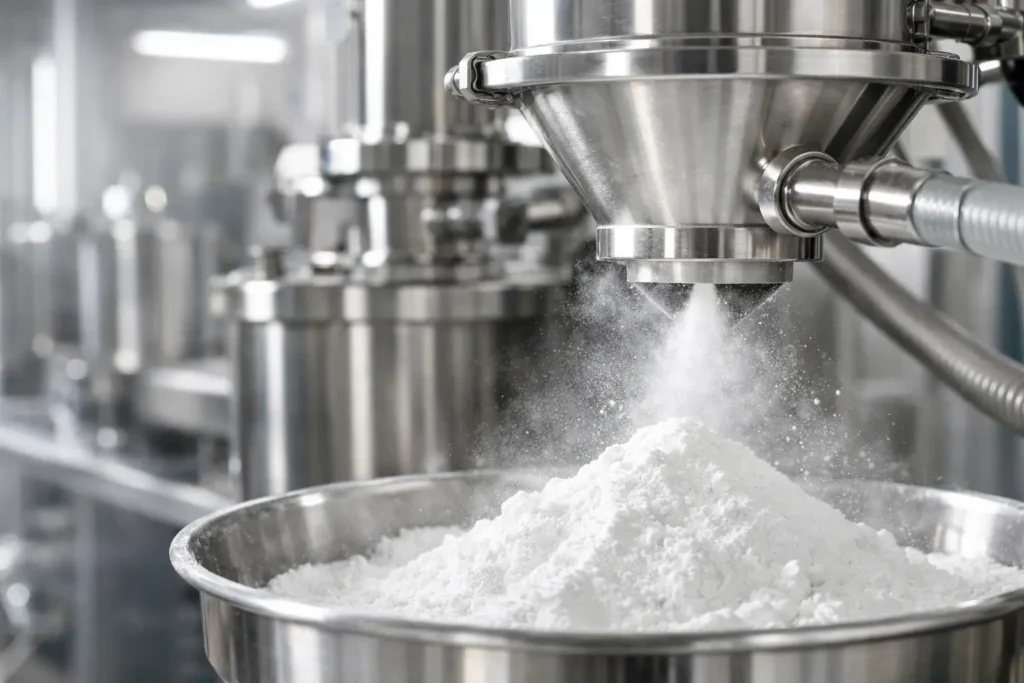
When a process spec calls for finer particle size without adding heat, metal wear, or broad particle distribution, jet milling micronization usually moves to the front of the conversation. That is especially true in pharmaceutical, battery, chemical, food, and advanced material production, where a few microns can change dissolution, flow, reactivity, packing density, or downstream yield.
Jet milling is not simply another way to make powder smaller. It is a high-energy fluid process that uses compressed gas to accelerate particles and reduce size through particle-to-particle impact. Because there are no high-speed mechanical grinding components in the grinding zone, the method is well suited for applications where contamination control, low temperature rise, and tight particle size targets matter.
What jet milling micronization actually does
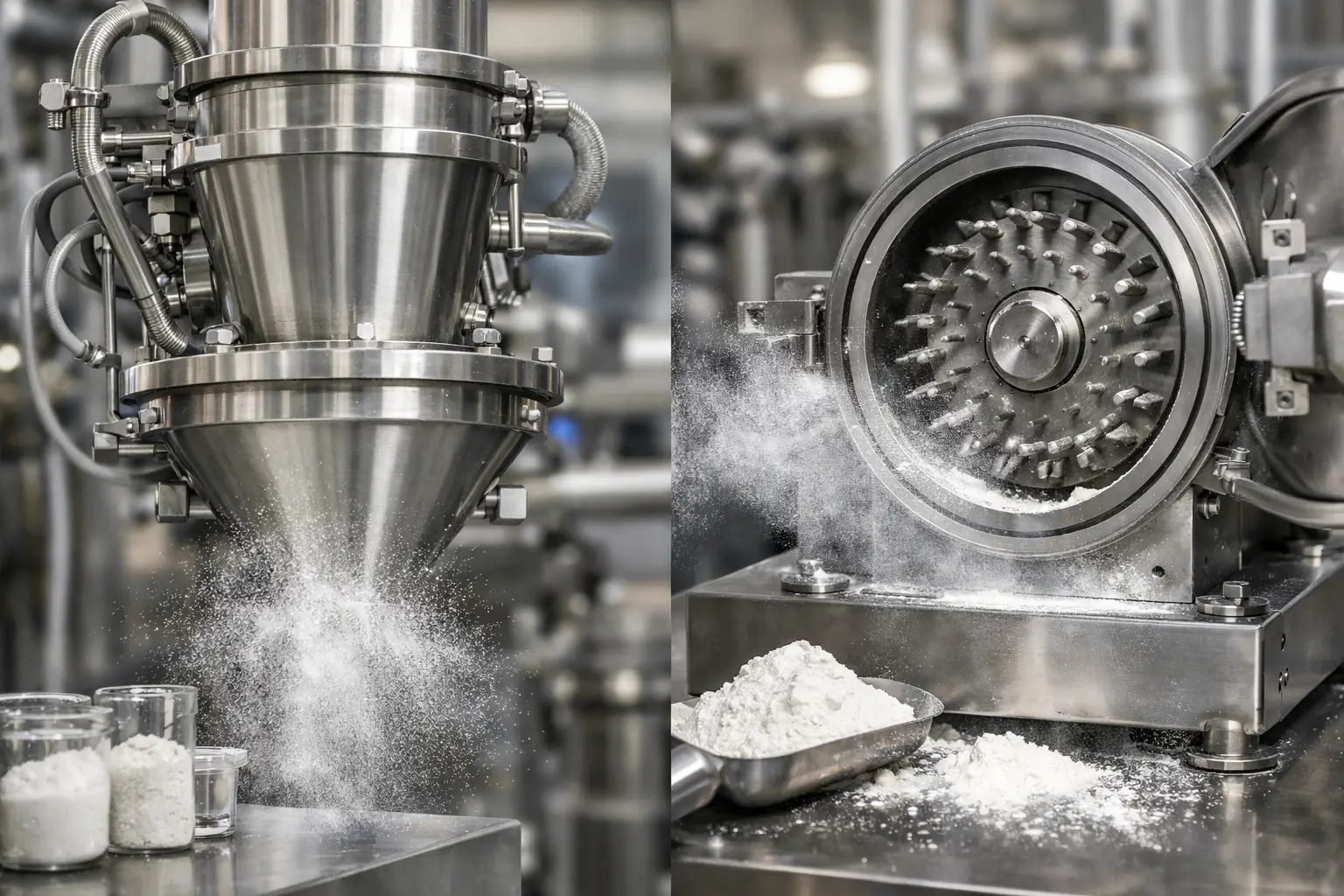
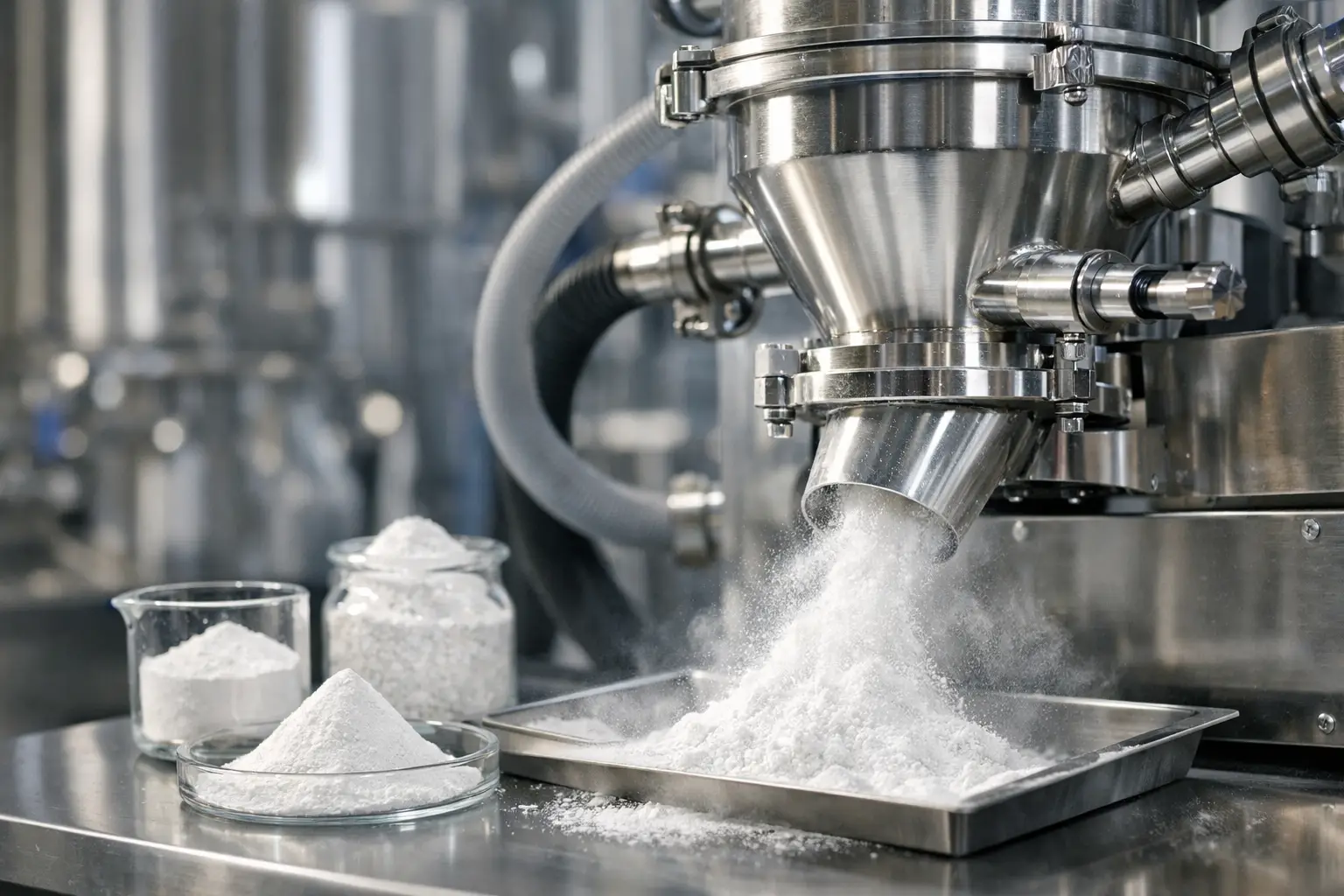
At its core, jet milling micronization is a dry size reduction process designed to produce fine to ultrafine powders, often in the low micron range. Instead of relying on hammers, pins, or other mechanical elements to strike material, a jet mill uses compressed air or gas introduced through nozzles to create a high-velocity spiral or opposed jet flow inside the milling chamber.
As particles accelerate in that gas stream, they collide with one another at high speed. Those collisions fracture the material and reduce particle size. In many designs, an internal classifier controls the top cut, allowing fine particles to exit while oversized material remains in the grinding zone until it reaches the required specification.
That mechanism matters because it changes the entire operating profile of the mill. Heat generation is generally lower than in many mechanical milling systems. Wear can also be reduced in the grinding zone, depending on material hardness, feed condition, and system design. For manufacturers handling heat-sensitive or contamination-sensitive products, those are not small advantages.
Why manufacturers choose jet milling micronization
The main reason is control. In many demanding applications, the goal is not just to make powder finer. It is to hit a defined particle size distribution consistently, protect material integrity, and do it at production scale without creating new process problems.
A well-engineered jet milling system can support narrow particle size distribution, lower processing temperatures, and cleaner operation compared with some conventional impact mills. That combination is valuable for active pharmaceutical ingredients, specialty chemicals, ceramics, battery materials, pigments, and nutraceutical ingredients where product behavior is tied directly to particle size.
Contamination control is another major factor. Since particle reduction occurs through inter-particle collision rather than direct contact with aggressive mechanical grinding tools, jet milling can reduce the risk of introducing unwanted wear material into the product stream. That said, contamination performance still depends on the full system design, including liner materials, nozzles, classifiers, product contact surfaces, seals, and the condition of the process gas.
There is also a practical production benefit. When the correct feed characteristics, gas conditions, and classifier settings are established, jet mills can deliver highly repeatable results. For operations under strict quality and compliance standards, repeatability often matters as much as the target size itself.
Where jet milling micronization fits best
Jet milling is highly effective, but it is not the right answer for every powder processing problem. It typically performs best when the application requires fine or ultrafine particle sizes, limited heat exposure, and tight control over the finished product.
In pharmaceuticals, it is commonly used for micronizing active ingredients to support bioavailability, blend uniformity, or inhalation performance. In battery and advanced materials, it can help control particle morphology and size distribution for electrochemical performance and consistency. In specialty chemicals and pigments, it is often selected when particle size affects dispersion, color development, reaction rate, or surface area.
Food and nutraceutical producers may also use jet milling when thermal sensitivity or product purity are major concerns. Still, the suitability depends on factors such as fat content, stickiness, moisture, and required throughput. Materials that smear, agglomerate easily, or carry high moisture may need upstream conditioning or a different milling approach altogether.
Key process variables that affect performance
Jet milling performance is shaped by more than the mill itself. Feed material behavior, system configuration, and operating parameters all influence the final result.
Feed size is one of the first considerations. Jet mills are designed for fine grinding, not coarse crushing. If feed is too large or inconsistent, pre-milling may be necessary to stabilize operation and improve efficiency. Material hardness and brittleness also matter because particle-to-particle collision works best when the material fractures cleanly under impact.
Moisture content can quickly become a limiting factor. Excess moisture may lead to agglomeration, poor flow, and lower classification efficiency. For hygroscopic or sticky materials, process gas conditioning or an alternate technology may be the better path.
Gas pressure and flow rate determine particle acceleration and therefore grinding energy. Higher energy can improve fineness, but it may also reduce throughput or increase operating cost. Classifier speed and geometry influence cut point and particle size distribution. Feed rate must be balanced carefully. Too much feed can overload the grinding zone and widen the distribution. Too little may reduce efficiency and available throughput.
This is where application knowledge becomes critical. The best result usually comes from tuning the entire process around the material, not from forcing the material through a standard set of mill conditions.
Jet milling micronization versus mechanical milling
For many manufacturers, the real question is not whether jet milling works. It is whether it is the best fit compared with an air classifier mill, pin mill, hammer mill, or another impact-based system.
Jet milling generally offers finer particle size capability and lower heat generation than most mechanical mills. It can also provide contamination advantages in applications where contact wear must be minimized. Those strengths make it attractive for high-value materials and tight specifications.
The trade-off is that jet milling can demand more energy per unit of production, particularly at very fine targets. Throughput may be lower than a mechanical mill processing the same material at a coarser specification. Compressed gas requirements also affect total operating cost. If the application does not require micron-scale performance, a different technology may deliver better economics.
That is why equipment selection should begin with the process objective, not with the machine category. If the product needs D50 or top-cut control in the low micron range, with low thermal stress and strong contamination control, jet milling often makes technical sense. If the target is less demanding, another mill may provide more throughput and lower cost.
System design matters as much as the mill
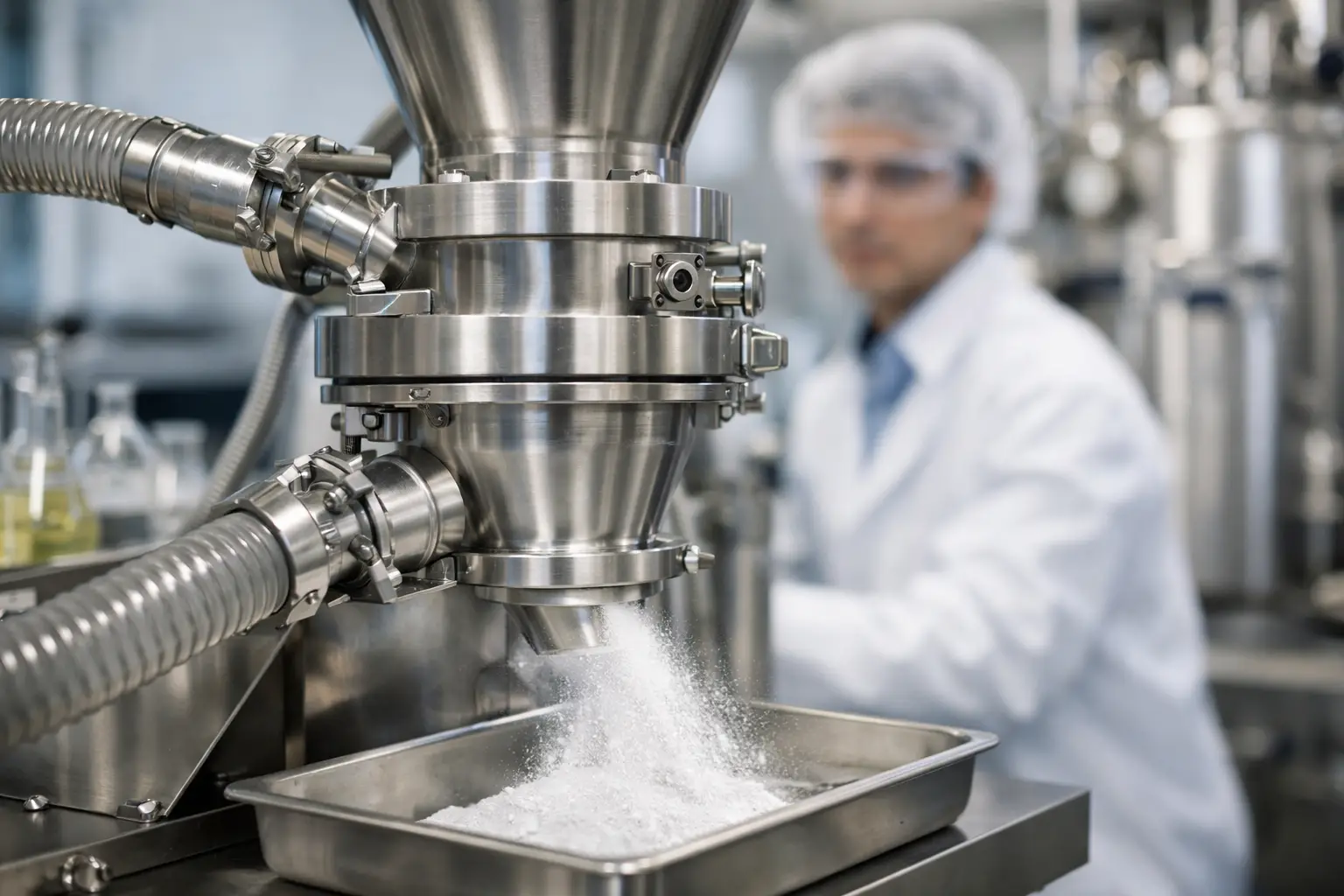
A jet mill does not operate in isolation. Real production performance depends on the full system, including feeding, air or gas handling, collection, controls, containment, and cleanability.
Poor feed presentation can destabilize the grinding zone. Inadequate dust collection can reduce yield and create housekeeping problems. Weak control logic can make scale-up difficult. For sanitary, pharmaceutical, or high-purity applications, clean-in-place or wash-in-place requirements may shape the system layout as much as the milling chamber itself.
In inert gas applications, especially with combustible or oxidation-sensitive materials, safety design becomes central. Oxygen control, pressure management, explosion protection strategy, and gas recovery considerations all need to be engineered into the process. These factors can materially affect project scope, capital cost, and long-term operating performance.
This is also where a customized approach often outperforms an off-the-shelf package. A jet milling system designed around actual material behavior, production targets, and plant constraints is more likely to deliver stable operation than a generic installation with limited application testing.
What to evaluate before specifying a jet mill
Before moving forward, manufacturers should define what success looks like in measurable terms. Particle size distribution is only one part of the decision.
Throughput expectations, acceptable yield loss, contamination limits, product temperature, bulk density change, and cleaning requirements should all be considered early. It is also important to understand whether the process needs flexibility for multiple products or whether it will run a narrow set of materials under fixed conditions.
Pilot testing can answer questions that datasheets cannot. Materials often behave differently at production energy levels than expected from lab assumptions alone. A practical evaluation should look at fineness, distribution, throughput, pressure demand, product quality, and operating stability together.
For manufacturers scaling new products or replacing aging equipment, the best outcomes usually come from treating micronization as a process design exercise rather than a simple machine purchase. That engineering mindset is central to how DP Mills approaches advanced particle size reduction solutions for demanding applications.
Jet milling micronization is at its best when the production goal is precise, repeatable, and clean fine grinding under real operating conditions. If that is the challenge in front of your team, the right system should do more than hit a micron target – it should support the way your plant needs to run.