DP Pulverizer Americas Inc
One Mill, Infinite Possibilities
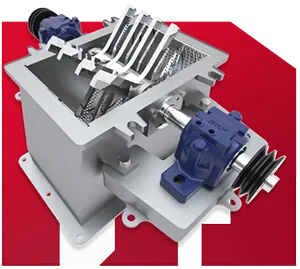
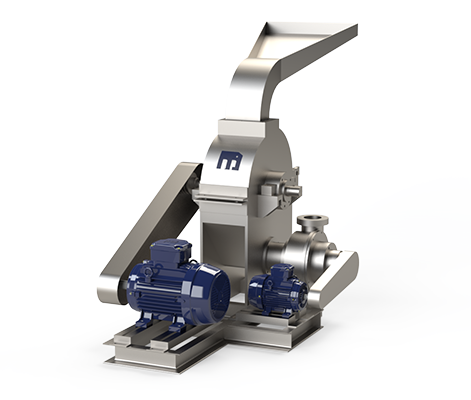
DP Pulverizer Hammer Mills deliver rugged, high-throughput grinding for coarse to medium materials—ideal for agriculture, recycling, food, biomass, and chemical applications. Our Hammer Mills lead the industry in engineering, innovation, performance, & quality, all while keeping a realistic price that everyone can afford.
Hammer mills are used in countless industries for bulk material size reduction
Need help selecting the right solution? Contact us now
Discuss your application, material, and production goals with our experts. We'll help identify the most suitable milling solution for your requirements.
A hammer mill is a type of mechanical size-reduction equipment that uses high-speed rotating hammers to crush, grind, and pulverize materials through repeated impact. It is one of the most widely used milling technologies in industrial processing due to its simplicity, versatility, and high throughput capability.
Hammer mills reduce material size by striking particles with rapidly rotating hammers and forcing them through a perforated screen or grate. Particle size is controlled by hammer speed, screen size, and feed rate, making hammer mills suitable for a wide range of coarse to moderately fine grinding applications.
Hammer mills are commonly used across industries such as food processing, agriculture, chemicals, pharmaceuticals, recycling, biomass, minerals, and industrial materials.
Hammer mills have remained a staple in size reduction for decades because they offer:
Simple, proven operating principles
Ability to handle a wide range of materials
High throughput at relatively low cost
Rugged construction for industrial environments
They are often the first stage of size reduction, preparing material for finer downstream milling when required.
Unlike jet mills or pin mills, hammer mills rely on direct mechanical impact between the hammer and the material.
Key distinctions include:
Suitable for coarse to medium-fine grinding, not ultra-fine micronization
Capable of processing tough, fibrous, or heterogeneous materials
More tolerant of feed size variation
Higher material contact and wear compared to non-contact mills
This makes hammer mills especially valuable in applications where durability and throughput matter more than ultra-tight particle size control.
Hammer mills are typically used to achieve particle sizes ranging from:
~0.5 mm to several millimeters, depending on screen size and configuration
With fine screens and proper configuration, some hammer mills can achieve finer sizes, though this is not their primary strength.
Hammer mills are well suited for a wide range of materials, including:
Grains and agricultural products
Sugar, salt, and food ingredients
Spices and seasonings (coarse grinding)
Biomass and wood products
Chemicals and salts
Minerals and industrial materials
Recycling streams and waste materials
Their ability to handle tough and inconsistent feedstocks makes them highly versatile.
In industrial applications, hammer mills are often integrated into complete processing lines, serving as:
Primary size reduction equipment
Pre-grinding units before fine milling
Conditioning mills ahead of classification or separation
When engineered correctly, hammer mills provide stable, reliable performance in demanding production environments.
A hammer mill reduces material size through repeated high-speed impact. Material is fed into a milling chamber where it is struck by rapidly rotating hammers, causing the particles to fracture. The material continues to be impacted until it is small enough to pass through a screen or grate at the discharge.
Hammer mills rely on mechanical force, not compressed gas or particle-to-particle collisions, making them especially effective for coarse to medium-fine grinding and high-throughput applications.
Material enters the hammer mill through a controlled feed inlet, either by gravity, screw feeder, or rotary airlock.
Proper feed control is important to:
Maintain stable milling conditions
Prevent overloading
Ensure consistent particle size
Hammer mills are relatively tolerant of feed size variation, which is one reason they are widely used as primary mills.
Inside the milling chamber, a rotor fitted with multiple swinging or fixed hammers rotates at high speed. As the rotor spins, centrifugal force causes the hammers to extend outward.
The rotational speed of the rotor determines:
Impact energy
Milling intensity
Final particle size potential
Higher speeds result in more aggressive size reduction.
Size reduction occurs when material particles are struck by the rotating hammers.
Particles are broken down through:
Direct hammer-to-particle impact
Secondary impact against breaker plates or liners
Particle-to-particle collisions within the chamber
Each impact fractures the material until it becomes small enough to exit the mill.
Hammer mills use perforated screens or grates to control final particle size.
Particles larger than the screen openings remain in the chamber for further grinding
Particles small enough pass through the screen and exit the mill
By changing screen size, operators can adjust the finished product size without altering the core machine.
Once particles pass through the screen, they exit the milling chamber through the discharge outlet.
In many systems:
Induced airflow assists product movement
Dust collection systems capture fine particles
Pneumatic conveying may transport product downstream
Airflow also helps remove heat generated during milling.
Hammer mills are designed for continuous operation, making them well suited for high-throughput industrial environments.
Their simple operating principle allows:
Stable long-term operation
Easy integration into processing lines
Rapid material throughput
Hammer mill performance is controlled by several adjustable factors, including:
Rotor speed
Hammer design and condition
Screen size and open area
Feed rate and material characteristics
Proper configuration ensures efficient grinding without excessive wear or energy consumption.
Because hammer mills rely on mechanical impact and friction, heat generation is inherent to the process.
Heat is managed through:
Short residence time
Airflow through the milling chamber
Proper screen and feed selection
For heat-sensitive materials, hammer mills may be paired with cooling or cryogenic systems when required.
Hammer mills are especially effective when:
Feed material size varies
High throughput is required
Coarse to medium-fine grinding is sufficient
Rugged, simple equipment is preferred
This versatility makes hammer mills one of the most widely used size-reduction technologies across industries.
A hammer mill is a mechanical impact size-reduction system made up of several key components that work together to grind materials efficiently and reliably. While hammer mill designs vary by capacity and application, all industrial hammer mills share the same fundamental elements.
Understanding these components helps manufacturers evaluate performance, maintenance needs, and suitability for specific materials.
The rotor assembly is the core rotating component of the hammer mill. It consists of a central shaft and rotor discs that support the hammers.
The rotor:
Spins at high speed to generate impact energy
Must be precisely balanced to minimize vibration
Determines overall milling intensity and throughput
Rotor speed and mass play a major role in grinding performance.
The hammers are the primary grinding elements responsible for breaking down material through impact.
Key features include:
Swinging or fixed hammer designs
Hardened or wear-resistant materials
Reversible or replaceable construction for extended life
Hammer shape, weight, and material selection are matched to the application to balance grinding efficiency and wear resistance.
Hammer pins secure the hammers to the rotor, allowing them to swing freely or remain fixed depending on design.
Spacers:
Maintain proper hammer alignment
Ensure consistent spacing
Help distribute impact forces evenly
These components are critical for smooth operation and longevity.
The milling chamber encloses the rotor and hammers, containing the grinding process and directing material flow.
The housing:
Protects operators and surrounding equipment
Is lined with wear-resistant liners or breaker plates
Influences internal material circulation
Proper chamber design improves grinding efficiency and reduces buildup.
Breaker plates or internal liners provide secondary impact surfaces within the milling chamber.
They:
Enhance size reduction efficiency
Help control material trajectory
Protect the housing from wear
These components are often replaceable to extend equipment life.
The screen or grate controls the final particle size by allowing only particles below a certain size to exit the mill.
Key characteristics include:
Perforated metal screens with defined opening sizes
Interchangeable designs for flexibility
Open area percentage affecting throughput
Screen selection is one of the most important factors in hammer mill performance.
The feed inlet introduces material into the milling chamber at a controlled rate.
Feed systems may include:
Gravity inlets
Screw feeders
Rotary airlocks
Proper feeding ensures stable operation and prevents overloading.
Once particles pass through the screen, they exit the mill through the discharge outlet.
The discharge may connect to:
Cyclones
Dust collection systems
Pneumatic conveying lines
Efficient discharge supports clean operation and high yield.
The drive system provides the power required for hammer rotation.
This typically includes:
Electric motor
Direct drive or belt-driven transmission
Variable frequency drive (VFD) for speed control
Adjustable speed allows operators to fine-tune impact energy and particle size.
Hammer mills rely on airflow to assist with product transport and heat removal.
This may include:
Induced draft fans
Air inlets and outlets
Dust collection equipment
Proper airflow improves milling efficiency and helps manage temperature rise.
Modern hammer mills may include instrumentation to monitor:
Rotor speed
Motor load
Temperature
Vibration
These systems improve safety, protect equipment, and support consistent operation.
While each component has a specific function, hammer mill performance depends on how well the system is engineered as a whole. Rotor design, hammer configuration, screen selection, and airflow must be balanced to achieve reliable and efficient grinding.
DP Pulverizer hammer mills are engineered for rugged, high-throughput size reduction, delivering reliable performance across a wide range of materials and operating conditions. They are designed as industrial production tools—built to run, not to be babied.
DP Pulverizer hammer mills are optimized for continuous, high-capacity operation, making them ideal for primary and secondary size reduction.
Key advantages include:
High material throughput per horsepower
Ability to handle variable feed size and consistency
Stable operation under heavy load
This makes them especially effective in production environments where volume and uptime are critical.
DP hammer mills can process a wide range of materials, including:
Food ingredients and sugars
Grains and agricultural products
Spices and seasonings (coarse grinding)
Chemicals and salts
Biomass and wood products
Minerals and industrial materials
Recycling and waste streams
Their tolerance for material variability makes them one of the most adaptable milling technologies available.
Hammer milling is a well-established and well-understood size-reduction method. DP Pulverizer builds on this proven principle with refined engineering and industrial-grade construction.
Benefits include:
Straightforward operation
Easy maintenance and servicing
Minimal process complexity
This simplicity translates into reliability and lower operational risk.
DP hammer mills allow particle size to be adjusted easily through:
Screen or grate selection
Rotor speed control
Hammer configuration
This flexibility enables operators to adapt to changing product requirements without replacing the entire machine.
DP Pulverizer hammer mills are built for industrial durability, with design priorities that include:
Heavy-duty rotors and shafts
Wear-resistant hammers and liners
Rigid housings to minimize vibration
Replaceable wear components
These features ensure long service life even in abrasive or demanding applications.
For coarse to medium-fine grinding, DP hammer mills offer an economical alternative to more complex milling systems.
Advantages include:
Lower initial capital cost
No compressed gas requirements
Lower system complexity
Predictable maintenance costs
This makes hammer mills an excellent choice when ultra-fine particle size is not required.
DP Pulverizer hammer mills are designed to integrate seamlessly into complete material handling and processing systems, including:
Feeders and conveyors
Air classification or secondary milling
Dust collection and containment
PLC-based automation
This system-level compatibility simplifies plant design and future expansion.
DP hammer mills are available in a range of sizes and configurations, allowing systems to scale from pilot applications to full production without changing the core technology.
This supports:
Consistent process behavior
Easier scale-up
Reduced development risk
DP hammer mills are an excellent solution when:
High throughput is required
Feed material size varies
Coarse to medium-fine grinding is sufficient
Equipment simplicity and durability matter
In these applications, DP Pulverizer hammer mills deliver dependable performance with a strong return on investment.
Hammer mills are widely used for size reduction due to their simplicity and throughput, but they are not the ideal solution for every application. Understanding their limitations is critical when selecting the correct milling technology.
Hammer mills are best suited for coarse to medium-fine grinding. They are not designed to achieve ultra-fine or micron-level particle sizes.
Limitations include:
Difficulty achieving particle sizes below ~300–500 microns consistently
Broad particle size distribution compared to pin or jet mills
For applications requiring tight particle size control or fine powders, pin mills, air classifying mills, or jet mills are typically more appropriate.
Because hammer mills rely on mechanical impact and friction, they generate significant heat during operation.
This can result in:
Softening or melting of heat-sensitive materials
Product degradation or discoloration
Increased risk of agglomeration or buildup
While airflow and system design can help manage heat, hammer mills are not ideal for thermally sensitive products without additional cooling or cryogenic support.
Hammer mills involve direct contact between hammers, liners, and material. When processing abrasive materials, this can lead to:
Accelerated wear of hammers and screens
Increased maintenance frequency
Higher long-term wear part costs
Although wear-resistant materials can mitigate this, wear remains a factor in abrasive applications.
Hammer mills operate at high rotational speeds and generate significant impact forces.
As a result:
Noise levels are typically higher than other milling technologies
Vibration must be managed through proper mounting and balancing
Facilities may require additional sound attenuation or isolation measures.
Particle size in a hammer mill is primarily controlled by screen size and rotor speed, which provides less precision than mills with integrated classification.
This can result in:
Wider particle size distribution
Increased fines or oversize material
Limited top-cut control
For processes where particle size uniformity is critical, additional downstream classification may be required.
Hammer mills perform best with dry, free-flowing materials.
Challenges arise when:
Material has high moisture content
Product is sticky or gummy
Feed tends to smear rather than fracture
In these cases, clogging, buildup, and reduced throughput can occur.
Because hammer mills include multiple wear surfaces and direct mechanical contact, there is a higher risk of trace contamination compared to non-contact technologies.
For ultra-high-purity or regulated pharmaceutical applications, jet mills or specialized systems may be preferred.
Hammer mills may not be the optimal solution when:
Fine or ultra-fine particle size is required
Heat sensitivity is a major concern
Abrasive wear must be minimized
Tight particle size distribution is critical
In these scenarios, alternative milling technologies often deliver better performance.
Hammer mills remain an excellent solution when applied correctly. However, the most successful processing outcomes come from matching the milling technology to the material and process goals, rather than forcing a single solution across all applications.
At DP Mills, milling is just one chapter of the story.
Real manufacturing challenges don’t begin or end at particle size. They live in how materials are fed, mixed, conditioned, and moved—reliably, repeatedly, and without contamination or waste.
That’s why DP Mills delivers integrated powder processing solutions, combining:
Precision milling
Engineered mixing
Intelligent bulk material handling
All designed to work as one coherent system, not a collection of disconnected machines.
Our mills are engineered to perform within a larger production ecosystem. Whether you’re reducing size, controlling top cut, or preserving heat-sensitive materials, DP Mills systems are designed with upstream and downstream integration in mind.
This means:
Consistent feed rates into the mill
Controlled discharge into mixers or classifiers
Reduced rework, fines, and yield loss
Scalable performance from R&D to full production
Milling becomes predictable. Operations become calmer. Engineers sleep better.
Particle size alone doesn’t make a product sellable. Homogeneity does.
That’s why DP Mills systems are frequently paired with PerMix industrial mixers, engineered for powders, pastes, and hybrid formulations across food, pharmaceutical, chemical, battery, and advanced material applications.
Integrated milling and mixing allows manufacturers to:
Mill and blend in a continuous or batch-controlled workflow
Achieve tighter formulation tolerances
Reduce material transfers and exposure to air or moisture
Design cleaner, safer, more automated plants
When milling and mixing are designed together, performance compounds.
Milling systems are only as good as the material feeding them.
DP Mills works alongside A.I.S. (Automated Ingredient Systems) to deliver fully automated bulk material handling—because manual feeding and inconsistent dosing have no place in modern production.
These systems include:
Loss-in-weight and gain-in-weight feeding
Automated batching and recipe control
Pneumatic and mechanical conveying
Dust containment and sanitary transfer
The result is a controlled, repeatable process from raw material intake to finished blend—without bottlenecks or operator guesswork.
Instead of coordinating multiple vendors, timelines, and control philosophies, DP Mills provides a single, unified solution for:
Milling + Mixing + Bulk Material Handling
This approach reduces:
Commissioning time
Integration risk
Control system conflicts
Long-term maintenance headaches
And it increases:
Process reliability
Product consistency
Line efficiency
ROI on capital equipment
From initial material testing to full turnkey systems, DP Mills doesn’t just ask “What micron size do you need?”
We ask “What does your process need to succeed?”
Because the future of manufacturing isn’t standalone machines.
It’s intelligent systems that work together—quietly, efficiently, and relentlessly.
That’s Milling, Mixing, & Bulk Material Handling—done right.
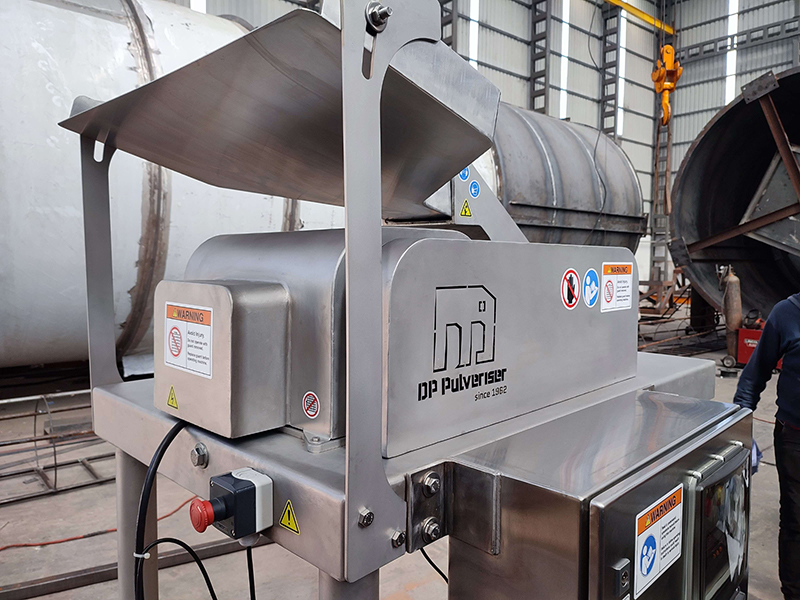
Engineering solutions that fuel client success.
Hammer mills are often selected for their simplicity and capacity—but performance over time depends entirely on how well the system is engineered and supported. DP Pulverizer hammer mills are designed for manufacturers who need durable, high-throughput size reduction that holds up under demanding production conditions.
DP Pulverizer hammer mills are built to operate continuously in industrial environments, not just laboratory or light-duty applications.
Design priorities include:
Heavy-duty rotors and shafts
Rigid housings to control vibration
Wear-resistant hammers, liners, and screens
Balanced assemblies for long bearing life
This rugged construction translates directly into higher uptime and longer service intervals.
DP Pulverizer does not deliver generic hammer mills. Each system is configured based on:
Material characteristics
Desired particle size range
Throughput requirements
Abrasiveness and wear considerations
Downstream processing needs
This ensures the hammer mill performs efficiently without unnecessary wear or energy consumption.
DP hammer mills are optimized to deliver consistent throughput and stable operation, even with variable feed materials.
Benefits include:
Tolerance for feed size variation
Reliable performance under heavy loads
Consistent discharge characteristics
This makes them ideal for primary and secondary size reduction where production stability matters.
DP Pulverizer hammer mills are designed with operator practicality in mind.
Features include:
Easy access to hammers and screens
Reversible and replaceable wear parts
Straightforward mechanical layouts
This reduces downtime, simplifies training, and lowers long-term maintenance costs.
DP hammer mills allow particle size to be adjusted quickly through:
Screen changes
Rotor speed control
Hammer configuration
This flexibility supports multiple products or changing specifications without major equipment changes.
DP Pulverizer hammer mills are engineered to integrate cleanly into complete milling and material handling systems, including:
Feeders and conveyors
Dust collection and airflow systems
Secondary milling or classification stages
PLC-based automation
This system-level approach ensures stable operation and easier expansion.
DP Pulverizer provides straightforward engineering guidance. If a hammer mill is not the right solution, that will be stated clearly—whether the process is better suited to a pin mill, air classifying mill, jet mill, or cryogenic system.
This honesty protects process performance and builds long-term partnerships.
DP hammer mills are the right solution when:
High throughput is required
Feed material size and consistency vary
Coarse to medium-fine grinding is sufficient
Equipment durability and uptime matter
In these applications, DP Pulverizer hammer mills deliver dependable performance backed by real engineering support.
From system design through commissioning and ongoing operation, DP Pulverizer works as a process partner, not just an equipment supplier. The focus is on equipment that runs reliably, meets production targets, and delivers value over its entire lifecycle
Hammer mills reduce bulk solids efficiently for food, pharma, chemical, and mineral processing wh...
Biochar performance depends on more than feedstock. Learn how particle size, milling, dust contro...
Find the best mills for pharmaceuticals by comparing jet, pin, hammer, cone, and classifier mills...


